


Range days and field hunts put real stress on your hearing. A solid pair of protective earmuffs, or a headset that ties into your comms setup, makes the difference between a comfortable session and one you regret. The six options below cover the everyday shooter, the comms-heavy group, and anyone building a tactical kit on a budget.
A Closer Look At The Lineup

PROHEAR Digital Electronic Shooting Earmuffs 23dB NRR
Electronic Shooting Ear Protection w/Gel Pads 23dB NRR
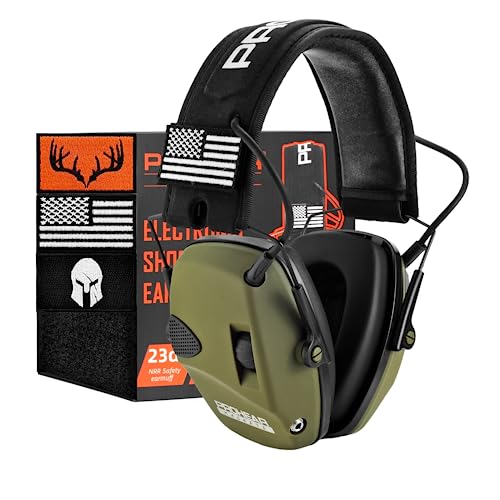
PROHEAR Electronic Ear Protection 4X Amplification Green

PROHEAR Bluetooth Walkie Talkie Module 3-Mile GMRS

EARMOR M32 Tactical Headset Nato TP120 Black
Retevis EHK012 Two Way Radio Headset with Mic
The Picks, Examined More Closely
PROHEAR’s flagship electronic muffs lean into speed. The sound cutoff reacts in roughly 0.0005 seconds, which keeps the abrupt crack of a high-caliber round from ever reaching your eardrum as a full blast. For range shooters running pistols and rifles back to back, that snappy response is what separates a comfortable session from a fatigue-building one.
At the same time, the 5X amplification pulls in range commands and quiet conversation. You hear a coach calling “mags up” across a bay without lifting the muffs. The ABS shell keeps weight low, and the slim cutaway means the stock of a rifle clears without pushing the cup out of place.
Where It Delivers
- 0.0005-second reaction time keeps loud impacts from feeling like a spike
- 5X amplification lifts footsteps and speech so situational awareness stays high
- Low-profile cups let the rifle stock nestle without lifting the seal
- Lightweight ABS build avoids neck strain on multi-hour range days
Worth Noting
- No Bluetooth or radio passthrough, so comms require a separate device
- Cushion foam, rather than gel, may feel warm during summer outdoor use
Key Specs
Right Fit For
Recreational range shooters who fire multiple firearms in a session and want fast, clean sound cutoff without paying for radio integration.
Look Elsewhere When
Shooters running two-way comms across a group should look at the PROHEAR Bluetooth Walkie Talkie Module, which layers GMRS radio onto existing muffs.
Where most electronic muffs rely on foam, this PYBBO model swaps in gel pads. The difference shows up after the second hour of wear, when foam typically starts pressing and trapping heat, and gel keeps an even seal. For instructors standing on the line for six hours or competitors grinding through stages, that comfort gap is the real story.
The 3X amplification is more modest than the 5X PROHEAR model, but it still pulls in range conversation. The 23 dB NRR rating (Noise Reduction Rating, a lab-tested measure of how much sound the muffs block) matches the rest of the field, so protection stays consistent across the lineup.
Everyday Perks
- Gel pads distribute pressure evenly across the temple
- Active cutoff engages fast on impacts above 82 dB
- 3X amplification balances speech pickup without overboosting background hiss
- PU and foam construction keeps the cup flexible but sealed
Trade Offs
- 3X amplification is lower than the PROHEAR 5X unit for very quiet environments
- Runs on 2 AAA batteries, which you will need to stock ahead of time
Made For
Shooters and instructors who spend long stretches at the range and prioritize comfort over maximum amplification.
Swap It Out When
Hunters who want a green color to blend with field kit should step to the PROHEAR Electronic Ear Protection 4X Amplification in green instead.
The green colorway is the headline for hunters, but the underlying smart circuit does the real work. PROHEAR’s active hearing protection compresses gunshot noise in under 0.01 seconds while lifting low-level ambient sounds like twig snaps, wing beats, and a hunting partner’s whisper. Walking a treeline with these on turns into a more aware experience, not a dulled one.
Compare that to the black PROHEAR 5X model reviewed earlier: the amplification is dialed back a touch, but the cutoff behavior is similar. The ABS shell, the AAA battery power, and the 23 dB NRR rating all carry over. What changes is the camo-friendly exterior and the gentler 4X gain.
The Value In It
- Green finish blends into field environments without flashy branding
- Smart compression reacts in under 0.01 seconds to suppress gunshots
- 4X amplification lifts low-level wildlife sounds without distortion
- Same 23 dB NRR protection level as higher-amp PROHEAR models
Soft Spots
- Lower 4X amplification is less useful in very quiet indoor ranges
- 2 AAA batteries required, not included
Best Suited To
Hunters and outdoorsmen who want hearing protection that disappears into the landscape and amplifies natural sounds.
A Better Fit Elsewhere
Range-only shooters who want maximum amplification should choose the PROHEAR Digital Electronic Shooting Earmuffs 23dB NRR with 5X boost instead.
This module is the bridge between passive muffs and active group communication. PROHEAR designed it to clip into compatible earmuffs, layering in both Bluetooth audio and a 3-mile GMRS (General Mobile Radio Service, a licensed UHF frequency used for short-range two-way radio) radio. Shooting instructors running a class of six, or a hunting party splitting up across a ridge, can stay in touch without hand signals.
The upgraded generation pairs faster than the older RH08 module, and signal stability is tighter in interference-heavy areas. It is not a standalone muff: you still need a base set of hearing protection to attach it to. Think of it as an add-on, not a replacement.
A Favorable Mix
- Dual-mode design stacks Bluetooth audio and GMRS radio in one module
- 3-mile GMRS range covers most outdoor range and field setups
- Faster pairing than the prior RH08 generation
- Stronger anti-interference performance in crowded RF (radio frequency) areas
Honest Caveats
- Requires compatible PROHEAR muffs, sold separately
- GMRS operation requires an FCC license in the United States
Key Specs
Whose Shelf It Belongs On
Group leaders and instructors who already own PROHEAR muffs and want a clean comms upgrade without buying a full tactical headset.
Reach For A Different Pick When
Shoppers who want comms built into the headset from the start should consider the EARMOR M32 Tactical Headset with its NATO TP120 jack.
The M32 is built for kit integration, not casual range use. The NATO TP120 jack on the side is the spec militaries and airsoft teams standardize around, so the headset drops into a PTT (push-to-talk) system with the right adapter. Mount it to a helmet with the proper rail adapter and you have a full comms-and-hearing-protection rig.
The trade-off is real, though. Without a compatible PTT, the radio side of the headset is dead weight, since the M32 alone does not transmit. And it does not clamp onto every helmet out of the box; you may need to source a separate adapter. For someone building a coordinated loadout, that is a feature. For a casual shooter, it is friction.
Where It Helps
- NATO TP120 jack standardizes into most PTT and radio setups
- Sound amplification lifts ambient awareness in the field
- Boom microphone allows clear transmission when paired with PTT
- Black tactical finish matches most kit configurations
Things To Consider
- Requires a compatible PTT for radio, sold separately
- Helmet mounting needs a separate adapter, not included
- Not compatible with civilian-wiring PTTs like Peltor or TAC-SKY
Who Should Grab It
Tactical shooters, airsoft competitors, and professionals building a comms-integrated kit with standardized NATO connections.
Skip It When
Recreational range shooters who just want amplification and protection should stay with the PROHEAR Digital Electronic Shooting Earmuffs 23dB NRR.
The Retevis EHK012 is not a hearing protector, and that distinction matters. It is a headset designed to plug into Retevis handhelds like the RT22, RT68, and RT86, and it works with Kenwood-style two-pin radios. The flexible boom mic and over-ear earpiece keep your hands free and your calls clear, even in loud environments where shouting across a bay is impractical.
What it does not do is block gunfire noise. You still need separate muffs or plugs to protect your hearing. Think of the EHK012 as the comms side of the equation, useful on its own for retail, event coordination, or range safety, and pairable with passive protection for shooting.
Key Advantages
- K-head 2-pin plug fits Retevis RT22, RT68, RT86, and Kenwood-style radios
- Flexible boom mic adjusts to mouth position for clear transmission
- Single over-ear earpiece keeps one ear open to ambient sound
Some Limits To Know
- No active hearing protection, gunfire noise passes through unimpeded
- Not compatible with Midland or Motorola radios
Key Specs
Who Will Love This
Retevis radio users coordinating a range, security detail, or event who need a hands-free headset with a clear boom mic.
Consider Something Else When
Shooters who need combined hearing protection and radio comms in one unit should look at the EARMOR M32 Tactical Headset with NATO TP120 jack.
What To Weigh Before Choosing Hearing Protection for Shooters
Comfort over long sessions is the first filter. Gel pads and a low clamping force matter more than spec sheets once you cross the two-hour mark. If you shoot indoors at a covered range, lighter cups with less bulk help. For outdoor treks, a color that blends in and a sealed ABS shell handle weather and brush.
Amplification level is the second filter. Models in the 3X to 5X range lift footsteps and speech without making every leaf crunch unbearable. Pick the lower end if you mainly want conversation, and the higher end if you hunt and need to pick up distant sounds.
Comms integration is the third filter. Standalone muffs cover most recreational shooters. The PROHEAR GMRS module layers radio onto existing muffs, and the EARMOR M32 builds comms in from the start with a NATO TP120 port. Make sure the plug matches your existing radio or PTT system before buying.
Battery type rounds it out. Most active muffs run on AAA cells, and a few packs of spares in your range bag save the day. Plan for replacements every few months if you shoot weekly.
Smart Shifts When Shopping for Shooter Hearing Protection
Where Shoppers Go Wrong
Treating NRR (Noise Reduction Rating) as the only number that matters is the classic trap. A high NRR with poor seal around glasses or a hat brim blocks far less than it claims. Fit and cup shape decide real-world protection more than the lab number. Try a muff on with the gear you actually wear to the range.
Battery surprises hit harder than expected. Some active muffs run months on a pair of AAAs, others drain faster under heavy amplification use. Stocking spares prevents a silent muff on a busy day, and turning the unit off between strings of fire extends runtime noticeably.
The Case For Spending Up
Higher-tier models buy faster sound cutoff, which feels different in real use. A 0.0005-second reaction time keeps a sharp crack from registering as a thud, and the difference in ear fatigue after a long day is real. Premium options also bring gel pads, better sealing, and integrated comms ports that cheaper units skip.
The upgrade pays off most for frequent shooters. A casual visitor to the range once a quarter will not feel the difference strongly, but anyone logging dozens of sessions a year will notice the comfort, sound quality, and durability gains right away.
Frequently Asked Questions
What does NRR mean on shooting earmuffs?
NRR stands for Noise Reduction Rating, a lab-measured score showing how many decibels the muffs block. A 23 dB NRR is a common level that handles most range and hunting scenarios safely.
Can electronic earmuffs damage hearing if amplification is too high?
The cutoff circuit compresses anything above roughly 82 dB, so loud impacts always get cut. The amplification only boosts quiet sounds, which keeps total exposure within safe levels for typical use.
Do I need a radio module for the range?
Only if you are coordinating with a group, instructor, or spotter. For solo sessions, a quality pair of standalone electronic muffs covers hearing protection and conversation pickup just fine.
Why do some headsets use NATO TP120 connectors?
NATO TP120 is a military-standardized plug that standardizes comms across different radios and PTT (push-to-talk) systems. It allows the headset to drop into kit setups without rewiring.
How long do AAA batteries last in active earmuffs?
Most active muffs run 200 to 350 hours on a fresh pair of AAAs, depending on amplification level and how often the cutoff circuit fires. Heavy range use drains them faster than occasional hunting trips.
Final Verdict
Your shooting style drives the call. Recreational range shooters get the most from the PROHEAR 5X model for its fast cutoff and clean amplification. Hunters gravitate to the green PROHEAR with 4X boost for field blending. Group shooters and instructors benefit from the GMRS module, while tactical kit builders want the EARMOR M32. For Retevis radio users, the EHK012 headset covers comms cleanly, with separate muffs handling hearing protection. Pick the one that matches the environment you actually train in, and your ears will thank you for years.



