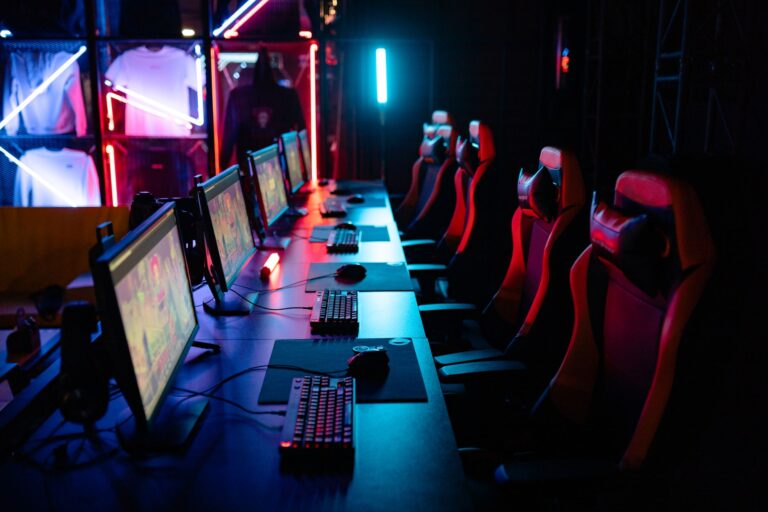
Their architecture, revenue models, and governance frameworks diverge sharply, with the contrast revealing far more about business and organizational design than about athletic legitimacy. To compare the two, picture a closed franchise with a century of institutional trust on one side, and a publisher-controlled tournament system built around a single video game on the other. The NBA, NFL, and FIA Formula 1 operate like the former; the League of Legends Championship Series (LCS) and Overwatch League have tried to mirror it, with mixed results.
This article breaks down how esports leagues and traditional sports organizations differ in structure, revenue, player careers, and media rights, comparing systems like the LCS and Overwatch League to the NBA, NFL, and FIA.
Defining the Two Competitive Ecosystems
Esports leagues cluster around individual video game titles, and each title runs its own self-contained competitive circuit with its own teams, rules, and prize structures. League of Legends, Counter-Strike, Dota 2, Overwatch, and Valorant each operate as a separate sport in everything but name, often with separate governing organizations, separate regional leagues, and separate world championships run by publishers like Riot Games and Valve.
Traditional sports leagues revolve around a single physical discipline with one unified rulebook enforced by a central authority. The NFL owns football in the United States, FIFA governs soccer worldwide, the FIA controls motorsport, and the International Olympic Committee oversees the Olympic program. A century of institutional history gives these bodies near-monopoly authority over their respective games, a position no esports publisher has yet matched.
Why the Distinction Matters beyond “Real Sport” Arguments
Legitimacy is the wrong frame for this comparison, because both ecosystems qualify as organized competitive enterprises with professional athletes, paying spectators, and measurable revenue. The real distinction lies in how each system builds competition around its core activity, how it sustains that competition financially, and how it regulates the people who compete. A traditional league sells a sport that already exists; an esports league is often built and dissolved by the same company that publishes the game being played.
| Dimension | Traditional Sports Leagues | Esports Leagues |
|---|---|---|
| Core product | A physical athletic activity (football, basketball, soccer) | A specific video game title (League of Legends, Overwatch) |
| Governing body | Federations like FIFA, IOC, FIA, NFL | Game publishers like Riot Games, Valve, Activision Blizzard |
| Ownership of the league | Team owners under a single league office | Publisher, with teams as franchisees or tournament participants |
| Rulebook source | Centralized, century-tested regulations | Publisher patches and balance updates |
League Architecture, Season Structure, and the Franchise Experiment
A traditional league follows a predictable rhythm built around a single annual calendar that you can plan around years in advance. The NFL runs from September through February with a 17-game regular season, single-elimination playoffs, and a Super Bowl that functions as the league’s annual climax. The NBA, NHL, and MLB mirror that structure with their own dates and formats, and each league locks its schedule so broadcasters, sponsors, and fans can plan around it.
Esports, until recently, ran on a tournament circuit model with no single league authority controlling the calendar. Teams competed across multiple events organized by third-party tournament operators like ESL, the game’s publisher, or both, and prize money came from event-by-event purses rather than a guaranteed league split. Dota 2’s The International, Counter-Strike’s Major circuit, and the early League of Legends world championship all operated this way, with top teams jetting between events in Berlin, Seoul, and Los Angeles on a global calendar that shifted every year.
The Overwatch League Franchise Experiment
Activision Blizzard tried to transplant the traditional franchise model into esports in 2018, selling city-based team slots at a reported $20 million each. The Overwatch League mirrored the NFL and NBA on paper, with home cities, geographic team identities, and a regular-season format that ran from February through playoffs in the summer.
The structure collapsed under its own weight by 2023, when Activision Blizzard dissolved the league after years of unsustainable operating costs, failed expansion, and a pandemic that destroyed the home-and-away attendance model. The shutdown stands as the clearest cautionary tale in esports economics: a publisher can copy the surface format of a traditional league, but it cannot copy the decades of fan loyalty, broadcast rights revenue, and stadium infrastructure that make franchises valuable in the first place.
The Overwatch League’s failure taught the industry that franchise valuations in traditional sports are built on assets you cannot manufacture overnight, including history, scarcity of teams, and broadcast lock-in.
Comparing the Three Structural Models
| Structural Element | Traditional League (e.g., NFL) | Esports Circuit (pre-franchise) | Overwatch League (2018-2023) |
|---|---|---|---|
| Season length | ~6 months regular season + playoffs | Year-round, event-by-event | ~5 months regular season + playoffs |
| Team identity | Geographic, stable | Org-based, often region-flexible | Geographic, but largely online |
| Central authority | League office and team owners | Publisher + tournament operators | Publisher (Activision Blizzard) |
| Outcome | Sustained for decades | Still dominant in most titles | Dissolved after 5 seasons |
Revenue Models, Prize Pools, and Where the Money Actually Comes From
Traditional leagues earn most of their money from long-term broadcast rights deals negotiated through decades of institutional leverage. The NFL’s media contracts, the NBA’s international television partnerships, and the Premier League’s overseas rights collectively generate tens of billions of dollars in committed revenue that teams can borrow against to fund operations. Gate receipts from ticket sales and corporate sponsorships fill out the rest of the income stack, with sponsorship revenue now exceeding $20 billion annually across major US leagues.
Esports revenue is far more fragmented. Most of it comes from sponsorship deals, media rights sold to streaming platforms, merchandise, and publisher funding, with prize pools for marquee events sometimes crowdfunded through in-game battle passes. Valve’s The International has pushed Dota 2’s crowdfunded prize pool above $40 million in multiple years, a number that rivals the purses of golf majors or tennis Grand Slams, but that money flows to a handful of top teams rather than the entire competitive ecosystem.
Player Pay, Salaries, and the Open-Circuit Gap
Franchised esports leagues like the LCS and the now-defunct Overwatch League offered player salaries and benefits structured to resemble traditional sports, with guaranteed minimums, health insurance, and revenue-sharing agreements. The LCS minimum salary for players sat around $75,000 in recent seasons, with top players earning seven figures.
Open-circuit esports, by contrast, rewards individual teams based on tournament finishes, with no guaranteed income between events. A Counter-Strike team might earn a $250,000 prize for winning a Major one month and then go four months without a paycheck while grinding qualifiers for the next event. The volatility is one of the largest structural gaps between the two ecosystems, and it shapes career decisions for every professional player who isn’t in a franchised league.
Side-by-Side Revenue Comparison
| Revenue Stream | Traditional Leagues | Esports Leagues |
|---|---|---|
| Broadcast rights | Dominant (multi-billion dollar deals) | Growing, but small relative to sponsorships |
| Sponsorships | Strong, often $20B+ across US leagues | Primary revenue source for most teams |
| Gate receipts | Major (ticket sales, concessions) | Minor (most events online or in small arenas) |
| Publisher funding | N/A | Significant, especially in franchised leagues |
| Crowdfunded prize pools | N/A | Unique to some titles (Dota 2, $40M+ events) |
Player Careers, Physical Demands, and the Question of Athletic Regulation
Traditional athletes typically peak in their late twenties and early thirties, with average career lengths measured in years and supported by established union representation and collective bargaining. The average NFL career lasts about 3.3 seasons, the NBA median is around 4-5 years, and top performers in soccer, tennis, and motorsport can compete at elite levels into their thirties and even forties. Pension systems, guaranteed contracts, and post-career transition programs are baked into the major US leagues after decades of player association pressure.
Esports careers compress that timeline dramatically. Most professional players peak before age 25, and the average career in titles like League of Legends or Counter-Strike runs between three and six years before players retire, often because reaction time, hand-eye coordination, and the cognitive intensity of high-level play start to slip earlier than they do in physical sports. The post-career infrastructure is also thinner, with limited pension systems, no universal player association, and most retired pros relying on streaming income, coaching roles, or content creation to stay afloat.
Injury Profiles and Health Governance
Physical injury patterns differ sharply between the two ecosystems, and that difference shapes how each one regulates athlete health. Traditional athletes face acute trauma, including concussions, torn ligaments, and orthopedic injuries that often require surgery and long rehabilitation. Leagues have responded with independent medical staffs, concussion protocols, and strict return-to-play rules enforced by team physicians and league officials.
Carpal tunnel syndrome, wrist tendonitis, and posture-related back problems are common among players who practice 10+ hours a day, and several high-profile retirements have been linked to burnout, anxiety, and depression. The NFL Players Association’s recent deal to cover treatment for “eSports injuries” represents one of the first formal recognitions that pro gaming carries its own medical burden, a step other governing bodies are only beginning to match.
- Traditional athletes face acute physical trauma, with established medical protocols and workers’ compensation systems.
- Esports professionals face repetitive strain injuries and mental health challenges, with patchy regulatory coverage.
- Career length in traditional sports averages 3-7 years at the top level, while esports careers often end before age 30.
- Post-career support is institutionalized in major US leagues but still developing in most esports circuits.
Governance, Media Rights, and the Streaming Parallel
Traditional sports operate under national and international federations that standardize rules across countries, enforce anti-doping protocols through agencies like USADA and WADA, and negotiate broadcast contracts with the kind of institutional leverage that took generations to build. The NFL, NBA, and FIFA can demand billions from broadcasters because they control the only legal source of their sport, and the scarcity drives up the price.
Esports governance remains fragmented across game publishers who own the intellectual property, set the rules, and can effectively dissolve a competitive scene overnight by changing a game’s meta or ending developer support. When Activision Blizzard cut Overwatch support after the league’s collapse, hundreds of professional players lost their competitive platform in a single announcement, something that simply cannot happen in the NFL or NBA.
Streaming Platforms as a Parallel Media Layer
Twitch and YouTube Gaming host tens of millions of concurrent esports viewers, building direct player-to-audience pipelines that legacy broadcasters have only started to copy in the last five years. Top esports players build personal brands through streaming, signing platform deals worth millions, and converting their audience into direct revenue without going through a league-controlled media rights deal.
Traditional leagues are now copying that model, with the NBA, NFL, and individual athletes launching their own streaming channels, second-screen experiences, and athlete-owned content programs. The result is a slow convergence: esports players get more institutional support, and traditional athletes get more direct audience access.
Twitch and YouTube Gaming didn’t replace broadcast rights for traditional sports, but they did create a parallel audience economy that forces both ecosystems to rethink how athletes monetize their personal brands.
Amateur Pipelines, Draft Systems, and Where the Two Worlds Converge
Traditional sports rely on a clearly defined amateur pipeline that funnels talent through high school programs, college athletics with scholarship structures, and a centralized draft system distributing new talent across franchises. The NFL Draft, NBA Draft, and NHL Draft are televised events with dedicated scouting departments, and the NCAA’s role as a developmental league gives fans a multi-year window to evaluate prospects before they turn pro.
Esports has no equivalent centralized draft, and amateur talent rises through ranked ladders, open qualifiers, and an emerging network of collegiate programs. The NAIA began offering official esports scholarships in 2016, and over 200 US colleges now field varsity esports teams, but most pathways remain publisher-dependent and lack standardized scouting. A top League of Legends prospect might grind the solo queue to Challenger rank, win an open qualifier, get scouted by a regional league, and turn pro within a year, with no formal draft in between.
Cultural Convergence and Olympic Recognition
Inclusion of esports as a medal event at the 2023 Asian Games signaled a clear institutional shift, marking the moment competitive gaming earned formal recognition from the IOC. After decades of debate, the Olympic movement accepted competitive gaming as a sport worthy of multi-national competition, and traditional sports organizations like the NBA, NFL, and FIFA have launched their own esports divisions to reach younger audiences.
The investment runs both ways. Esports organizations are adopting traditional sports structures, including coaching staffs, performance analysts, and player development programs, while traditional leagues are hiring esports producers and content creators. The talent pipelines, media strategies, and career paths are starting to overlap in ways that make a clean “us vs. them” comparison increasingly hard to sustain, whether you watch as a fan, play at a competitive level, or track the industry for a living.
- Traditional draft systems centralize talent distribution through NFL, NBA, and NHL events with multi-year scouting windows.
- Esports pipelines rely on ranked ladders, open qualifiers, and collegiate scholarships without a formal draft.
- Collegiate esports now offers scholarships at over 200 US schools, with the NAIA leading the way since 2016.
- Olympic recognition at the 2023 Asian Games legitimized esports as a multi-national competitive discipline.
- Cross-investment is growing, with NBA, NFL, and FIFA all launching official esports divisions.
Key Takeaways
Esports and traditional sports leagues both qualify as organized competitive ecosystems, but the difference between esports and traditional sports leagues runs through their architecture, not their legitimacy. Traditional leagues own century-old institutions with locked-in broadcast rights, geographic franchises, and union-backed player contracts, while esports circuits depend on publisher-controlled IP, fragmented revenue streams, and career timelines that compress into a player’s early twenties. The Overwatch League’s collapse proved that you can copy a franchise model without copying the institutional trust that makes franchises valuable, and the 2023 Asian Games proved that the cultural gap is closing faster than the structural one.
FAQ
Is esports a real sport?
Reflex speed, deliberate practice routines, ranked competition, and live audiences satisfy the standard criteria for sport, a fact the IOC underscored by scheduling a medal event at the 2023 Asian Games. The difference between esports and traditional sports is not legitimacy but format: esports measures cognitive and motor skill through a digital interface, while traditional sports measure physical exertion through direct athletic movement.
Why is esports different from traditional sports?
Esports operates on a publisher-controlled model where the game developer owns the IP, sets the rules, and can end a competitive scene by stopping support for the game. Traditional sports leagues control their own rules through federations that have operated for decades, giving them institutional stability that no esports league has matched.
Do esports players train as hard as traditional athletes?
Top esports professionals practice 10-12 hours daily, including scrims, strategy review, and individual mechanical drills, a workload comparable to traditional athletes in training camp. You’ll notice the physical demands differ, with esports players managing repetitive strain and mental fatigue rather than the orthopedic injuries common in physical sports.
How do esports leagues make money compared to traditional sports leagues?
Traditional sports leagues earn the bulk of their revenue from multi-billion dollar broadcast rights deals, while esports leagues depend on sponsorship revenue, publisher funding, merchandise, and streaming rights. Gate receipts and ticket sales are major income sources for traditional leagues but minor for most esports events, which run online or in small arenas.
Will esports ever be in the Olympics?
Esports appeared as a medal event at the 2023 Asian Games, the first multi-national recognition by an Olympic-affiliated body. A full Olympic debut remains complicated by publisher IP control, but the IOC has hosted an Olympic Esports Week and continues to explore inclusion, with the trend pointing toward formal recognition in the coming years.
What skills are needed for esports vs traditional sports?
Reaction time, hand-eye coordination, game-sense, and team communication under pressure dominate competitive gaming, while physical disciplines layer on endurance, strength, and spatial reading of a moving field. The cognitive overlap is significant, but the physical training requirements diverge sharply between the two ecosystems.