


A loaded game library has a way of outgrowing console and PC storage long before you expect it. Modern titles regularly push past 100GB, and that “low storage” warning becomes a regular visitor. The right external drive turns that friction into a non-issue, giving you room for more installs, faster load handoffs, and a clean way to back up save files before a system swap.
This list covers drives tuned for gaming use, from slim 2.5-inch portable units that live next to a console to high-capacity desktop towers built for sprawling Steam libraries. There are spinning hard drives for budget-friendly bulk and portable SSDs for the kind of speed that shaves seconds off loading screens. Each pick below earns its spot with a clear use case, a fair look at trade-offs, and an honest read on who it suits.
An Overview Of The Picks

Western Digital 2TB Gaming Drive for PS4

ADATA HV620S 1TB Slim External Hard Drive

SANDISK 4TB Extreme Portable SSD

Seagate Game Drive 2TB for PS4

Seagate Game Drive 4TB for PS4
SANDISK 2TB Extreme Portable SSD
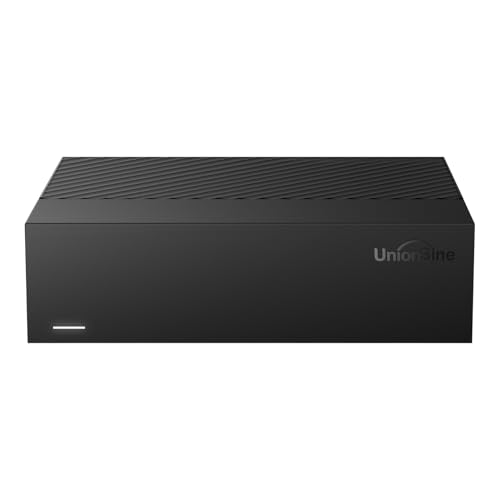
UnionSine 16TB Desktop External Hard Drive
UnionSine 10TB Desktop External Hard Drive
UnionSine 14TB Desktop External Hard Drive
More On The Choices That Made The List
The Western Digital 2TB Gaming Drive is built specifically with PlayStation 4 users in mind, and that focus shows in how little effort it takes to get running. You plug it into a console USB port, walk through a short format step, and the system recognises it as extended storage without any extra software or driver hunting.
For anyone whose PS4 library has outgrown the original 500GB or 1TB internal drive, this is the kind of painless upgrade that pays for itself the first time you stop deleting a favorite to make room for a new release. The 2.5-inch portable form factor draws power from USB, so there’s no brick to plug into the wall. Owners commonly keep it parked on the console shelf, occasionally sliding it into a bag for a friend’s house.
The Helpful Details
- Purpose-built for PS4 expansion, so the format and recognition flow is short and predictable
- USB 3.0 connection delivers noticeably faster transfer than older USB 2.0 drives when moving large installs
- Bus-powered design means one cable to the console, no extra power brick cluttering the entertainment center
- 2TB comfortably holds a large rotating library, so you can keep backlogs instead of constantly managing space
Things To Consider
- As a spinning hard drive rather than an SSD, load times for big open-world titles run slower than what the 2TB Sandisk Extreme drives in this list offer
- The enclosure is functional rather than ruggedized, so most owners treat it as a stay-at-home drive
Who It Suits Best
PS4 owners who want a simple, officially supported way to grow their install library without swapping the internal drive.
A Better Fit Elsewhere
Gamers who need the same plug-and-play simplicity for a much larger library should look at the Seagate Game Drive 4TB for PS4 instead.
The ADATA HV620S earns its spot in any gaming bag because of how little space it asks for. At 11.5mm thick, it slides into a laptop sleeve or jacket pocket without creating a bulge, and the raised edge along the casing helps the finish stay clean when it sits on a desk next to other gear.
This is a 2.5-inch portable hard drive, the kind that draws all the power it needs from the USB cable. The 1TB capacity is enough to back up a moderate Steam library or carry a curated slice of your console collection between systems. A small blue activity light gives you a quick visual confirmation when files are moving, which is helpful when you’re juggling big game folders.
A Few Highlights
- At 11.5mm thick, it’s one of the slimmest portable HDDs in this roundup and easy to pocket
- The scratch-resistant raised lip protects the surface when you lay it flat on a table or shelf
- Bright activity LED makes file transfers easy to confirm at a glance
- Works as backup storage for PS4, Xbox, and PC, giving you flexibility across platforms
Points To Note
- 1TB fills up fast with modern AAA installs, so owners with large collections often use it as a rotating backup rather than a primary library
- Spinning-platter speeds trail what the Sandisk Extreme SSDs in this list deliver
- The glossy finish tends to show fingerprints and minor scuffs over time
Best Suited To
Travelers and commuters who want a featherweight drive for save backups, screenshots, and a few carried-over games between machines.
Skip It When
PC players chasing the fastest possible load times should reach for the SANDISK 1TB Extreme Portable SSD instead.
The 4TB Sandisk Extreme Portable SSD is the largest capacity in the new Extreme lineup, and it pairs that room with the kind of speed that changes how you think about an external drive. With USB Type-C connectivity and read speeds rated up to 2000MB/s, game loads from this drive feel closer to internal storage than the old USB hard drive era.
For PC and laptop gamers juggling huge modern libraries, the 4TB tier means you stop rationing space. Direct storage support on current titles benefits from the throughput, and the ruggedized silicone shell is built to take drops and vibration better than a bare 2.5-inch HDD. It also pairs nicely with the latest consoles for cold-storage of installed titles you want ready to swap back in.
Notable Upsides
- 4TB capacity handles sprawling Steam, Epic, and Game Pass libraries without compromise
- Up to 2000MB/s read speeds cut load times noticeably versus spinning external drives
- Ruggedized construction gives you more confidence taking it to a friend’s setup or LAN event
- USB Type-C connection matches modern laptops, desktops, and current-gen consoles without adapters
Trade Offs
- Reaching the rated 2000MB/s usually requires a USB 3.2 Gen 2×2 port, which not every system has
- Higher capacity drives sit at the top of the pricing curve compared to HDD options
- Real-world sustained writes slow as the SLC cache fills, which matters for huge multi-hundred-gig transfers
Feature Snapshot
Right Fit For
PC and laptop gamers with large libraries who want both speed and storage in a single, durable enclosure.
Consider Something Else When
Console-only users after simple, officially licensed expansion will find the Western Digital 2TB Gaming Drive for PS4 easier to set up.
The Seagate Game Drive 2TB is officially licensed for PS4, which means it shows up in the system as native extended storage with no driver wrangling. Plug it in, follow the on-screen format prompt, and you’re ready to start moving games off the internal drive. The classic black and blue styling sits comfortably next to a PS4 or PS4 Pro without looking out of place.
USB 3.0 connectivity moves a typical PS4 install across in a reasonable window, and since the drive draws power from the console, the only cable you deal with is the USB one. For anyone whose existing library is creeping past the limits of the original PS4 hard drive, this is a sensible step up that holds a healthy chunk of games in active rotation.
What Earns Its Place
- Officially licensed PS4 product, so the format-and-go process is reliable on current firmware
- USB 3.0 with no power cable needed, keeping the entertainment center clean
- Compact and travel-friendly for moving between two systems on the same account
- 2TB holds a sizable slice of a PS4 library in active rotation
Worth Noting
- HDD speeds mean longer waits for massive installs compared to the Sandisk Extreme SSD options above
- The PS4-focused design and licensing make it less appealing if you also want to share storage with a PC
Made For
PS4 owners who want an officially supported, plug-and-play storage bump without the higher cost of a 4TB or SSD option.
Another Choice May Suit
PS4 users with a growing backlog of big titles should look at the Seagate Game Drive 4TB for PS4 for more breathing room.
The 4TB version of Seagate’s PS4 Game Drive exists for one straightforward reason: large libraries. If you’ve been holding on to dozens of titles and dreading the next “not enough space” prompt, this drive gives you room to breathe without rethinking your whole collection. The black and blue styling keeps it visually consistent with the PS4 family.
It’s still a 2.5-inch portable HDD with USB 3.0, so setup remains the same short format step. The 4TB tier is the sweet spot for households where multiple people share the same console, or for anyone who treats the PS4 as a retro machine worth keeping fully loaded. Bus-powered operation means no extra brick on the shelf.
What It Does Well
- 4TB holds a very large PS4 collection in active rotation, so you stop deleting games to install new ones
- Officially licensed for PS4, so the format process stays predictable on current firmware
- No power cable needed, so it fits neatly next to the console
- USB 3.0 speeds make moving big installs practical rather than painful
Honest Caveats
- As a spinning hard drive, it can’t match the load-time speed of the Sandisk Extreme SSDs in this list
- 4TB drives in this category carry a higher per-unit cost than smaller portable options
At A Glance
Who Will Love This
PS4 households with deep, established libraries who want a single drive that holds nearly everything at once.
Look Elsewhere When
Gamers who want faster load times from a portable drive should consider the SANDISK 2TB Extreme Portable SSD instead.
The 1TB version of the Sandisk Extreme Portable SSD is the most travel-friendly tier in the new lineup, and it tends to suit gamers who carry a focused set of titles rather than a full archive. The pocketable form factor and USB Type-C connection make it a clean fit for laptop gaming sessions in coffee shops, on planes, or in shared spaces.
Rated read speeds of up to 2000MB/s make quick work of game loads when the host system has a fast USB port, and the ruggedized exterior handles the knocks of life in a backpack. For someone building out a portable battlestation, the 1TB capacity hits the right balance of cost, weight, and usable room.
A Strong Showing
- Compact size makes it a natural fit for laptop bags and travel kits
- Up to 2000MB/s read speed (with a compatible USB 3.2 Gen 2×2 port) keeps load times tight
- USB Type-C works directly with modern laptops, phones, and consoles
- Ruggedized shell is more drop-tolerant than a bare portable HDD
Room For Improvement
- 1TB fills up quickly with current-generation AAA installs, so most users will curate the library
- Reaching the highest speeds depends on a USB 3.2 Gen 2×2 port, which older systems lack
Perfect Match For
Traveling laptop gamers and students who want a fast, pocketable drive for a curated active library.
Where A Sibling Pick Shines
Gamers who want more room at the same speed should look at the SANDISK 2TB Extreme Portable SSD instead.
The 2TB Sandisk Extreme Portable SSD lands in the middle of the new lineup, and for most PC gamers it’s the capacity sweet spot. You get the same up to 2000MB/s read performance as the larger 4TB sibling, with enough room for a serious active library without jumping to the top of the price ladder.
USB Type-C connectivity means you’re not hunting for adapters on a modern desktop or laptop, and the ruggedized shell is comfortable to take to a friend’s place for a co-op session. For anyone stepping up from a portable HDD, the day-to-day difference shows up immediately in how fast games appear on screen.
Notable Gains
- 2TB is a comfortable capacity for an active PC game library
- Up to 2000MB/s read speed makes this drive feel close to internal storage
- USB Type-C connection matches modern systems without extra cables
- Ruggedized build is friendlier to life in a bag than a bare HDD
Points To Keep In Mind
- Full speed requires a USB 3.2 Gen 2×2 port, which is still uncommon on older hardware
- Higher cost per terabyte than the larger 4TB Sandisk or the spinning UnionSine desktop options
Feature Snapshot
Who Should Grab It
PC and laptop gamers who want SSD-level speed with enough capacity to hold most of what they actively play.
Not Your Match When
Shoppers prioritizing raw capacity per dollar should consider the UnionSine 16TB Desktop External Hard Drive instead.
The UnionSine 16TB is a 3.5-inch desktop hard drive, and that form factor is what unlocks the very large capacity tier. For PC gamers running multi-terabyte Steam, Epic, and Game Pass libraries alongside captured clips and screenshots, this is the kind of room that lets you stop thinking about storage entirely.
USB 3.0 with the MicroB connector delivers solid transfer rates for a spinning drive, and the horizontal desktop chassis sits flat on a shelf or next to the tower without taking much footprint. It’s the right tool for archival-style storage where the priority is volume and stable throughput rather than pocketability.
Real Benefits
- 16TB holds an enormous game library, capture folder, and mods collection in one place
- 3.5-inch desktop format keeps cost per terabyte lower than portable SSD alternatives
- USB 3.0 speeds are appropriate for the kind of large sequential transfers this drive is built for
- Horizontal chassis sits flat and steady on a desk or media shelf
Things To Consider
- Spinning-platter speeds are well below the Sandisk Extreme SSDs in this roundup, so it’s not the right pick for active game loading
- Desktop form factor means it stays at home, so it’s not a companion for travel or LAN sessions
- 3.5-inch drives commonly draw enough power to need the included adapter, so plan for an outlet nearby
Quick Facts
Built With In Mind
PC gamers with very large, ever-growing libraries who want a single high-volume drive to park on the desk.
Swap It Out When
Anyone prioritizing speed and portability over raw capacity should pick up the SANDISK 4TB Extreme Portable SSD instead.
The UnionSine 10TB hits a friendlier capacity tier than the 16TB while still giving desktop-class room. For households where the same drive backs up more than one gaming system, or where someone wants a clear separation between active installs and cold-storage archives, 10TB is often the more practical number.
Like the other UnionSine desktop options in this list, it uses a 3.5-inch HDD inside a horizontal chassis with USB 3.0. The capacity is more than enough for a typical full Steam library plus console content, and the cost lands in a more approachable spot than the 16TB tier above.
The Upside
- 10TB handles a full game library and a large capture or screenshot folder without strain
- Lower cost per terabyte than most portable SSD alternatives
- Horizontal chassis stays put on a desk or shelf without vibrating around
- USB 3.0 keeps large sequential transfers reasonable for an HDD
Softer Spots
- HDD read and write speeds are slower than the Sandisk Extreme SSDs in this roundup
- 3.5-inch desktop form factor means it stays plugged in at home rather than traveling with you
Whose Shelf It Belongs On
Multi-device households and PC gamers who want generous capacity without stepping all the way to the 16TB tier.
Reach For A Different Pick When
Gamers who need the same kind of capacity in a portable, ruggedized package should look at the SANDISK 4TB Extreme Portable SSD instead.
The UnionSine 14TB sits between the 10TB and 16TB siblings, and for many shoppers it lands at the most comfortable capacity point. It’s large enough to absorb years of game installs and recorded footage, while still feeling like a measured purchase rather than a top-of-the-line commitment.
The 3.5-inch HDD inside delivers solid sequential read and write performance for archival work, paired with USB 3.0 to keep transfer times reasonable. The horizontal enclosure matches the rest of the UnionSine desktop family, so the look stays consistent if you ever decide to add a second unit.
Points In Its Favor
- 14TB covers a deep game library plus captures, mods, and screenshots
- 3.5-inch HDD form factor keeps the per-terabyte cost approachable
- USB 3.0 interface supports fast sequential transfers for the kind of large moves this drive is designed for
- Horizontal chassis fits naturally next to a tower or media console
Practical Considerations
- Spinning-platter speeds fall well short of the Sandisk Extreme SSDs in this list, so it’s better suited to storage than active loading
- 3.5-inch desktop drives commonly need the included power adapter, so an outlet is required nearby
The Right Fit
Long-term game archivists and content creators who want a high-capacity, set-and-forget drive for their library.
Where Another Pick Suits Better
Gamers who value speed and portability equally should pick the SANDISK 2TB Extreme Portable SSD instead.
Choosing External Storage That Keeps Up With Your Library
Matching Capacity To Your Real Library
A useful starting point is a quick audit of your current footprint. Open your game launcher, check how much space your installed titles consume, and add 30 to 50 percent headroom for the next year of releases. Console-only gamers running a curated PS4 or Xbox library can often live happily with 2TB, while PC players juggling Steam, Epic, and Game Pass together tend to fill 4TB faster than they expect. The desktop-class UnionSine units at the bottom of this list (10TB, 14TB, 16TB) make sense for households treating the drive as a multi-year archive.
HDD Versus SSD In Practice
An HDD stores data on spinning platters and reads it with a moving head, which makes it affordable and roomy but slower. An SSD, or solid state drive, uses flash memory with no moving parts, which is why the Sandisk Extreme models in this list hit read speeds up to 2000MB/s. For active game loading on PC, that gap shows up in real seconds off your load screens. For cold storage of games you only reinstall occasionally, a 3.5-inch HDD is the more cost-effective way to hold the volume.
Console Compatibility And Connection Type
Modern consoles accept external drives for media and backup, but rules vary. The officially licensed PS4 drives in this list (Western Digital and Seagate) format cleanly on current firmware, and they’re well-documented for new owners. For PC and laptop use, USB Type-C is the most forward-looking connection because it matches the ports on current systems. A USB 3.2 Gen 2×2 port is what unlocks the highest rated speeds on the Sandisk Extreme SSDs, so it’s worth checking your hardware before chasing peak throughput.
Portability, Build, And Real-World Handling
A pocketable 2.5-inch drive like the ADATA HV620S or the Sandisk Extreme SSDs is the right tool for travel. A 3.5-inch desktop drive delivers more storage for the same kind of money, but it lives on a shelf and needs a power outlet. Drop tolerance matters more than people expect, and ruggedized SSD shells tend to handle life in a bag better than bare portable HDDs. Match the chassis to the way you actually use the drive, and the rest of the decision tends to follow.
Picking With The Long Game In Mind
Pitfalls Shoppers Hit
The most common mistake is buying a drive with the capacity to fit today’s library but no room for next year’s releases. A second slip is choosing a spinning HDD expecting SSD-class load times, then feeling disappointed by the speed. Finally, picking a USB-C SSD for an older system that only has USB 3.0 ports leaves the rated speeds on the table, so always check what your hardware can actually push.
Where The Extra Money Goes
Higher tiers in this roundup add up to two things: speed and capacity. SSDs cost more per terabyte than HDDs because the flash memory is the expensive part, and the ruggedized enclosures add to the bill. Stepping from a 2TB HDD to a 2TB Sandisk Extreme SSD can mean several times the cost for the same capacity, with the payoff being load times and travel durability. For active PC libraries, that tradeoff usually pays off. For pure archive duty, the spinning desktop drives are the smarter spend.
Frequently Asked Questions
Do external hard drives work with all gaming consoles?
Console compatibility depends on the model and the firmware version. Officially licensed PS4 drives like the Western Digital and Seagate options in this list format cleanly on current PS4 systems. Xbox and Switch compatibility varies, so it’s worth checking the product page for the specific console before you buy.
Is an SSD better than an HDD for gaming storage?
An SSD delivers much faster load times because it has no moving parts, while an HDD is slower but more affordable per terabyte. For active PC gaming, an SSD like the Sandisk Extreme lineup makes a noticeable difference. For long-term storage of large game libraries, an HDD is often the more practical choice.
How much storage do most gamers actually need?
Console-only gamers running a curated library usually find 2TB comfortable, while PC players juggling multiple launchers often fill 4TB quickly. If you capture gameplay, keep large mod folders, or hold onto a deep backlog, stepping up to 8TB or more makes sense.
Can I use one drive for both PC and console?
Yes, but you’ll need to reformat the drive when switching between systems, which erases its contents. Many people keep separate drives for each platform, or use a large drive as PC storage and a smaller officially licensed drive for the console.
Do portable SSDs need their own power source?
No. Portable SSDs like the Sandisk Extreme models draw all the power they need from the USB cable. The 3.5-inch desktop drives in this list typically include a power adapter because the larger platters need more current than USB alone can supply.
The Takeaway
A good external drive for gaming is the one that matches how you actually play: console-only with a focused library, multi-platform with a growing backlog, or PC-first where load times matter. The picks above cover the practical range from slim 1TB portables to 16TB desktop archives. Pick the capacity that fits your next two years of releases, choose SSD speed if you load games often, and the rest tends to take care of itself.



