


Retro gaming has quietly moved from a niche hobby into a mainstream way to relive arcade memories on a commute or a long flight. The trick is matching a handheld to how you actually play, not to the loudest spec sheet. This list rounds up seven solid emulator handhelds across budgets, screen sizes, and operating systems, so you can stop comparing and start playing.
A Fast Comparison Of The Options

Retroid Pocket Classic 3.92″ OLED Handheld (PKM Yellow)
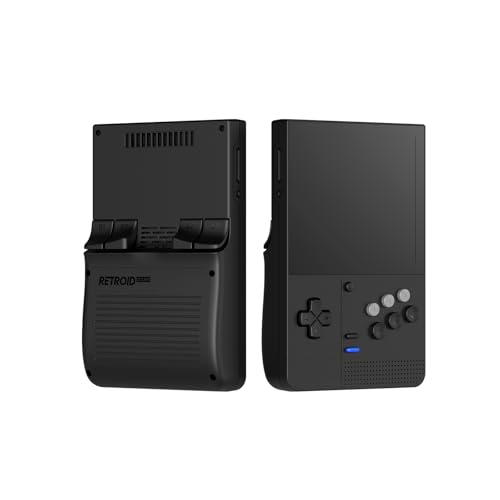
Retroid Pocket Classic 3.92″ OLED Handheld (Classic 6 GS)

Retroid Pocket 5 5.5″ 1080p Handheld (GC)

Retroid Pocket 4 Pro 4.7″ Handheld (D1100, Black)

Anbernic RG 476H 4.7″ IPS Handheld (Indigo)
xiskt 16-Bit Preloaded Handheld 3.2″ (Pink)

Anbernic RG34XXSP Flip 3.4″ Clamshell Handheld
More On The Choices That Made The List
The Retroid Pocket Classic is the smallest OLED handheld in this roundup, and that compact body is its whole pitch. A 3.92-inch AMOLED touchscreen running at 1240×1080 at 60fps means pixel-precise retro work without the wrist strain of a larger slab. Android 14 sits underneath, so anything on Google Play runs alongside the usual emulator suite once sideloaded.
For commuters, the 5000mAh battery generally covers a full work day of casual play. The PKM Yellow finish is a small thing, but for collectors who care about colorways, it stands out on a shelf next to the more sober Android handhelds from earlier generations.
Useful Strengths
- 3.92-inch AMOLED touchscreen brings deep blacks and punchy color to 8-bit and 16-bit ROMs.
- Android 14 opens the door to Google Play apps, cloud streaming, and modern launcher tweaks.
- 5000mAh battery keeps a typical workday of light play uninterrupted.
- 6GB RAM plus 128GB storage leaves headroom for sizable multi-system ROM libraries.
- WiFi 5 covers online syncing, retro-achievements, and storefront downloads without lag.
Worth Noting
- No preload: you bring your own games and emulator setup, which can be a hurdle for first-timers.
- Owners commonly report that the 3.92-inch screen feels tight when emulating 4:3 arcade boards or DS titles.
- Yellow finish may scuff at the corners over months of pocket carry, based on widely reported cosmetic wear.
Who It Suits Best
Commuters and pocket-first players who want OLED contrast without the bulk of a 5.5-inch slab.
Consider Something Else When
The xiskt 16-Bit Preloaded Handheld is a friendlier starting point if you want games preloaded and zero setup.
The Classic 6 GS is essentially a recolored sibling of the PKM Yellow model above, with the same 3.92-inch OLED panel, 6+128GB storage, and 5000mAh cell. The draw here is the finish and the variant labeling, which appeals to handheld collectors who treat these like Game Boy Micro colorways.
Performance is identical to its yellow counterpart, so the real decision is aesthetic. Android 14 and WiFi 5 still cover the modern app side, and the screen still renders 1240×1080 at 60fps for clean pixel art. The trade-off is exactly the same as the PKM version, with no internal upgrade.
Everyday Perks
- Same OLED panel and 60fps output as the PKM Yellow, so picture quality is not a compromise.
- Distinct finish gives collectors a reason to own more than one variant.
- WiFi 5 keeps storefront syncing and online multiplayer compatible with the broader handheld scene.
Trade Offs
- Identical internals to the PKM Yellow mean you are paying for a finish, not a spec bump.
- Still no preload: bring your own ROMs and emulators, which costs setup time.
Made For
Collectors and retro enthusiasts who want a second Retroid Pocket Classic purely for the colorway.
Look Elsewhere When
The Retroid Pocket 5 5.5-inch 1080p Handheld is a smarter move if a bigger, sharper screen matters more than finish variety.
The Retroid Pocket 5 is the muscle car of the lineup, pairing a Snapdragon 865 with an Adreno 650 GPU on a 5.5-inch 1080p touchscreen. That silicon handles Dreamcast, GameCube, and even light PS2 emulation at playable frame rates, which is more than the smaller Retroid Pocket Classic models can promise. Android 13 sits underneath, with full Google Play access.
Connectivity steps up too, with WiFi 6 and Bluetooth 5.1 for cleaner wireless controller pairing and faster downloads. The 8GB RAM plus 128GB storage gives multi-system ROM libraries room to breathe. Owners commonly report the larger body being friendlier for longer sessions than the 3.92-inch options, and the higher resolution makes 3D games considerably cleaner.
Reasons It Performs
- 5.5-inch 1080p touchscreen makes 3D emulators and widescreen hacks read at their intended scale.
- Snapdragon 865 plus Adreno 650 GPU pushes performance past the smaller Retroid Pocket Classic models.
- WiFi 6 and Bluetooth 5.1 keep streaming and wireless controllers responsive.
- 8GB RAM is generous for emulator front-ends, multiple cores running in parallel, and background tasks.
Points To Keep In Mind
- First charge after long storage can take roughly 8 hours to wake the battery protection mode, per the manufacturer note.
- Bigger chassis means pocket carry is less comfortable than the Retroid Pocket Classic 3.92-inch models.
- Still no preload, so the setup tax lands on you.
Key Specs
Right Fit For
Tinkerers chasing Dreamcast, GameCube, and early PS2 emulation who want a screen that does those systems justice.
Skip It When
The Anbernic RG 476H 4.7-inch IPS Handheld is worth a look if you want a 120Hz refresh rate for 2D pixel art at very high frame rates.
The Retroid Pocket 4 Pro sits in the middle of the lineup with a MediaTek Dimensity 1100 octa-core CPU, a G77 MC9 GPU, and 8GB of LPDDR4X RAM. That makes it a confident mid-range option for PSP, Dreamcast, and most Nintendo DS titles, while keeping the body smaller than the Retroid Pocket 5 above.
The 4.7-inch display is a comfortable middle ground between the 3.92-inch OLED handhelds and the 5.5-inch RP5, and the 5000mAh battery keeps sessions reasonably long. The Android platform supports multiple emulators side by side, which is a quiet perk for users who switch between systems often.
Why It Works Well
- Dimensity 1100 with G77 MC9 GPU is plenty for PSP, Dreamcast, and most DS emulation.
- 4.7-inch screen splits the difference between pocketability and visibility.
- 8GB LPDDR4X RAM keeps multi-emulator workflows responsive.
Honest Caveats
- Powerful enough for most 3D systems, but lighter silicon than the Retroid Pocket 5’s Snapdragon 865.
- No preload: setup is on you, like most Android-based picks here.
- 4.7-inch display can feel cramped for 3D games that demand more screen real estate.
Who Will Love This
Mid-range tinkerers who want strong 3D performance without the bigger footprint of the RP5.
Reach For A Different Pick When
The Anbernic RG34XXSP Flip 3.4-inch Clamshell Handheld suits you better if clamshell portability is a higher priority than screen size.
The Anbernic RG 476H is the pick for gamers who care about motion clarity. A 4.7-inch IPS multi-touch panel with OCA full lamination runs at 1280×960 with a 120Hz refresh rate, which makes fast 2D shooters and fighters look noticeably smoother than the standard 60Hz options elsewhere on this list.
A Unisoc T820 processor drives Android 13, with 1080p DP output for TV play. The 5000mAh battery delivers around 8 hours of play and charges to full in roughly 3.5 hours at 5V/2A. The Indigo finish gives it a slightly understated look that fits a desk setup.
The Good Stuff
- 120Hz IPS display with OCA lamination gives sharp pixel art and very smooth scrolling.
- Unisoc T820 keeps Android 13 snappy in front-ends and lighter 3D emulators.
- 1080p DP output lets you push gameplay to a TV without extra adapters.
- 5000mAh battery covers around 8 hours of play for most users.
Some Limits To Know
- Unisoc T820 does not match the Snapdragon 865 in the Retroid Pocket 5 for heavy 3D workloads.
- Indigo finish shows fingerprints on the glossy back, which owners commonly mention.
Best Suited To
Pixel-art purists and 2D fighting-game fans who want high refresh rates in a handheld form factor.
Swap It Out When
The Retroid Pocket 5 5.5-inch 1080p Handheld makes more sense if your library leans on 3D console titles.
This is the most approachable option on the list. The xiskt 16-Bit ships with around 300 preloaded 16-bit-style games across action, puzzle, sports, and arcade genres, with no Wi-Fi, no downloads, and no subscriptions required. A 3.2-inch HD screen with adjustable brightness keeps things readable indoors or on a road trip.
For kids, grandparents, or anyone who just wants a low-fuss retro distraction, the setup-free design is the main draw. It does not pretend to be an emulator powerhouse, and that is the point. Think of it as a stocking-stuffer-grade handheld rather than a tinkerer’s tool.
What Pays Off
- 300 preloaded games mean zero setup, no Wi-Fi, and no subscriptions.
- 3.2-inch HD screen with adjustable brightness adapts to different lighting.
- Pink finish and simple controls make it approachable for younger players.
- Travel-friendly form factor slips into a coat pocket or carry-on easily.
Less Ideal Details
- Closed library: you cannot add your own games or run third-party emulators.
- Game selection skews to 16-bit-style titles, so 3D systems are off the table.
Perfect Match For
Kids, casual players, and gift-givers who want a plug-and-play retro experience with no setup.
A Better Fit Elsewhere
The Retroid Pocket Classic 3.92-inch OLED Handheld fits older kids and adults who can handle sideloading their own ROMs.
The RG34XXSP trades raw power for portability, hiding a 3.4-inch IPS screen behind a clamshell lid that protects the panel in a backpack. A 64GB TF card ships pre-installed with thousands of games, and the Linux-based system keeps the boot time fast and the interface simple. A quad-core ARM Cortex-A53 H700 at up to 1.5GHz and a dual-core Mali-G31MP2 GPU drive the show, with 2GB of LPDDR4 RAM.
The dual-grip layout improves handling during longer sessions, and 5G WiFi plus Bluetooth and HDMI output make it flexible for travel. It is not a 3D emulation beast, but for 8-bit and 16-bit libraries on the go, the clamshell form factor is hard to beat.
Useful Highlights
- Clamshell design protects the 3.4-inch IPS screen from scratches in transit.
- 64GB TF card pre-installed with a large multi-system game library.
- 5G WiFi, Bluetooth, and HDMI output cover modern connectivity needs.
- Linux boot is fast and low-fuss, which suits casual pick-up-and-play sessions.
Where It May Fall Short
- Smaller screen and modest silicon limit heavier 3D emulation compared to the Retroid Pocket 5.
- Hinge longevity depends on care; clamshell designs can develop wobble after heavy use.
Who Should Grab It
Travelers and commuters who want a pocket-safe clamshell with a sizable preloaded game library.
Another Choice May Suit
The xiskt 16-Bit Preloaded Handheld is simpler still for kids who do not need 5G WiFi or HDMI output.
What Matters Most Before Choosing Emulator Handhelds
Screen Size and Resolution
A larger 1080p panel like the Retroid Pocket 5’s is great for 3D systems, but it adds bulk. A 3.4-inch clamshell or 3.92-inch OLED keeps the device pocketable, though 4:3 arcade games can feel cramped. Match the screen to the systems you play most, not the biggest number on the spec sheet.
Operating System and Library
Android-based handhelds like the Retroid Pocket 5 and the Anbernic RG 476H give you Google Play, multiple emulator front-ends, and streaming apps. Linux-based picks such as the Anbernic RG34XXSP boot faster and stay focused on local games. Preloaded options like the xiskt 16-Bit skip the setup entirely, which matters for younger players.
Silicon Power and Emulation Targets
A Snapdragon 865 or Dimensity 1100 opens up GameCube and lighter PS2 work, while a Unisoc T820 or H700 handles 8-bit through PSP cleanly. If your library stops at SNES and Genesis, you can skip the higher tier. Heavy 3D fans should weigh a bigger screen and a faster chipset together, because resolution matters as much as raw power.
Battery, Charging, and Build
A 5000mAh cell is the common floor here, though real-world endurance depends on screen brightness and WiFi use. Clamshell shells protect the panel in bags, while larger slabs feel sturdier in the hand. Touchscreens add a layer to clean, and owners commonly report that pocket lint collects around the analog sticks on smaller picks.
Key Considerations Across These Picks
Where Shoppers Go Wrong
The most common mistake is buying on chipset alone and ignoring the screen. A powerful CPU behind a 3.4-inch panel still produces a cramped image for 3D games. Another trap is assuming preloaded libraries cover what you actually want to play, then finding out the games are 16-bit-style only. Always confirm storage expandability, controller support, and whether the OS supports sideloading before committing.
The Case For Spending Up
Paying more generally buys a sharper display, faster silicon for 3D systems, and extras like HDMI output or 120Hz refresh rates. The Retroid Pocket 5 and the Anbernic RG 476H sit in that upper tier, and for owners chasing Dreamcast, GameCube, and beyond, the extra cost tends to translate into fewer compromises. For SNES-and-below libraries, a budget pick like the xiskt 16-Bit is genuinely enough.
Frequently Asked Questions
Do emulator handhelds come with games preloaded?
Only certain models do, like the xiskt 16-Bit and the Anbernic RG34XXSP. Most Android-based picks, including the Retroid Pocket line, require you to supply your own ROMs and emulator apps.
Can these handhelds connect to a TV?
A few of them support it. The Anbernic RG 476H offers 1080p DP output, and the Anbernic RG34XXSP supports HDMI output, so either can double as a small living-room console with the right cable.
How long does the battery typically last?
A 5000mAh cell is the common floor across this list, which generally delivers several hours of play. Real-world run time depends on screen brightness, WiFi use, and which emulator core is running, so heavier 3D titles drain faster than 8-bit games.
Are emulator handhelds hard to set up?
Preloaded options like the xiskt 16-Bit require almost no setup. Android-based picks need you to install a front-end and load ROMs, which takes time but is well-documented in retro gaming communities. Linux-based models like the RG34XXSP fall somewhere in between.
Is WiFi needed to play games?
No. Most picks on this list run entirely offline once your library is loaded. WiFi is mainly used for storefront syncing, cloud saves, streaming apps, and online multiplayer features.
Closing Remarks
Pick the handheld that matches the systems you actually play, not the one with the loudest spec sheet. For plug-and-play simplicity, the xiskt 16-Bit and the Anbernic RG34XXSP are easy starting points. For deeper emulation work, the Retroid Pocket 5 and the Anbernic RG 476H earn their higher cost with sharper screens and more capable silicon. Whichever route you take, the goal is the same: a comfortable handheld that brings your favorite retro library back to life on your terms.



