


Retro gaming has quietly matured into something genuinely portable, and the current crop of emulation handhelds proves it. Whether you’re reliving arcade nights from the 90s or exploring homebrew scenes on a long flight, modern devices pack enough horsepower to run multiple console generations in your coat pocket. This roundup sorts through eight standouts worth your attention, balancing screen quality, build feel, and raw performance so you can match a handheld to the way you actually play.
The Picks In Brief

Retroid Pocket Classic Retro Handheld Console 6+128GB
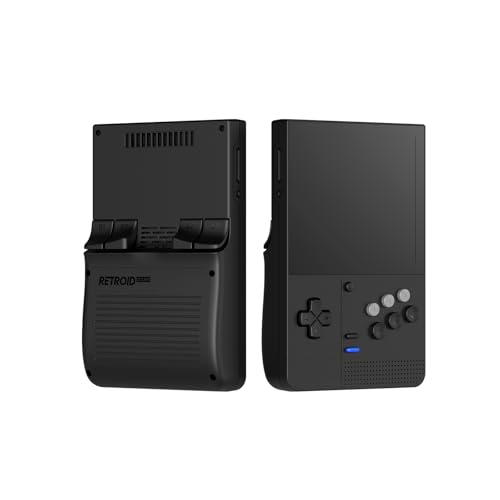
Retroid Pocket Classic 6 GS Handheld Console

RG477M Retro Handheld Console Dimensity 8300

Retroid Pocket 5 Handheld Console 8+128GB

Retroid Pocket 4 Pro Handheld Console

Anbernic RG 476H Retro Handheld Console

RG34XXSP Flip Clamshell Handheld Console

Miyoo Mini Plus Retro Handheld Console
Why These Options Stand Out
The Retroid Pocket Classic lands in that sweet spot where portability meets a screen worth staring at. Its 3.92-inch OLED panel renders deep blacks and punchy color, which makes older 8-bit and 16-bit games look closer to their arcade origins than LCD alternatives can manage. Wi-Fi 5 keeps multiplayer tinkering simple, and the 5000mAh cell should last through a cross-country flight for most classic-era titles.
For casual players who want one device that handles Game Boy, NES, SNES, and PlayStation-era roms without fiddling, this handheld is a sensible daily carry. The Android 14 base means familiar app stores, but most owners will live inside the built-in front-end for game launching.
A Strong Showing
- 3.92-inch OLED touchscreen produces rich contrast and wide viewing angles, ideal for long sessions in varied lighting.
- 6GB RAM paired with 128GB storage leaves breathing room for sizable game libraries without constant SD card juggling.
- 5000mAh battery supports hours of play, which matters for commuters and travelers who charge overnight.
- Android 14 grants access to mainstream app stores for streaming and front-end customization.
Small Caveats
- No preloaded games means you’ll spend an evening curating your library before day-one play.
- The 3.92-inch screen can feel tight for titles originally designed for 4:3 CRT displays.
Who It Suits Best
Daily commuters and casual retro fans who want a pocketable Android handheld with a vivid OLED and enough storage to skip memory management.
Look Elsewhere When
You want a larger 1080p canvas; the Retroid Pocket 5 gives you a bigger 5.5-inch touchscreen and more RAM for the same ecosystem.
The Classic 6 GS variant shares its OLED screen and core spec sheet with the standard Pocket Classic, but targets a slightly different buyer: the hobbyist who treats a handheld as a small Android tablet first. Wi-Fi 5 and Android 14 turn it into a flexible mini-computer that happens to run emulators exceptionally well.
Where the first pick in this list leans casual, this one rewards owners who want to swap front-ends, sideload utilities, or stream from a home server. For tinkerers, the same panel and battery translate into a device that can moonlight as a portable media player between sessions.
Useful Strengths
- Android 14 unlocks mainstream app stores, giving you streaming and productivity options beyond emulation.
- 128GB of internal storage provides enough room for a curated multi-system library out of the box.
- The OLED display holds up well to long play sessions because of low blue-light fatigue relative to LCDs.
Honest Caveats
- Setup involves a learning curve, as owners commonly report spending time configuring the front-end before playing.
- Touchscreen accuracy can feel slightly cramped when navigating file managers.
Made For
Tinkerers and homebrew fans who want Android flexibility alongside a quality OLED panel and a comfortable controller layout.
Swap It Out When
You want a more plug-and-play experience; the Retroid Pocket 4 Pro offers a similar form factor with a less hands-on setup path.
The RG477M is the heavyweight in this roundup, and the moment you hold it, the aluminum CNC chassis telegraphs that intent. The 4.7-inch touch panel is sharp, and the Dimensity 8300 chip inside is a 5G-class mobile processor built on a 4nm process, paired with 8GB of LPDDR5X RAM. That combination means smooth performance well into Dreamcast, PSP, and lighter Nintendo DS territory.
Compared to the plastic-bodied Retroid Pocket 4 Pro, this device trades some pocketability for thermal headroom and premium materials. RGB lighting and a hall-effect joystick add polish, while the 5300mAh cell keeps the lights on through long sessions. For owners who care about feel as much as frame rates, the build quality is the headline here.
Noteworthy Benefits
- Aluminum CNC unibody construction feels notably more rigid than typical plastic shells.
- 8GB of LPDDR5X RAM supports heavier emulators and Android multitasking without slowdowns.
- 128GB UFS 4.0 storage provides faster load times for large game collections.
- Hall-effect joystick resists stick drift, which matters for long-term ownership.
Points To Note
- The metal build adds weight, so extended one-handed sessions can tire smaller hands.
- No preloaded games means setup time before the first play session.
- TF card expansion up to 2TB is supported, though you’ll need to supply your own high-endurance card.
Key Attributes
Right Fit For
Power users chasing the strongest emulation performance in a handheld form, willing to carry a bit more weight for the privilege.
A Better Fit Elsewhere
Casual players should consider the Retroid Pocket Classic; the OLED screen and lighter body are easier for short sessions.
The Retroid Pocket 5 stretches the retro handheld format into something closer to a portable Android tablet. The 5.5-inch 1080p touchscreen is the star, and combined with the Snapdragon 865 chip and Adreno 650 GPU, it handles PlayStation 2-era and Nintendo DS emulation with confidence. Wi-Fi 6 and Bluetooth 5.1 round out modern wireless expectations.
Compared to the more pocket-friendly Pocket Classic, this one asks for a bag rather than a jeans pocket. In return, the larger panel makes 4:3 and 16:9 content far more legible, and the added screen real estate reduces squinting during long sessions. The honest read is that this is the upgrade path for anyone outgrowing the smaller OLEDs.
Points In Its Favor
- 5.5-inch 1080p touchscreen makes text-heavy RPG menus readable without zooming.
- Snapdragon 865 paired with 8GB RAM handles heavier Android apps and emulators.
- Wi-Fi 6 offers faster downloads and lower-latency streaming than older Wi-Fi standards.
Some Limits To Know
- The larger body can feel bulky during commutes, especially one-handed play.
- No preloaded games means you’ll need to source your own roms before launch.
- Battery protection mode may require an extended initial charge if the device sits unused for weeks.
Best Suited To
Enthusiasts who want a sharper 1080p panel and extra horsepower for trickier emulators, and who carry a small bag for daily transport.
Not Your Match When
You want something more pocketable; the Retroid Pocket 4 Pro is the more comfortable everyday carry.
The Retroid Pocket 4 Pro has earned its reputation as a workhorse, and the spec sheet explains why. A MediaTek Dimensity 1100 octa-core chip with 8GB of LPDDR4X RAM gives it the headroom for PlayStation 1, Nintendo 64, and lighter PSP workloads without breaking a sweat. The 4.7-inch display sits in the middle ground between compact and tablet-style handhelds.
For shoppers who want a known quantity rather than a new release, the 4 Pro is a sensible middle ground. It lacks the OLED punch of the Pocket Classic, but it counters with stronger emulation muscle and a mature accessory ecosystem. Owners commonly report reliable performance after months of daily use.
Well-Handled Touches
- Dimensity 1100 with 8GB RAM is proven across thousands of community setup guides.
- 4.7-inch display strikes a balance between portability and readable text.
- 5000mAh battery delivers consistent multi-hour play sessions.
- Established community support means troubleshooting is rarely a dead end.
Trade-Offs To Consider
- The IPS panel, while sharp, lacks the deep blacks of OLED alternatives.
- No preloaded games means you handle your own library curation.
Feature Snapshot
Who Will Love This
Multi-system emulation fans who value proven performance and a large community of setup guides over cutting-edge screen tech.
Consider Something Else When
You want OLED contrast; the Retroid Pocket Classic offers that panel at a more compact size.
The Anbernic RG 476H leans into display quality, and the numbers do the talking. A 4.7-inch IPS panel with OCA full lamination, 1280×960 resolution, and a 120Hz refresh rate make this one of the smoothest screens in the roundup. The Unisoc T820 chip and Android 13 base handle mainstream emulation duties reliably, and 1080p DisplayPort output turns it into a living-room console when docked to a TV.
Compared to the 60Hz panels on most rivals, that high refresh rate makes scrolling menus and certain 3D titles feel noticeably smoother. For households that want a single device to handle handheld and TV play, the DP output is the secret weapon. Charging at 5V/2A tops the 5000mAh cell in around 3.5 hours, depending on your charger.
What Helps Most
- 120Hz IPS display makes fast-paced games and menu navigation feel fluid.
- 1080p DisplayPort output transforms the device into a living-room console with the right cable.
- 5000mAh battery supports over 8 hours of play in many classic-era titles.
- OCA full lamination improves touch response and reduces glare compared to air-gapped panels.
Less-Strong Areas
- Higher refresh rate can draw more battery in demanding titles, depending on the emulator.
- DisplayPort cable is typically sold separately, so plan for that additional purchase.
Quick Facts
Perfect Match For
Shoppers who split time between handheld and TV play, and who appreciate a high-refresh screen for menu polish and motion-heavy games.
Reach For A Different Pick When
You want OLED contrast; the Retroid Pocket Classic delivers deeper blacks in a more pocketable body.
The RG34XXSP flips the script, literally, with a clamshell design that protects the screen during pocket carry. Inside, an H700 quad-core ARM Cortex-A53 processor paired with 2GB of LPDDR4 RAM runs a Linux-based system that focuses on 8-bit and 16-bit era titles, with expandability for select 32-bit systems. A 64GB TF card arrives pre-installed with a large starter game collection.
For travelers worried about scratched screens in a backpack, the clamshell form factor is genuinely useful. Compared to the larger Anbernic RG 476H, this one trades raw performance for portability and a closed shell. HDMI output is supported, so you can still enjoy selected titles on a big screen when you have the right cable.
Strengths Worth Knowing
- Clamshell design protects the 3.4-inch IPS screen during pocket transport.
- Pre-installed 64GB TF card gets you into games quickly with a large starter library.
- Linux-based system is lightweight and tends to boot quickly into the front-end.
- HDMI output enables big-screen play for compatible titles.
Trade-Offs To Consider
- The 3.4-inch screen is the smallest in this roundup, which can feel cramped for 16-bit RPGs.
- 2GB of RAM limits performance for some PSP and Dreamcast titles, depending on optimization.
Who Should Grab It
Travelers and commuters who want a pocketable clamshell with preloaded games and quick boot times for short sessions.
Where Another Pick Suits Better
You want a larger screen for RPG menus; the Retroid Pocket 5 gives you 5.5 inches of 1080p real estate.
The Miyoo Mini Plus leans into the gift-friendly end of the market, arriving with a protective portable case and a Linux-based system tuned for retro play. The 3.5-inch IPS screen, Wi-Fi connectivity, and RTC (real-time clock) for save-state timestamps cover the basics that most newcomers actually use. Stereo output rounds out the experience for headphone-friendly sessions.
Where the Retroid Pocket Classic targets Android tinkerers, this device stays closer to a curated, almost appliance-like experience. That simplicity is a feature for first-timers who don’t want to wrestle with custom firmware on day one. Owners commonly note the included case as a nice touch for tossing the unit into a bag without scratches.
Good Reasons To Consider
- Included portable case protects the screen and shell during transport and storage.
- Curated Linux firmware is approachable for users new to emulation handhelds.
- Wi-Fi and RTC support simplify save tracking and online front-end updates.
- Compact 3.5-inch IPS display keeps the unit pocket-friendly.
A Few Limitations
- Linux firmware is less flexible than Android for app installs and streaming services.
- Game library curation is largely up to the owner, so plan on initial setup time.
At A Glance
Built With In Mind
First-time retro players and gift shoppers who value a curated experience, protective case, and a gentle learning curve.
Where A Sibling Pick Shines
You want Android flexibility; the Retroid Pocket Classic brings the Play Store and broader app support to the same price tier.
What To Weigh Before Picking An Emulation Handheld
Screen technology sits at the top of the list because retro games are visually distinctive. OLED panels produce deep blacks and saturated colors that flatter pixel art, while high-refresh IPS displays reduce motion blur during fast-paced platformers and 3D titles. A 3.4-inch screen is great for travel, but text-heavy RPGs can feel cramped; a 5.5-inch panel makes menus readable without zooming.
Processor and RAM determine which console generations run smoothly. Emulators translate the original hardware instructions in real time, so heavier systems like Nintendo DS, PSP, and PlayStation 2 demand more recent chipsets and at least 4GB of RAM. Lightweight 8-bit and 16-bit systems run well on almost any modern handheld, so your target library matters more than raw benchmarks.
Form factor influences daily use more than people expect. A clamshell design protects the screen during pocket carry, while a flat slab offers a larger viewable area at the cost of vulnerability. Controller layout, button spacing, and joystick type (including hall-effect sensors that resist drift) shape long-session comfort, especially for fighting games and platformers.
Battery life and charging speed deserve attention for travel. Most devices in this roundup use 5000mAh cells that last several hours, but high-refresh displays and flagship chips can drain faster during demanding titles. Fast charging at 5V/2A or higher reduces downtime between sessions, which matters on long-haul flights or extended commutes.
Key Considerations Across These Picks
Mistakes Worth Dodging
The most common misstep is buying on raw benchmark numbers alone. A flagship chip means little if the screen is too small for your favorite genre, or if the controller layout strains your hands after an hour. Many newcomers also overlook software setup time; some devices arrive with no preloaded games, meaning an evening of curation before the first play session.
Another trap is ignoring the long-term accessory and firmware ecosystem. Established handhelds benefit from larger community guides, replacement parts, and ongoing firmware updates. Brand-new models may ship with rough edges that take months to polish, so balancing novelty against track record helps you avoid early-adopter headaches.
Where The Extra Money Goes
Higher-tier models typically invest in three areas: a faster processor, a better display, and a more durable chassis. The Dimensity 8300 in the RG477M and the Snapdragon 865 in the Retroid Pocket 5 unlock heavier console emulation, while 120Hz IPS and OLED panels transform how pixel art and 3D titles look. Aluminum CNC bodies and hall-effect joysticks add longevity that budget plastic shells can’t match.
The upgrade pays off most for enthusiasts running PlayStation 2, GameCube, or Nintendo DS libraries, and for anyone who games daily enough to notice stick drift or screen burn-in. Casual players who mainly enjoy 8-bit and 16-bit titles can find excellent experiences lower in the price ladder without missing critical features.
Frequently Asked Questions
Are emulation handhelds legal to own?
The handhelds themselves are legal to purchase in most regions, as they are simply specialized computing devices. The legality depends entirely on how you source the game files, with your own purchased cartridges and officially licensed digital stores being widely accepted paths.
Can these handhelds run PlayStation 2 or GameCube games?
Higher-end picks like the Retroid Pocket 5 and RG477M are designed to handle PS2 and lighter GameCube titles, though performance varies by game. Budget and mid-tier devices tend to struggle with these consoles, so match the chip to the era you care about most.
Do any of these come with games pre-installed?
The RG34XXSP includes a 64GB TF card with a large starter library, while the Miyoo Mini Plus ships with firmware ready for game loading. Most Android-based options, including the Retroid Pocket line and the RG477M, arrive without preloaded games.
How important is screen type for retro gaming?
Screen type matters more than resolution for retro play because pixel art benefits from strong contrast and accurate color. OLED panels flatter 8-bit and 16-bit games, while high-refresh IPS displays improve 3D-era titles with smoother motion.
What is hall-effect joystick technology?
A hall-effect joystick uses magnetic sensors instead of physical contact points, which means no internal components rub together during use. This design resists the stick drift that plagues traditional potentiometer-based sticks after months of heavy play.
Wrap Up
The right emulation handheld depends on the screens you play on, the games you love, and the bag you carry. For OLED charm in a compact shell, the Retroid Pocket Classic is hard to beat. For raw performance and premium materials, the RG477M earns its flagship status. And for newcomers who want a gentle, gift-ready entry point, the Miyoo Mini Plus keeps things simple without skimping on the essentials. Match the device to your habits, and the rest tends to fall into place.



