


Running out of controller juice mid-match kills momentum. Rechargeable batteries and a tidy dock fix that problem, but the wrong station can be a headache to live with, and a good one keeps you gaming through long sessions with zero fuss. This list covers ten dual charging stations for Xbox, each with a different angle on the same job.
The Choices Worth Comparing

DINOSTRIKE Upgraded Xbox One Controller Battery Pack Charger (4 Pack)

DINOSTRIKE Xbox Series X|S Battery Pack & Charger Station (4 Pack)

DINOSTRIKE 2x5520mWh Xbox Charger Station with 4 Covers

Fosmon Fast Charging for Xbox Controller Charger Station Dock, Black

PowerA Solo Charging Stand for Xbox Series X|S – White

RJAD Xbox Controller Charger Station with 2x4800mWh Batteries

NinABXY Upgraded 2x6200mWh Xbox Controller Charger Station
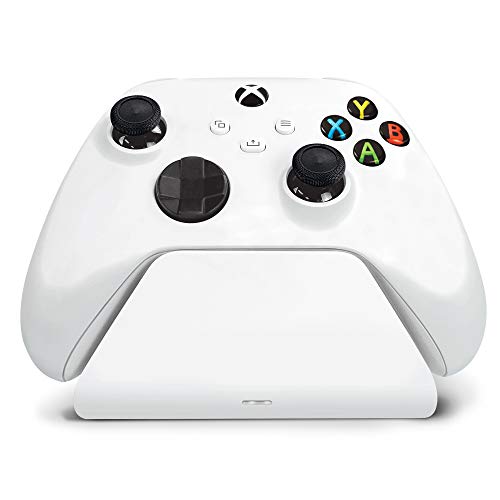
Controller Gear Robot White Xbox Pro Charging Stand

OIVO Xbox Controller Charger Station with 2x5520mWh Batteries (White)

Vanpark Charging Station Dock for Xbox Elite Wireless Controller Series 2 (Black)
What Each Pick Brings To The Table
Four charging bays are unusual at this tier, and that changes how the station lives on a shelf. You can rotate two packs through gameplay and keep two more sipping power, which is the rhythm that households with siblings or weekend guests tend to settle into. The dock ships with four 4080mWh Ni-MH cells, a USB-C cable, and per-slot LED indicators that shift between red and green as each bay fills.
Compared to the Fosmon entry further down, this unit trades single-pad simplicity for raw capacity per slot. In a busy living room, that extra headroom tends to matter more than slim dimensions.
Advantages To Know
- Four independent bays eliminate the “who’s charging first” bottleneck in shared setups
- Per-slot LEDs give you an honest read on which packs are ready to swap, no guessing
- 2.5 to 3 hour full-charge cycle means a fast turnaround between long sessions
- Broad controller compatibility covers One, One S, One X, One Elite, and Series X|S
Honest Caveats
- Ni-MH cells deliver shorter per-charge runtime than Li-ion alternatives in this category
- The dock has a noticeable footprint, so small entertainment centers may feel crowded
Key Attributes
Who It Suits Best
Gaming households juggling two or more controllers, parents tired of hunting for AAs, and split-screen fans who can’t afford a dead pad in round three.
A Better Fit Elsewhere
Solo players who only own one controller and care about a smaller shelf footprint will get more value from the PowerA Solo Charging Stand, which uses an officially licensed single-slot design.
Input flexibility is the headline here, and it’s a quieter win than raw capacity. The 9.4-inch built-in USB cable handles everyday charging, while the onboard Type-C port turns the station into a hybrid that works with the cable you already carry for your phone. Four 2550mAh cells push roughly 20 to 25 hours of playtime each, which is a noticeable bump over the Ni-MH packs in the previous entry.
Think of this as the travel-friendly cousin of Pick 1, trading the four-slot simultaneous layout for slightly better cells and a tidier cable situation on a hotel TV stand.
Noteworthy Benefits
- 20 to 25 hour per-cell runtime supports multi-day use before another swap
- Dual USB-A and USB-C inputs remove the hunt for the “right” cable at the back of the console
- Works across One, One S, One X, One Elite, and Series X|S controllers
Trade-Offs To Consider
- Only two physical charging slots, so you cycle cells instead of parking entire controllers
- Per-cell capacity sits below some single-bay competitors at similar tiers
- Built-in cable is convenient but not user-replaceable, which may worry long-term owners
Made For
Travelers and couch co-op regulars who want a flexible input setup and don’t mind rotating cells through the dock in sequence.
Skip It When
You’d rather charge whole controllers on a single drop-in stand, in which case the Fosmon Fast Charging dock offers a cleaner two-slot dock-style workflow.
High-capacity paired cells are the pitch, and the dock actually backs that up. Two 5520mWh batteries slot into a slim two-bay cradle, and the package adds four battery covers so you can swap door plates between older Xbox One shells and the newer Series X|S frame. For a household already committed to two controllers, this tends to land as the lowest-friction option on the list.
Versus the RJAD pick below, this DINOSTRIKE station leans slightly higher on cell capacity, though both share the same four-cover approach.
Practical Pluses
- 5520mWh per cell keeps average playtime well beyond a typical weekend binge
- Two battery covers each for One and Series X|S covers mixed-console homes
- Drop-in cradle design means no fiddling with cables once it’s set up
Points To Keep In Mind
- Controllers are not included, so the dock is purely a battery-and-cradle upgrade
- Two slots only, limiting households running three or more pads simultaneously
- Cover fit can vary slightly between third-party and first-party shells, depending on tolerance
Spec Overview
Best Suited To
Two-controller households wanting higher per-cell capacity without committing to a four-pack that may gather dust.
Not Your Match When
You rotate three or more controllers nightly, in which case the DINOSTRIKE four-bay station at the top of the list scales better.
Two controller-shaped bays and matching 5280mWh cells are the selling point. You drop the whole pad in rather than fishing out a battery, which is the workflow most people actually want after a long session. The “fast” framing in the name refers to the dual-pad simultaneous current draw rather than a separate quick-charge protocol.
Where the four-pack DINOSTRIKE stations focus on cells, Fosmon leans into pad-as-dock ergonomics, and that distinction matters more in real living rooms than spec sheets suggest.
Where It Delivers
- Dual controller slots let you park two pads and walk away, no manual swaps
- 5280mWh cells per slot offer strong per-charge playtime for two-controller owners
- Compatible with the latest Series X|S pads and prior Xbox One generations
Honest Caveats
- Only two slots, so four-controller households still need a backup plan
- The black plastic finish shows dust in bright rooms, depending on your setup
Feature Card
Who Will Love This
Competitive two-pad players who want a true dock-and-go feel instead of swapping cells in and out.
Look Elsewhere When
You’re chasing maximum cell capacity and prefer cycling batteries, where the NinABXY 6200mWh pack gives you more headroom per cell.
Officially licensed status separates PowerA from the pack, and that’s not marketing fluff. The stand pairs with the console’s design language, ships with a 1100mAh rechargeable battery plus two battery doors, and includes a 3.3-foot USB charging cable. Single-bay operation is the explicit design choice, and the trade-off shows up in the desk footprint, which is the smallest on this list.
Compared to the Fosmon dock above, this is the minimalist, single-pad alternative that prioritizes visual fit with a Series X|S shelf.
Notable Upsides
- Officially licensed for Xbox Series X|S, ensuring clean fit and finish with the console
- Compact upright stand works in tight entertainment centers
- Two battery doors accommodate both standard Xbox Wireless and One-style controllers
Trade-Offs To Consider
- One slot only, so it’s a poor match for households with multiple controllers
- 1100mAh cell capacity is modest compared to the 5000+ mWh picks in this roundup
- White finish can pick up scuffs on a high-traffic shelf over time
The Right Fit
Single-controller gamers who want their charge stand to look like it belongs next to the console, rather than disappear into a drawer.
Swap It Out When
You regularly run two pads at once, in which case the OIVO 2x5520mWh station below scales up without adding visible clutter.
The pitch here is flexibility across controller generations. Two 1800mAh cells, four battery covers, a USB-C cable, and a slim two-bay cradle form the package. The 4800mWh per-cell figure sits in the middle of the pack, which is exactly why RJAD shows up as the “all-rounder” rather than a capacity leader.
Where DINOSTRIKE’s four-pack targets shared-screen households, RJAD is built for the single-player who occasionally hands off a pad.
A Favorable Mix
- Four battery covers split evenly between One and Series X|S pads
- USB-C cable input keeps the setup aligned with modern console cabling
- Ni-MH cell chemistry is widely supported and easy to replace if a pack degrades
Things To Weigh Up
- Capacity per cell trails the 5520mWh and 6200mWh picks on this list
- Two-slot dock caps you at charging two pads at once
Key Product Details
Whose Shelf It Belongs On
Anyone running a mix of Xbox One and Series X|S controllers who wants one tidy station instead of a drawer of mismatched cables.
Another Choice May Suit
Power users chasing the longest per-charge runtime should look at the NinABXY 6200mWh station, which raises cell capacity meaningfully.
Top of the capacity charts for two-cell stations, and that matters most in marathon single-player games where the controller can stay parked for a full day. The 6200mWh cells translate to roughly 18 to 25 hours of playtime, depending on rumble and headset draw, with a 4 to 5 hour recharge window. Two slots keep the dock footprint compact despite the larger cells.
Next to the Fosmon 5280mWh pack above, this is the option you reach for when one extra hour of runtime per swap actually changes your evening.
Good Reasons To Consider
- 6200mWh per cell is the highest paired capacity in this roundup
- Solid 18 to 25 hour runtime under typical play conditions
- Compact two-slot dock keeps the shelf uncluttered
Trade-Offs To Consider
- Higher capacity cells tend to add a small amount of weight inside the controller
- Controllers are not included, so the upgrade assumes you already own pads
Perfect Match For
Single-player enthusiasts and streamers who run one pad for hours and hate the “low battery” pop-up in the middle of a boss fight.
Consider Something Else When
You want a true drop-in dock for two full controllers at once, in which case the Fosmon two-slot pad dock fits that workflow better.
Collector-grade styling is the headline, and Controller Gear leans into the themed-design lane. The Robot White finish matches the matching limited-edition controller, and the stand itself includes a 1200mAh rechargeable cell, overcharge protection, and a sub-3-hour charge cycle. Display, not raw capacity, is the reason this lives on the list.
Against the PowerA Solo stand, this is the option for shoppers who care more about shelf aesthetics than minimum cell capacity.
Key Advantages
- Themed white finish pairs with matching limited-edition controllers
- Overcharge protection safeguards the cell during long idle stretches
- Under 3 hour charge cycle keeps the dock quick to recover
Points To Note
- 1200mAh cell is the lowest capacity in this roundup, so swap frequency rises
- Single-bay design again rules out multi-controller households
Built With In Mind
Collectors and themed-setup owners who want the charge station to feel like part of the display, not a generic black slab.
Reach For A Different Pick When
Capacity and dual-controller workflow matter more than aesthetics, in which case the Fosmon two-slot pad dock earns its keep.
Plug-and-play is the right frame for OIVO, and the spec sheet backs that up. Two 5520mWh cells, four battery covers split between One and Series X|S, and a clean white housing that fits modern shelf setups. New Xbox owners tend to land here because the package answers every obvious question without overcommitting on capacity or footprint.
Compared to the DINOSTRIKE 2x5520mWh pick earlier, OIVO trades brand familiarity for a similar capacity profile and a slightly lower entry barrier.
The Practical Payoff
- 5520mWh per cell matches the higher-end two-controller stations
- Four battery covers cover both console generations out of the box
- White housing reads clean against most console colorways
Practical Considerations
- Two slots only, so you can’t charge both pads and both spare cells at the same time
- White finish may yellow slightly in rooms with heavy sunlight exposure over time
Who Should Grab It
New Xbox owners who want a complete starter kit without spending time researching cell chemistries and cable specs.
Where A Sibling Pick Shines
Heavy multi-controller households will find the four-bay DINOSTRIKE station at the top of the list more practical, even if the per-cell capacity is lower.
Elite Series 2 owners know the controller charges through copper contact pins rather than a USB-C port, and most docks on this list won’t work for it. Vanpark solves that exact problem with a pin-based cradle, overcharge protection, and a charging cable that completes the kit. Model 1797 compatibility is the explicit frame, covering both the standard Elite Series 2 and the Series 2 Core.
Against every other entry above, this is a single-purpose dock for a specific controller, which is why it lands at the bottom as a specialty pick rather than a generalist recommendation.
Bright Spots
- Pin contact design is the correct fit for Elite Series 2 and Series 2 Core
- Overcharge protection helps preserve the internal battery over time
- Eliminates disposable AA dependence for an already premium controller
Less-Strong Areas
- Not compatible with standard Xbox Wireless controllers, so it’s a one-controller solution
- Single bay only, which is fine for the Elite’s internal cell but offers no spare-pack rotation
The Right Fit
Anyone who already owns an Xbox Elite Wireless Controller Series 2 or Series 2 Core and wants a proper dock instead of the charging cable bundle.
Look Elsewhere When
Your household runs standard Xbox Wireless controllers, in which case the OIVO or DINOSTRIKE two-bay stations cover far more ground.
What To Look For In An Xbox Charging Station
Compatibility is the first filter, and it cuts the list in half. Series X|S, Xbox One, One S, One X, and Elite pads all share the same AA-style battery compartment, which is why most stations on this list work across generations, with the Vanpark entry as the deliberate exception for Elite Series 2 pin charging. Matching your controller type to the dock’s contact style avoids the most common return-trip mistake.
Cell chemistry is the next real decision. Ni-MH packs (like the four-bay DINOSTRIKE at the top) cost less upfront and are easy to replace, while higher-capacity Li-ion cells (Fosmon, NinABXY) push longer per-charge runtime. Ni-MH chemistry means a nickel-metal-hydride rechargeable cell, a common battery type that trades a bit of capacity for affordability and easy sourcing.
Capacity matters in real hours, not in marketing claims. A 5520mWh cell will generally outlast an 1100mAh pack by a wide margin, but actual runtime depends on rumble intensity, headset draw, and trigger-lock usage. For most players, anything above 4000mWh per cell is enough to forget about charging between weekend sessions.
Slot count and footprint trade off directly. A four-bay cradle keeps everyone topped up but eats shelf space, while a single-bay stand disappears into the background. Two-bay designs sit comfortably in the middle and tend to fit the average two-controller household without compromise.
Things Worth Knowing Before You Buy
Pitfalls Shoppers Hit
Assuming every dock charges every controller is the most common slip, and the Elite Series 2 is the usual victim. Standard AA-style docks won’t make contact with that controller’s internal cell, so pin-based stations like the Vanpark pick exist for a reason. Check the compatibility list before you commit.
Buying on cell capacity alone can backfire when the dock only charges one slot at a time. A 6200mWh cell is great, but a two-slot cradle with two spares beats a one-slot cradle with a single large cell if your household actually rotates pads. Match the station to your rotation, not just to the spec sheet.
Where The Extra Money Goes
Premium tiers tend to buy better fit and finish, official licensing, and overcharge protection circuits. The PowerA Solo stand and Controller Gear Robot White show what that looks like in practice: cleaner plastic, tighter tolerances, and a dock that visually matches the console it’s paired with. Capacity does not move much between premium and budget tiers, but the charging experience feels meaningfully different.
Higher-tier models also tend to bundle better accessories, like multiple battery covers, longer cables, or more refined LED indicators. For casual players, those extras are nice-to-have. For collectors and display-focused setups, they’re often the reason to spend up.
Frequently Asked Questions
Do these charging stations work with both Xbox Series X|S and Xbox One controllers?
Most stations on this list support both generations because the controllers share the same AA-style battery compartment. The Vanpark dock is the exception, since it’s built specifically for the Elite Series 2’s pin-based charging.
How long does it take to fully charge a rechargeable Xbox battery pack?
Charge times vary by capacity and station, but most packs on this list reach full charge in 2.5 to 5 hours. The four-bay DINOSTRIKE station is on the faster end at roughly 2.5 to 3 hours, while the 6200mWh NinABXY cells trade a longer 4 to 5 hour cycle for more runtime per charge.
Can I leave my controller on the dock overnight?
Yes. Stations with overcharge protection, including the PowerA Solo and Controller Gear stands, automatically stop sending current once the cell is full. Without that feature, you should unplug once the LED indicator turns green to extend cell life.
Are the included battery covers universal across Xbox models?
No, and that’s why most kits ship two sets. Series X|S and older Xbox One controllers use different door shapes, so a single cover won’t fit both. Pick a station that includes at least one cover for each controller generation in your home.
Will using rechargeable packs void my controller warranty?
Generally no, since the controllers are designed to accept standard AA cells. Using third-party rechargeable packs is widely accepted, though any damage caused by a faulty third-party cell typically wouldn’t be covered under the controller manufacturer’s warranty.
Closing Remarks
The right dual charging station comes down to how many controllers you actually rotate, how much shelf space you can spare, and whether you want cells or full pads parked in the dock. Most two-controller households will be happy with any entry from the middle of this list, while collectors and Elite Series 2 owners have a clear specialty pick waiting at the end. Pick the profile that matches your setup, and the rest is mostly aesthetic.



