


Putting together a proper driving rig takes more than a console and a screen. You need a wheel that feels right, a frame that stays planted when you brake hard, and enough storage for the games that actually interest you. Casual arcade racers, serious sim leagues, and weekend tinkerers all want something different from the gear sitting between them and the track.
This roundup covers the practical add-ons, wheels, cockpits, and storage pieces that round out a driving setup. Each pick targets a different budget, room size, and level of commitment, so you can build around your space rather than the other way around.
An Overview Of The Picks
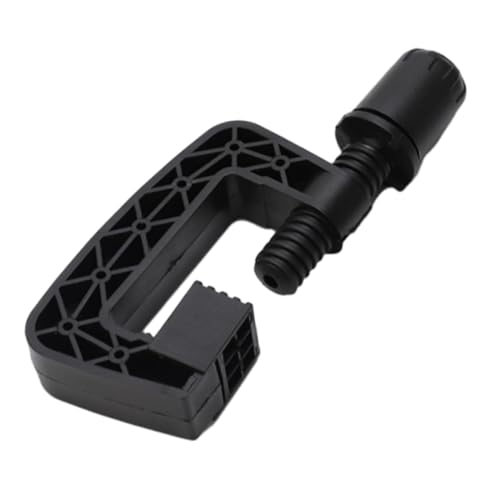
ATORSE Steering Wheel Clip Clamp for G25 G27 G29 G920 G923

LIGTEX CV500-BSC51 Basic Unit CV Series Programmable Controller

Trak Racer RS6 Racing Simulator Cockpit Sim Rig

yulewiix Foldable Racing Simulator Cockpit with Steering Wheel

Seagate Shuri SE FireCuda External HDD USB 3.2

Microsoft Xbox 360 Wireless Controller for Windows

aqxreight PC Steering Wheel 180 Degree with Pedals

GOWENIC USB Racing Game Steering Wheel for Controller
Why These Options Stand Out
Anyone who runs a Logitech G-series wheel knows the small plastic clamp that secures the unit to a desk or rig is the first part to crack under hard braking. The ATORSE clip is a direct replacement for that piece, designed to fit the G25, G27, G29, G920, and G923 without modification. It clips in place the same way the original part does, so there is no rewiring, no drilling, and no time spent reverse-engineering how the wheel came apart.
For a sub-component like this, fitment matters far more than flash. The PP plastic body is rigid enough to handle repeated force feedback loads, and the molded shape matches the Logitech spec closely enough that owners commonly report a snug seat. If your wheel has started to wobble at the desk clamp, this is the kind of low-cost part that brings the whole rig back into line.
The Good Stuff
- Direct-fit replacement for the OEM Logitech clamp across five popular wheel models
- PP plastic construction handles daily force feedback without flexing
- Tool-free install means you stay racing instead of disassembling hardware
- Single-piece package keeps the repair cheap and the swap simple
Small Caveats
- Only works with the listed Logitech wheels, so verify your model before ordering
- Plastic body will eventually wear with very heavy braking, just like the original
Whose Shelf It Belongs On
Logitech G-series owners with a cracked or loose desk clamp who want a fast, no-fuss fix.
Where Another Pick Suits Better
Sim racers building a permanent setup should skip this clamp and step up to the Trak Racer RS6 cockpit instead.
The LIGTEX CV500-BSC51 sits far outside the consumer wheel-and-pedal lane. It is a programmable logic controller (PLC) module from the CV series, the kind of compact industrial brain used to run machinery, conveyor belts, and process equipment. A PLC takes input signals from sensors and switches, runs them through a user-programmed logic routine, and sends commands back out to motors, lights, and valves.
For driving game setup, this only matters if you are building something custom, like a motion platform, a button box with hardwired inputs, or a force-feedback rig that talks to a real automation bus. If that description matches your project, the BSC51 is the base unit that anchors the rest of the CV-series stack. Everyone else should treat this as a niche curiosity, useful for the right tinkerer and irrelevant for most.
Key Advantages
- Base unit for Omron CV-series expansion modules, a long-running industrial platform
- Compact form factor suits control cabinets with limited panel space
- Programmable logic gives a custom rig precise input and output handling
Worth Noting
- Requires PLC programming knowledge and CV-series expansion hardware to do anything useful
- No consumer driver support, so it cannot plug into a console like a normal wheel
Made For
Engineers and advanced hobbyists wiring a custom motion rig, button box, or industrial-style control setup.
Not Your Match When
Most home racers will be better served by the aqxreight steering wheel, which actually connects to a game.
The Trak Racer RS6 is the cockpit to consider when a desk clamp no longer cuts it. Trak Racer has been building sim rigs since 2008, and the RS6 reflects that experience: a full-size steel frame with an open-leg design that makes ingress easier, integrated cable routing to keep the wiring tidy, and rubber floor protectors that stop the whole rig from sliding on hardwood or tile. It works with both PC and console wheels, so swapping platforms is mostly a matter of cables.
For racers who run long sessions, a dedicated cockpit changes how the equipment behaves. The wheel stays where you put it, the pedals sit at a consistent distance, and your shoulders stop bracing against a desk. You trade living-room space for stability, and for serious sim players that trade usually makes sense.
Benefits That Matter
- Full-size steel frame handles direct-drive wheels without flex
- Open-leg layout suits taller drivers who need extra knee clearance
- Built-in cable management keeps power and signal runs out of the way
- Rubber floor protectors prevent slide on smooth surfaces
Practical Considerations
- Large footprint, so it needs a dedicated corner of the room
- Heavier and more involved to assemble than the foldable option below
Key Specs
Best Suited To
Sim enthusiasts who train on titles like iRacing or Assetto Corsa and want a frame that stays still under hard inputs.
A Better Fit Elsewhere
Renters and apartment dwellers should look at the yulewiix foldable cockpit for the same experience in a smaller footprint.
The yulewiix foldable cockpit is built for people who want a real seat and wheel mount without dedicating an entire room to it. The frame folds up after a session, so the rig leans against a wall or slides behind a couch instead of sitting out as permanent furniture. Adjustable pedal spacing, gearshift position on either side, seat angle, and wheel tilt let you dial in a fit that feels personal rather than generic.
It is the most flexible cockpit in this roundup, the kind of unit that fits a one-bedroom apartment and a small den with equal ease. You give up some of the absolute rigidity of a fixed steel rig like the Trak Racer RS6, but you keep a more livable floor plan.
Positive Points
- Folds flat for storage, which matters when the rig lives in a shared space
- Adjustable pedal and seat positions accommodate different body sizes
- Left or right gearshifter placement suits a wide range of game titles
Honest Caveats
- Foldable frames flex more under direct-drive wheels than fixed rigs do
- Wheel mount hardware may need occasional re-tightening after repeated folding
Perfect Match For
Sim players in small apartments or shared homes who need a real cockpit that disappears between sessions.
Skip It When
Hardcore sim racers running heavy direct-drive bases should step up to the Trak Racer RS6 for a stiffer platform.
Modern racing games can easily top 80 or 100 GB each, and a console internal drive fills up fast once you install a few sims. The Seagate Shuri SE FireCuda is a USB 3.2 external hard drive styled with a Marvel’s Black Panther theme, complete with cyan LED lighting. It works across PC, Mac, PlayStation, and Xbox, so the same drive can rotate between platforms when you do.
An HDD (hard disk drive) reads and writes data using a spinning platter, which makes it slower than a modern SSD but far cheaper per terabyte. For storing a library of older racing titles, install archives, and screenshots, that trade-off still makes sense. The FireCuda brand also includes a year of Seagate Rescue data recovery, which is a soft comfort if the drive ever takes a hard fall.
A Strong Showing
- Cross-platform support covers PC, Mac, PlayStation, and Xbox from one device
- USB 3.2 keeps transfer speeds reasonable for a spinning-platter drive
- Customizable RGB lighting adds a bit of desk personality
- Includes one year of Seagate Rescue data recovery services
Points To Note
- Spinning-platter speeds lag behind external SSDs, especially for current-gen titles
- Mechanical drive construction is more vulnerable to drops than solid-state alternatives
Feature Snapshot
Who Should Grab It
Console racers juggling large install sizes who want extra room without cracking open their system.
Look Elsewhere When
Sim players chasing the fastest load times should pair their setup with an SSD instead of a platter drive.
Two decades after launch, the Xbox 360 controller is still one of the most comfortable wireless gamepads ever made, and the Windows version pairs that design with a dedicated wireless receiver for PC. It runs on 2.4 GHz wireless, with a working range of around 30 feet from the receiver, and it includes a headset jack for PC chat headsets.
It is not the right tool for serious sim racing, since analog sticks and triggers cannot match the precision of a wheel. For arcade-style racers, party titles played on the couch, or older PC sims that still support the gamepad, it remains a comfortable fallback. The trigger resistance, grip shape, and weight balance still hold up, which is why so many of these controllers are still in active rotation.
Where It Delivers
- Iconic ergonomic shape works well for long couch sessions
- Wireless 2.4 GHz connection with around 30 feet of range
- Integrated headset jack supports PC chat headsets out of the box
- Bundled wireless receiver means no extra accessory purchase
Less Ideal Details
- No native Bluetooth, so it depends on the included USB receiver
- Trigger and stick precision cannot compete with a proper racing wheel
Right Fit For
Casual racers and retro PC players who prefer a familiar gamepad for arcade-style driving games.
Consider Something Else When
Racers who want real steering feedback should choose the aqxreight or GOWENIC wheel options instead.
The aqxreight wheel is the friendliest entry point in this roundup. It ships with a steering wheel, a pedal set, and a plug-and-play USB connection that works across most PCs and consoles without driver installs. The 180-degree rotation range (meaning the wheel turns a half-circle lock-to-lock) is the same number that arcade racers use, which feels natural for Forza Horizon, Need for Speed, and similar titles.
Reinforced suction cups anchor the wheel to a smooth desk or shelf, and the pedal set has its own non-slip base. Nothing here pretends to be a direct-drive rig, but for someone stepping up from a gamepad for the first time, the jump in immersion is meaningful.
Reasons It Performs
- All-in-one package includes wheel and pedals in a single box
- 180-degree rotation matches arcade racers and feels intuitive
- Suction-cup mounting keeps the wheel stable on a desk
- Broad console and PC compatibility skips driver headaches
Things To Consider
- Suction cups lose grip on textured or porous surfaces
- No force feedback, so road feel comes only through the screen and your imagination
Quick Facts
Who Will Love This
First-time wheel shoppers who want a real steering setup without spending on a direct-drive rig.
Reach For A Different Pick When
Players chasing realistic force feedback should consider a Thrustmaster or Logitech wheel on the Trak Racer RS6 instead.
The GOWENIC wheel is a small plastic shell that clips over an existing gamepad controller, turning its left thumbstick into a steering input. There are no pedals, no force feedback, and no clamp, just a lightweight grip that adds the tactile feel of a wheel without replacing your controller. The cutout matches a standard gamepad profile, and the anti-slip interior helps the shell stay put during longer sessions.
It is the most casual pick in this list, aimed at couch players who find thumbstick steering awkward but do not want to commit to a real wheel. For racing games where exact precision does not matter, it is a fun, inexpensive middle ground.
Where It Helps
- Lightweight shell slips into a bag for travel or LAN parties
- Plug-and-play design needs no setup beyond clipping it on
- Anti-slip interior keeps the grip from sliding off the controller
Where It May Fall Short
- Limited to whatever precision the underlying thumbstick can deliver
- No pedals, so braking and throttling still rely on buttons or triggers
Built With In Mind
Couch racers who want a more wheel-like feel from a regular controller without buying a full wheel setup.
Swap It Out When
Anyone serious about input quality should move up to the aqxreight wheel and pedal set for real steering hardware.
Choosing Gear That Fits Your Driving Game Setup
Start with where the rig will live, not which wheel sounds best. A full cockpit like the Trak Racer RS6 is the right answer in a spare room, but it eats floor space that an apartment dweller may not have. Folding frames bridge that gap, while a desk-mounted wheel with a clamp keeps the footprint nearly invisible.
Think about force feedback next. A clip-on shell or a basic 180-degree wheel can teach you whether sim racing clicks for you. Direct-drive wheels deliver stronger, more realistic road feel, but they need a frame that resists flex and a clamp that does not snap under load. Match the wheel to the frame rather than the other way around, otherwise the heavier base will shake loose parts the rig was not designed to handle.
Storage and platform mix matter more than people expect. Cross-platform external drives let a household rotate a single library across PC, PlayStation, and Xbox without re-downloading. Console-only owners should still plan for the next-gen upgrade, since modern racing titles balloon past 100 GB quickly.
Comfort items like seat height, pedal distance, and shifter side should be adjustable from the start, since the same rig often gets shared between drivers. A wheel that is fun for fifteen minutes becomes a chore at ninety if your knees sit at the wrong angle. Treat the cockpit as a long-term fit, not a weekend impulse.
Things Worth Watching Before You Order
Common Shopping Slip Ups
The biggest mistake is buying a wheel without checking the mounting hardware that comes with the rig. Some wheels clamp to a desk, others bolt to a frame, and a few need adapter plates that are not always in the box. A wheel that does not physically connect to the rig is a wheel you will be returning.
The other classic slip is underestimating the power draw of force feedback bases. Direct-drive wheels pull serious current, and a wall outlet behind a TV stand is not always rated for sustained high load. Plan the cable route and the outlet access before the box arrives, not after.
Where The Extra Money Goes
The step from a budget wheel to a mid-range direct-drive setup brings real force feedback, stronger clamping hardware, and metal pedal sets. That is the upgrade tier that makes a difference you feel on the first lap, not a spec sheet number you read later. Going further into premium direct-drive and hydraulic pedals adds precision that sim league players will notice, but casual racers may not.
A higher-tier cockpit is mostly steel where budget frames are aluminum or composite. That matters most for drivers who brake hard and shift aggressively, since flex in the frame shows up as wheel wobble in the hands. For most home setups, mid-tier hits the sweet spot between rigidity and footprint.
Frequently Asked Questions
Do I need a cockpit if I already have a wheel with a desk clamp?
A desk clamp works for lighter wheels and short sessions, but it shifts and wears over time. A cockpit keeps the wheel and pedals locked in the same position, which improves consistency. For casual play, a clamp is fine. For serious sim sessions, a frame is worth the floor space.
What is the difference between a 180-degree and 900-degree wheel?
A 180-degree wheel locks at half a turn, which suits arcade racers. A 900-degree wheel (sometimes called a “realistic” range) turns nearly two and a half full rotations lock-to-lock, matching the steering ratio of a real road car. Sim racers prefer the wider range for precision; arcade players usually prefer the tighter throw.
Can I use one external hard drive across multiple consoles?
Yes, as long as each console supports external USB storage and the drive is formatted in a compatible file system. Many modern drives work across PC, PlayStation, and Xbox, though you may need to reformat between platforms, which wipes the data. Plan a backup before swapping formats.
What is force feedback, and do I need it?
Force feedback is motor-driven resistance in the wheel that simulates road texture, curb impacts, and tire slip. It adds immersion and helps with consistency, but it also raises the price and power needs. Casual players can skip it; sim enthusiasts consider it essential.
How much storage do modern racing games use?
Newer sims and arcade racers commonly run 60 to 100 GB each, and the larger titles push past that. A 2 TB external drive holds roughly twenty to thirty current-generation racing games, which is enough for most households. Hardcore collectors with hundreds of titles may want more.
Final Verdict
The right pick depends on how you actually race. A small apartment and a casual arcade habit call for a foldable cockpit and an entry-level wheel, while a dedicated sim room benefits from a full steel frame and a direct-drive base. Match the gear to your space, your platform mix, and how long your sessions tend to run, and the rest of the decision lines up on its own.



