


A solid power amp is the quiet workhorse of any DJ setup, and choosing the right one shapes how your mixes translate in the room. Run a home rig, mobile gig circuit, or weekend club night and you need clean headroom, dependable connectors, and a rackmount that won’t rattle loose in transit. This lineup focuses on options across budget and wattage tiers, mixing traditional rack amps with newer DSP-equipped (Digital Signal Processing, meaning built-in tone-shaping and crossover controls) models. A pair of solid speaker cables rounds out the shortlist for finishing a full system.
The Essentials At A Glance

Mr. Dj CSMSF50 50-Foot Speakon Speaker Cable

Rockville RPA12 2-Channel Rack Power Amplifier

Mr. Dj AMP11000DSP 10000W Class AB Power Amplifier

Mr. Dj AMP5000DSP 5000W Class AB Power Amplifier
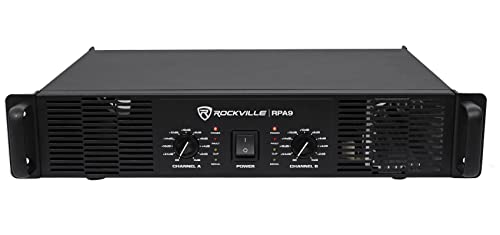
Rockville RPA9 2-Channel Rack Power Amplifier

Behringer Europower EP4000 Stereo Power Amplifier

Mr. Dj AMP2000DSP 2000W Class AB Power Amplifier
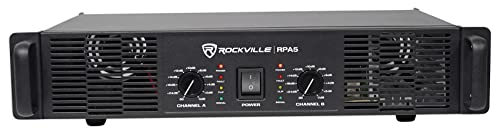
Rockville RPA5 2-Channel Rack Power Amplifier

Mr. Dj AMP3000DSP 3000W Class AB Power Amplifier
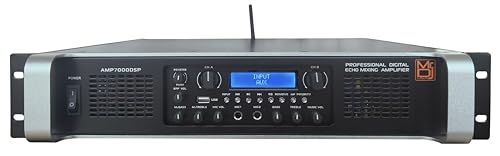
Mr. Dj AMP7000DSP 7000W Class AB Power Amplifier
A Deeper Look At The Lineup
Every amp on this list needs a quality speaker cable to actually move sound, and a 50-foot run covers most stage layouts without an extension. The CSMSF50 ships with Speakon connectors on both ends, a locking style that won’t vibrate loose mid-set. Stranded copper conductors help keep the signal path clear over distance, which matters when you’re pushing the amp channels hard.
Mobile rigs benefit most here, since 50 feet gives you room to route around a dance floor and still reach a side-fill stack. Garage and rehearsal setups also gain flexibility for repositioning cabinets.
What Pays Off
- Long 50-foot reach suits larger rooms and outdoor stages
- Speakon locking connectors stay seated under vibration
- Stranded copper build supports clean signal transfer over distance
- 2-conductor design works with most passive PA cabinets
Worth Noting
- Heavier than 25-foot runs, so plan your cable management
- Speakon-only ends mean you’ll need an adapter for 1/4-inch jacks
Made For
Mobile DJs running passive speakers at weddings, school events, or club nights where 50 feet of slack is essential.
Skip It When
You need active powered tops instead, in which case the Rockville RPA9 covers the amp side of that build.
The RPA12 sits at the top of Rockville’s rack amp line, aimed at working pros who push large speaker stacks. Two channels feed separate mains and sub zones, and a bridge mode (a setting that combines both channels into one higher-power mono output) lets you feed a subwoofer with everything the amp has. Owners commonly run this in mid-size clubs where headroom (extra power kept in reserve to prevent distortion at peaks) matters more than fine tuning.
The tradeoff is weight and rack depth, so plan a sturdy case if you tour with it. DJs who need DSP presets will find fewer onboard tools here compared to the Mr. Dj DSP models later in the list.
Where It Excels
- High wattage ceiling handles demanding sub stacks
- Bridge mode concentrates power into a single channel
- Standard rackmount form fits common road cases
- Stable operation under sustained loads
Honest Caveats
- Heavier chassis means transport wheels or a helper
- No onboard DSP means outboard EQ for tone shaping
Key Specs
Who It Suits Best
Pros running large PA rigs at venues, festivals, or club residencies who need raw wattage over menu-driven presets.
Look Elsewhere When
You want Bluetooth streaming and DSP in one chassis, in which case the Mr. Dj AMP7000DSP handles both jobs.
The flagship in the Mr. Dj DSP lineup pushes Class AB output to its limit, pairing 2-channel topology with on-board processing. DSP handles crossover points (the frequency where your amp hands off low notes to subs and high notes to tops), speaker tuning, and limiting, so you spend less time tweaking external gear. Bluetooth and USB media playback round out the front panel, useful for break music or background sets without a separate mixer.
Touring or installed rigs benefit most from the integrated routing, though smaller home setups may not tap the full wattage envelope. The real appeal is consolidating amp, processor, and music source into one rack unit.
Strengths Worth Knowing
- Onboard DSP replaces a separate processor rack
- Bluetooth and USB cut down on extra source gear
- Class AB topology (analog circuitry that combines two output stages for efficiency and warmth) for warm, full-range character
- Two mic inputs handle announcements and MC duties
Practical Considerations
- Full output demands serious speaker cable gauges and proper ventilation
- Menu navigation takes time to learn, depending on your comfort with DSP interfaces
Right Fit For
Touring DJs and large venues that need amp, processor, and music source in one rack drawer.
Another Choice May Suit
Mid-size rooms without a road crew may find the Mr. Dj AMP5000DSP easier to manage day to day.
The AMP5000DSP sits in the middle of the DSP family, balancing wattage and rack space. It keeps the same Bluetooth and USB input design as its bigger siblings, with a slightly lower power ceiling that suits mid-size event rooms. The onboard DSP still covers crossover control and speaker optimization, so you retain the streamlined rack approach even at lower volume targets.
Wedding DJs, school events, and club warm-up sets all fit comfortably inside its output range. It’s a logical step down from the AMP11000DSP without giving up the streaming and processing features.
Reasons It Performs
- Built-in DSP streamlines crossover and limiter settings
- Bluetooth and USB cover walk-in and break music
- Two mic inputs allow MC use without a separate mixer
- 5000W ceiling covers most 200 to 400 seat rooms
Trade-Offs To Consider
- Front panel LCD can be hard to read from a standing position in low light
- Still requires a properly rated mains circuit for full output
At A Glance
Best Suited To
Mid-career mobile DJs running hybrid events where streaming and DSP presets save setup time.
Where Another Pick Suits Better
Smaller home studios will find the Rockville RPA5 lighter on the power bill and easier to position.
The RPA9 is the middle of Rockville’s rack trio, slotting between the compact RPA5 and the big-stage RPA12. With 2 channels and bridgeable output, it serves typical PA and DJ stacks without overkill. Owners commonly use it for bar gigs, mobile setups, and small clubs where dependable power matters more than extensive menu systems.
It’s a workhorse amp without the wireless streaming of the Mr. Dj DSP family, which keeps the front panel simple. If you already have a mixer and source gear, that minimalism can be a plus.
The Good Stuff
- Bridgeable design for subwoofer-focused setups
- Rackmount chassis fits common 2U cases
- Reliable thermal protection under sustained load
- Wide input compatibility with most DJ mixers
Points To Keep In Mind
- No onboard DSP or wireless input means extra gear for tone shaping
- Cooling fans can be audible in quiet rooms
Feature Snapshot
Who Will Love This
Working mobile DJs who already own a mixer and need a clean, reliable amp without extra menu layers.
Not Your Match When
You want a streaming source built in, in which case the Mr. Dj AMP3000DSP is the more convenient middle step.
The Europower EP4000 has been a club and bar standard for years, with output ratings of 2,000 watts per side into 2 ohms (a low-impedance speaker load that draws more current from the amp). ATR (Accelerated Transient Response) circuitry is designed to keep transients (short, sharp bursts of audio energy like kick drum hits) tight, so kick drums and snare hits stay punchy. XLR and 1/4-inch TRS inputs (balanced cable connections that reject noise over long runs) cover most mixers, and the touch-proof binding posts and speaker connectors accept a range of cabling.
Unlike the Rockville and Mr. Dj amps above, this is a traditional no-frills workhorse. Professionals appreciate the predictable sound, and the price typically lands below newer DSP-equipped alternatives.
The Case For It
- ATR technology preserves transient detail in source audio
- Power, signal, and clip LEDs simplify live monitoring
- Bridge mode delivers 4,000 watts into 4 ohms for subs
- Wide compatibility with XLR, TRS, and Speakon cabling
Less Ideal Details
- No built-in DSP or wireless streaming options
- Larger chassis footprint than newer competitors
Built With In Mind
Installs and residencies where stable, well-known amp behavior matters more than modern feature lists.
A Better Fit Elsewhere
Mobile DJs who want fewer rack pieces should look at the Mr. Dj AMP2000DSP, which combines amp and processor in one unit.
The AMP2000DSP is the smallest entry in Mr. Dj’s DSP family, and the natural starting point for newer DJs stepping up from powered speakers. The LCD display walks through setup options, and Bluetooth 5.3 (a recent wireless standard offering more stable connections and longer range than older versions) handles streaming from a phone without extra adapters. Two mic inputs let you host announcements without a separate mixer.
For a bedroom rig or a small hall under 100 people, 2,000 watts of Class AB output is plenty of headroom. It’s a friendlier first amp than the big-stage Rockville RPA12 reviewed earlier.
A Few Highlights
- Lower learning curve thanks to clear LCD menu
- Bluetooth 5.3 reduces dropouts from mobile devices
- USB playback for unattended background music
- Compact chassis fits shallow rack cases
Small Caveats
- Output ceiling caps this at small venue sizes
- Internal fan noise can be heard during quiet spoken-word sets
Perfect Match For
New DJs building their first passive rig or handling small private events under 100 guests.
Swap It Out When
Your room size grows, at which point the Mr. Dj AMP5000DSP offers similar menu logic with more wattage.
The RPA5 is the smallest of the Rockville rack trio, sized for home studios, lounges, and rehearsal spaces. It still covers both stereo and bridged mono operation, and the built-in crossover (an internal circuit that splits audio into high and low frequency bands) lets you feed a sub and tops from one amp. XLR, 1/4-inch, and RCA inputs (the red-and-white consumer audio jacks found on most home gear) make it flexible enough to plug into a DJ controller, a phone, or a small mixer.
Output is rated at 1,000 watts peak, so this is the right pick for low-volume environments rather than large events. Think practice room, not dance floor.
The Practical Payoff
- Compact 2U chassis fits shallow studio racks
- Built-in crossover removes need for an external processor
- Multiple input types cover DJ controllers and consumer sources
- Speakon and banana plug outputs accept common cable ends
Soft Spots
- Lower headroom than the RPA9 and RPA12
- Front panel layout is dense for a compact unit
Quick Facts
Whose Shelf It Belongs On
Home DJs, producers, and small venue operators who prioritize rack space and easy source flexibility.
Reach For A Different Pick When
You need Bluetooth and DSP in a similarly compact amp, where the Mr. Dj AMP2000DSP is the more capable option.
The AMP3000DSP lands between the beginner-friendly 2000 and the larger 5000, giving mobile DJs more room without jumping to a club-rated amp. It carries the same Bluetooth 5.3 and USB media playback as the rest of the family, so streaming break tracks is still one tap away. The LCD display keeps the menu structure consistent with the other Mr. Dj DSP units, which makes sense for anyone running a multi-amp rig.
Wedding and corporate event DJs tend to land here because the output ceiling suits a 150 to 250 person room. For most working gigs, that’s the sweet spot.
Advantages To Know
- Balanced output ceiling for typical event sizes
- Shared menu logic with the wider Mr. Dj DSP family
- Bluetooth 5.3 streaming supports modern devices
- Two mic inputs for MC and ceremony use
Where It May Fall Short
- Not enough headroom for very large halls or outdoor stages
- Speaker cable runs still need proper gauge for full output
Who Should Grab It
Working event DJs handling mid-size weddings, corporate parties, and club warm-up sets on a regular basis.
Consider Something Else When
Your room size fluctuates widely, in which case the Behringer EP4000 adapts to both small and large rooms with a single amp.
The AMP7000DSP sits one step below the flagship 11000, and for most mobile rigs it’s the smarter ceiling. You get the same DSP routing, Bluetooth 5.3, USB playback, and dual mic inputs as the larger units, with output that still handles 300-plus seat rooms comfortably. The 2U-style rack footprint stays manageable for transport, unlike the heavier 11000.
DJs who find the AMP5000DSP a touch light but don’t need the 11000’s bulk tend to land here. It balances touring readiness with sensible weight.
Bright Spots
- Big-room wattage without the flagship weight
- Onboard DSP replaces external processor racks
- Bluetooth 5.3 and USB cover streaming scenarios
- Front-panel display matches other Mr. Dj DSP units
Practical Considerations
- Still requires proper mains power and cabling for full output
- Menu depth can overwhelm first-time DSP users
Right Fit For
Mobile and venue DJs running mid-to-large rooms who want flagship features in a more manageable chassis.
Not Your Match When
You mostly play smaller rooms, where the Mr. Dj AMP3000DSP saves weight and cost without losing the menu flow.
Matching Your Power Amp To The Gig
The right DJ amp depends on three honest variables: room size, speaker type, and how much rack gear you want to carry. Passive speakers (cabinets with no built-in amplification) need external power, so wattage matters more than it would for active tops. Measure the largest room you handle on a regular basis, then aim for an amp that delivers around twice that wattage rating to keep clean headroom on transients. Class AB amps like the Mr. Dj DSP family and Rockville RPA series offer warm full-range character, while a built-in crossover eliminates the need for a separate processor if you run subs and tops together.
Speaker cable gauge (the thickness of the wire, measured in AWG, where lower numbers mean thicker wire) is the silent partner of any amp purchase. Thicker lower-gauge cable preserves signal over long runs, which matters for outdoor stages or split-room setups. A 50-foot Speakon cable like the Mr. Dj CSMSF50 gives you room to position cabinets without signal loss.
Connectivity is the other decision driver. DJs who already use a dedicated mixer benefit from the no-frills approach of the Rockville RPA5, RPA9, or Behringer EP4000. Those who want a single rack drawer covering amp, processor, and music source should look at the DSP-equipped Mr. Dj models, which consolidate streaming and crossover control behind one front panel.
Pitfalls Shoppers Hit And Where The Extra Money Goes
Wrong Turns To Avoid
The most common mistake is matching amp wattage to speaker wattage instead of room size. Speakers rated at 200 watts can still benefit from a 500-watt amp if the room demands headroom, because clipping (when an amp tries to push more power than it can deliver cleanly, producing distortion) is what damages drivers, not clean power. The second slip is overlooking cable gauge, which can choke even the best amp into sounding thin over a 30-foot run. Lastly, ignoring the rack case weight leads to a road-worn back over a season of gigs, so factor the chassis into your transport plan.
What The Higher Tier Buys
Stepping up from a 2,000W amp to a 7,000W model adds headroom, a more capable DSP engine, and stronger component cooling, which together handle bigger rooms and longer event runs. You also gain extra input flexibility on the higher Mr. Dj models, including more mic options and the processing headroom to tune larger speaker arrays. For working pros who play larger venues regularly, that headroom translates directly into cleaner sound at high volumes and fewer clipping incidents during peak sections of a set. For home or small event use, the upgrade rarely justifies the spend.
Frequently Asked Questions
How Many Watts Do I Need For A DJ Amp?
Match the amp to your largest regular room rather than your speaker rating. For a 100-guest hall, 2,000 watts of clean output is typically enough. For 250 guests, 5,000 watts gives you safer headroom on transients. Bigger rooms and outdoor stages usually call for 7,000 watts or more.
What Is The Difference Between Class AB And Class D DJ Amps?
Class AB amps use linear output stages (traditional analog circuits that produce a smooth, warm signal) and tend to sound warm and full, at the cost of more heat and heavier chassis. Class D amps switch output stages rapidly for cooler, lighter operation. The Mr. Dj DSP family and Rockville RPA series in this list are Class AB, which suits users who prefer analog character.
Do I Need A Separate Crossover With These Amps?
Not necessarily. The Mr. Dj DSP models include onboard crossover control, and the Rockville RPA5 has a built-in crossover as well. If you choose a non-DSP amp like the Behringer EP4000, an external crossover is needed when running separate sub and top cabinets.
Can I Bridge A 2-Channel Amp For More Power?
Yes. Most 2-channel amps in this lineup support bridge mode, which combines both channels into a single higher-power mono output. That’s useful for driving a subwoofer, though you lose the second channel for a separate cabinet.
How Important Is Speaker Cable Gauge?
Very important over long runs. A thinner 16 AWG cable (a common mid-thickness speaker wire) can choke signal at 30 feet or more, while a lower-gauge 12 or 14 AWG cable preserves the amp’s output. For the 50-foot Mr. Dj Speakon cable reviewed above, lower-gauge construction helps maintain clarity at full volume.
Final Verdict
A DJ amp earns its place by staying clean at the volumes you actually play, fitting the rack case you already own, and routing signals without menu headaches. Match the wattage to your largest room, decide whether onboard DSP and streaming simplify your rig, and your shortlist gets very short very fast. The picks above cover everything from bedroom practice to club residencies, and any of them will reward careful matching to your speakers and cabling.



