


Pinball has a hold on people that just doesn’t quit, and the good news is you don’t need a 300-pound cabinet or a quarter in your pocket to enjoy it. Today’s lineup runs from a single replacement steel ball to a full-size digital console that recreates the arcade feel in your living room. The trick is matching the format to your space, your household, and how deep you want to go.
This guide breaks down eight genuinely different options: a maintenance part for the pinball you already own, STEM kits and wooden toys for younger players, dedicated tabletop electronics, and a connected console for grown-up hobbyists. A few of these are toys, a few are hobby hardware, and one is a downloadable expansion for an existing setup. Whatever your budget and the age of the household, there’s a sensible match below.
The Main Contenders

Game Room Guys Steel Pinball Ball 1-1/16″

Smartivity DIY Pinball Machine Kit

AtGames Legends Pinball Micro Console

Namubarwa Pinball Skee Ball Marble Run

SPEEDY MONKEY Wooden Tabletop Pinball

AtGames Taito Pinball Pack 2 Game Card
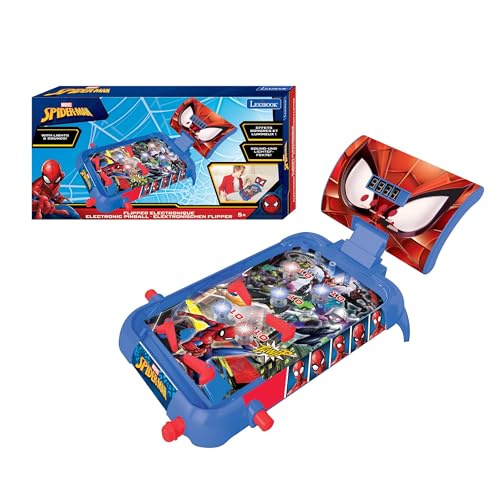
LEXiBOOK Spider-Man Electronic Pinball JG610SP

Hitish Dinosaur Pinball Machine for Kids
The Details Behind The Selections
Strictly speaking, the Game Room Guys steel ball isn’t a pinball machine at all. It’s the small part that makes every other machine on this list function, and it’s the only true maintenance consumable in the roundup. A single 1-1/16-inch carbon steel sphere, manufactured to the standard arcade diameter, this is the size most home and commercial pinball machines shipped through the 2000s and 2010s expect.
For anyone who already owns a real machine, a pitted or rusty ball is the single cheapest fix for sluggish, unreliable play. The steel is treated to resist residual magnetism, which keeps the ball from sticking to playfield hardware or the flipper assemblies. It drops in, no tools required.
Notable Gains
- Standard 1-1/16-inch diameter fits the vast majority of home pinball cabinets
- Carbon steel construction handles years of impact without denting
- Residual magnetism treatment prevents odd sticking behavior on metal hardware
- Single-pack format lets you replace a worn ball without committing to a multi-pack
Practical Considerations
- Only useful for owners of an actual mechanical pinball machine; no standalone play value
- Confirm diameter before ordering, since a few modern Stern titles use slightly different specs
Who It Suits Best
Existing pinball owners who notice pitting, rust, or rattling during play and want a single, exact-spec replacement ball.
Where Another Pick Suits Better
Shoppers without a real machine should look at the Smartivity DIY Kit for a complete playable experience instead.
Where most STEM kits live on a shelf after the first hour, the Smartivity DIY Pinball Machine Kit flips that script. You build a working tabletop arcade with real spring-loaded flippers, a launcher, and scoring targets, then you actually play it. The kit is aimed at ages 8 and up, but the engineering principles behind it hold genuine interest for teens and curious adults who want to understand momentum, mechanical advantage, and energy transfer through play.
Construction uses pre-cut pieces that slot together without glue, which is helpful in busy households where a younger builder might need to walk away mid-project. The finished machine is small enough to clear off a desk when homework calls, but sturdy enough to survive regular after-school sessions.
Positive Points
- Genuine physics learning disguised as a build-and-play toy
- Glue-free assembly means easy repairs and no messy cleanup
- Compact size fits a backpack, a small shelf, or a corner of a playroom
- Skewed toward older kids and tweens who have outgrown simpler toys
Honest Caveats
- Build time runs longer than a single afternoon for most kids
- Not built to withstand rough toddler handling, so younger siblings need supervision
Made For
Kids aged 8 to 12 who want a project they can show off and then play repeatedly, plus parents who appreciate a screen-free activity with educational value.
Skip It When
Households with very young children should consider the Hitish Dinosaur Pinball instead, since it requires no assembly and suits a much younger age range.
The Legends Pinball Micro is the most grown-up pick in the roundup. It’s a compact home digital pinball platform that delivers 50 licensed tables out of the box, including Zaccaria’s deluxe editions, Space Invaders, Bubble Bobble, and Arkanoid. The hardware pairs a 15.6-inch HD playfield display with an 8-inch backglass LCD, stereo speakers, a haptic feedback motor, and a nudge sensor that translates real cabinet shakes into in-game physics.
Visuals run at 1080p and 60 frames per second, which matters far more for pinball than for slower genres, since the ball needs to feel weighty and readable. The 16GB of internal storage leaves headroom for downloadable tables, and Wi-Fi opens the door to leaderboards, multiplayer lobbies, and free firmware updates.
Practical Pluses
- Mechanical-style flippers and a nudge sensor that respond to real cabinet inputs
- Wide library of licensed retro tables means something for nearly every era of arcade history
- Wi-Fi and Ethernet support enables online play, friends lists, and voice chat
- 16GB of system storage covers the built-in library and then some
Trade Offs
- Smaller footprint than a full-size cabinet, so the playfield depth is a compromise
- Subscriptions and downloadable content add to the total cost of ownership over time
Best Suited To
Adult retro gaming fans and serious hobbyists who want dozens of tables, online competition, and a real arcade feel without dedicating a room to a full-size cabinet.
Look Elsewhere When
Shoppers shopping for young children should consider the LEXiBOOK Spider-Man Electronic Pinball, since the Legends Micro is a hobbyist product built for older hands.
The Namubarwa game is a curious hybrid: it borrows the looping ramp structure of a pinball table, the lane-scoring layout of a skee ball alley, and the cascading chaos of a marble run, then mashes them into one tabletop toy. Kids aged 6 to 12 launch balls down a board and watch them bounce off obstacles, scoring points based on where they land.
The honest read is that skill and luck pull in roughly equal measure, which is part of the appeal for mixed-age households. A younger sibling can still win a round against an older cousin, and the table needs zero assembly, just unbox, set it on a flat surface, and you’re rolling.
Positive Takeaways
- Zero setup means the fun starts within minutes of unboxing
- Combined pinball-skee ball-marble run format gives variety in a single game
- Level playing field across ages, with younger kids often surprising older ones
Worth Noting
- Ball loss is a real concern over time, and a flat floor is essential to avoid runaway marbles
- Plastic construction tolerates normal play but not rough use, so it works best as a shared family item
Who Will Love This
Families with kids aged 6 to 12 who want a no-fuss group activity that works equally well at family game nights and rainy afternoon play.
Reach For A Different Pick When
Shoppers looking for a single-player, no-mess experience should consider the SPEEDY MONKEY Wooden Pinball, which keeps marbles contained and stays on a desktop.
The SPEEDY MONKEY wooden pinball sets itself apart with a galaxy-themed painted cabinet that looks more like a piece of art than a toy. The wooden body is heavier than a plastic equivalent, which is a real plus during play since the table stays put when the ball is launched hard. Inside, you get traditional spring flippers, a plunger-style launcher, and metal bumpers that give genuine feedback when the ball connects.
It’s small enough to live on a coffee table or a desk, and the play is self-contained, so balls don’t escape the playfield. Older kids and adults get the most out of this one, but the visual style appeals to a wide audience.
What Helps Most
- Wooden construction adds weight and stability during enthusiastic play
- Galaxy-themed artwork doubles as décor when the game sits on a shelf
- Self-contained ball path avoids the runaway-mess problem common in marble-run games
Some Limits To Know
- No electronic scoring or sound, so it relies on player honesty to keep tallies
- Smaller flippers suit casual play better than serious practice sessions
Perfect Match For
Adult collectors and design-minded shoppers who want a casual tabletop option that looks as good sitting on a shelf as it does mid-game.
Not Your Match When
Parents looking for licensed character appeal should look at the LEXiBOOK Spider-Man Electronic Pinball instead.
You can’t use the Taito Pinball Pack 2 on its own, but if you already own an AtGames Legends Arcade device, it’s a near-mandatory expansion. The card unlocks four Taito-themed tables covering Chack’N Pop, Elevator Action, Operation Wolf, and Zoo Keeper, each rebuilt with the sights, sounds, and physics that the Legends platform is known for.
Redemption requires a connection to Wi-Fi or Ethernet, and signing in with a Legends ID lets you install the tables on up to six connected devices under the same account. The code arrives on a physical card with a scratch-off label, so it also works as a gift for the pinball hobbyist in your life.
Benefits That Matter
- Four licensed Taito tables with HD visuals and arcade-faithful sound design
- Single license covers up to six connected Legends devices under one account
- Physical card format works as a stocking-stuffer or birthday add-on
Practical Considerations
- Completely useless without an existing AtGames Legends device
- Online redemption step adds a small setup hurdle for less tech-comfortable households
Right Fit For
Legends Arcade owners who want to expand their library with classic Taito titles and already have a Legends ID account set up.
Another Choice May Suit
Shoppers without a Legends device should start with the AtGames Legends Pinball Micro Console first, since the game card adds no standalone value.
LEXiBOOK’s Spider-Man tabletop leans hard on the licensed character appeal, and for the right kid, that’s exactly the hook. The cabinet features Spider-Man artwork, four mechanical flippers, five bumpers, an LCD score readout, and sound effects designed to mimic a real arcade. A reset button and a music mute option give parents some control over the noise factor.
Power comes from three LR14 C-cell batteries, which aren’t included, so factor that into the total cost. Two adjustable stands on the bottom set the playing angle, and the layout scales down well for small hands.
What Pays Off
- Licensed Marvel branding creates strong appeal for Spider-Man fans
- Real mechanical flippers and bumpers, with electronic scoring and arcade-style sound
- Music mute switch keeps shared spaces livable during longer sessions
Points To Keep In Mind
- Batteries are not included, and LR14 C-cells add to the upfront cost
- Battery life depends heavily on how often the sound effects are used
Built With In Mind
Kids aged roughly 6 and up who are deep into Marvel characters and want a themed, single-player tabletop they can set up on a bedroom desk.
Where A Sibling Pick Shines
Shoppers wanting multi-player family play will find the Namubarwa Skee Ball Marble Run a better group fit.
The Hitish Dinosaur Pinball is the youngest-skewing pick in the roundup, aimed at toddlers and early elementary kids from age 3 and up. The dinosaur theme is loud, the lights and sounds are prominent, and the scoring system is forgiving enough that very young players feel successful. Each successful hit triggers a point, and the electronic scoring board helps build early number recognition.
It’s marketed as an educational toy, and the honest read is that the educational value is gentle, more about turn-taking, hand-eye coordination, and number familiarity than deep learning. As a gift option for a 3 to 5 year old, the theme and play pattern land well.
Notable Upsides
- Dinosaur theme lands strongly with the preschool and early-elementary set
- Forgiving scoring keeps very young players feeling successful
- No assembly required, which matters when gifting to families with younger kids
Less-Strong Areas
- Educational value is more motivational than instructional
- Loud sound effects can grate on parents during long play sessions
Whose Shelf It Belongs On
Preschoolers and early elementary kids aged 3 to 6 who love dinosaurs and need a gentle, themed intro to the pinball idea.
Swap It Out When
Older kids past the dinosaur phase will get more out of the LEXiBOOK Spider-Man Electronic Pinball, which suits a slightly older age range and offers more mechanical play.
Choosing The Right Pinball Format For Your Household
Digital pinball machines, tabletop kits, and STEM builds all look similar at a glance, but the user experience is wildly different. The right format depends on who’s playing, where it lives, and whether you want a quick distraction or a long-term hobby.
Build It Yourself Or Buy It Ready-Made
DIY kits teach mechanical principles and reward patience, but they require a multi-hour build session and an age range that can handle the steps. Ready-made tabletop electronics and consoles give immediate play value, which is better for younger kids or anyone who wants a gift that works the moment it comes out of the box.
Size, Footprint, And Where It Will Live
A small wooden tabletop pinball fits on a desk and tucks into a closet. The Legends Micro console is a tabletop unit but heavier and more permanent. A full-size cabinet is something else entirely and wasn’t in scope for this roundup, but it’s worth knowing where each of these lands. Measure your space before ordering; the wooden tabletop option is the easiest fit for a small apartment.
Sound, Power, And Household Tolerance
Battery-powered toys with electronic sound can drain cells faster than expected, and family-room volume tolerance varies widely. Mute switches help, but for shared spaces, an unplugged mechanical design can be the calmer choice. Corded consoles need a stable outlet and a TV or monitor for the larger experience.
Maintenance, Repairs, And Lifespan
Plastic toys have a shorter working life than wooden or metal-based designs, so households planning to pass the item down should lean toward the wooden SPEEDY MONKEY or a real cabinet ecosystem. The replacement steel ball is the only true consumable in the roundup, and keeping a spare on hand pays for itself the first time the active ball goes missing.
Key Considerations Across These Picks
Common Shopping Slip Ups
A frequent mistake is buying an expansion card without owning the parent device. The Taito Pinball Pack 2 only works inside a Legends Arcade ecosystem, so check the compatibility list before ordering. Another trap is picking a kit that’s too advanced for the recipient’s age range, which turns a fun gift into a frustrating afternoon. Match the age label on the box, not the ceiling age, since the upper age figure usually reflects the most capable builders.
Where The Extra Money Goes
The price gap between a wooden toy and a connected console buys you deeper physics, more tables, online play, and longer firmware support. The honest trade-off is that you also inherit subscriptions, account requirements, and a product that’s harder to hand down without that ecosystem. Spend up if the household will actually use the extra tables and online features; skip the upgrade if a single tabletop toy fits the use case better.
Frequently Asked Questions
What Is A Digital Pinball Machine?
A digital pinball machine uses a screen, real mechanical flippers, and software-simulated physics to recreate the feel of an arcade pinball without a full mechanical playfield. Tabletop and toy versions simplify this further, sometimes using a single ball, mechanical bumpers, and an electronic score readout.
Are Digital Pinball Machines Worth The Cost?
For adult retro fans, connected consoles offer hundreds of tables and online competition, which justifies the higher cost over years of use. For families with younger kids, a tabletop toy or wooden build gives the same flavor of play at a fraction of the cost and a much shorter commitment.
How Long Do Tabletop Pinball Toys Last?
Wooden tabletop toys tend to outlast plastic equivalents under normal use, and replacement parts are simple to source for many designs. Battery-powered electronics depend heavily on how often the sound effects are used, and LR14 C-cells can drain quickly with heavy play.
Can You Add More Tables To A Digital Pinball Machine?
Connected consoles like the AtGames Legends platform support downloadable table packs and expansions, often sold as separate game cards. Standalone tabletop toys without network connectivity do not support table additions and are limited to whatever shipped in the box.
What Age Is Right For A First Pinball Toy?
For toddlers and early elementary kids, themed electronic toys with forgiving scoring work best. Kids aged 8 and up who want a project can handle a build-it-yourself kit, while teens and adults tend to get the most out of wooden tabletop designs or a connected console.
Bottom Line
The best digital pinball machine is the one that matches the room and the players already in it. Young kids and family game nights point toward the themed tabletop toys, hobbyist adults will outgrow those quickly and want a connected console, and existing cabinet owners simply need a fresh steel ball to keep things rolling. Pick the format first, then the brand, and you’ll end up with something that actually gets played instead of sitting on a shelf.



