


A great delay pedal earns its place on the board by doing something simple well: adding space, depth, or rhythmic pulse to your playing without muddying what sits underneath it. The category runs wide, from old-school analog tape echoes to modern multi-effect units packed with dozens of algorithms. This list gathers ten options across that range, focusing on the parts of each pedal that actually affect your tone and workflow, so you can match the right box to the right situation on your board.
A Side-By-Side Look

Donner X MIYAVI Dimension Weaver Triple Pedal

BOSS DD-8 Digital Delay Guitar Effects Pedal

BOSS DD-8 Eleven Modes Digital Delay Pedal

Boss DD-7 Digital Delay Pedal

Donner White Tape Stereo Delay Pedal

Donner Tutti Love Analog Chorus Pedal

Donner Yellow Fall Analog Delay Mini Pedal

Donner Verb Square Digital Reverb 7 Modes
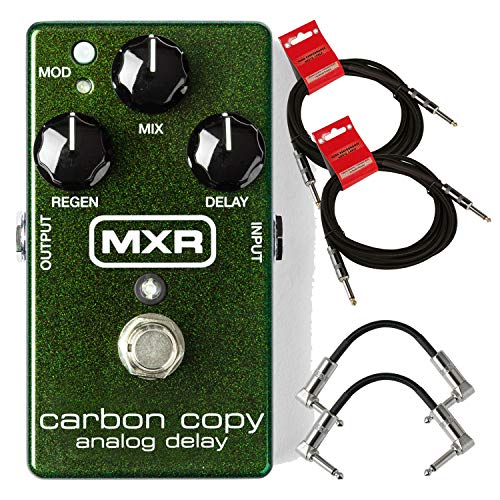
MXR M169 Carbon Copy Analog Delay Pedal Bundle
Donner Mod Square II 16-Mode Modulation Pedal
Taking A Closer Look At The Options
The Dimension Weaver Triple Pedal collapses three core effects into a single floor unit, designed jointly with MIYAVI and aimed at guitarists who want chorus, delay, and reverb on tap without dedicating three slots on the board. Each block can be activated on its own, so you can run a clean delay tone with no chorus or reverb muddying it, or stack all three for wider ambient textures when a song calls for it.
For a small bedroom rig or a travel board, that consolidation matters. Compared to the BOSS DD-8 we look at next, this pedal trades single-effect refinement for the convenience of having three usable voices in one box. You may find the depth of each individual effect less specialized, but the trade-off is fewer cables, fewer power draws, and fewer switches to manage mid-song.
What Earns Its Place
- Three independent effect blocks let you build a chain without running extra pedals.
- Switching each block separately keeps your core tone clean when only one effect is needed.
- One power input and one footprint simplify small boards and travel setups.
- Stacked mode gives you a full ambient layer for pads and slow ballad passages.
Points To Keep In Mind
- Each individual effect sits a step behind a dedicated single-effect pedal in refinement.
- Power supply is not included, so factor in a DC adapter before the first session.
Who Will Love This
Players building a compact first board who want chorus, delay, and reverb covered in one purchase will find this an efficient starting point.
Where Another Pick Suits Better
For players chasing a single, deeply tweakable delay voice, the BOSS DD-8 Digital Delay Guitar Effects Pedal offers more dedicated control in a single direction.
The BOSS DD-8 is built around eleven delay modes running from the standard digital repeats to looper, modulation, and more unusual textures. It slips into a mono or stereo rig with standard BOSS input and output, so adding it to an existing board tends to be straightforward even when the rest of your setup runs hot.
Players covering many styles in a single set will appreciate the range here. The looper function adds practical rehearsal and songwriting value, while the longer delay times open up ambient territory that smaller analog units cannot reach. Compared to the older Boss DD-7 we cover later, the DD-8 broadens the palette without inflating the footprint.
Noteworthy Benefits
- Eleven delay modes cover basic, vintage, and exotic textures in a single pedal.
- Onboard looper expands the unit into a songwriting and practice tool.
- Standard BOSS chassis fits existing pedalboard layouts and patch plans.
- Stereo I/O supports wider rig designs without external splitters.
Worth Noting
- Eleven modes can feel like more menu navigation than a beginner needs at first.
- Owners commonly find that dialing in the right tap-divisions takes some patience on the first day.
Best Suited To
Working guitarists who need a single delay pedal that handles covers, originals, and ambient passages in a range of venues will get strong mileage from the DD-8.
Consider Something Else When
For players who specifically want the warble of old tape echo hardware, the Donner White Tape Stereo Delay Pedal leans harder into that character.
This listing of the BOSS DD-8 shares the same eleven-mode engine as the previous entry, framed for buyers prioritizing full stereo input and output support. Stereo I/O matters when your delay sits between two amps, a wet/dry rig, or a stereo modulation chain, since ping-pong patterns and spatial effects only fully unfold across two channels.
The compact form factor keeps the rest of your board layout intact. You may find the controls dense at first glance, but most players settle into a handful of modes they use night to night, leaving the deeper options for recording sessions. Compared to the MXR Carbon Copy we cover later, this unit trades analog warmth for digital flexibility and broader routing options.
Where It Excels
- Full stereo I/O makes ping-pong and spatial delay patterns sound the way they were designed.
- Eleven modes give you strong range from a single enclosure.
- Compact chassis frees up real estate for other pedals on the board.
- Pairs well with stereo modulation and reverb units further down the signal chain.
A Few Limitations
- Does not replicate the warm, worn character of analog bucket-brigade delay.
- Power supply is sold separately, which is common for BOSS pedals but worth budgeting for.
Right Fit For
Players running stereo amps or recording setups who want one pedal to cover a wide range of delay flavors will find the routing flexibility useful here.
Look Elsewhere When
For guitarists focused on a single, organic analog voice, the MXR M169 Carbon Copy Analog Delay Pedal Bundle is the closer match.
The Boss DD-7 has been a fixture on stage and studio boards for years, and the design continues to earn its place for players who want a reliable, broadly capable digital delay. It includes modulation and modeled analog modes alongside the standard digital repeats, which gives it a flavor flexibility many older delay units simply do not offer.
External pedal control is one of the quieter strengths of this unit, letting you assign tap tempo or hold functions to a separate footswitch when your playing requires it. Compared to the DD-8, you give up some of the newer mode count, but the DD-7 still covers the ground most working guitarists touch. The chassis matches the rest of the BOSS compact line, so cable layouts stay familiar.
Where It Helps
- Modeled analog and modulation modes add vintage character without buying a second pedal.
- External pedal control support opens up tap tempo and hold tricks on stage.
- Standard BOSS build handles gigging and transport without much fuss.
- Long delay time range covers lead passages and ambient swells.
Honest Caveats
- Fewer total modes than the newer DD-8, which matters if you want the looper built in.
- Knob density is high for a first pedalboard; expect a learning curve over a few sessions.
Made For
Intermediate and pro guitarists who want a single digital delay that has already proven itself across genres and rigs will find the DD-7 an easy fit.
Skip It When
For players wanting a simpler one-knob-per-function analog intro, the Donner Yellow Fall Analog Delay Mini Pedal keeps things more approachable.
The Donner White Tape Delay is built around the warm, slightly imperfect character of vintage tape echo machines, capturing the wow and flutter that made classic studio delays recognizable on a record. Two independent channels let you shape a stereo image or run two completely different delay voices at once, depending on how you set it up.
For guitarists who want their delay to sound like a moving piece of gear rather than a clean digital repeat, this pedal pulls in that direction. The independent Time, Feedback, and Level controls per channel reward hands-on tweaking. Compared to the MXR Carbon Copy, the White Tape leans more obviously into the tape echo aesthetic and stereo possibilities, while the Carbon Copy stays more analog-organic in its character.
What Stands Out
- Two independent channels make stereo ping-pong or dual-mono setups easy to build.
- Tape echo character adds movement and warmth to clean and overdriven tones.
- Per-channel Time, Feedback, and Level controls let you dial in two delay voices in parallel.
Trade Offs
- Power supply is not included, so plan on buying a compatible DC adapter.
- Two channels of controls mean more knob tweaking than a single-channel delay.
Whose Shelf It Belongs On
Players chasing the warm, breathing sound of vintage tape echo, or anyone running a stereo rig, will get a lot out of the White Tape.
A Better Fit Elsewhere
For a more compact, single-voice analog delay, the Donner Yellow Fall Analog Delay Mini Pedal takes up less board space.
The Donner Tutti Love chorus pedal covers a different corner of the modulation family, useful for widening clean tones and thickening jazz-style passages. It is not a delay pedal itself, but it lives in the same orbit and pairs naturally with the delay units in this list when you want a fuller ambient picture.
The traditional Depth and Rate controls are joined by an extra Level knob, giving you more control over how loud the chorused signal sits next to the dry guitar. The aluminium-alloy housing handles the kind of gigging wear that smaller pedals sometimes struggle with. For players new to modulation, the layout is approachable without a manual.
Practical Pluses
- Analog circuit design gives the chorus a warmer, smoother character than digital emulations.
- True bypass keeps your dry tone uncolored when the pedal is off.
- Aluminium-alloy housing handles transport and stage use without much worry.
Possible Compromises
- Chorus only, so you will still need a dedicated delay pedal for repeats.
- Power supply is not included, a common consideration for budget-friendly stomp boxes.
Perfect Match For
Beginner and intermediate players looking to add a classic, smooth chorus voice to their first pedalboard setup.
Swap It Out When
For a wider range of modulation flavors in one box, the Donner Mod Square II 16-Mode Modulation Pedal covers chorus, flanger, phaser, and more.
The Donner Yellow Fall mini delay takes the warm, natural character of classic analog delay and squeezes it into a small chassis built to fit tight pedalboard layouts. The aluminum-alloy body holds up to gigging, and the smaller footprint leaves room for the rest of a growing board.
You get 20ms to 620ms of delay time, which covers a useful range of slapback, dotted-eighth, and longer ambient passages for most styles. Adjustable delay level and feedback knobs give you the core controls without the menu diving of a multi-mode unit. Compared to the MXR Carbon Copy, this is a more compact, more budget-friendly entry into analog delay, with fewer features but a friendlier layout.
Notable Gains
- Mini size fits boards where space is at a real premium.
- True bypass keeps your dry signal uncolored when the effect is off.
- Delay time range from 20ms to 620ms covers most classic and modern uses.
- Aluminium-alloy chassis handles the typical wear of a gigging pedal.
Points To Note
- No tap tempo, so rhythmic delay changes require manual knob adjustment.
- Power supply is not included, an extra purchase before first use.
Built With In Mind
Players running a small or mid-sized board who want a dependable, warm analog delay in a space-saving enclosure will find the Yellow Fall a practical fit.
Reach For A Different Pick When
For longer delay times and tap-tempo control, the Boss DD-7 Digital Delay Pedal is a more capable next step.
The Donner Verb Square covers seven reverb voices in a single mini enclosure, including Room, Hall, Church, Spring, Plate, Studio, and Mod. Like the chorus pedal earlier, it is not a delay unit itself, but reverb and delay are commonly paired on the same board, and this pedal handles the reverb side of that conversation.
True bypass keeps your dry signal clean, and the aluminium-alloy build handles gigging wear. The seven voices cover the spaces most guitarists want to call on, from a quick room ambience to a long church-style wash. For a small board, having those seven options in one pedal saves space over running a separate reverb unit for each style.
Standout Benefits
- Seven reverb modes cover most stylistic needs in a single pedal.
- Mini form factor leaves more room for other pedals on a small board.
- True bypass preserves your dry tone when the effect is off.
- Aluminium-alloy housing stands up to regular transport and stage use.
Less-Strong Areas
- DC 9V power supply is not included, so plan on buying one separately.
- One effect type only, so it works best as a companion to other pedals rather than a stand-in for them.
The Right Fit
Players who already have a dedicated delay pedal and need a compact reverb to round out their ambient tones will find the Verb Square a useful partner.
Not Your Match When
For a single pedal that handles chorus, delay, and reverb in one box, the Donner X MIYAVI Dimension Weaver Triple Pedal is a stronger all-in-one solution.
The MXR Carbon Copy uses an all-analog audio path built around classic bucket-brigade technology, the kind of design that defined many of the delay sounds you hear on records from the late 70s and 80s. Up to 600ms of delay time, a top-mounted modulation switch, and three straightforward knobs keep the layout focused and gig-friendly.
The included cable bundle makes the first hookup simple, with patch cables and instrument cables in the box so you can place the pedal on the board and run it into your amp without an extra trip to the music store. Compared to the Donner White Tape, the Carbon Copy leans more toward warm analog repeats than vintage tape character, and the control surface is simpler.
What Works In Its Favor
- All-analog bucket-brigade signal path delivers warm, organic repeats.
- Simple three-knob layout keeps the basics within reach during a set.
- Top-mounted modulation switch adds a gentle width to the repeats when you want it.
- Included patch and instrument cables mean the pedal is ready to go out of the box.
Worth Bearing In Mind
- 600ms ceiling on delay time limits how far you can push into long ambient washes.
- No tap tempo, so rhythmic delay changes require manual knob adjustment.
Made For
Players who want a single, organic-sounding analog delay with everything needed to plug in and play will find the Carbon Copy bundle an easy first choice.
Where Another Pick Suits Better
For longer delay times, tap tempo, and more routing options, the BOSS DD-8 Digital Delay Guitar Effects Pedal extends well beyond the Carbon Copy’s ceiling.
The Mod Square II pulls sixteen modulation effects into a single pedal, including chorus, phaser, tremolo, flanger, rotary, vibrato, wah, and lo-fi detune. It is a modulation unit rather than a delay pedal, but for guitarists exploring texture, it pairs naturally with any of the delay units in this list, especially the BOSS DD-8 or the Yellow Fall mini delay.
Intuitive Rate, Level, and Depth controls let you shape each mode without diving through menus, and the small enclosure keeps board real estate manageable. For a player who wants to experiment with motion and color without buying a separate pedal for each effect, the Mod Square II covers a lot of ground.
Positive Points
- Sixteen modulation modes in a single box cover most common textures.
- Simple Rate, Level, and Depth controls keep each mode approachable.
- Compact size makes it a practical addition to most pedalboards.
Things To Weigh
- No delay sounds here, so it works best alongside a dedicated delay unit.
- Power supply is not included in the box.
Who Should Grab It
Players looking to add motion, color, and texture to their tone who want a single modulation pedal to cover the most common effects will get strong use from the Mod Square II.
Where A Sibling Pick Shines
For an all-in-one delay, chorus, and reverb package, the Donner X MIYAVI Dimension Weaver Triple Pedal covers more ground in a single box.
Choosing The Right Pedal For Your Playing
Delay pedals come in two main flavors that shape everything else. Analog delays, like the MXR Carbon Copy and Donner Yellow Fall, use bucket-brigade chips that produce warm, slightly degraded repeats with a soft, natural character. Digital delays, like the BOSS DD-8, process the signal as numbers, which gives them pristine repeats, long delay times, and a wide range of algorithmic modes from tape echo to looper.
Delay time range is the next practical filter. Anything from 20ms to about 400ms covers most rock, blues, and country work, including dotted-eighth, quarter-note, and slapback sounds. Ambient and post-rock players often want 600ms to a second or more, which is where units like the BOSS DD-8 and the White Tape push past the analog ceiling. Tap tempo becomes important once your delays lock into the song’s tempo, since dialing delay time by ear mid-song is hard to do accurately.
True bypass is worth checking, especially on a board with vintage or high-headroom single-coil guitars. When a pedal is off, true bypass routes the dry signal straight through the circuit, which keeps the tone uncolored. Buffered bypass, common on some multi-effects, can change the high-end response on long cable runs. For stereo rigs, look for full stereo input and output, which is the difference between ping-pong delay panning across two amps versus a mono sum.
Finally, look at board space and power. A multi-effect unit like the Dimension Weaver replaces three pedals with one, but it may be a step behind a dedicated single-effect unit in each direction. A small mini delay like the Yellow Fall saves room but gives up some features. Power supplies are typically not included with these pedals, so factor a DC adapter or isolated power supply into your total board budget before first use.
Key Considerations Across These Picks
Mistakes Worth Dodging
The most common trap is buying a delay pedal with far more modes than you actually use. Eleven or sixteen modes sound exciting on paper, but for most players, three or four well-chosen sounds cover the live set. Spend time thinking about the three delay sounds you reach for first, then pick a pedal that nails those cleanly rather than one that offers everything at the cost of clarity.
The other slip is ignoring the power supply. Almost none of the pedals in this list include a DC adapter in the box, and using the wrong voltage or a daisy-chain setup can introduce ground noise that people blame on the pedal itself. An isolated power supply costs more up front but saves a lot of debugging later, especially on a board with several digital units.
Where The Extra Money Goes
Higher-tier delay pedals cost more because of three things: longer delay time, more accurate modeling of vintage hardware, and better integration with external controllers. A BOSS DD-8 gives you tap tempo, external footswitch control, and a looper, which a budget analog unit simply cannot match. The trade-off is that you pay for headroom and flexibility you may not use right away.
The honest read is that you do not need the top of the line on day one. A well-chosen mid-range analog delay covers most playing situations, and the upgrade path toward longer delay times, tap tempo, and stereo routing is worth taking once you know what you actually use on stage. Spending up makes the most sense when you have already hit the limits of a simpler pedal in real playing.
Frequently Asked Questions
What is the difference between analog and digital delay? Analog delay uses analog bucket-brigade chips to produce warm, slightly degraded repeats, while digital delay processes the signal digitally, giving you cleaner repeats, longer delay times, and often multiple modes in one pedal.
How much delay time do most guitarists actually need? Most playing styles fall between 20ms and 600ms, covering slapback, dotted-eighth, and quarter-note delays. Ambient and post-rock players often want 600ms to over a second for longer washes.
Do delay pedals need a separate power supply? Most of the pedals in this list do not include a DC adapter in the box, so a compatible 9V power supply is a separate purchase. Isolated power supplies are a good idea when you run several digital pedals on one board.
What does true bypass do? True bypass routes the dry signal directly through the pedal when the effect is off, keeping the uncolored tone of your guitar and amp intact. It matters most on boards with long cable runs or vintage-style single-coil guitars.
Can I use a delay pedal with a chorus or modulation pedal? Yes, delay and modulation pedals are commonly chained together, with modulation often placed before delay to add movement and depth to the repeats before they trail off.
The Takeaway
The best delay pedal for your situation comes down to the sounds you reach for first and the size of your board. Analog units like the MXR Carbon Copy and Donner Yellow Fall give you warm, musical repeats with simple controls, while digital units like the BOSS DD-8 give you range, longer delay times, and tap tempo. Multi-effect units like the Dimension Weaver trade some refinement for board real estate, and the chorus, reverb, and modulation pedals in this list round out a full ambient picture. Take the time to match the pedal to the music you actually play, and the rest of the decision tends to follow.



