


PC gaming has shifted hard toward controller-friendly play, from action games to platformers and even shooters. Paddles (extra buttons on the back of the grip) let your thumbs stay on the sticks while your middle fingers handle jump, crouch, reload, or whatever else. The right paddle layout turns long sessions into something more comfortable, and the wrong one just gets ignored. This roundup looks at paddle-equipped options across budget, mid-range, and premium tiers so you can match a setup to your actual play style.
The Choices Worth Comparing

miadore 4 Pack Classic 64 Controller (Non PC USB)
8Bitdo Ultimate 2 Wireless Gaming Controller – WUCHANG: Fallen Feathers

miadore Retro N64 Wired Controller 2 Pack
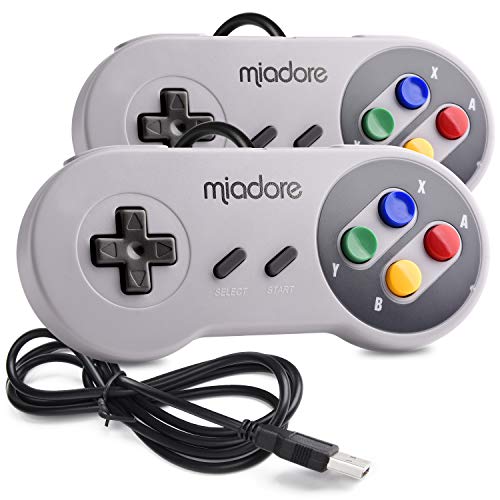
miadore 2 Pack SNES USB Gamepad for PC

miadore 2 Pack USB N64 Controller for PC (Black/Gray)

miadore 2 Pack Classic 64 Wired Controller (Jungle Green/Orange)

miadore 2 Pack N64 Controllers with 6FT Extension Cables
miadore 2 Packs USB Retro N64 Controllers for PC
More On The Choices That Made The List
Four controllers, four clear shells, and a wired-only design meant for the original N64 console. The “Non PC USB” label matters: these connect through the N64 port, not USB, so this bundle is for people who still own the actual hardware rather than people running emulators on a modern PC. The upgraded joystick is a real improvement over the notoriously loose original stick, which made long platforming sessions feel sloppy.
For couch multiplayer nights with family or friends, having four pads ready to go removes the bottleneck of hunting for working controllers. Each one ships in a different transparent color, so no one mixes theirs up. The trade-off is a hard console lock-in.
Standout Benefits
- Four pads mean instant four-player support for Mario Kart 64 and similar party games
- Upgraded joystick offers more consistent centering than the original hardware
- Distinct transparent shells make it easy to tell whose controller is whose
- Wired connection means no batteries or pairing headaches
Worth Noting
- No PC or USB compatibility, which limits the use case to an actual N64 console
- The expansion port does not ship with a rumble pak or memory card, so vibration has to be added separately
Feature Snapshot
Who Will Love This
Anyone with a working N64 console who wants a spare set of pads for couch multiplayer and does not want to gamble on used original hardware.
Look Elsewhere When
Skip this bundle and reach for the 8Bitdo Ultimate 2 WUCHANG: Fallen Feathers controller if you play on Windows or Android, where the lack of USB or Bluetooth rules these pads out entirely.
The Ultimate 2 is the only pad on this list that genuinely belongs in the modern paddle-controller conversation. It runs over 2.4GHz wireless to a Windows PC, falls back to Bluetooth for Android, and supports a wired mode if you want zero input lag. The standout hardware is a pair of TMR joysticks, a magnet-based sensor type that promises higher sensitivity and lower power draw than the Hall Effect sticks in last year’s model. In real use, that translates to finer aim adjustments in shooters without the stick feeling jittery.
The integrated charging dock is the kind of small touch that changes daily habits. Drop the pad on the cradle after a session and it recharges without you having to remember a cable. The trigger-mode switch between linear Hall Effect and non-linear tactile feels useful for sims on one side and platformers on the other.
Notable Upsides
- TMR joysticks deliver precise aim and last longer than standard potentiometer sticks
- Hall Effect trigger option helps with throttle and brake control in racing and sim games
- 2.4GHz connection reports latency as low as 1ms, useful for competitive play
- Remappable rear bumpers (R4 and L4) act as the paddle layer for jump, crouch, or reload inputs
- Charging dock keeps the pad topped off without fiddling with cables
Trade Offs
- Premium feature set pushes this into a higher budget than the retro pads on the list
- 2.4GHz dongle is small enough to lose, so a dedicated storage spot helps
- No native iOS support listed, which limits cross-platform households
Quick Facts
Made For
PC and Android players who want competitive-grade aim, paddle-style rear inputs, and a charging dock that removes the daily “did I plug it in” worry.
Skip It When
Pass on this and consider the miadore 2 Pack Classic 64 Wired Controller if your only goal is cheap local multiplayer on an actual N64, where the Ultimate 2’s modern wireless stack is overkill.
Two pads, one solid cable each, and a shape that mimics the classic N64 layout. Unlike the first pick, this pair targets the actual N64 console with the proper port, so it skips any USB or PC angle. The 6-foot cable is a small but meaningful detail: it lets you sit back on a couch without leaning over a CRT.
For people hunting a budget replacement for a worn-out original pad, this is the kind of pack that makes sense. You get a spare for the friend who always forgets theirs, and the M-shaped grip actually fits adult hands better than the more compact shells from the 90s.
A Few Highlights
- Two-pack pricing is friendlier to the wallet than buying spares one at a time
- 6-foot cable gives couch-friendly reach without leaning in
- M-shaped grip supports several hand positions for different game types
Small Caveats
- Joystick durability tends to vary on third-party pads like this, so rough play will shorten its life
- No bundled rumble or memory card in the box
Key Attributes
Best Suited To
Console owners who want a budget replacement for aging N64 pads and prefer wired reliability over any wireless option.
Consider Something Else When
If you need USB connectivity for emulators on a PC, skip this and grab the miadore 2 Pack SNES USB Gamepad for PC, which targets a different use case entirely.
These are the simplest pads in the roundup: a USB cable, no batteries, no pairing, and an SNES-style layout. They work on Windows, macOS, Linux, and Raspberry Pi, which makes them a popular pick for people running emulators like RetroPie. The “plug in before launching the emulator” note in the manual matters, because some software refuses to recognize a controller that connects after it boots.
For first-timers building a retro setup, this is a low-risk entry point. You’re not investing in a pricey pad to find out whether emulator gaming clicks for you.
A Few Strong Suits
- True plug-and-play with no driver installs required
- Two-pack keeps the cost per controller low
- Cross-platform support covers Windows, Mac, Linux, and Raspberry Pi
Honest Caveats
- SNES layout lacks the second analog stick modern 3D games need
- Some emulators require manual button mapping, which adds setup time for first-timers
Whose Shelf It Belongs On
Emulator hobbyists and Raspberry Pi tinkerers who want a low-cost, no-fuss pad for classic 2D games and older 3D titles.
Not Your Match When
If you want competitive PC play with rear paddles, the 8Bitdo Ultimate 2 WUCHANG: Fallen Feathers controller is the right tool, since this SNES pad was never designed for that style of play.
This is the bridge pick: an N64-style controller with a generic USB connection instead of the proprietary N64 port. That single change opens the door to Windows PCs, Macs, Linux boxes, Raspberry Pi, and a long list of retro gaming operating systems. If you want the N64 feel for Project64 or Mupen64Plus on a modern machine, this is the version to look at.
The “just plug and play” claim holds up for most desktops. The catch is that some games still need their input mapped inside the emulator, which is a one-time setup task rather than a daily annoyance.
Notable Gains
- USB connection drops the original N64 port requirement entirely
- Supports RetroPie, Recalbox, Lakka, and several other retro distributions
- Two-pack gives a spare for local two-player sessions
Points To Keep In Mind
- Not compatible with Android TV boxes, which narrows the living-room use case
- Emulators sometimes need manual button mapping on first launch
Feature Rundown
The Right Fit
Retro gamers who run N64 emulators on a PC, Mac, or Raspberry Pi and want a familiar N64 layout without a converter dongle.
Swap It Out When
If you still own a real N64 console and want zero-latency wired play, the miadore 2 Pack Retro N64 Wired Controller is the better match for that scenario.
A second miadore N64 pad pair, this time in a Jungle Green and Orange colorway that splits the look from the standard black variants. Functionally, it shares the same M-shaped grip and 10-function layout, which means it suits the same kind of play as the other N64 picks: platformers, racing, and shooters built around one analog stick and a D-pad.
The color choice is more than cosmetic. In a room with kids or frequent guests, the bright shells make it obvious which pad belongs to whom, and the rounded edges are friendlier to small hands than the sharper original hardware.
Bright Spots
- Bright colors help everyone in the room keep track of their own pad
- M-shaped grip with separate handles supports different hand positions
- Functional expansion port on the bottom for adding a rumble pak or memory card
Less Ideal Details
- No rumble or memory card included, both sold separately if you want them
- Joystick centering can drift after heavy use, which is a common third-party pad behavior
Perfect Match For
Families and cartridge collectors who want extra N64 pads with a fun look for the original console, not for PC emulators.
Another Choice May Suit
If you need PC or Raspberry Pi support out of the box, the miadore 2 Pack USB N64 Controller for PC gives you the same N64 feel with a USB connection that works on modern hardware.
This bundle is essentially the Jungle Green and Blue controller pair with two 6-foot extension cables in the box. The cables plug into the N64 port on the console, so the original short cord on each pad can reach a couch or recliner across the room. It’s a small addition that solves a real annoyance if your TV is wall-mounted or your console lives in a media cabinet.
For households that have already worn through a few original N64 cables, the extension approach is more practical than buying pads with longer built-in cords. The extensions also take the strain off the controller port, which was a common failure point on the original hardware.
Practical Advantages
- Extension cables add reach without stressing the console’s controller port
- Two-pack plus two cables means a full couch-multiplayer setup in one box
- Different colors reduce mix-ups between players
Potential Drawbacks
- Adds a small extra connection point that can loosen over years of plugging and unplugging
- No PC support, so the use case stays tied to a real N64
Who Should Grab It
N64 owners whose setup is far from the TV, or families who want a tidy two-player bundle without buying cables separately.
Reach For A Different Pick When
For PC gaming with paddle support, the 8Bitdo Ultimate 2 WUCHANG: Fallen Feathers controller is the clear alternative, since this bundle doesn’t address PC use at all.
The last miadore entry on the list is another USB N64-style pad, this one leaning hard into emulator compatibility. Project64, Mupen64Plus, CEN64, and a long list of older emulators are listed as supported, along with OpenEmu for macOS. Setup is plug-and-play at the hardware level, but you still have to map buttons inside your chosen emulator the first time you run it.
The included replacement joystick is a thoughtful touch. Third-party N64 sticks are the most common failure point, and a spare in the box means you can keep playing instead of waiting on a replacement.
A Favorable Mix
- Broad emulator support covers most popular N64 emulators on PC and Mac
- USB connection drops the original port requirement entirely
- Spare joystick included for the inevitable stick wear
Some Limits To Know
- First-time button mapping adds setup time, especially for newer emulators
- Doesn’t pair with the Switch in handheld mode, only docked
Feature Breakdown
Right Fit For
Hobbyists running N64 emulators on a PC, Mac, or Raspberry Pi who want a familiar pad shape without an adapter.
Where A Sibling Pick Shines
For the original N64 console, the miadore 4 Pack Classic 64 Controller stays the stronger match because it targets the real hardware this pad is built to emulate.
What Matters Most Before Choosing Controllers With Paddles For Pc
Connection Type and Latency
The single biggest decision is how the pad talks to your PC. A wired USB controller gives the lowest input lag and never needs charging, which is why most competitive players still prefer a cable. A 2.4GHz wireless dongle, like the one in the 8Bitdo Ultimate 2, comes close to wired performance and removes cable clutter on the desk. Bluetooth works too, but it adds a small amount of latency that can show up in fast-paced games.
Joystick and Trigger Technology
Older controllers used potentiometer sticks that wore out and developed drift. Newer designs use Hall Effect or TMR sensors, which read stick position through magnetic fields instead of physical contact. That means no drift over time and finer analog control. If you play shooters or fighting games, this is the kind of upgrade you feel within a session, not just read about on a spec sheet.
Paddle Layout and Remapping
Paddles only help if the software can assign them to useful inputs. Look for pads that remap without third-party software, so you can change bindings on the fly between games. Rear-mounted buttons also need to fall naturally under your middle fingers; if you have to shift your grip to reach them, the ergonomic benefit disappears.
Software Support and Updates
Some brands ship a companion app that handles firmware updates, button remapping, and deadzone tuning. Controllers that receive regular firmware updates tend to age better, because new features and bug fixes roll out months after purchase. It’s worth checking whether the brand you pick has a track record of supporting older products.
Key Considerations Across These Picks
Common Shopping Slip Ups
A frequent mistake is buying a pad built for the original N64 console and expecting it to work on a PC. The proprietary N64 port is not USB, so unless the listing specifically says USB or PC, you’ll need an adapter or a different pad entirely. Another trap is skipping the first-time button mapping step on emulators. Most emulators need you to assign each button inside their settings, and skipping that step makes the pad look broken when it is actually fine.
Where The Extra Money Goes
The jump from a budget retro pad to a feature-rich controller like the 8Bitdo Ultimate 2 pays for Hall Effect or TMR sticks, a charging dock, a 1000Hz polling rate, and a wireless stack engineered for low latency. None of that matters for casual retro play, but for competitive PC gaming, the smoother sticks and faster input response are the difference between landing a shot and missing it. Higher-tier models also tend to use better plastics and stiffer buttons, which adds to the long-term feel of the pad. Whether that upgrade is worth it depends entirely on how many hours a week the controller actually leaves the dock.



