


Analog video sources still hide in a lot of closets: VHS tapes, camcorder reels, retro game consoles, aging DVD players. A good component capture card bridges that gap, turning outdated signals into files you can actually watch, edit, and share. The picks below cover everything from quick consumer-friendly USB sticks to a professional PCIe ingest card, so you can match the tool to the tapes (or consoles) sitting in front of you.
A Quick View Of The Lineup

GGrozza VHS to USB 2.0 Capture Card

Anber-Tech AV YPbPr to USB Capture

Blackmagic DeckLink Mini Recorder

NEWCARE VHS to Digital Converter
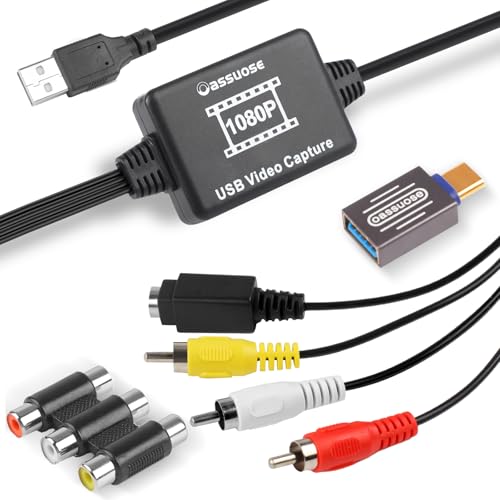
Oassuose 1080P VHS Capture Card

CLLGrocery 1080P VHS to Digital Converter

Techigher 2-in-1 Capture and HDMI Adapter

Wonlyus YPbPr 1080P 60Hz Capture Card
What Each Pick Brings To The Table
Stacks of unlabeled VHS tapes usually start with a single goal: get them onto a computer before the tapes degrade further. The GGrozza VHS to USB 2.0 Capture Card is built for exactly that job, accepting RCA CVBS composite and S-Video sources from a VCR, camcorder, or older console, then streaming the analog signal through a USB 2.0 port into recording software. Because it draws power straight from the USB bus (no brick required), setup stays tidy on a crowded desk.
For most people, this is the kind of tool that lives in a drawer between sessions. The UVC1.0 protocol support means your computer should recognize it without a custom driver hunt, which matters for first-timers who just want a tape to become a file. Compared with the more flexible Anber-Tech YPbPr model, this one keeps things simple, omitting component input for users who don’t need it.
The Helpful Details
- Bus-powered design removes the need for a separate power brick in most setups.
- Backward compatibility with USB 1.1 ports helps older laptops still participate.
- S-Video alongside composite input gives you a cleaner path for supported tapes.
- Compact shell slips into a drawer between digitization sessions.
- UVC1.0 protocol support typically means plug-and-play detection on modern operating systems.
Things To Consider
- No component (YPbPr) input, so high-end retro consoles and some DVD players will need a different path.
- USB 2.0 throughput caps recording at standard-definition bitrates rather than full HD pipelines.
- Long transfer sessions can warm the small enclosure, a minor consideration during marathon jobs.
Feature Snapshot
Who It Suits Best
Casual archivists clearing a shelf of home VHS tapes who want a simple, USB-only workflow without a learning curve.
Where Another Pick Suits Better
Anyone planning to capture from a component-output source like a PS2 or Wii should look at the Wonlyus YPbPr 1080P 60Hz Capture Card instead.
The Anber-Tech AV YPbPr to USB Capture steps up from the GGrozza by adding component video input, a three-cable analog format (YPbPr) that older DVD players and most sixth-generation consoles use. For anyone whose “to digitize” pile includes a PlayStation 2 alongside VHS tapes, that extra input format removes the need to buy a second adapter. The same USB 2.0 pipeline carries the signal into your recording software, so the workflow on the computer side stays familiar.
It’s a practical middle ground, lighter than a professional ingest card but more capable than a composite-only stick. Component input also tends to deliver a noticeably cleaner picture from consoles that support it, since YPbPr keeps the video signal split into its color components rather than mixing them onto one line. If your gear list is mixed, this is the kind of device that quietly covers both halves.
A Few Strong Suits
- Component input brings consoles like PS2 and Wii into the same workflow as VHS tapes.
- Composite AV support preserves compatibility with older VCRs and camcorders.
- USB 2.0 hookup keeps software setup consistent across sources.
Worth Noting
- Output still flows through a USB 2.0 bus, so absolute resolution tops out below what a PCIe card can accept.
- Some bundled software paths are minimal, meaning you may install your own capture app for finer control.
Quick Facts
Made For
Shelf archivists juggling both VHS tapes and older game consoles who want one device to cover both worlds without juggling adapters.
Consider Something Else When
Studio editors needing uncompressed 10-bit ingest over SDI or HDMI will be better served by the Blackmagic DeckLink Mini Recorder.
The Blackmagic DeckLink Mini Recorder is a different category of animal from the USB sticks earlier in this list. It’s a low-profile PCIe capture card, which means it slides into a desktop tower and pulls power directly from the motherboard slot, then accepts 3G-SDI and HDMI sources. That makes it a natural fit for ingest servers, broadcast-style workflows, and anyone who needs uncompressed 10-bit video rather than the compressed paths USB solutions tend to use.
Blackmagic includes two PCIe shields so the card can drop into either a full-height or low-profile slot, which simplifies installation across mixed hardware. The card switches between SD and HD formats on the fly, so you can move between standard-definition archival work and HD camera feeds without reconfiguring the hardware. For home users with a stack of VHS tapes, it’s overkill; for anyone running a small production setup, it’s the tool the rest of this roundup is measured against.
The Upside
- Uncompressed 10-bit recording preserves the headroom editors need for grading.
- 3G-SDI and HDMI inputs cover professional cameras and modern mirrorless bodies alike.
- SD and HD auto-switching removes a manual step between mixed sources.
- Included shields support both full-height and low-profile PCIe slots.
Trade Offs
- Requires a desktop tower with an open PCIe slot; laptops are out of luck.
- No analog inputs, so VHS and retro consoles need a separate path through other picks.
The Numbers That Matter
Best Suited To
Independent editors, livestream producers, and small-studio operators who need broadcast-grade ingest on a desktop workstation.
Not Your Match When
Anyone digitizing analog tapes at home will find the NEWCARE VHS to Digital Converter a much friendlier starting point.
Modern laptops have a way of making older accessories feel like a puzzle. The NEWCARE VHS to Digital Converter sidesteps that with a built-in 2-in-1 cable that ends in both USB-A and Type-C connectors, plus a 3.3-foot lead that reaches the back of a desktop without strain. On the source side, RCA and S-Video inputs handle the typical VCR, camcorder, and DVD player lineup, with NTSC and PAL compatibility for international tapes.
The experience here is shaped around accessibility. You plug in, fire up your capture software, and press play on the source. No hunting for a compatible adapter or a driver disc, no extra power cable. For a household where the “computer person” is also the one tasked with digitizing grandpa’s tapes, that simplicity pays off in saved evenings.
What Earns Its Place
- Dual USB-A and Type-C connectors cover both older and newer computers without an extra adapter.
- 3.3-foot integrated cable offers flexibility for awkward desk layouts.
- RCA and S-Video support covers the bulk of consumer analog gear.
- NTSC and PAL compatibility is useful for international tape collections.
Points To Note
- No component (YPbPr) input, so consoles like PS2 and Wii still need a different solution.
- Quality of the captured file depends heavily on the recording software you choose to pair with it.
Key Specs
Who Will Love This
Family archivists with a mixed bag of modern laptops and aging VCRs who want one cable to bridge the two without buying extra adapters.
Skip It When
Console collectors capturing from component-output hardware will want the Wonlyus YPbPr 1080P 60Hz Capture Card instead.
The Oassuose 1080P VHS Capture Card targets a slightly different promise than most USB capture sticks: a 1080P 30fps output path through both USB-A and USB-C connectors. The marketing points to clearer digital files, though the real-world ceiling here still depends on the analog source, since a worn VHS tape won’t suddenly look like a Blu-ray. RCA and S-Video inputs keep the device compatible with VCRs, Hi8 camcorders, and DVD players, and the dual connector design follows the same flexibility the NEWCARE model offers.
For households where the goal is sharing old memories rather than producing professional video, the appeal is straightforward. You get a tidy little box, plug it in, and end up with files that play on a smart TV or upload to a shared family album. The honest read is that this card behaves much like its peers in this category, with the higher 1080P throughput serving as a comfort feature for those who simply want the best their analog source can offer.
Why It Works Well
- 1080P 30fps output spec gives headroom over standard-definition capture paths.
- USB-A and USB-C support covers a wide range of host computers without adapters.
- RCA and S-Video inputs handle the usual mix of VCRs, camcorders, and DVD players.
Honest Caveats
- Actual image quality remains bounded by the source tape, so worn media won’t magically sharpen.
- No YPbPr component input, so component-only consoles sit outside its reach.
Feature Card
Perfect Match For
Families digitizing camcorder tapes and home videos for sharing on a smart TV or social platform without a learning curve.
A Better Fit Elsewhere
Anyone capturing from a retro console using component cables should reach for the Anber-Tech AV YPbPr to USB Capture for cleaner results.
The CLLGrocery 1080P VHS to Digital Converter takes a kitchen-sink approach to source coverage. RCA inputs welcome VCRs and DVD players, while the listed source compatibility stretches to Hi8 and mini DV camcorders, with NTSC and PAL broadcast standard support for international tapes. The 1080P output spec mirrors the Oassuose model, again with the caveat that the source limits the picture more than the device does.
The case for this pick is breadth rather than depth. Capture quality hinges on the recording software you pair it with, and MP4 or similar common formats make sharing easy. For households working through boxes of mixed tapes and camcorder media, having one box that claims to handle all of it removes a layer of guesswork from the project.
What Pays Off
- Broad source coverage including Hi8, mini DV, VCR, and DVD sources.
- 1080P output spec with common digital formats like MP4 for easy sharing.
- NTSC and PAL support handles tapes from multiple broadcast regions.
Points To Keep In Mind
- Component (YPbPr) input is absent, so component-only consoles aren’t covered here.
- Software setup can vary by host operating system, and finding a compatible capture app may take a few tries.
Right Fit For
Anyone with a wide-ranging media pile of VHS, camcorder tapes, and DVDs who wants one box to handle the full sweep.
Another Choice May Suit
Producers looking for broadcast-grade SDI or HDMI ingest should look at the Blackmagic DeckLink Mini Recorder instead.
The Techigher 2-in-1 splits its identity between a USB capture path and an RCA-to-HDMI adapter, both running through the same box. Connect a VCR or retro console to the analog inputs, and the device can pass the signal through HDMI to a modern TV or monitor while simultaneously sending a capture stream over USB to your computer. That dual role is genuinely useful for retro gamers who want to play on a big screen and record the session at the same time, instead of juggling two devices.
Compatibility spans VCR, DVD, AV sources, and consoles like the PlayStation 2 and Wii, depending on your cable situation. The trade-off is that the device still needs capture software on the host computer to actually save anything, and HDMI passthrough quality can vary by display. For setups where the TV is the centerpiece of the experience, this hybrid design removes an extra box from the shelf.
Well-Handled Touches
- Simultaneous HDMI output and USB capture lets you play and record in parallel.
- Analog inputs cover VCR, DVD, and AV sources, including PS2 and Wii depending on cabling.
- Single-box design cleans up a shelf that would otherwise need a separate HDMI adapter.
Some Limits To Know
- Recording still requires third-party capture software installed on the host computer.
- Output resolution and HDMI behavior can vary depending on the connected display and source format.
Who Should Grab It
Retro gaming enthusiasts who want their consoles on a modern HDMI display while also capturing footage for streams or archives.
Reach For A Different Pick When
Archivists focused purely on VHS tape transfer will find the GGrozza VHS to USB 2.0 Capture Card a simpler, single-purpose option.
The Wonlyus 1080P 60Hz Capture Card leans into the higher end of what a USB capture device can offer. Dual input support covers both composite AV and component YPbPr, with 1080P at 60Hz capture framing it for retro consoles that benefit from smoother frame rates than the standard 30fps paths produce. Compatible host systems include Windows, Mac, Linux, and Android, which is a wider software umbrella than most competitors manage.
For a household with a PlayStation 2, a Wii, an N64, plus a dusty VCR, this card aims to be the single tool that handles all of them. The trade-off is that 60Hz capture places a higher demand on the host computer, so older or underpowered machines may struggle where a current desktop breezes through. Setup still requires you to bring your own capture software, but the input flexibility makes that one-time setup worthwhile for mixed-vintage setups.
A Few Highlights
- 1080P 60Hz capture spec suits smooth-motion retro console output.
- Dual AV and YPbPr input covers tapes, camcorders, and consoles in one device.
- Broad OS compatibility spans Windows, Mac, Linux, and Android hosts.
Possible Compromises
- 60Hz capture raises the bar on host hardware, so older laptops may drop frames.
- You’ll need to source and configure your own capture software, since none is bundled in a meaningful way.
Built With In Mind
Retro gaming enthusiasts capturing from PS2, Wii, and N64 alongside a VCR who want the highest frame rate a USB device can offer.
Swap It Out When
Professionals needing uncompressed 10-bit SDI ingest should step up to the Blackmagic DeckLink Mini Recorder instead.
Choosing A Component Capture Card That Actually Fits
Match The Card To Your Sources, Not The Other Way Around
The single biggest decision is what you plan to connect. VHS tapes, camcorders, and DVD players typically use RCA composite or S-Video outputs, and most cards in this roundup handle those. Retro consoles from the PlayStation 2, Wii, and N64 era often rely on component video (YPbPr), which separates the signal into three cables and delivers a noticeably cleaner picture. A card without component input forces you into a lower-quality path or a second adapter, so list your sources before you list your budget.
Understand The Difference Between USB And PCIe
USB capture devices are portable, draw power from the host, and suit home archivists. PCIe cards like the Blackmagic DeckLink Mini Recorder slide into a desktop tower and pull uncompressed 10-bit video from SDI and HDMI sources, the format professional cameras and broadcast gear use. For most home projects, USB is the right starting point. For studio work, PCIe earns its place.
Software Matters As Much As Hardware
Every card in this roundup depends on capture software to actually write files. Some ship with minimal apps, others expect you to install OBS, VirtualDub, or another tool. Factor in the learning curve for that software before you commit, especially for first-time archivists. A “simple” card paired with complex software feels anything but simple.
Resolution Specs Tell A Partial Story
A 1080P 60Hz spec on a USB capture card sounds impressive, but the source tape or console still sets the ceiling. Worn VHS media won’t suddenly look like Blu-ray, no matter what the box promises. Treat resolution specs as a headroom indicator, not a guarantee of the final image quality.
Smart Buying Tips For Component Capture Cards
Pitfalls Shoppers Hit
Many first-time shoppers grab a composite-only card and discover too late that their DVD player or console only outputs component video, leaving them with a fuzzy image or no signal at all. Others assume bundled software will run smoothly, only to find it crashes or lacks the formats they need. The fix is straightforward: confirm your source’s output type before you buy, and budget time to install a proven third-party capture app like OBS if the bundled option disappoints.
Where The Extra Money Goes
Higher-priced cards in this category typically add component (YPbPr) inputs, smoother 60Hz frame rates, and broader operating system support. The Blackmagic DeckLink Mini Recorder is the clearest jump, trading consumer-friendly USB simplicity for uncompressed 10-bit SDI and HDMI ingest in a PCIe form factor. For a household with a stack of tapes, that upgrade rarely pays off. For a small studio or live production rig, it’s the difference between workable and professional.
Frequently Asked Questions
Do I Need Component Input For VHS Tapes?
No, standard VHS players output composite video through a yellow RCA jack, which every card in this roundup accepts. Component input matters for retro game consoles and some DVD players, not for VHS itself.
Can These Cards Capture Audio Too?
Yes, all eight picks carry the analog audio signal alongside the video through the same input bundle, so your VCR’s stereo RCA audio outputs feed the capture software as a paired track. No separate audio routing is required for typical home setups.
Will A Capture Card Work With A Modern Laptop?
Most USB-based picks in this roundup include either USB-A, USB-C, or both, so newer laptops with only Type-C ports can connect without an extra hub. The Blackmagic DeckLink Mini Recorder is the exception, since it requires a desktop PCIe slot.
Is 1080P 60Hz Capture Actually Necessary?
For VHS and standard-definition camcorder footage, 30fps capture is plenty. 60Hz becomes valuable when capturing from retro consoles, where smoother motion and progressive scan output make a visible difference in the final recording.
Do I Need Special Software To Use These Cards?
Every pick requires some form of capture software, ranging from a bundled app to a third-party tool like OBS or VirtualDub. Plan on spending a little time learning whichever program you choose, since the software controls the final file format and quality.
Closing Remarks
The right capture card depends almost entirely on the gear you already own. A simple USB stick handles a closet full of VHS tapes with minimal fuss, while component-input models open the door to retro console capture at higher quality. For professional SDI or HDMI ingest, the DeckLink steps into a different league. Match the device to your sources, set aside a few hours to learn the capture software, and those old tapes and cartridges finally get a second life on screens that can actually show them.



