


A sim racing cockpit turns a flat desk into something that actually feels like a car. The right frame keeps the wheel planted under hard braking, holds your monitor at eye level, and gives your arms and feet a believable position so the game stops feeling like a game. The wrong one wobbles the moment you turn in, and you start fighting the rig instead of the track.
You probably already have a wheel and pedals in mind, so the frame is the part you need to match to that setup. A small wheel stand tucks into a closet. A full cockpit with a seat and triple monitor mount eats a corner of the room. This list covers everything between, including a wheel-and-pedal set worth pairing with a budget stand.
Your Options, Compared
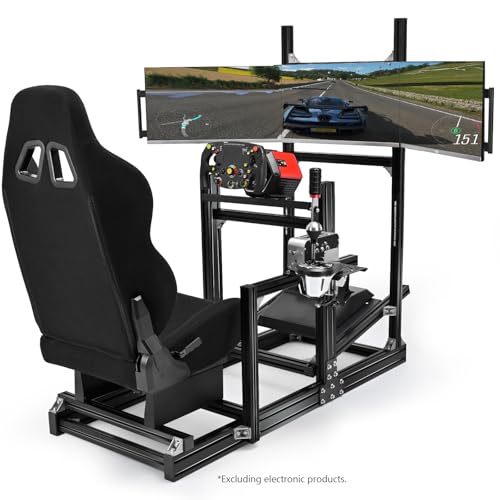
Anman Aluminum Profile Sim Cockpit with Triple TV Mount
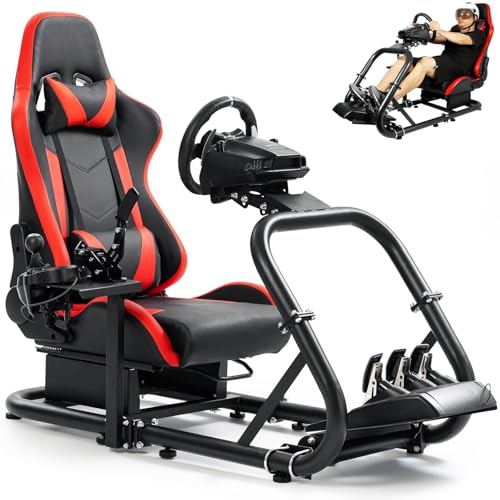
Marada Racing Simulator Cockpit with Red Seat

CAMMOO High Compatible Racing Wheel Stand

CAMMOO Sim Racing Cockpit with Monitor Mount

Dardoo G920 Racing Simulator Cockpit with Red Seat
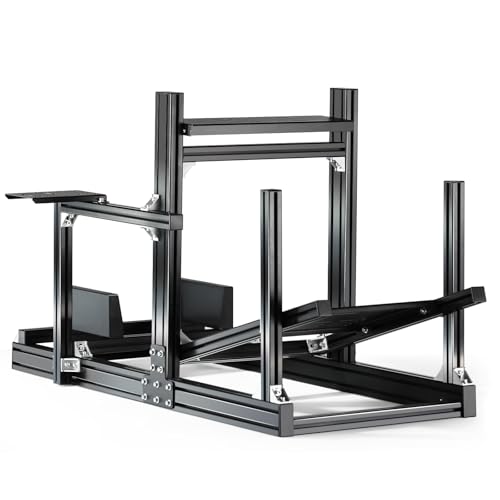
Anman GT/F1 Sim Racing Cockpit 8040 Aluminium

ARES WING Racing Simulator Cockpit with TV Mount
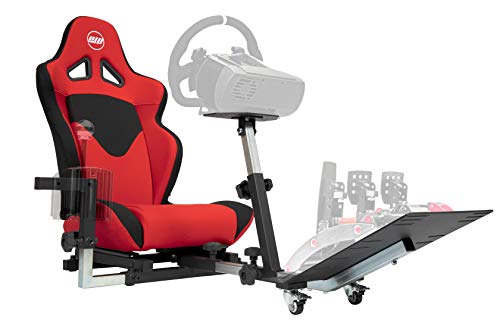
OpenWheeler Advanced Racing Simulator Seat with Gear Shift Mount

CAMMOO Foldable Racing Wheel Stand with Cup Holder
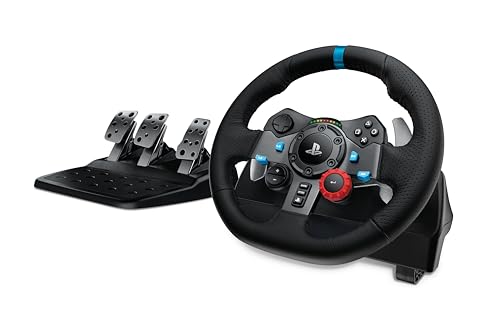
Logitech G29 Racing Wheel and Pedals
The Picks, Examined More Closely
This is the rig for sim racers chasing a wraparound triple-screen field of view. The frame uses aluminum profiles with a support bar near the wheel deck, so the column where the wheel clamps stays put even when you saw at the wheel to wrestle a rear-wheel-drive car out of a slide. Compared to the Marada cockpit later in this list, the Anman leans more toward monitor mounting than direct-drive brute force, which makes it a sensible match for mid-range belt-driven or gear-driven wheels.
It arrives in a single shipment with a bundled seat, so you get a real racing posture on day one rather than bolting a kitchen chair to a frame. If your screens are 32-inch panels or smaller, the three-arm mount lines up well; for larger displays, you may find the mount flexes under their weight.
The Case For It
- Triple-monitor mount is built in, so you skip buying a separate stand and the alignment stays tight across all three panels.
- Aluminum profile construction feels stiffer than a steel-tube frame when the wheel deck loads up under hard correction.
- Support bar at the handle position adds a noticeable amount of torsional rigidity, which matters when you trail-brake into a chicane.
- Includes a dedicated seat, so setup time is mostly unboxing and bolting rather than sourcing a chair separately.
Things To Consider
- The triple mount is engineered for three panels, so single-monitor owners may not use most of what they paid for.
- Owners commonly report that the build takes patience: allow a full afternoon and a second pair of hands for assembly.
At A Glance
Made For
Sim racers running triple 27- to 32-inch monitors with mid-torque wheels who want one integrated rig instead of separate frame and monitor stands.
Where Another Pick Suits Better
The OpenWheeler Advanced Racing Simulator Seat is a smarter pick for console racers who want something lighter and easier to store between sessions.
Direct-drive wheels like a 12Nm unit put real punishment on a frame, and the Marada cockpit is built for that. The chassis uses 50×50mm round tube construction with a 4-hole flange layout at the joints, so the wheel deck doesn’t shift while you wrestle a 900-horsepower car through Eau Rouge. The included seat reclines from 90 to 180 degrees and ships with both neck and lumbar support cushions, which becomes important once a session stretches past an hour.
Where the Anman cockpit on this list focuses on triple monitors, the Marada leans into raw rigidity. Sim racers running high-torque direct drive benefit most, since the frame has the mass to absorb the feedback rather than translating it into a wobbly column. For lighter gear-driven wheels, the rig is more frame than you need.
Well-Handled Touches
- 50×50mm large round tube frame feels planted, so the wheel deck holds position under heavy correction.
- Reclining seat from 90 to 180 degrees lets you switch between a tucked GT position and a more open endurance stance.
- Neck and lumbar cushions are included, which is rare at this frame size and saves a separate purchase.
- Pedal and shifter positions adjust, so a range of driver heights can dial in a believable leg position.
Points To Note
- The frame is heavy, so once it’s set up, you’ll likely leave it in place rather than fold it between sessions.
- Steering wheel and pedals are not included, so the rig assumes you already have hardware to mount.
Built For
Direct-drive owners who push 8Nm to 12Nm wheels and want a frame that won’t flex mid-corner during long GT or open-wheel stints.
Consider Something Else When
The Anman Aluminum Profile Sim Cockpit is the better fit for triple-monitor setups where screen alignment matters more than chassis thickness.
Not everyone needs a full cockpit with a bucket seat bolted in. The CAMMOO wheel stand is a frame you slide a regular office or dining chair into, and that single design choice changes who the product suits. A sim racer who already owns a comfortable chair doesn’t need to buy a second one just to mount a wheel.
The wheel plate has 31 mounting holes and the shifter plate has 26, which opens up compatibility with mainstream wheels, pedals, shifters, and handbrakes without adapter plates. Compared to the CAMMOO cockpit later in this list, this stand is lighter, faster to set up, and easier to push against a wall when you’re done. For belt-driven wheels like the Logitech G29, the rigidity is adequate; for direct drive, you’d want something heavier like the Marada.
What Helps Most
- Chair slot design means you bring your own seat, so comfort is already dialed to your body.
- 31-hole wheel plate and 26-hole shifter plate cover the popular wheel, pedal, and handbrake patterns without extra brackets.
- Footprint stays small, which suits a home office or a corner of a bedroom that doubles as a racing station.
Where It May Fall Short
- Without a built-in seat, the stand is only as stable as the chair you slide into it; a wobbly chair translates to a wobbly wheel.
- Steering wheel and pedals are not included, so you need to budget for a separate wheel set like the Logitech G29 reviewed below.
Right Fit For
Casual sim racers in small apartments who want a low-fuss stand that disappears between sessions and works with their existing chair.
Look Elsewhere When
The CAMMOO Sim Racing Cockpit with Monitor Mount is the better fit if you want a full frame and don’t already own a chair you like.
The CAMMOO cockpit sits in the comfortable middle of this roundup: a full frame with a single monitor mount, shipped in a single box with hardware sorted in blister packs. That last detail sounds small until you build a frame with fifty mixed screws and lose track of which spacer goes where. Two people make the build easier, and the included instructions line up with that.
Compatibility is broad: a 31-hole wheel plate and 26-hole shifter plate cover mainstream Logitech, Thrustmaster, Fanatec, and PXN hardware without adapter brackets. Compared to the triple-monitor Anman at the top of this list, this one suits a single ultrawide or a single 32-inch panel, which is what most sim racers actually use day to day. For triple-screen ambition, step up to the Anman.
Where It Excels
- Single-monitor mount puts a panel right in your eye line, which is the most common single-screen setup.
- Blister-packed screws keep the build sorted, so you spend less time sorting hardware and more time driving.
- Wheel and shifter plate hole counts cover mainstream wheels, shifters, and handbrakes without adapter plates.
Practical Considerations
- Assembly goes faster with two people, so solo builders should set aside a longer evening.
- Steering wheel and pedals are not included, so factor those into the total cost before committing.
At A Glance
Whose Setup It Belongs In
First-time cockpit owners running a single monitor with a mid-range Logitech or Thrustmaster wheel who want a clean, complete frame.
Skip It When
The Dardoo G920 Racing Simulator Cockpit is a better match for Logitech G-series owners who want maximum adjustability from the start.
Logitech G-series wheels are everywhere, and the Dardoo cockpit is built with that ecosystem specifically in mind. The wheel plate is drilled for G29, G920, and G923, plus Thrustmaster T300RS, TMX, T248, MOZA R5, and PXN V99 patterns, which covers most entry-level and mid-range setups. The fit for G-series wheels is the tightest on this list, so you skip the trial-and-error bracket hunt.
Adjustment range is the headline feature. Wheel angle, wheel height, pedal tilt, and shifter position all move, which means a range of driver heights can land on a believable position. Compared to the CAMMOO cockpit reviewed earlier, the Dardoo is a more polished fit for Logitech owners but lighter on universal mounting patterns. For first-time cockpit owners, that trade usually works in your favor.
Strong Points
- Drilled for Logitech G29, G920, and G923, so the wheel clamps directly without adapter plates.
- Multi-axis adjustment on wheel, pedal, and shifter makes the cockpit work for a wide range of driver heights.
- Wheel, pedal, and shifter positions all lock independently, so you can lock in a setup and return to it exactly.
Honest Caveats
- Designed for a single monitor setup, so triple-screen users will need a different frame.
- Frame is light enough to slide for storage, so on hardwood floors you may want a rug underneath to keep it planted.
Made For
First-time cockpit owners running a Logitech G29, G920, or G923 wheel who want a frame that mounts without adapter plates.
Where Another Pick Suits Better
The Logitech G29 Racing Wheel and Pedals is the better starting point if you don’t yet own a wheel and want a complete box on day one.
Sim racers who switch between GT endurance cars and open-wheel formula cars know that the seating position changes dramatically between the two. A GT car has you sitting low with arms reaching up. An F1 car drops your legs and tucks your arms forward. The Anman GT/F1 cockpit is engineered to handle both without compromise, which is unusual outside of much pricier aluminum extrusion rigs.
Construction is full 8040 aluminum profile, the same family of T-slot extrusion used in serious custom builds. The frame supports heavy direct-drive wheels without deformation during long sessions, and stepless adjustment on the seat rails lets you slide forward into an F1 tuck or back into a GT recline. Compared to the Anman triple-monitor rig earlier in this list, this one skips the monitor mount and focuses on chassis adjustability, so budget for a separate screen solution.
What Makes Sense
- Full 8040 aluminum profile construction supports heavy direct-drive wheels without flex during long stints.
- Seat, wheel, and pedal positions adjust steplessly, which matters when you race both GT and formula cars in the same week.
- Frame geometry supports both a high-arm GT position and a low-arm F1 tuck, so the rig covers the full range of car types.
Trade Offs
- No monitor mount included, so you need a separate screen stand or wall mount to complete the setup.
- Premium aluminum frame carries a higher price tag, so this is a deliberate upgrade rather than a starter choice.
Built For
Enthusiast sim racers with deep budgets who run high-torque direct drive and switch between GT and formula seating positions.
Consider Something Else When
The Marada Racing Simulator Cockpit is the better value for direct-drive owners who don’t need a dedicated F1 seating position.
Eight non-slip support feet line the base of the ARES WING cockpit, and that detail is what separates a frame that drifts across a hard floor from one that stays put. When you’re running a direct-drive wheel and the force feedback kicks in mid-corner, the last thing you want is the frame creeping backward. The reinforced structure is rated for high-torque wheels like the Fanatec Pro series.
Beyond the base, the cockpit includes a TV mount and a detachable design, which means a partial disassembly for transport rather than hauling a fully welded rig. Compared to the Marada cockpit reviewed earlier, the ARES WING is more modular and easier to break down, though not as heavy in the chassis. Sim racers upgrading from a wheel stand to a real cockpit land in the sweet spot for this frame.
The Value In It
- Eight non-slip feet at the base keep the frame planted during hard force-feedback moments.
- Reinforced structure handles high-torque direct-drive wheels, so the rig doesn’t constrain your upgrade path.
- Detachable design makes the frame easier to transport than a fully welded cockpit.
Points To Keep In Mind
- Build quality varies in this tier, so budget time to check bolt torque after the first few sessions.
- TV mount supports a single screen, so triple-monitor owners will need a different solution.
Made For
Sim racers moving up from a wheel stand to a proper cockpit, especially those stepping into a high-torque direct-drive wheel.
Look Elsewhere When
The Anman GT/F1 Sim Racing Cockpit is a better fit for racers who switch between GT and formula seating positions regularly.
The OpenWheeler seat is closer to a fiberglass-style racing shell than a full steel cockpit, and that single design choice makes the lightest option in this roundup by a wide margin. Console racers on PS3, PS4, Xbox 360, and Xbox One, plus retro platforms like PS1, PS2, Wii, and GameCube, all sit in the supported console list. PC racers are covered too, since the wheel plate accepts standard PC wheel patterns.
The shell mounts the gear shifter on either the left or right hand side, which matters for drivers in countries where shifters sit on the left. Compared to the Anman aluminum profile cockpit earlier in this list, the OpenWheeler trades rigidity for portability, and that trade is the right call for console gamers who store the rig between sessions. For high-torque direct drive, you’ll want something heavier.
Practical Pluses
- Lightweight fiberglass-style shell makes the rig the easiest to move in this roundup.
- Left or right shifter mount covers markets where the shifter sits opposite to a US-style layout.
- Console support stretches from PS1 through PS4 and Xbox 360 through Xbox One, plus Wii and GameCube.
Some Limits To Know
- Shell design isn’t built for high-torque direct drive, so direct-drive owners should look at heavier frames like the Marada.
- Steering wheel and pedals are not included, so factor those into the total setup cost.
Best Suited To
Console sim racers in small rooms who want a true racing seat shape without the footprint of a full cockpit frame.
Reach For A Different Pick When
The Dardoo G920 Racing Simulator Cockpit is a better fit for Logitech G-series owners who want a sturdier frame for daily use.
Plenty of sim racers share a room with a desk, a couch, or a dining table, and a full cockpit just won’t fit. The CAMMOO foldable stand collapses flat, which is the headline feature. You wheel out for a session, race, and fold the stand back behind a door or under a bed when you’re done. The cup holder is a small touch, but in a long endurance stint it keeps a drink within reach without a side table.
Mounting is broad: 31 holes on the wheel plate and 26 on the shifter plate cover Logitech G29, G920, G923, Thrustmaster T128 through T300RS, Fanatec F1, Hori, Mad Catz, and PXN V9 and V10 patterns. Compared to the CAMMOO wheel stand reviewed earlier, the foldable version trades a bit of rigidity for storage, so a heavy direct-drive wheel may push the limits of what the frame absorbs.
Useful Highlights
- Folding design lets the stand stow behind a door or under furniture, which is rare in this category.
- Cup holder built into the frame keeps a drink within reach during long stints.
- Broad hole pattern on the wheel and shifter plates covers mainstream wheels, shifters, and handbrakes without adapters.
What To Weigh
- Folding joints introduce some flex compared to a one-piece frame, so a heavy direct-drive wheel may push the limits.
- Steering wheel and pedals are not included, so the stand assumes you have or are buying wheels separately.
Perfect Match For
Sim racers in small apartments or shared rooms who need a rig that disappears between sessions without a full breakdown.
Swap It Out When
The CAMMOO Sim Racing Cockpit with Monitor Mount is a better fit if you have a dedicated corner and don’t need the folding design.
The other nine items on this list are frames, and a frame alone is just metal. The Logitech G29 is the wheel and pedal set that brings the rig to life. The Driving Force wheel uses helical gearing, which is a gear design that runs smoother and quieter than straight-cut gears, so the wheel feels tight rather than clunky when you turn in. The wheel rim is wrapped in hand-stitched leather, which matters during long sessions where a hard plastic rim starts to feel cold.
The pedal set includes a pressure-sensitive brake, which is the single most important upgrade over a basic three-pedal plate. You modulate brake pressure rather than on-off, which is how real cars work. Compatibility covers PS5, PS4, and PC, so a wide range of racing titles work out of the box. Mount the G29 on any frame in this roundup, and you have a complete setup.
Useful Touches
- Helical gearing delivers smooth, quiet steering, which becomes obvious during a long endurance stint.
- Pressure-sensitive brake pedal lets you trail-brake and modulate lockup, which is the difference between arcade and sim feel.
- Hand-stitched leather wheel wrap feels closer to a real car than a hard plastic rim, especially in cooler rooms.
Room For Improvement
- Force feedback is gear-driven rather than belt or direct drive, so the detail in road texture is less refined than higher-end wheels.
- Pedals are entry-level plastic, so serious racers tend to upgrade the pedal set eventually.
At A Glance
Made For
Newcomers buying their first wheel and pedal set for PS5, PS4, or PC who want a known-good starter without overcommitting on price.
Skip It When
The CAMMOO High Compatible Racing Wheel Stand is the better fit if you already own a wheel and only need a frame to mount it on.
Key Things To Weigh Before Choosing A Sim Racing Cockpit
A sim racing cockpit is really three decisions in one: wheel compatibility, frame rigidity, and footprint. Get those right and the rest follows.
Wheel compatibility is the first filter. Logitech G-series wheels, Thrustmaster T-series, and Fanatec patterns cover most of the market, but the hole patterns aren’t identical. A frame drilled for one pattern may need adapter plates for another, and adapters add flex. If you already own a wheel, check the cockpit’s wheel plate against your specific model before anything else.
Frame rigidity comes from tube size, joint design, and total mass. A 50mm round tube with flanged joints feels different under hard correction than a thin steel frame with welded corners. Direct-drive wheels amplify the difference, since the force feedback is fighting the frame, not just your hands. For belt- or gear-driven wheels like the Logitech G29, lighter frames work fine. For 8Nm and up, heavier is the right call.
Footprint and storage matter more than most shoppers expect. A full cockpit eats a corner of a room permanently. A foldable stand stows under a bed. A wheel stand with a chair slot lives wherever your chair already does. Be honest about the space you actually have, and the right product almost picks itself.
Smart Choices And What They Cost You
Pitfalls Shoppers Hit
The most common buying mistake in this category is matching the frame to the room instead of the wheel. A budget foldable stand paired with a 10Nm direct drive flexes under hard braking, and the feedback that should be telling you about lockup instead tells you about the frame. Match the frame’s stiffness to the wheel’s torque, not the other way around.
A close second is forgetting the monitor solution. Cockpits like the Anman GT/F1 ship without a monitor mount, which is fine if you already own a screen stand. If you don’t, a triple-screen plan needs a triple-monitor cockpit, not a single-mount frame with a separate third-party monitor stand. Plan the screen setup before choosing the rig.
Where The Extra Money Goes
Premium aluminum-profile cockpits cost more because the material is stiffer, lighter, and easier to reconfigure. Steel tube is cheaper but heavier and harder to adjust. If you switch between GT and formula seating positions, the premium aluminum frame is the right upgrade. If you race one car type and never plan to change, a mid-range steel frame is plenty.
The other place higher-tier pricing shows up is the pedal and shifter ecosystem. Branded pedal sets and hydraulic handbrakes mount cleanly on cockpit frames with proper hole patterns. Budget frames sometimes skip those patterns, which means adapter plates and lost time. Spending up on the frame usually saves money on adapters later.
Frequently Asked Questions
What wheel do I need for sim racing?
You can start with a gear- or belt-driven wheel like the Logitech G29, which is the most common entry point. As you race more, you can step up to a direct-drive wheel for stronger and more detailed force feedback. The frame you choose should match the torque rating of your current and next wheel.
Are foldable wheel stands stable enough for direct drive?
Most foldable stands are designed for belt- and gear-driven wheels. Direct-drive wheels put more force into the frame, and a folding joint can flex under that load. If you plan to run direct drive, a heavier fixed frame like the Marada or Anman GT/F1 is the safer choice.
Can I use a sim racing cockpit on carpet?
Most cockpits have rubber or plastic feet that work on both hard floors and carpet, though very thick carpet can compress under load and slightly shift the wheel deck. On hardwood, you may want a rug or mat under the frame to keep it from sliding during heavy force feedback. Always recheck bolt tension after the first few sessions.
Do I need a seat with my cockpit?
Some cockpits like the Anman triple-monitor rig and the Marada include a seat. Others like the CAMMOO wheel stands use a chair slot, so you bring your own. If you already own a comfortable chair, a chair-slot stand saves money. If you don’t, a cockpit with a bundled seat is the simpler path.
How big a monitor do I need for sim racing?
A single 27- to 32-inch monitor covers most single-screen setups and mounts on most cockpit frames. A single ultrawide panel gives a wider field of view without the alignment headaches of a triple setup. Triple 27-inch screens give the widest view but require a frame specifically built to hold three panels, like the Anman triple-monitor cockpit.
Wrap Up
A sim racing cockpit is the difference between playing a racing game and feeling like you’re driving. Match the frame to the wheel you have today and the wheel you might buy in a year, and the rest is just where the rig fits in your room. Start with the wheel if you don’t yet own one, then add a frame that mounts it cleanly. Your future self, mid-stint at Spa, will appreciate the choice.



