


Pulling out a board game for friends, partners, or family on a slow weekend is one of those small joys that’s getting rarer. Streaming subscriptions, group chats, and a hundred other things pull people apart, but sitting around a table with a stack of cards and a shared goal still works. The trick is finding games that don’t require a rulebook the size of a paperback, that welcome mixed experience levels, and that finish while everyone’s still awake.
This list focuses on titles that hit those marks. Most scale for 2 to 6 players, a few stretch higher, and a couple teach something real while you play. Below are seven strong options, each with a clear reason to be on your shelf and a clear reason to skip it for something else.
The Lineup, Simplified
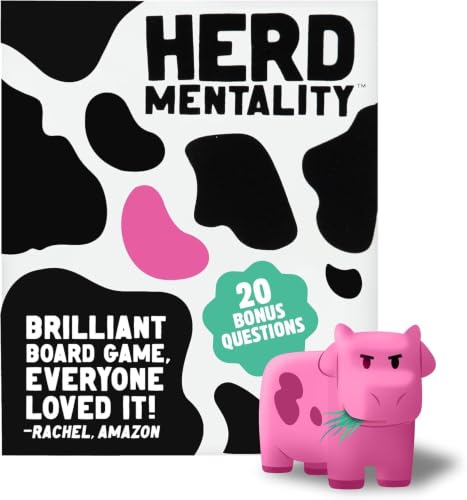
Herd Mentality Family Board Game (Ages 10+)

Funko Cranium Big Brain Detective Game (Ages 5+)

CGE Codenames Board Game (2nd Edition)

CP TIME Game: A Black Trivia Party Game

Late for the Sky Brew-Opoly Adult Beer Board Game

IELLO Prophecy Strategic Trick-Taking Card Game

Genius Games Peptide Protein Building Card Game
The Picks, Examined More Closely
Big Potato’s Herd Mentality thrives on group size, and the published range of 4 to 20+ players means you can break it out at family reunions, office parties, or just a packed living room. The core loop is simple: flip a question, everyone writes an answer, and if you land in the majority you win a cow. A pink cow acts as a wild card, and the person with the herd at the end wins.
This edition ships with bonus content, a Festive Expansion pack, and a Moosic and Moovies edition, so the variety holds up across multiple game nights. For groups that like low-stakes laughter over heavy strategy, it’s a strong opener. The answer-writing format also means shy players get a chance to chime in without being put on the spot verbally.
Where It Excels
- Scales from 4 to 20+ players without rule changes
- Quick to teach, often under five minutes
- Includes bonus and expansion content for replay value
- Written answers remove the pressure of speaking up
Things To Consider
- Not suited for two players, since consensus needs a crowd
- Can feel repetitive after several rounds back to back
Feature Snapshot
Best Suited To
Large family gatherings, party hosts, and anyone whose game night already has a dozen people and needs something inclusive.
Look Elsewhere When
You want a head-to-head mental challenge, since the IELLO Prophecy card game is a much better fit for two players and tight strategy.
Funko’s Big Brain Detective Game comes from the same team that built Cranium Hoopla and Cranium Hullabaloo, and the family focus shows. Players work together to search a vibrantly illustrated map, spot visual clues, and crack 300 included mysteries before the clock runs out. The 1-4 player count and age 5+ recommendation put it well within reach of mixed families.
Cooperation is the big draw here. Nobody gets eliminated, and the team wins or loses as a group, which suits households with younger kids. Compared to the open-ended party format of Herd Mentality earlier on this list, this one trades loud laughter for a slower, more curious pace. It doubles as a weekend activity for a parent and a single child.
Strong Points
- Cooperative format keeps younger players engaged and included
- 300 mysteries lengthen replay value before things repeat
- Colorful map doubles as visual eye-spy practice for kids
- Plays well with a single adult and one child
Worth Noting
- Capped at four players, so it won’t fill a large party
- Reading skills may be needed for older mysteries, depending on the round
Made For
Families with kids age 5 and up, and parents looking for a screen-free weekend activity that builds observation skills.
Skip It When
You need a game for ten people, since CGE Codenames handles two-team formats of any size with a lot more energy.
Codenames is a word-association game built around a 5×5 grid of cards. A spymaster on each team gives a single-word clue and a number, and teammates race to identify their agents while avoiding the assassin card that ends the round instantly. The 2nd edition refreshes the components without changing the core engine that made the original a modern classic.
Two teams means an even number of players works best, but in a pinch, one person can hold both spymaster roles. The creativity reward is real: a clever clue feels earned, and a misfire leads to good-natured arguments. The cooperative Cranium game above trains observation, while this one trains lateral thinking and shared vocabulary.
A Favorable Mix
- Simple rules that open up deep wordplay
- Plays well in roughly 15 minutes per round
- Strong replay value from a 5×5 grid of changing cards
Room For Improvement
- Odd player counts need a temporary spymaster or solo variant
- Heavily language dependent, which limits accessibility for some households
Key Specs
Right Fit For
Two pairs of friends, couples, or family teams who enjoy verbal puzzles and a touch of competitive bluffing.
Swap It Out When
You need something for 20 people, since Herd Mentality swallows large crowds without breaking a sweat.
CP TIME leans into culture-focused trivia across categories like pop culture, music, and general knowledge, then layers in a companion app that runs an unpredictable timer. The result is a party game where you can never quite settle into a rhythm, since the clock changes how long you get to answer.
It lands well for game nights where players want something specific and themed rather than a broad family pick. The app-driven timer means most households will want a phone or tablet ready, and one common practical note: keeping that device charged between sessions avoids mid-game interruptions. Compared to the free-form wordplay of Codenames, this one’s a knowledge test with a bit of friendly pressure.
Everyday Wins
- Multiple trivia categories keep rounds from feeling one-note
- App-driven timer adds unpredictability to each turn
- Conversation starter for hosts who want a themed night
Points To Note
- Requires a phone or tablet for the timer companion
- Knowledge focused, so it rewards players with broader cultural familiarity
Quick Facts
Who Should Grab It
Hosts planning a culture-themed party or a family reunion where trivia is the main event.
Reach For A Different Pick When
You’d rather not depend on an app, since Herd Mentality runs entirely on paper and pens with no device needed.
Brew-Opoly takes the classic property-trading formula and swaps real estate for breweries, brewpubs, and craft styles. Players buy favorite beer styles, build brewpubs, collect rent in a way that mirrors Monopoly, and out-strategize friends. The 2-6 player range fits couples and small groups, and the recommended age is 21+.
Two rule sets ship in the box: a full game and a quick-play version, which makes the box versatile depending on the night. The components include a colorful board, money, tokens, cases, brew houses, and challenge cards packed with beer facts and party dares. The educational angle is real, since each card carries tidbits about American microbrews alongside the dares.
What Helps Most
- Beer trivia cards double as conversation pieces
- Quick-play rules shorten sessions for weeknight play
- Themed components appeal to craft beer enthusiasts
Small Caveats
- Theme limits appeal to non-beer drinkers
- Long full games can outlast attention spans
Whose Shelf It Belongs On
Hosts of craft beer tastings, bachelor parties, and adult game nights where the theme fits the table.
A Better Fit Elsewhere
You want pure mental strategy without a theme filter, since IELLO Prophecy runs deeper with cleaner mechanics for two players.
Prophecy puts a Mayan priest theme on top of a trick-taking card game, and the twist is the betting layer. At the start of each round, players secretly set aside cards to declare how many tricks they expect to win. The catch is the same as any betting game: declaring too high a number and missing the mark can sink your score, but playing it too safe means missing out on a big payoff.
The 2-6 player range and roughly 40-minute runtime hit a sweet spot for weeknight play, and the 10+ age recommendation makes it playable for older kids. Compared to the party chaos of Herd Mentality earlier on this list, Prophecy is quiet, focused, and rewards careful reading of the table. Owners commonly report that the box holds up well to repeated play, with sleeves recommended if your group shuffles hard.
The Good Stuff
- Betting layer adds stakes to every trick
- Plays cleanly at two players, which most strategy games avoid
- Manageable 40-minute runtime fits a weeknight
Practical Considerations
- Card condition depends on handling, and frequent shufflers may want sleeves
- Theme is light, so the appeal comes from mechanics more than narrative
Feature Card
Built With In Mind
Two players who want a thinking game, plus small groups that enjoy card-based strategy over dice luck.
Where A Sibling Pick Shines
You need a big-party laugh, since the Late for the Sky Brew-Opoly box fits a beer-themed crowd much better than a tight two-player duel.
Peptide is built around the biology of how cells convert genes into proteins, with players drafting amino acid cards and matching mRNA nucleotides to build a peptide chain. The vocabulary on the cards covers organelles, nucleus, mitochondria, and ribosome, all concepts that show up in high school biology. The 10+ age recommendation matches that audience, and the open card-drafting structure keeps adults engaged.
The game is most often used in classrooms and homeschool settings, but it also plays well at home for families with a science-curious kid or a biology teacher looking for a hands-on activity. Compared to the pure entertainment focus of every other title on this list, Peptide wears its educational value proudly, and the strategy layer means it doesn’t feel like a worksheet.
Why It Works Well
- Accurate science aligned with high school biology curriculum
- Open drafting rewards thoughtful card selection
- Doubles as a teaching tool for homeschool or classroom use
Factors To Consider
- Educational tone limits appeal for casual party groups
- Storage of organelle and amino acid cards benefits from a small sorting tray, which most households will not have on hand
Spec Overview
Perfect Match For
Biology teachers, homeschool families, and curious adults who want a strategy game that teaches something real between turns.
Not Your Match When
You want something loud and social, since the CP TIME trivia box fits a party crowd with much more energy than a science card draft.
Choosing Games That Earn Their Place at the Table
Player count is the first filter, and it deserves more weight than most shoppers give it. A game rated for 4 to 20 players covers everything, but a tight two-player title collapses to a poor three-player experience. Match the box to the size of your real group, not the size of the group you wish you had.
Mechanic depth matters next, since the gap between a party game and a strategy game is large. Party titles like Herd Mentality and CP TIME trade complexity for laughs and short rules, while IELLO Prophecy and CGE Codenames ask for more thinking without crossing into hours-long play. Reading the rulebook before you buy is fair, since most publishers post a PDF copy online for exactly this reason.
Theme often decides ties. A craft beer group will embrace Brew-Opoly where a classroom setting would rather reach for Peptide. Ages matter too, since the 5+ Cranium game and the 10+ strategy cards serve very different tables. Build a small rotation rather than one perfect box, and your game nights get more reliable across the seasons.
Navigating The Decision Before You Buy
Where Shoppers Go Wrong
A common trap is buying for a hypothetical future group, like a 12-person party you host twice a year, when your weekly game night is three people. Another is ignoring the rulebook weight, since a 30-page PDF is a real time cost for first-time play. Storage slips past shoppers too, and games with hundreds of small cards benefit from a designated tray or insert before they hit the shelf.
Where The Extra Money Goes
Higher-tier boxes usually pay for better component quality, deeper strategy, and stronger replay value. Brew-Opoly and the 2nd edition of Codenames lean into richer components and refined art, while a budget party game often skimps on card stock. Spend up when the box will hit the table weekly, and save when it’s a once-a-year crowd pleaser.
Frequently Asked Questions
How many players do most cooperative or campaign games support?
Most boxes on this list cover 2 to 6 players, while a few party titles stretch into the double digits. Pick by your real group size, not your ideal one.
Are card sleeves worth buying for these games?
For trick-taking and drafting titles like Prophecy and Peptide, sleeves are a worthwhile add since the cards shuffle hard during repeated play. Party decks see less wear.
What’s a good first game for a mixed-age family?
The Funko Cranium Big Brain Detective Game covers ages 5 and up, plays cooperatively, and finishes in a window that holds kids’ attention, which is usually the hardest constraint.
How long do these games typically take to learn?
Most of these read in under 10 minutes from opening the box, with Codenames and Herd Mentality at the simpler end and Prophecy and Peptide asking for a sample round before competitive play.
Can these games be played solo?
Only the Cranium detective game is built for one to four players with solo in mind. The rest assume at least a small group, though Codenames can run as a single-player puzzle with both spymaster roles.
Wrap Up
The right pick comes down to the people at your table and the night you want to have. Herd Mentality fills a crowded room, Codenames sparks arguments in the best way, and Peptide earns a spot in a classroom or curious household. Browse the listing for current details, and pick the one that matches your next gathering rather than chasing a perfect shelf.



