


Building layered guitar parts at home used to require a four-track recorder and a decent chunk of patience. A modern looper pedal compresses that workflow into a single stompbox, letting you stack rhythm, lead, and percussion-style overdubs on the fly. The catch is that pro-tier loopers often stretch well past what a casual player wants to spend, which is exactly where this roundup earns its keep.
Every pick below lands comfortably below flagship pricing while still covering the features most bedroom and gigging players actually use. You’ll find everything from a no-frills single-loop workhorse to a loop-plus-drum-machine combo, so you can match the pedal to your playing style instead of the other way around.
The Essentials At A Glance

LEKATO Looper Guitar Pedal 9 Loops 40 Min (Black)

Electro-Harmonix Nano Looper 360

Boss RC-1 Loop Station

LEKATO Guitar Effect Pedal Looper with Tuner

M-VAVE Loop Pedal Pro
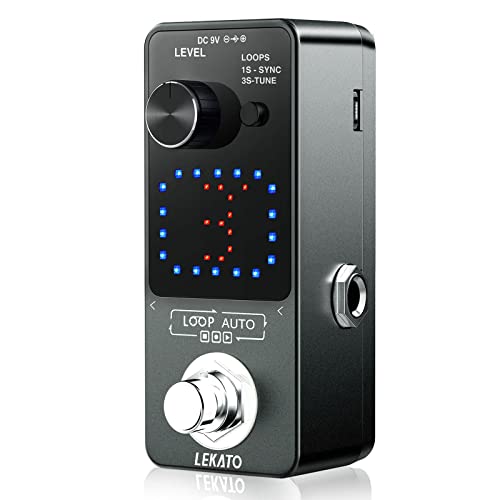
LEKATO Looper with SYNC and Tuner

LEKATO Mini Looper with Power Supply

Donner Circle Looper and Drum Machine

Coolmusic Jammer Looper Effects Pedal
Inside Each Recommended Option
The LEKATO Looper lands in a comfortable spot for anyone stepping into looping for the first time. The visual time indicator on the top panel keeps you oriented, so a long overdub session never feels like guesswork. A 48K/24-bit sampling rate and an Analog-Dry-Through signal path preserve your dry guitar tone even as the layered parts build up underneath.
Compared with the Electro-Harmonix Nano Looper that follows, this LEKATO trades a smaller footprint for more onboard memory slots. You get nine loops and roughly 40 minutes of total record time, which is generous for songwriting sessions and full-band practice. Bass players running through a looper benefit from the same uncompressed audio path, so low-end punch stays intact.
Useful Strengths
- 9 onboard slots give you room to store verses, choruses, and alternate takes without erasing.
- 40 minutes of total record time supports long-form jam sessions.
- Uncompressed 24-bit audio keeps stacked layers clean and detailed.
- Analog-Dry-Through routing preserves your clean tone underneath every overdub.
- The clear visual time indicator helps you land loop endpoints accurately.
Points To Note
- Relies on a separate 9V power supply, which adds cable clutter to a small board.
- Some users find the footswitch action a touch stiff for fast punch-ins during live use.
Feature Snapshot
Best Suited To
Beginners and intermediate players who want plenty of memory and don’t need the smallest enclosure on the market.
Consider Something Else When
The Electro-Harmonix Nano Looper 360 suits you more if pedalboard real estate matters more than slot count.
Where the LEKATO leans into memory depth, the Electro-Harmonix Nano Looper 360 keeps the physical footprint small without gutting the feature list. The housing fits easily between standard-sized stompboxes, which matters when your board is already full of drives and mod effects. Eleven storable loops give you enough variety to swap sections between songs without erasing on the fly.
Audio quality is a real strength: uncompressed 24-bit A/D/A at 44.1kHz means overdubs don’t slowly smear the way they do on cheaper units. The silent momentary footswitch is a thoughtful touch, especially for players who record in apartments or quiet studios. For solo practice and songwriting, the 360 seconds of total loop time is plenty.
Practical Advantages
- Tiny enclosure frees up space for other pedals on a crowded board.
- 11 loop slots let you organize song parts with minimal erasing.
- Uncompressed 24-bit A/D/A keeps stacked parts clean.
- Silent momentary switching is friendly to home recording setups.
Worth Noting
- Smaller physical size can make the single footswitch feel cramped for players with larger feet.
- Lacks a built-in screen, so you navigate slots by indicator lights alone.
Who Will Love This
Players running tight boards, traveling with a compact setup, or working in noise-sensitive home studios.
Look Elsewhere When
The Boss RC-1 Loop Station fits better if you want a circular status display and a more traditional footswitch feel.
The Boss RC-1 brings a layout that makes sense the first time you use it. The 24-segment LED ring on the top panel shows record, overdub, and play status at a glance, so you can focus on the music instead of the indicator lights. Stereo in and out give the pedal room to breathe on a two-amp rig or a stereo recording chain.
Up to 12 minutes of stereo recording is the headline number, and it’s a comfortable amount for full-length song structures. Boss pedals are also known for surviving the road, which is a real consideration for anyone hauling gear to weekly gigs. Compared with the LEKATO units, the RC-1 prioritizes a more polished, single-footswitch workflow over a long list of secondary modes.
The Helpful Details
- Circular LED indicator gives you instant visual feedback on mode and position.
- 12 minutes of stereo recording supports full song arrangements.
- Stereo inputs and outputs make it easy to integrate into a modern rig.
- Boss build quality tends to hold up well under regular transport and gig use.
- Simple single-footswitch operation keeps the learning curve short.
Trade Offs
- No multi-slot memory bank like the LEKATO units, so you’ll erase between sections.
- Lacks a built-in tuner or drum grooves that some other picks include.
At A Glance
Perfect Match For
Gigging guitarists who need a roadworthy pedal with a layout anyone can learn in minutes.
Swap It Out When
The Donner Circle Looper makes more sense if you want built-in drum grooves to anchor your practice sessions.
What separates this LEKATO from the earlier LEKATO entry is what’s in the box. A bundled 9V 0.6A power supply and a USB cable take the usual “now I need to buy an adapter” sting out of the purchase. For a first pedalboard, that one-stop approach saves both money and a trip back to the retailer.
The core looper spec is the same: nine slots, 40 minutes of total record time, uncompressed 24-bit audio, and an Analog-Dry-Through signal path. A built-in high-sensitivity tuner is genuinely useful for players who don’t already have a dedicated tuner pedal taking up space. You trade a few dollars for a bit more plastic feel in the housing, but the functionality is comparable to pricier alternatives.
Why It Works Well
- Included power supply and USB cable make the pedal ready to play out of the box.
- Built-in tuner removes the need to dedicate board space to a separate unit.
- 9 loop slots and 40 minutes of record time match the more expensive LEKATO entry.
Honest Caveats
- The included adapter is a basic unit, so you may eventually want an isolated supply for a full board.
- Housing feels lighter than the Boss RC-1, which matters for players who gig hard.
The Right Fit
Starter pedalboard builders who want everything they need in one purchase and don’t need pro-grade road toughness yet.
Another Choice May Suit
The Boss RC-1 Loop Station is a smarter pick if you gig regularly and want a sturdier enclosure.
The M-VAVE Loop Pedal Pro is the kind of unit that earns a closer look from songwriters. Nine slots with 40 minutes of total recording time mirror the LEKATO numbers, but a built-in LED screen changes the day-to-day experience. You can see your slot, your loop length, and your overdub status without squinting at a tiny indicator strip.
Pristine audio fidelity is the headline claim, and the spec sheet supports it. Layering multiple tracks is where the screen really pays off, because you can navigate between slots without losing your place. The Pro label hints at a more modern feature set than the smallest entry-level loopers, which is a nice middle ground for serious practice use.
Points In Its Favor
- LED screen makes slot selection and overdub tracking far easier than indicator-only designs.
- 9 slots and 40 minutes of record time support long, evolving arrangements.
- Layered overdub fidelity is strong enough for songwriting demos.
Where It May Fall Short
- More on-screen features mean a slightly steeper learning curve than single-footswitch units.
- You’ll need to budget for a power supply if you don’t already have one.
Whose Shelf It Belongs On
Songwriters and serious practice players who want screen-based navigation and plenty of recording room.
Reach For A Different Pick When
The LEKATO Looper with SYNC and Tuner suits you more if you want triple-effect routing for live sets.
This LEKATO steps the design forward with synchronous recording, which lets you drop into record mode during playback without missing a moment. The triple-effect routing is a meaningful upgrade for players running guitar and bass through the same pedal, because the SYNC mode keeps phrases from clashing. An LED screen rounds out the front panel.
The trade-off shows up in the loop depth: 3 slots and 18 minutes of total record time is less generous than the bigger LEKATO entry. For songwriters juggling full arrangements, that may feel tight, but for solo performers and small-venue players, the synchronous workflow is genuinely useful. A built-in high-sensitivity tuner keeps the pedalboard lean.
What Stands Out
- Synchronous recording mode lets you layer on the fly without a stop-and-start gap.
- Triple-effect routing supports guitar and bass setups in one box.
- Built-in tuner removes the need for a separate pedal on small boards.
- LED screen makes sync and overdub status easy to read mid-performance.
Factors To Consider
- Smaller loop memory (3 slots) is limiting for multi-section songwriters.
- Triple-effect routing takes some time to learn compared with simpler single-loop designs.
Spec Overview
Who Should Grab It
Solo performers and small-venue players who want sync-mode control and don’t need massive loop memory.
A Better Fit Elsewhere
The M-VAVE Loop Pedal Pro is the smarter pick if you need nine slots for long-form songwriting.
The smallest LEKATO in this roundup aims squarely at tight pedalboards and travel rigs. An aluminum-alloy housing keeps the unit light without feeling flimsy, which is genuinely useful for players who swap boards in and out of gig bags. The included 9V 0.6A adapter and USB cable mean you’re not scrambling for accessories after the box arrives.
Five minutes of looping time is shorter than most picks here, but for sketching song ideas and practicing lead-over-rhythm parts, it’s a workable amount. Uncompressed 24-bit audio and an Analog-Dry-Through design ensure the dry tone stays clean, which is the part that actually matters for sound. You give up the larger memory of the bigger LEKATO units, but the size savings are significant.
Key Advantages
- Aluminum-alloy housing is light and travel-friendly.
- Bundled power supply and USB cable remove extra setup steps.
- Uncompressed 24-bit audio keeps dry tone clear under layers.
Potential Drawbacks
- 5 minutes of looping time is short for full song arrangements.
- Limited to one main loop, so you’ll erase between song sections.
- Smaller enclosure can be harder to stomp accurately on dark stages.
Built With In Mind
Traveling players and minimalists who need a small, durable looper for sketching and practice.
Skip It When
The Electro-Harmonix Nano Looper 360 is a better match if you want multiple slots in a still-compact design.
The Donner Circle Looper does something none of the other picks here do: it doubles as a drum machine. 110 drum grooves across 11 styles and 10 metronome settings give solo guitarists a built-in backing band, which is genuinely useful for practice and small performances. 40 memory slots and 160 minutes of total record time put it ahead of every other item in this roundup.
Tap tempo and a fade-out function show that Donner thought about live use, not just home practice. The bright screen keeps you oriented, and the stereo signal path supports a wide stereo rig. For the price tier, the spec sheet is hard to argue with, though the bigger feature set does mean more menu navigation than a simple looper.
Reasons It Performs
- Built-in drum machine covers practice, songwriting, and small live sets.
- 40 slots and 160 minutes of total recording time outclass every other pick here.
- Tap tempo helps you lock loop length to external timing references.
- Fade-out function is handy for ending loops smoothly in performance.
Some Limits To Know
- Combined looper-plus-drum interface has a steeper learning curve than single-purpose pedals.
- Larger menu means more time spent with the manual early on.
Feature Card
Made For
Solo performers and practice-focused players who want loops and drum grooves in a single box.
Where Another Pick Suits Better
The Boss RC-1 Loop Station is a cleaner choice if you just want simple, road-ready looping without the drum-machine extras.
The Coolmusic Jammer is the most stripped-down option in the roundup, and that’s the point. True bypass switching means your dry signal passes through untouched when the pedal is off, which is a meaningful detail for players who obsess over tone. A single output-volume knob keeps the front panel refreshingly simple.
10 minutes of looping time and unlimited overdubs cover most practice and songwriting needs. The trade-off is that you don’t get a screen, multiple slots, or a built-in drum machine, so this is a pedal for someone who wants a basic looper without a learning curve. It sits in a different lane from the feature-heavy Donner but works well as a second looper or a beginner’s first stompbox.
What Earns Its Place
- True bypass keeps your signal clean when the pedal is disengaged.
- Unlimited overdubs let you keep stacking as long as memory allows.
- Single-knob control reduces the learning curve to almost nothing.
- Low-noise design supports home recording setups.
Possible Compromises
- No screen or multiple slots, so navigating long sessions takes some memorization.
- DC adapter is not included, so you’ll need to factor in a separate purchase.
Who It Suits Best
Minimalists and tone-conscious players who want a basic, no-frills looper for sketching and practice.
Not Your Match When
The Donner Circle Looper fits you better if you want drum grooves and many slots in one box.
What To Weigh Before Choosing A Looper Pedal
The first thing to lock in is how much loop time you actually need. Bedroom songwriters layering long ambient parts want at least 10 minutes of total memory, while players who only sketch chord progressions can get away with less. Loop slots matter just as much: more slots mean less erasing between song sections, but they also raise the price for the same audio quality.
I/O and routing come next. Stereo in and out matters for players with two amps or stereo recording setups, while mono boards are fine with a single in/out pair. A built-in tuner is a quiet but real win, especially on smaller boards, and Analog-Dry-Through routing (a design that keeps your clean signal unprocessed even when the looper is active) preserves your dry tone under heavy overdubs. Build quality is worth thinking about if you gig: aluminum housings and sturdy footswitches hold up better than all-plastic enclosures under regular transport.
Key Considerations Across These Picks
Where Shoppers Go Wrong
A common buying mistake is chasing loop time alone and ignoring slot count. A 40-minute pedal with one slot is less useful in practice than a 10-minute pedal with nine slots, because you’re constantly erasing to switch songs. Another trap is buying a looper without checking whether the signal path is true bypass or buffered, which can subtly change your tone when the pedal is off. Forgetting to budget for a 9V power adapter is a frequent first-timer miss too, since some units ship without one.
When Paying More Pays Off
Spending more in this category usually buys three things: better audio fidelity, a sturdier housing, and smarter live-performance features. Higher-tier loopers often include drum grooves, tap tempo, and fade-out functions, which can replace a separate drum machine on your board. The upgrade is worth it for gigging players and serious songwriters, but a budget option handles practice and basic layering with no real compromise in sound.



