


Every working musician knows the sting of a stage monitor cutting out mid-set, or a vocalist struggling to hear pitch through cheap earbuds that turn a cymbal crash into a wall of mush. In-ear monitors (IEMs) solve that problem by sealing the ear canal and delivering a clear, isolated mix directly to your ears, but the professional models often carry price tags that hurt. A solid budget IEM can give you the isolation and detail you need for practice, recording, and live performance without draining your gear fund. The picks below cover the strongest options currently available, each tuned for musicians who care about sound accuracy, comfort during long sessions, and a build that survives gig bags and travel.
A Closer Look At The Lineup
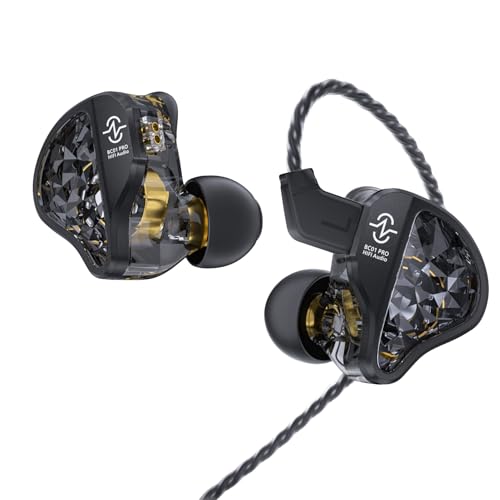
CCZ BC01 PRO in Ear Monitor Headphones (Dark Black)

KZ ZST X Hybrid in-Ear Earphones (Black)

CCA C10 in Ear Monitor Headphone 10 Hybrid Drivers

CCZ Melody in Ear Headphones (Red)

KZ ZSN PRO X Gaming Earbuds (Black)

KZ DQS Semi-Open in-Ear Earphones (Black)

Kinboofi KZ ZSN PRO X 1BA 1DD Hybrid HiFi Earphone (Gold)

Kinboofi KZ ZS10 Pro IEM Headphone (Matte Black)

KZ AS10 IEM Headphone (Black)

KBEAR KS1 Earphones in Ear Monitor
A Deeper Look At The Lineup
The CCZ BC01 PRO earns its place at the top of this list by pairing a balanced armature (BA) driver with a dynamic driver (DD) in a single shell, a hybrid setup usually found on pricier stage monitors. A balanced armature handles the upper frequencies with surgical precision, while the dynamic driver pumps out the low end that drummers and bassists need to stay locked to the beat. Together they create a sound signature that handles vocals, percussion, and full band mixes without muddying the mids.
For working musicians, the practical upside is a single IEM that works across rehearsal, recording, and live sets. The wired connection means zero latency, which matters when you need every kick drum hit to land on cue. Compared to the KZ ZST X further down, the BC01 PRO brings a slightly more refined midrange that flatters acoustic instruments and vocals.
Useful Strengths
- Hybrid driver setup separates bass and treble duties for cleaner detail across the frequency range.
- Wired connection eliminates latency, a real advantage during live performance or tracking sessions.
- The 1BA 1DD configuration handles full-band mixes without overwhelming vocals, making it versatile across genres.
- Dark black finish keeps a low profile under stage lights and on camera.
Trade-Offs Worth Knowing
- The non-detachable cable means a snag or break could shorten the lifespan of the entire unit.
- Without a microphone variant in this listing, call and stream use is limited to pure listening.
Feature Snapshot
Whose Rig It Belongs On
Singers, drummers, and multi-instrumentalists who need a versatile, latency-free monitor for both rehearsal and live performance.
Consider A Swap When
You want a detachable cable for easier replacement; the KZ ZSN PRO X Gaming Earbuds offer that rugged option in a similar price range.
The KZ ZST X has earned a loyal following among budget-conscious musicians, and the spec sheet explains why. A 10mm double magnetic dynamic unit pushes air with more authority than single-magnet designs, giving drummers and bass players the chest-thump they crave from a compact IEM. The 30095 high-frequency balanced armature sits at the front of the ear canal and handles cymbals, vocals, and string detail without harshness.
For musicians gigging on weekends or running through scales at home, the ZST X delivers a sound profile that flatters electronic, hip-hop, and rock material especially well. The trade-off is a slightly less nuanced midrange compared to the CCZ BC01 PRO above, but the punchier low end wins points for rhythm-section players.
Notable Gains
- 10mm dual-magnetic dynamic driver delivers fast, punchy bass that suits drum-heavy mixes.
- High-frequency armature keeps cymbals and vocals crisp without sounding thin.
- Hybrid design at a price point where most competitors ship a single driver.
Honest Caveats
- Stock cable is non-detachable, so cable failure ends the IEM’s life in most cases.
- Midrange tuning leans forward, which some acoustic players may find bright over long sessions.
- Fit depends heavily on the included tip selection; smaller ear canals may need third-party tips for a proper seal.
Right Fit For
Drummers, DJs, and electronic music producers who want a fast, bass-forward IEM for stage monitoring or cue mixing.
Look Elsewhere When
Vocal tracking is the priority; the KZ AS10 IEM Headphone uses five balanced armatures for a more vocal-friendly signature.
The CCA C10 stands out for sheer driver count, packing four balanced armatures and one dynamic driver per side, totaling ten drivers across the pair. That density lets the manufacturer split the frequency range into finer slices, with dedicated armatures handling the low, mid, and high bands separately. The result is a level of detail retrieval that budget IEMs rarely touch, and a soundstage (the sense of where instruments sit in space) that helps producers place tracks in a mix.
Studio musicians and engineers will appreciate the detachable cable, a feature that extends the IEM’s lifespan far beyond a typical budget pair. The trade-off is bulk: the C10’s housing is larger than the KZ ZST X, and ear canal geometry matters for comfort during long tracking sessions.
What Earns Its Place
- Ten hybrid drivers deliver exceptional detail and a wide, layered soundstage for mixing work.
- Detachable cable design means a worn or damaged cable can be swapped without replacing the whole IEM.
- Noise-isolating seal reduces stage bleed and room noise during recording.
Possible Compromises
- Larger housing may not fit smaller ears comfortably, especially during extended wear.
- More drivers mean higher sensitivity to source quality; a weak audio output can make the C10 sound underwhelming.
Quick Facts
Made For
Studio engineers, producers, and session musicians who need reference-level detail for tracking and mixing without leaving the budget tier.
Another Choice May Suit When
Smaller ears or shorter sessions are the norm; the KZ DQS Semi-Open in-Ear Earphones offer a lighter fit for casual wear.
Comfort can make or break an IEM during a three-hour set, and the CCZ Melody addresses that with ear fins that hook gently into the outer ear for added stability. The PC cavity shell with a UV varnish finish keeps the housing light, while the TPE (thermoplastic elastomer) ear tips and fins stay soft against the skin. A groove design at the ear cap is a small touch that widens the soundstage slightly compared to flat-faced designs.
Musicians who move around on stage, think touring guitarists or animated front-persons, will appreciate how the fins keep the IEM seated when the head is bobbing. The 1DD 1BA hybrid inside delivers a balanced signature that handles vocals and instruments with equal weight, making it a strong all-rounder for rehearsal spaces and small venues.
Everyday Wins
- Ear fins provide secure fit during movement, ideal for active performers.
- Lightweight PC cavity reduces ear fatigue over long sessions.
- Groove-tuned ear cap adds a touch of width to the soundstage for a more open feel.
- Red finish stands out in dark venues and is easier to locate in a gig bag.
A Few Limitations
- Ear fins may interfere with glasses or over-ear headphones for users who wear both.
- The microphone-free build limits use for hybrid streaming or remote rehearsals.
Who Will Love This
Performing musicians and live vocalists who need a stable, comfortable fit for long sets and active stage movement.
Skip It When
You want the absolute lowest price for casual practice; the KZ ZST X delivers similar audio at a tighter budget point.
Durability is the headline feature here, and the ZSN PRO X delivers it through a zinc-alloy faceplate paired with a resin inner cavity and aluminum voice chamber. That metal-and-resin sandwich shrugs off the drops, bag tosses, and cable yanks that are part of life on the road. The hybrid 1BA 1DD setup mirrors the CCZ BC01 PRO above, but the ZSN PRO X adds a detachable, tangle-resistant cable as a practical upgrade.
Musicians who travel frequently or play outdoor shows will find the build quality reassuring. The sound signature leans slightly warm, with a mid-bass emphasis that gives guitars and snare drums extra body without smothering the highs.
Points In Its Favor
- Zinc-alloy faceplate and aluminum voice chamber provide a noticeably rugged build for the price.
- Detachable cable can be replaced if damaged, extending the IEM’s service life.
- Warm tuning suits rock, pop, and worship band mixes where mid-bass presence matters.
Points To Keep In Mind
- Heavier metal faceplate can cause slight ear fatigue compared to all-resin shells like the CCZ Melody.
- The microphone-free configuration limits hands-free call use.
Feature Card
Best Suited To
Touring musicians and frequent giggers who need a tough, road-ready IEM that can handle rough handling.
A Better Fit Elsewhere When
You prefer a lighter shell for marathon studio sessions; the KBEAR KS1 Earphones in Ear Monitor offers a more featherweight build.
Most IEMs seal the ear canal completely, which boosts bass but can create a pressurized, “underwater” sensation during long sessions. The KZ DQS breaks that mold with a semi-open design that vents a small amount of air through the housing, easing the seal and producing a more natural, breathable sound. The 14mm dynamic driver behind the vent has been tuned with a narrow magnetic gap for tighter response than earlier KZ open designs.
Producers and mixing engineers often prefer this style for long hours in the studio, where the reduced ear fatigue adds up over a full day. The microphone-equipped variant also opens up remote session calls, a small but useful bonus.
Noteworthy Benefits
- Semi-open venting reduces ear pressure and keeps long sessions comfortable.
- 14mm dynamic driver with refined magnetic gap delivers fast, articulate sound.
- Available with an in-line microphone for call and remote session use.
Softer Spots
- Semi-open design leaks some sound, which can be an issue in quiet recording booths or libraries.
- Bass response is lighter than fully sealed IEMs like the KZ ZST X.
Spec Overview
Perfect Match For
Producers and mixing engineers spending long hours at a desk who want reduced ear fatigue without leaving the wired IEM format.
Swap It Out When
You need maximum isolation for loud stage environments; the CCZ BC01 PRO in Ear Monitor Headphones seal the ear more aggressively.
Kinboofi’s take on the ZSN PRO X formula leans on the same 10mm dual-magnetic dynamic driver and 30095 balanced armature as the standard model, but the brand tunes the crossover (the internal circuit that splits frequencies between drivers) for a slightly wider soundstage and warmer midrange. The gold faceplate is a cosmetic touch, but the practical change is a detachable cable that allows for easy replacement if the stock cable frays.
For drummers and percussionists, the tuning adds a touch more body to snare and tom hits without losing the cymbal shimmer. The hybrid 1BA 1DD configuration keeps vocals intelligible, which matters when you need to hear cues from a bandleader mid-song.
Real-World Strengths
- Tuned crossover delivers a wider soundstage than the base ZSN PRO X for better positional cue reading.
- Detachable cable means the most common failure point is user-replaceable.
- Gold finish is easy to spot in a dark dressing room or cluttered bag.
Things To Weigh
- Color and tuning differences from the standard KZ ZSN PRO X are subtle; some shoppers may not notice them at a glance.
- No microphone variant in this listing, limiting hybrid call/streaming use.
Who Should Grab It
Drummers and rhythm-section players who want a slightly warmer, more spacious take on the ZSN PRO X formula.
Reach For A Different Pick When
Pure stage monitoring with maximum driver count is the goal; the Kinboofi KZ ZS10 Pro IEM Headphone adds more drivers for finer detail.
The ZS10 Pro pushes the driver count up to five per side, pairing a 10mm second-generation dual-magnetic dynamic driver with four balanced armatures covering low, mid, and high duties. The result is a frequency split that handles complex mixes with less smearing between instruments. A 50060 balanced armature handles the mids while the 30095 takes the treble, giving vocals and acoustic guitars room to breathe without crossing into harshness.
Multi-instrumentalists running a hybrid live rig, maybe a guitar and vocal setup, benefit from the layered presentation. The matte black finish keeps reflections off-camera for video creators, and the detachable cable gives a long-term ownership path.
Standout Benefits
- Five drivers per side create a layered, detailed sound that flatters complex mixes.
- Detachable cable design supports long-term ownership and easy replacement.
- Matte black finish is a practical choice for video creators and on-camera performers.
Practical Considerations
- The larger five-driver housing may sit awkwardly in smaller ear canals during long sessions.
- Without a microphone, the unit is dedicated to pure listening only.
Key Product Details
Right Fit For
Multi-instrumentalists and singer-songwriters running layered live or recording setups who want driver-level detail at a budget price.
Where A Sibling Pick Shines
You primarily need bass weight and stage punch; the KZ ZST X delivers a punchier low end in a more compact housing.
The KZ AS10 drops the dynamic driver entirely, relying on five balanced armatures to cover the full frequency range. That pure-armature approach delivers the kind of speed and detail that vocalists and acoustic players tend to prefer, with tighter transients (the precise attack and decay of a note) and less of the bass overhang that dynamic drivers sometimes introduce. The trade-off is a slightly leaner low end compared to hybrid designs.
Tracking vocals, monitoring acoustic sessions, and hearing subtle mixing decisions are the AS10’s strongest use cases. The detachable 2-pin cable keeps repair options open, which is helpful for a brand that prioritizes sound over cable accessories.
The Practical Payoff
- Five balanced armatures deliver fast, precise detail that flatters vocals and acoustic instruments.
- Pure-armature design avoids the bass overhang some dynamic-driver IEMs introduce.
- Detachable 2-pin cable allows easy replacement and aftermarket upgrades.
Less-Strong Areas
- No dynamic driver means less sub-bass rumble for electronic and hip-hop genres.
- No microphone in this configuration, so call and stream use is limited.
Best Suited To
Vocalists, acoustic players, and tracking engineers who prioritize detail and speed over bass weight.
Not Your Match When
You need a deep, punchy low end for bass guitar or electronic music; the KBEAR KS1 Earphones in Ear Monitor leans warmer and bass-forward.
The KBEAR KS1 takes a different route, relying on a single dual-magnetic dynamic driver paired with a rear sound cavity (a small chamber behind the driver that shapes airflow) to deliver a warm, bass-rich signature. The independent rear cavity compresses air efficiently, which translates to a low end that feels fuller than the driver size alone would suggest. Mids stay mellow, and highs come through transparent enough to keep cymbals and string detail audible.
Casual players, music students, and home practice sessions are where the KS1 fits most naturally. The USB-C with microphone variant also makes it a useful daily carry for musicians who switch between practice and remote calls on a phone or laptop.
Features That Help
- Single dynamic driver with rear sound cavity delivers warm, full bass from a compact shell.
- Available with a USB-C microphone for hybrid practice and remote call use.
- Mellow midrange reduces listening fatigue during long personal practice sessions.
Where It May Fall Short
- Single driver cannot match the layered detail of multi-driver IEMs like the CCA C10 above.
- Noise isolation is more dependent on tip fit than on active cancellation circuitry.
Built With In Mind
Music students, hobbyists, and home practice musicians who want a warm, easy-to-live-with IEM that doubles for daily phone and laptop use.
Where Another Pick Suits Better
Live performance is the main use case; the CCZ BC01 PRO in Ear Monitor Headphones offers a hybrid setup better tuned for stage monitoring.
What To Weigh Before Choosing Your Next Pair
A hybrid driver setup pairs a balanced armature (BA) for treble clarity with a dynamic driver (DD) for bass depth, and it tends to be the most versatile option for musicians juggling vocals, guitar, and drums. Pure balanced armature designs lean toward speed and detail, which suits vocalists and acoustic players, while single dynamic driver IEMs often deliver the warmest, most relaxed signature at the lowest cost.
Detachable cables matter more than they look at first glance. Cables fail more often than drivers, and a 2-pin or MMCX detachable connection lets you replace just the cable rather than the whole IEM. For touring musicians and frequent giggers, that single feature can double or triple the effective lifespan of a budget pair.
Isolation versus comfort is a real trade-off. Fully sealed IEMs like the CCZ BC01 PRO block the most stage noise but can create pressure during long sessions. Semi-open designs like the KZ DQS reduce that pressure at the cost of some sound leakage. The right choice depends on whether you spend more time on loud stages or in quiet studios.
Fit and tip selection are where most budget IEM disappointments actually start. A loose seal kills bass response and ruins the soundstage, no matter how good the drivers are. Stock tips work for many users, but musicians with smaller or larger ear canals often benefit from aftermarket silicone or memory foam tips to get a proper seal.
Key Considerations Across These Picks
Pitfalls Shoppers Hit
The most common mistake is choosing an IEM purely by driver count. More drivers can mean more detail, but only if the tuning, housing, and seal all work together. A poorly tuned five-driver IEM can sound worse than a well-tuned single driver, so read owner feedback on the specific sound signature rather than chasing spec sheet numbers.
Another trap is ignoring the cable situation. Non-detachable cables are the most common failure point for budget IEMs, and replacing the entire unit because of a frayed cable is a frustrating ownership experience. Whenever the option exists, picking a detachable cable model pays off over the long run.
Where The Extra Money Goes
Stepping up to the next tier typically buys better tuning, more durable housings, and detachable cables. The KZ ZS10 Pro and CCA C10 sit in that middle ground, where you are paying for refinement and driver complexity rather than brand markup. Musicians who play weekly or record often find the upgrade pays for itself in longevity and sound accuracy.
For performers who only need a reliable pair for occasional rehearsals or lessons, the lower-priced picks on this list deliver genuine value without overcommitting the budget. Match the tier to your actual use frequency, and the right pair becomes much easier to land on.
Frequently Asked Questions
What is an in-ear monitor (IEM)? An IEM is a small earphone designed to seal inside the ear canal, delivering an isolated mix directly to the listener’s ears. Musicians use them on stage and in studios to hear their performance clearly without stage wedges or headphone bleed.
How many drivers do I really need in a budget IEM? For most musicians, a hybrid 1BA 1DD setup covers vocals, drums, and full band mixes well. More drivers add detail and soundstage layering, but only matter if the tuning is good and the seal is solid.
Are wired IEMs better than wireless for musicians? Wired IEMs offer zero latency (no delay between source and ear) and a reliable connection, which matters for live performance and studio tracking. Wireless IEMs offer mobility but introduce compression and potential dropouts, which can be problematic on stage.
What is a detachable cable, and why does it matter? A detachable cable connects to the IEM housing via a small plug (usually 2-pin or MMCX) rather than being permanently soldered. When a cable fails, you replace only the cable, extending the IEM’s service life significantly.
How do I get a good seal with budget IEM tips? Try the included tips first, and if bass response feels weak or outside noise bleeds in, swap to memory foam tips or a different silicone size. A proper seal is the single biggest factor in IEM sound quality.
Bottom Line
The right budget IEM comes down to how and where you play. Drummers and bassists tend to favor the KZ ZST X and KBEAR KS1 for their bass-forward signatures, while vocalists and acoustic players often prefer the KZ AS10 for its detail and speed. The CCZ BC01 PRO remains the most balanced all-rounder, and the CCA C10 is the detail pick for studio work. Pick the pair that matches your real playing situation, and your monitor mix will thank you for it.



