


A great blues pedal should feel like a natural extension of your hands, translating every finger roll and pick scrape into warm, expressive grit. The right choice depends on how you play, the amp you run, and whether you want a subtle push or a snarling solo voice. The lineup below covers the workhorses, the cult classics, the budget-friendly surprises, and a few pedalboard-saving designs, so you can spend less time scrolling and more time playing.
The Lineup, Simplified
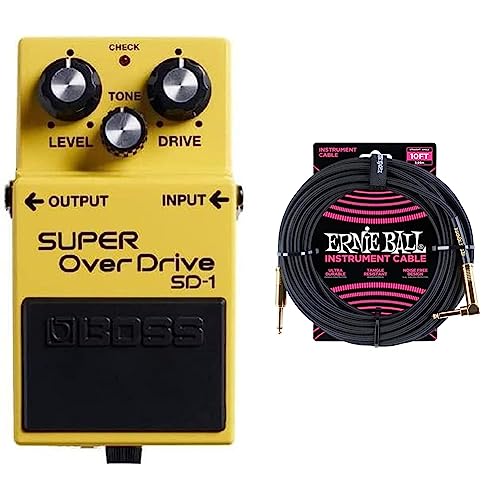
Boss SD-1 Super Overdrive Pedal & Cable Bundle

Ibanez TS9 Tube Screamer Overdrive Pedal

Ibanez Tube Screamer Mini Pedal

Boss BD-2 Blues Driver Guitar Effects Pedal

TC Electronic El Cambo Overdrive Pedal

Pro Co RAT2 Distortion Pedal

Donner Morpher Mini Distortion Pedal

Donner Blues Drive Vintage Overdrive Pedal

Donner Giant Metal Distortion Pedal
A Closer Look At Each Pick
The Boss SD-1 has earned its spot on countless boards for one simple reason: it makes a clean amp sound like it’s already cooking. Built around an asymmetrical clipping circuit, the SD-1 adds warmth and a touch of rasp without smothering your picking dynamics. Paired here with a 10-foot straight-to-angle braided cable, the bundle saves you a separate trip and works straight out of the box for bedroom setups, jam nights, or a first proper gig.
Compared to the Ibanez TS9 coming up next, the SD-1 feels less mid-focused and a touch more open, which is why it plays nicely with single-coils and humbuckers alike. For players wanting a single, dependable overdrive that complements most amps, this combo is hard to beat as a starting point.
Positive Points
- Asymmetrical clipping circuit adds organic grit while preserving note clarity
- Three-knob layout (Level, Tone, Drive) keeps dialing in fast on a dark stage
- Compact Boss chassis tolerates stomps, transport, and crowded boards
- 10-foot braided cable included, useful for practice rooms and short stage runs
Things To Consider
- Less midrange push than a Tube Screamer, so it cuts less through a dense mix
- The bundled cable is solid but not a long-stage run-and-return solution
Key Specs
Who It Suits Best
Players starting from scratch who want a trusted overdrive and a working cable in one purchase.
Where Another Pick Suits Better
Players chasing a vocal, mid-humped lead voice should reach for the Ibanez TS9 instead.
The TS9 is the pedal countless guitarists learn their craft on, and the reissue keeps that familiar mid-hump growl alive at a sensible price. It is a stompbox designed to push a clean tube amp into sweet breakup, layering in a focused midrange that helps solos cut through a band. For traditional blues and blues-rock phrasing, the TS9 has a way of making bent notes feel like they’re singing.
Stacked in front of a clean amp, the TS9 behaves like an always-on tone shaper; pushed harder, it becomes a rhythm-pedal workhorse. Compared to the Boss SD-1 reviewed above, it has a tighter, more vocal character that flatters humbuckers especially well. In most bedrooms and small clubs, you can rely on a TS9 to deliver the goods without fuss.
Bright Spots
- Iconic midrange focus helps solos sit forward in a mix
- Same housing and component feel as the original classic
- Plays well as a clean boost or a full overdrive
Trade Offs
- The mid-hump can feel nasal with some single-coils and bright amps
- Battery access is less convenient than modern top-mount jacks
Made For
Blues and rock players wanting a time-tested, vocal overdrive that pairs with a clean tube amp.
Consider Something Else When
Pedalboard real estate is tight and you need a smaller footprint, in which case the Ibanez Tube Screamer Mini is a smarter pick.
The Tube Screamer Mini distills the TS9 into a pedalboard-friendly box without skimping on the core circuit. It uses the same Overdrive, Tone, and Level controls found on the full-size version, along with the analog JRC4558 IC (integrated circuit) chip that helped define the Tube Screamer sound. The result is the familiar mid-hump character in a housing that leaves room for everything else.
Where the standard TS9 eats a chunk of board space, the Mini slides between two standard pedals with room to spare. For traveling players with a compact fly rig or anyone running ten or more effects, the size difference is a genuine gift. It delivers the same response to pick attack that the larger version does, and the all-analog signal path preserves the touch-sensitive feel blues phrasing depends on.
The Good Stuff
- Compact chassis fits where a full-size TS9 cannot
- Same analog circuit and JRC4558 IC as the classic version
- Top-mounted jacks keep cable runs tidy on a small board
Worth Noting
- Smaller knobs can be fiddly with stage boots or thick fingers
- No battery option, so a power supply is essentially required
Key Specs
Right Fit For
Traveling players and anyone building a smaller board who refuses to give up the classic Tube Screamer sound.
Look Elsewhere When
You want a more open, less mid-focused overdrive, in which case the Boss BD-2 Blues Driver is a better match.
The BD-2 Blues Driver is Boss’s love letter to expressive players, offering a creamy low end that thickens into a satisfying crunch as you push the gain. It behaves like a vintage tube amp in a box, responding to your volume knob and pick attack in a way most overdrives only hint at. Run it clean for whisper-quiet blues phrasing or crank it for a vintage-rock roar that still retains note definition.
Stacked against the TS9 above, the BD-2 has a wider tonal palette and more low-end thump, making it a natural choice for humbucker players. The Gain knob sweeps from a polite edge to a fully driven roar without becoming fizzy, and the Tone control shapes everything from smoky jazz-blues grind to biting leads. For guitarists who treat dynamics as part of the performance, the BD-2 rewards every subtle move.
A Few Highlights
- Tube-amp-style response to volume and pick dynamics
- Wide gain range from edge-of-breakup to chunky crunch
- Internal switch adds extra low-end punch for humbuckers
Points To Note
- High-gain settings can get bright with single-coils, requiring careful tone trimming
- Slightly more noise floor than cleaner designs like the SD-1
Quick Facts
Best Suited To
Humbucker-toting blues and rock players who treat touch and dynamics as part of the solo.
Skip It When
You mainly need a transparent clean boost to push an already-overdriven amp, where the Pro Co RAT2 fits the job better.
The El Cambo lives up to its name with a vintage, tube-flavored voice and a layout you can wrap your head around in a single session. Three knobs handle the essentials: gain, tone, and level, with no hidden switches to memorize. It aims squarely at classic blues-rock tones, the kind of warm, slightly broken-up grit you hear on records from the late 60s and early 70s.
For new pedal users, the El Cambo’s straightforward design means less time fiddling and more time playing. Its voicing is a touch thicker than the TS9 reviewed earlier, leaning into low-mid bloom rather than focused mid-hump. That makes it a flattering partner for single-coils looking for body and humbuckers that feel just a little smoother on top.
Real Benefits
- Simple three-knob layout reduces the learning curve
- Vintage-style voicing suits blues-rock and classic rock tones
- True-bypass switching keeps the dry signal untouched when off
Honest Caveats
- Less versatile than multi-mode designs for heavier genres
- Limited tone-shaping range compared to four-knob competitors
Who Will Love This
Beginners and returning players who want a one-knob-per-job pedal that delivers a familiar blues-rock voice right away.
Reach For A Different Pick When
You want to explore a wider gain range or alternate voicings, where the Donner Morpher Mini offers more flexibility at a similar price.
The RAT2 sits in a category of its own, more aggressive than a Tube Screamer yet more musical than a metal pedal. It runs the spectrum from a gritty boost that pushes a tube amp into a glorious crunch all the way up to a thick, sustaining distortion that holds lead lines with ease. The classic steel housing and simple three-knob layout have barely changed for decades, and that’s a feature in itself.
For a gigging blues-rocker with a clean or slightly crunchy amp, the RAT2 functions as a solo boost that sits perfectly on the edge of feedback. Set the gain low and the level high, and the RAT2 acts like a preamp pushing your existing tone forward. Pushed harder, it gives you that snarling, sustaining voice that stands up next to a loud drummer without losing clarity.
Practical Advantages
- Wide gain range works as a boost, crunch, or full distortion
- Classic steel enclosure is built for life on the road
- Excellent note sustain for expressive lead playing
Some Limits To Know
- Higher-gain settings can feel less refined than dedicated blues overdrives
- Tone control sweeps wider than some players prefer, requiring care at extremes
Feature Snapshot
Perfect Match For
Tone chasers with a clean or mildly broken-up amp who want a single pedal to do boost and dirty work.
A Better Fit Elsewhere
Players wanting a purer blues texture without distortion flavor will be happier with the Boss BD-2 Blues Driver.
Donner’s Morpher Mini squeezes three distinct distortion voices into a compact housing, giving you more flavor variety per dollar than most budget options. Natural mode keeps things open and dynamic, Tight mode focuses the low end for chunky riffing, and Classic Crunch leans into the gritty 80s rock territory that bridges blues and hard rock. The whole thing runs on true-bypass switching, so the dry signal stays clean when the pedal is off.
Compared to the single-mode El Cambo reviewed above, the Morpher trades simplicity for flexibility, which suits players still dialing in their sound. The aluminum-alloy shell feels solid for the price, and the small footprint makes it easy to slot into a starter pedalboard. For the cost, owners commonly find the tone and build punch above their weight class.
A Strong Showing
- Three gain modes cover a wide stylistic range
- True-bypass switching preserves the dry tone when bypassed
- Aluminum-alloy shell feels durable for everyday transport
Practical Considerations
- Mode-switching is not programmable, so changes happen at the pedal
- Tone refinement is coarser than what the RAT2 or BD-2 offer
Who Should Grab It
Budget-conscious players who want multiple flavors to experiment with before committing to a specific tone.
Where A Sibling Pick Shines
Players who know they want a pure vintage blues overdrive should consider the Donner Blues Drive instead.
The Donner Blues Drive is a Tube Screamer-style overdrive at a friendlier price, with two voicings that cover the bases most players actually use. Warm mode delivers the smooth, vocal midrange that defines classic blues-rock tones, while Hot mode pushes the gain and low-end for thicker, more aggressive passages. LEVEL, TONE, and GAIN knobs give you familiar, predictable control over the result.
Where the Morpher Mini above offers three flavors of distortion, the Blues Drive stays focused on overdrive territory. That’s a feature if you want a dedicated “always-on” pedal in front of a clean amp. The true-bypass circuit keeps the dry signal true when the pedal is off, and for home players building a first board, the Blues Drive earns its slot without dominating the budget.
Points In Its Favor
- Warm and Hot modes cover subtle breakup and heavier drive
- True-bypass switching keeps the bypassed tone clean
- Approachable price for players building a first board
A Few Limitations
- Lacks the refinement and longer-term durability reputation of the TS9
- Tone shaping is more limited than the BD-2 or RAT2
Built With In Mind
Home players and hobbyists who want a versatile Tube Screamer-style pedal at a comfortable price.
Swap It Out When
You want a more authentic Tube Screamer experience with the classic JRC4558 IC, in which case the Ibanez TS9 is the safer long-term pick.
The Giant Metal lands on the heavier end of the blues-rock spectrum, delivering thick, high-gain tones with a dedicated Hi Boost function to push solos over the top. Three selectable modes let you cover everything from a chunky crunch to a sustained, modern lead voice. True-bypass switching keeps the dry signal uncolored when the pedal is off, which matters on a board that also hosts cleaner drives.
It earns a place in a blues roundup because blues-rock lives right next door to harder territory, and the Giant Metal makes that crossover easy. Run it lower for a thick rhythm push, or engage the boost for a screaming lead tone that holds together on long bends. Compared to the Blues Drive reviewed above, it trades vintage warmth for modern aggression, so it works best as a second dirt pedal rather than a first.
What Works In Its Favor
- Three gain modes suit heavier blues-rock styles
- Hi Boost function adds cut for lead work
- True-bypass switching keeps the bypassed signal intact
Factors To Consider
- Too aggressive for traditional blues phrasing on a clean amp
- Single-coils can sound thin at the highest gain settings without careful EQ
Whose Shelf It Belongs On
Blues-rock players pushing into heavier territory who want a dedicated high-gain voice for leads and rhythm.
Not Your Match When
You mostly play traditional acoustic-electric blues or vintage blues-rock, where the Boss BD-2 or Donner Blues Drive fit more naturally.
What Matters Most Before Choosing Blues Pedals
Understand Your Amp First
A blues pedal reacts to the amp it’s plugged into, so start by thinking about what your amp already does. A clean Fender-style combo wants a pedal that adds midrange and breakup, which is where Tube Screamer-style designs shine. A Marshall-flavored amp with built-in crunch benefits from a more transparent overdrive that pushes the existing voice, making pedals like the Boss SD-1 or BD-2 better partners. Match the pedal to the amp’s character and the rest falls into place more easily.
Gain Staging And Transparency
Two pedals at the same gain level can feel wildly different depending on how they shape the signal. Overdrive pedals tend to add warmth and compression while preserving note clarity, which suits expressive blues phrasing. Distortion designs push harder, sustain longer, and color the tone more aggressively. For most traditional blues, an overdrive keeps the playing dynamic; for lead-heavy blues-rock, a distortion like the RAT2 opens up solo possibilities.
Pedalboard Real Estate And Power
Pedal size matters more than beginners expect. A full-size Boss or Ibanez pedal takes up about the same room, but compact designs like the Tube Screamer Mini or Donner Morpher Mini free up critical inches on crowded boards. Power needs also vary: some pedals run on 9V batteries, while others require an isolated power supply, and that affects your gig bag setup. Plan the board layout before committing to a full-size stompbox.
True Bypass And Signal Integrity
True-bypass wiring means the pedal is physically removed from the signal chain when switched off, so the dry tone stays exactly as your guitar and amp intended. Buffered pedals add a small circuit that can help long cable runs but slightly color the bypassed tone. For most home setups, true-bypass pedals are the easier choice; for players with long pedal chains, a mix of buffered and true-bypass designs tends to work best.
Smart Shopping Considerations
Common Shopping Slip Ups
The biggest mistake is choosing a pedal based on a famous song tone rather than the actual amp and guitar you play. A TS9 that sounds perfect through a clean blackface can feel honky and nasal through a darker-voiced amp, and the reverse is just as true. Always consider the pedal’s role in your own rig before chasing a tone you heard on a record.
What The Higher Tier Buys
Spending more on a blues pedal generally buys you better components, more reliable switching, and often a more considered circuit design. Boutique pedals and established flagships like the RAT2 or BD-2 tend to age well, hold their value, and offer a wider range of usable tones than cheap multi-mode designs. The upgrade makes sense once you know the basic sound you want and are ready to refine it for years of playing.
Frequently Asked Questions
What is the difference between overdrive and distortion?
Overdrive simulates the natural breakup of a tube amp pushed hard, keeping the playing dynamic and responsive. Distortion adds more aggressive clipping and compression, sustaining notes longer and adding heavier harmonic content. Blues players usually prefer overdrive for traditional tones, while distortion fits blues-rock and lead-heavy playing.
Do I need a buffer or true-bypass pedal?
True-bypass pedals keep your bypassed tone completely clean, which is ideal for shorter cable runs. Buffers help preserve signal strength across long cables and large pedal chains. Most home players start with true-bypass designs and add a buffer later if their rig grows.
Can a single pedal cover both rhythm and lead tones?
Yes, many overdrive pedals sweep from edge-of-breakup to full crunch, working as both rhythm and lead voices. Designs like the BD-2, RAT2, and Tube Screamer Mini all handle this range with care. Setting the gain lower and the level higher often produces the most versatile rhythm tone.
Will a blues pedal work with a solid-state amp?
Modern solid-state amps respond well to overdrive and distortion pedals, though they lack the natural compression of tube designs. You may need to adjust the amp’s EQ and the pedal’s tone control to avoid a thin or harsh result. Many players report solid results pairing a Tube Screamer-style pedal with a clean solid-state combo.
How should I power multiple pedals on a board?
An isolated multi-output power supply is the cleanest solution, keeping each pedal’s ground separate to reduce hum. Daisy-chaining pedals off a single output can introduce noise, especially with high-gain designs. Plan your power layout when buying your first few pedals to avoid rewiring later.
Closing Remarks
Pick the pedal that flatters the amp you already own, and the rest of the equation tends to work itself out. Your playing style, your room, and the volume you gig at all matter more than any single spec sheet. Start simple, listen honestly, and let the tones you reach for first guide your next move.



