


Auto wah pedals shape your tone the second your pick hits a string, sweeping through frequencies without you moving a foot. Players chasing Hendrix-style cry, Kirk Hammett’s metallic snarl, or a hands-free filter for funk leads all lean on this category. The right pedal tightens your sound, while the wrong one fights your amp and eats pedalboard real estate for no reason.
The picks below cover genuine wah pedals plus a few adjacent effects worth knowing, since auto-wah territory often overlaps with auto-filters, envelope filters, and expression-driven workhorses. Each entry fits a different rig, budget, and playing style.
A Snapshot Of The Selections
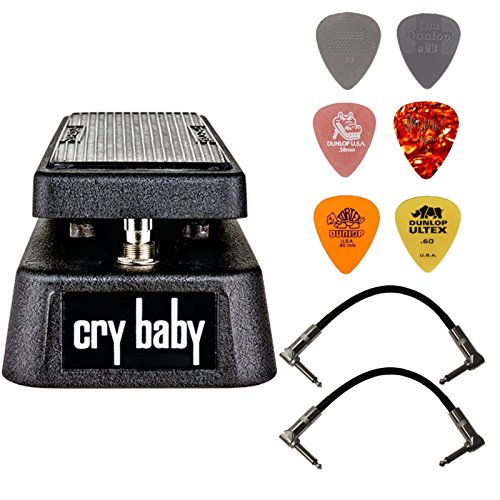
Dunlop Crybaby GCB-95 Classic Wah Pedal Bundle

Dunlop KH95 Kirk Hammett Wah Pedal

Donner Fuzz Mini Effect Pedal
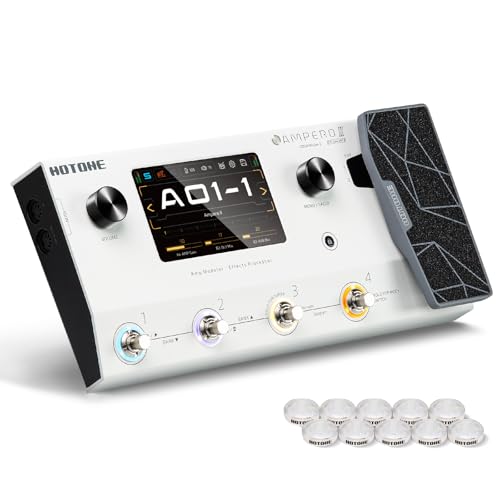
HOTONE Ampero II Multi-Effects Pedal

Donner Morpher Mini Distortion Pedal

Donner Dumbal Drive Overdrive Pedal

HOTONE Soul Press II 4-in-1 Pedal

Donner Lax Comp Compressor Pedal
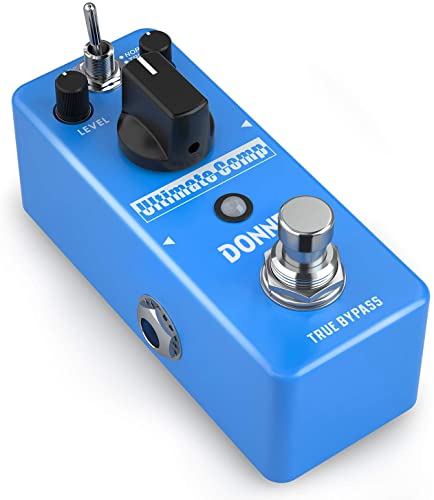
Donner Ultimate Comp 2-Mode Compressor
The Details Behind The Selections
The Crybaby is the wah most players picture before they picture anything else. The GCB-95 circuitry has shown up on stages and in studios for decades, and the bundled cables plus a set of picks make it a complete starting kit for someone building a first board.
On a clean amp it produces that wide, vocal sweep that defines classic rock leads. Plug it in front of a driven amp and the midrange push gets more aggressive, which is exactly why this pedal has remained the reference point since the Hendrix era.
Positive Points
- The sweep range covers everything from a slow ballad cry to a fast funk stab without needing internal tweaks
- Sturdy die-cast housing handles accidental drops from a pedalboard edge
- Bundle includes patch cables and picks, so you can plug in and play on arrival
- True to the original voicing that defined rock wah tones for generations
- Wide compatibility with both single-coil and humbucker pickups
Points To Note
- The treadle can feel stiff out of the box and may benefit from a short break-in period
- Buffered bypass behavior, so it interacts differently with very long cable runs than true-bypass units
Key Specs
Who It Suits Best
Players stepping into their first wah who want the textbook Crybaby tone and the cables to match.
A Better Fit Elsewhere
If your style leans toward aggressive metal soloing, the Dunlop KH95 Kirk Hammett Wah Pedal is tuned closer to that voicing.
Where the standard GCB-95 leans toward a balanced rock sweep, the KH95 has been voiced to push harder into the upper-midrange. That makes the pedal cut through dense, high-gain amp stacks rather than getting buried under them.
Compared to the Crybaby reviewed above, the KH95 trades a touch of low-end warmth for a sharper, more vocal bark. The added cable bundle keeps it friendly to gigging players who need spares in the gig bag.
Everyday Wins
- EQ curve mirrors the aggressive mid push that defined ’80s metal lead work
- Internal controls let you dial in the exact range that suits your amp
- Heavy-duty chassis tolerates the kind of footwork metal rhythm playing demands
- Six included cables reduce the chance of a bad lead ending a set
Trade Offs
- The voicing can sound thin in front of a clean or low-gain amp where the Crybaby GCB-95 stays fuller
- Internal pots take some patience to set, since access requires opening the chassis
Feature Snapshot
Made For
Metal guitarists who want a wah that stays audible in front of a cranked high-gain rig.
Look Elsewhere When
You split time between clean funk and overdrive. The Dunlop Crybaby GCB-95 stays more balanced for that range.
Fuzz sits next door to auto wah on a tonal map, and the Donner Fuzz Mini earns a place here because it fits boards where a full-size Crybaby simply will not. The mini enclosure is roughly a third of the footprint of a standard pedal, leaving room for actual wahs alongside it.
Where the Dunlop entries above live in the filter-and-sweep world, this one colors the gain. Bass, treble, level, and volume knobs give the same kind of tonal range a vintage Germanium fuzz offers, without eating pedalboard space.
Good Reasons To Consider
- Compact enclosure frees space for larger pedals like a Crybaby or expression unit
- True bypass keeps the dry signal intact when the effect is off
- Four-knob layout provides meaningful control without overwhelming beginners
- Works for both electric guitar and bass, so multi-instrumentalists get use from it
Honest Caveats
- Not an actual wah or auto-filter, so it covers a different job than the Crybaby or KH95
- Smaller knobs can feel fiddly for players with larger hands during live tweaking
Right Fit For
Players running tight boards or bassists who want vintage fuzz without committing to a full-size box.
Skip It When
You came here specifically for an auto-sweep filter. The HOTONE Soul Press II handles that role with actual wah circuitry.
The Ampero II sits in a different category from a single Crybaby, but it earns its place in any auto wah discussion because its filter models include dedicated auto-wah and envelope options. The 5-inch touchscreen handles most editing, while the built-in expression pedal delivers real-time control.
Compared to every other entry here, this one replaces multiple pedals rather than adding another one. Dual effect chains mean you can run a wah and a delay simultaneously, while MIDI I/O lets the unit talk to switching systems in a larger rig.
Everyday Perks
- Built-in expression pedal gives hands-free wah control without buying a separate unit
- Dual effect chains allow parallel and serial signal routing for complex sounds
- Stereo outputs plus an XLR option fit both home studios and front-of-house setups
- Touchscreen editing keeps deep tweaking fast, even mid-session
- USB audio interface function means a single box covers both pedals and recording input
Potential Drawbacks
- Learning curve is steeper than a single-knob Crybaby, since the touchscreen holds menus
- Not a true analog pedal, so purists chasing old-school warmth may prefer the Donner options
Technical Highlights
Best Suited To
Working players who want one box to cover filters, modulation, amp sims, and IR loading for both stage and studio.
Where A Sibling Pick Shines
You mainly want a dedicated analog wah and nothing else. The Dunlop Crybaby GCB-95 keeps the signal path simple.
The Morpher earns its spot next to auto wah pedals because distortion and wah often live in the same signal chain. A clean wah into high-gain gives a vocal solo; the same wah into clean rhythm gives funk quack. The Morpher covers the gain side of that pairing at a friendly price.
Three modes let you swap between Natural, Tight, and Classic Crunch voicings without buying a second pedal. The mini form factor matches the Donner Fuzz covered earlier, so the two stack nicely on a small board.
What Pays Off
- Three gain modes cover rhythm crunch, tight palm-muted work, and thicker classic-rock leads
- Aluminum-alloy shell holds up to regular gigging and transport
- True bypass keeps the dry tone clean when the pedal is disengaged
- Wide dynamic range, so picking attack changes the gain feel, similar to higher-end drives
Where It May Fall Short
- The label is clearly aimed at the budget tier, so it lacks the boutique refinement of pricier drives
- Footswitches on smaller enclosures can feel cramped for players used to larger boxes
Who Will Love This
Players building their first pedalboard who need an affordable crunch that pairs with a Crybaby or HOTONE expression unit.
Consider Something Else When
You want smoother, lower-gain breakup for blues. The Donner Dumbal Drive Overdrive Pedal sits closer to that territory.
The Dumbal Drive covers the smooth side of the family. Dumble-style overdrive is famous for its glassy edge and creamy sustain, the kind of tone that sits well under a slow wah sweep. Pairing it with a Crybaby in front gives classic fusion lead tones without much fuss.
Two-band EQ (Bass and Treble) plus a Boost function gives the player more shaping power than the typical three-knob overdrive. The pure analog signal path appeals to anyone chasing that vintage feel.
What Earns Its Place
- Dumble-inspired voicing produces a singing lead tone that responds well to volume-knob roll-off
- Two-band EQ plus a dedicated Boost gives extra shape without menu diving
- Pure analog circuitry appeals to players who prefer the older signal path
- True bypass keeps the dry signal clean when the pedal is off
Soft Spots
- The Boost and EQ knobs can take experimentation to land a useful setting, more so than simpler drives
- Low-gain players may find the high end slightly glassy without tweaking the treble knob down
Perfect Match For
Blues and fusion guitarists who want a vocal lead tone that pairs smoothly with an auto-sweep filter.
Swap It Out When
You want a heavier high-gain voicing for metal. The Donner Morpher Mini Distortion Pedal covers that better.
The Soul Press II is a true auto wah candidate worth your attention. It packs four functions into one box: wah, volume, expression output, and tuner output. The visible LED indicator shows mode status in real time, which is handy on a dim stage.
Where the Crybaby reviewed above is a dedicated wah and the Ampero II is a full multi-effects unit, the Soul Press II occupies the middle: a single compact pedal that swaps roles mid-song. Q and Tone controls shape the wah character, while independent EXP Out and Tuner Out keep the routing flexible.
Strong Points
- Switchable Warm and Classic wah voicings cover both vintage and modern sweeps
- Active volume mode preserves signal clarity at low settings
- Independent expression output can drive other pedals that accept external control
- Compact chassis sits well on boards where a Crybaby would crowd other units
Small Limitations
- 9V battery or DC adapter not included, so you need to factor that into the purchase
- The mode switching happens on the fly, which can feel like one more thing to manage mid-song
Feature Facts
Built With In Mind
Working guitarists who want a single compact pedal to handle wah, volume swells, and expression control.
Another Choice May Suit
You prefer the classic treadle feel of a vintage Crybaby. The Dunlop Crybaby GCB-95 keeps that traditional feel intact.
Compressors sit in a different family than auto wah, but they share a common habit: they shape how your pick attack reaches the amp. A FET-style compressor evens out volume swells so a slow wah sweep has a more consistent level underneath.
The Lax Comp draws on the classic peak limiter style, with Sustain, Attack, Level, and Limit knobs covering the most useful ranges. Pure analog circuitry keeps the signal character intact for players who like the warmth of older electronics.
The Helpful Details
- FET-inspired compression delivers a smooth, even response across picking dynamics
- Two-band EQ gives extra tone shaping beyond basic compression
- Pure analog signal path preserves the warmth players expect from vintage-style units
- Works for both guitar and bass, so the same pedal can move between instruments
Things To Weigh
- Compression behavior takes some ear training to set well, more so than a distortion or wah
- Knob count runs higher than simpler compressors, which may overwhelm a true first-timer
Spec Overview
Whose Shelf It Belongs On
Players who want even volume control and a vintage-style character to support their wah and drive pedals.
Reach For A Different Pick When
You want a simpler two-knob compressor. The Donner Ultimate Comp covers the basics with fewer controls to manage.
The Ultimate Comp rounds out the list as the simplest option for players new to compression. Two modes and three main knobs keep the controls clear, and pure analog circuitry gives it a more musical feel than many digital alternatives.
Compared to the Lax Comp reviewed just above, this pedal makes fewer demands on the player’s ear. You can drop it on the board, dial a moderate compression, and focus on playing rather than tweaking.
The Practical Payoff
- Two-mode design switches between compression flavors without menu diving
- Three-knob layout (COMP, TONE, LEVEL) covers the essentials without overwhelming beginners
- Pure analog path delivers a warmer, more natural response than budget digital units
- True bypass leaves the dry signal alone when the effect is off
Less Ideal Details
- Fewer tonal controls than the Lax Comp, so experienced players may want more shape
- Footswitch placement on smaller enclosures can feel tight for players with large feet
Who Should Grab It
Beginners and intermediate players who want a no-fuss compressor that pairs with a Crybaby or Soul Press II.
Not Your Match When
You want a peak-limiter-style voicing with extra EQ range. The Donner Lax Comp is the better fit for that.
Choosing An Auto Wah Pedal That Fits Your Rig
Picking an auto wah pedal comes down to how you actually play. The Crybaby treadle still sets the standard for foot-controlled wah, while envelope-driven and filter-based units handle hands-free swells. Match the pedal’s range to the part of your playing where you want the effect most: a wide sweep for vocal leads, a tighter band for percussive funk.
Think about your amp first. A clean or low-gain amp benefits from the wider sweep of a GCB-95, while a high-gain rig usually needs the midrange push of a KH95. If you already run a multi-effects unit, check whether the auto-wah model inside it covers your needs before adding another box.
Pedalboard real estate matters. The HOTONE Soul Press II delivers wah plus volume and expression in a single mini enclosure, which can free room for drives and modulation. The Ampero II replaces several pedals at once but demands more menu time. Plan around how much tweaking you enjoy mid-song.
For most home and studio players, the bigger question is whether you want a dedicated analog pedal or a modeler that covers dozens of sounds. If you mostly play one style, a dedicated unit stays simpler. If you cover multiple genres on a single board, a modeler saves clutter.
Key Considerations Across These Picks
Common Slip Ups In This Category
A frequent mistake is buying an auto wah before sorting out the signal chain. Wah pedals typically sit before drive and modulation, so placement in front of a clean amp and behind a buffered tuner works best. Putting a wah after heavy distortion often produces a muddy, undefined sweep because the drive has already compressed the frequency range.
Another trap is ignoring the power supply. Many mini pedals need a 9V DC adapter that is not always included. Check the listed power requirements before you add the pedal to a multi-power supply, since polarity and current draw can vary.
Why Higher Tier Units Cost More
Premium units in this category invest in better internal components, more precise treadle pots, and sturdier enclosures. The KH95, for example, includes internal EQ trims that let you dial the exact sweep range, while budget Crybaby bundles use a fixed voicing. Higher-tier models also tend to use more durable jacks and switches, which matters for players who gig regularly.
The case for spending up is simple: more adjustability, longer lifespan, and often a more reliable footswitch. For bedroom players, the budget tier is usually fine. For working musicians, the upgrade often pays for itself through fewer repairs and more consistent performance.
Frequently Asked Questions
What does an auto wah pedal actually do?
It sweeps a band of frequencies up and down in response to your playing dynamics, creating the classic wah sound without needing a foot treadle.
Can I use a Crybaby on a bass guitar?
Yes, though bass players sometimes prefer envelope filters that track the lower frequencies better, like dedicated bass auto-wah units.
Should an auto wah go before or after distortion?
Place the wah before distortion for a vocal, expressive sweep. Place it after for a tighter, more pronounced filter effect on top of a saturated tone.
Do these pedals need batteries or only power adapters?
The HOTONE Soul Press II works on either 9V DC or battery, though the battery is not included. The Dunlop wah models typically run on a standard 9V adapter.
Is a multi-effects unit a good replacement for a single wah pedal?
A unit like the Ampero II covers wah plus many other effects, which is useful for travel and home use. Dedicated wah pedals still tend to feel more responsive for live playing.
Closing Thoughts
The right auto wah pedal depends on what you already have, where you play, and how hands-on you want to be. A Crybaby covers the standard rock and blues sweep, a HOTONE Soul Press II adds versatility, and a multi-effects unit like the Ampero II replaces several pedals at once. Take your time matching the pedal to your rig rather than the other way around, and the tone usually takes care of itself.



