


Some weekends call for a single-player run on a long flight. Other weekends call for two stools, a wide table, and a queue of friends waiting their turn. The right arcade systems lineup stretches from pocket-sized nostalgia to furniture-grade showpieces, and the gap between them is bigger than most people expect. A handheld in your bag brings Pac-Man to a coffee shop. A cocktail cabinet, by contrast, anchors a game room and survives years of Friday-night tournaments.
The seven picks below span that full range. Cocktail cabinets lead the list, then a desktop mini, two upgraded handhelds, and a pocket unit round things out. Each one suits a different room, budget, and appetite for nostalgia.
The Main Contenders

Top Us Video Arcades Cocktail Arcade Machine 2 Player 60 Games 22″ LCD
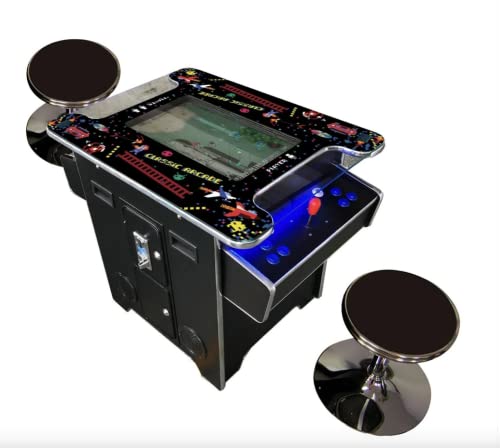
TOP US VIDEO ARCADES Cocktail Arcade Machine 2 Player 412 Games 22″ LCD

Tiny Arcade Atari 2600 Mini Console 3.5″ Screen 10 Classic Games

Qoody S600 Retro Handheld Console 4″ IPS 22,000+ Games 64GB

TRIMUI Smart PRO Handheld Console with CrossMix OS and Case
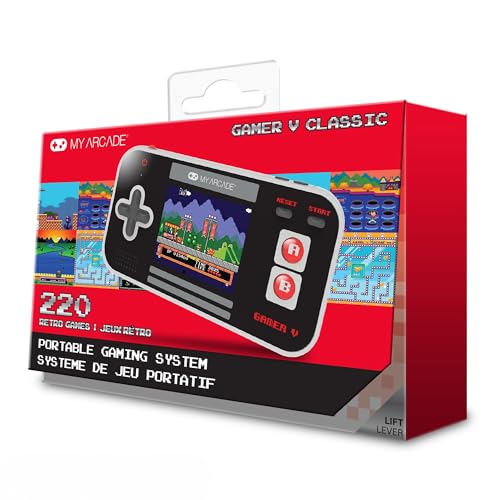
My Arcade Gamer V Classic Portable 220 Games 2.5″ Display

Qoody S600 Retro Handheld Console Dark Grey 64GB
The Details Behind The Selections
The Top Us Video Arcades cocktail cabinet leans into a real arcade-bar aesthetic rather than a toy-shop vibe. A 22-inch LCD sits behind thick tempered glass, framed by commercial-grade materials that suggest the cabinet was built to handle a busy rec room rather than a quiet corner. Two included stools turn the table itself into a two-player station, and a centered joystick layout means you can switch hands without rearranging the room.
For anyone setting up a dedicated game space, the cabinet-and-stool package arrives as a complete setup. Owners commonly find the build weight reassuring for a piece of furniture that doubles as a console. Compared to the more compact Tiny Atari desktop mini, this is a full room feature rather than a shelf trinket.
Real-World Strengths
- Tempered glass over the LCD adds spill and scratch resistance for family use.
- Two-player cocktail layout feels like a real pub table, with stools included.
- Centered joystick fits both right- and left-handed players without swapping seats.
- LED lighting with a remote lets you tune the room mood without rewiring anything.
Things To Consider
- The 60-game library is curated rather than sprawling, so variety seekers may want a bigger roster.
- Its full-size footprint requires a dedicated corner of the room, not a small apartment nook.
- Surfaces and glass will need regular wiping since players tend to rest drinks right on the table.
Key Specs
Who It Suits Best
Households dedicating a room to retro gaming and willing to give the cabinet prime real estate.
Where Another Pick Suits Better
Travelers and small-apartment dwellers will find the My Arcade Gamer V Classic far easier to live with day to day.
Step into the bigger sibling of the first pick and the headline change is the game count. Where the 60-game cabinet leans curated, this 412-game version reads like a greatest-hits archive of the 80s. The build bones stay the same: 22-inch LCD, tempered glass overlay, centered joystick for either hand, and a cocktail-table form factor with stools tucked underneath.
For a house that hosts rotating groups, the deeper library means a guest can land on a new game every visit. The plywood cabinet weight is a real differentiator, since cabinets built from lighter materials tend to drift across tile floors during intense play. Compared to the smaller 60-game model, this one trades curation for raw range.
A Few Strong Suits
- 412 built-in titles deliver more variety per gathering than most cocktail cabinets in this range.
- Heavy-duty 3/4-inch plywood body resists the wobble lighter cabinets pick up over time.
- Two-player cocktail format with stools turns any evening into a tournament bracket.
Worth Noting
- Higher game count does not always mean higher quality, and some titles feel like filler.
- The 22-inch screen is shared across two players, so seating posture matters for legibility.
- Glass surface will need a microfiber cloth handy since fingerprints show up under LED light.
Feature Snapshot
Made For
Hosts running frequent game nights who want enough variety that nobody has to repeat a session in a month.
Consider Something Else When
Quiet households chasing a tighter, more polished game list should look at the 60-game Top Us Video Arcades cabinet instead.
The Tiny Arcade Atari 2600 mini skips the full-size ambition entirely. It shrinks the whole experience down to a 3.5-inch playable screen, a real joystick, and ten built-in classics, including Pac-Man and Breakout. The pitch is simple: a working Atari you can park next to a coffee mug without rearranging the desk.
Compared to the massive cocktail cabinets from Top Us, this is pure shelf candy with actual buttons and sound. Owners with curated desk setups tend to keep it powered on for the visual feel as much as the play. It is the rare retro pick that doubles as decor without forcing a dedicated room.
Benefits That Matter
- Working joystick and screen, not a static replica, so the play experience is genuine.
- Preloaded classics remove the need for downloads, internet setup, or extra controllers.
- Compact size fits a work desk, a bookshelf, or a carry-on for travel photos.
Points To Note
- Ten games feels thin for anyone chasing depth, and there is no expansion path.
- The 3.5-inch screen is comfortable for short sessions but tiring over an hour.
- Small parts and joystick stems tend to attract dust, so a soft brush helps keep it crisp.
Right Fit For
Anyone wanting a charming desktop piece that plays real Atari games rather than just looking the part.
Look Elsewhere When
Handheld-only travelers will prefer the Qoody S600 for its larger screen and far deeper library on the go.
The Qoody S600 trades charm for screen real estate. A 4-inch IPS (in-plane switching) panel running at 720×720 sits in a textured shell that resists fingerprints and grip slips during long play. The 64GB of internal storage holds more than 22,000 preloaded titles, which is deep enough to lose a weekend without seeing the same title twice.
For commuters, the IPS screen is the headline. IPS panels hold their color and contrast at wide angles, so you can play tilted toward a window without washing out the picture. Compared to the Tiny Arcade Atari, this is a pure-play handheld rather than a desk piece, and the library depth makes it feel closer to a portable anthology.
The Upside
- 4-inch 720×720 IPS screen keeps the picture crisp even on a tilted bus seat.
- 22,000+ preloaded games remove the fiddling that usually comes with retro handhelds.
- Anti-slip texture helps during sweaty long sessions or shared play with kids.
- 64GB storage leaves room for save files and any future firmware updates.
Some Limits To Know
- The library mixes gems and filler, so expect to spend time hunting for the good stuff.
- It is a chunkier handheld than the pocket-size My Arcade, so jacket pockets are tight.
- Battery life varies wildly with brightness, so dimming the screen early pays off.
Feature Card
Best Suited To
Frequent travelers and office-break players who want sharp visuals and enough variety to skip repeats.
Not Your Match When
Tinkerers chasing firmware customization should grab the TRIMUI Smart PRO with CrossMix OS instead.
The TRIMUI Smart PRO leans into a different corner of the handheld market. CrossMix OS is a custom firmware layer that adds auto-save, deeper menu customization, and a more polished interface than stock retro handhelds tend to ship with. The package also includes a storage case, which is a thoughtful touch for anyone who tosses a console into a backpack.
For players who like to tune their setup, the firmware story is the real draw. Save states that resume where you left off mean short coffee breaks no longer wipe progress. Compared to the Qoody S600, this one favors software refinement over sheer library size.
A Strong Showing
- CrossMix OS adds auto-save and resume, so a flat battery does not mean a lost run.
- Included storage case protects the shell during daily travel.
- Customization options make the interface feel tailored rather than off-the-shelf.
Factors To Consider
- The custom firmware can be intimidating for anyone who has never tweaked a retro handheld.
- Library depth depends on what you sideload, so out-of-the-box variety feels lighter than the Qoody.
- Software updates occasionally shift menus, so muscle memory may need a refresh after a major patch.
Who Will Love This
Curious tinkerers who want firmware control without building a retro handheld from parts.
Skip It When
You would rather plug in and play than tweak settings, in which case the Qoody S600 is the easier path.
The My Arcade Gamer V Classic leans fully into portability. A 2.5-inch color display and pocket-friendly shell make it the kind of unit you forget is in your jacket until a delay turns up. The 220 preloaded games lean casual, which fits the quick-session use case the form factor suggests.
For a child or a casual player, the Gamer V is the lowest-friction entry on the list. Power on, pick a game, play. There is no firmware tweaking, no save-state management, and no menus to learn. Compared to the deeper Qoody S600, this one is a quick-break companion rather than a long-haul handheld.
Where It Helps
- Pocket-size body slips into a jacket or a small bag without bulk.
- 220 preloaded titles cover casual genres like puzzles, sports, and light shooters.
- Plug-and-play setup means no accounts, downloads, or firmware updates to manage.
Some Limits To Know
- 2.5-inch display is comfortable for short sessions but small for anything longer.
- Game selection skews light, so genre fans hunting for specific arcade titles will feel limited.
- Plastic shell picks up scuffs in pockets, so a soft pouch pays for itself quickly.
Perfect Match For
Commuters, kids, and casual players who want a pick-up-and-play handheld without a learning curve.
Reach For A Different Pick When
Long-session players should consider the Qoody S600 for its larger IPS screen and far deeper library.
The second Qoody S600 listing here is the same handheld wrapped in a slightly different colorway and price tag. The 4-inch IPS panel, 64GB storage, and 22,000+ preloaded titles carry over, so the play experience matches its sibling. The difference is purely a value question, and that is exactly the point.
For first-time handheld shoppers, this version is a low-risk way to step into the format without stretching the budget. Compared to the TRIMUI Smart PRO, you give up firmware flexibility but gain a bigger preloaded library out of the box. Compared to the Tiny Atari, you give up shelf charm and gain a real travel-ready screen.
Advantages To Know
- Same IPS screen and storage as the pricier S600 listing, just a different price tier.
- Preloaded library removes the sideload learning curve for newcomers.
- Dark grey finish hides fingerprints better than glossy alternatives.
Room For Improvement
- Body is still chunkier than the My Arcade Gamer V, so a pocket needs to be deep.
- Battery life is sensitive to brightness settings, so plan on dimming for long trips.
- Game curation is uneven, so casual fans may need to sort through filler to find favorites.
Who Should Grab It
Newcomers to retro handhelds who want the S600 experience without the upgraded listing’s price tag.
A Better Fit Elsewhere
Anyone who wants firmware tinkering should reach for the TRIMUI Smart PRO with CrossMix OS instead.
What Matters Most Before Choosing Arcade Systems
The first real decision is form factor. Cocktail cabinets anchor a room, but they also demand floor space, two stools, and a willingness to dedicate a corner. A handheld fits a coat pocket but tops out at a four-inch screen, and a desktop mini like the Tiny Atari lives somewhere in between, working as decor as much as a console.
Screen quality matters more than people expect. IPS panels, the kind of LCD (liquid crystal display) that holds color at wide angles, are worth the premium for travel because tilted bus seats and airplane tray tables punish washed-out displays. TN panels, an older and cheaper LCD type, look fine head-on but fade fast when the angle shifts.
Game library shape matters as much as library size. A 412-game cabinet with filler feels shallower than a 60-game cabinet with curated classics. Look for genre spread that matches your tastes, and remember that retro handhelds often include platformers, shooters, and puzzlers in wildly uneven ratios.
Build and weight signal longevity. Plywood cabinet bodies outlast particle board by years in high-traffic game rooms. Handheld shells with anti-slip texture hold up better when shared with kids, and glass overlays on cocktail cabinets save you from a single spilled drink turning into a panel replacement.
Key Considerations Across These Picks
Pitfalls Shoppers Hit
A common trap is chasing raw game count. A 22,000-game handheld sounds generous until you spend an hour scrolling through duplicates and low-effort ports. Curated libraries of 60 to 400 titles usually feel more playable day to day. Another slip is ignoring screen type. TN panels look fine in product photos but fade the moment you tilt the device, which matters on every commute.
When Paying More Pays Off
The premium on a cocktail cabinet, beyond a flat-screen and a joystick, mostly buys structural plywood, tempered glass, and stools. That stack holds up to years of weekly play, while lighter cabinets tend to wobble and shift. On handhelds, the upgrade dollars go to IPS screens and larger batteries, which directly improve comfort on long sessions rather than adding features you may never touch.
Frequently Asked Questions
What size arcade cabinet fits in a small apartment? Compact cocktail cabinets need a roughly 3-by-3-foot floor footprint plus stool clearance. In tight spaces, a handheld or a desktop mini is the more realistic call.
Do these systems need internet to play? The picks on this list are preloaded and play offline. No downloads, accounts, or firmware updates are required to start a session.
Are retro handhelds good for kids? Yes, especially units with anti-slip shells and curated libraries. Younger players tend to do well with the My Arcade Gamer V because the controls and menus are simple.
How long do handheld batteries usually last? Battery life varies with brightness and game type, but most retro handhelds in this range deliver a few hours per charge. Lowering screen brightness extends runtime noticeably.
Can I add more games later? Some handhelds support sideloading, but the picks here arrive preloaded for plug-and-play use. Adding files typically requires a computer and some comfort with file management.
The Takeaway
The right arcade system is the one that matches your room and your routine, not the one with the loudest spec sheet. Coffee-shop players tend to thrive with a handheld, while game-room hosts get the most from a full cocktail cabinet. Pick the form factor first, then match screen quality and library shape to the way you actually play.



