


There’s a particular joy in firing up a game you loved as a kid and feeling the buttons respond under your fingers like the originals did. The good news for hobbyists is that assembling your own cabinet no longer requires scavenging parts from broken machines. Modern arcade cabinet kits ship with the buttons, joysticks, encoders, and mounting hardware you need, so the work shifts to woodworking (or skipping the woodwork entirely) and software.
You also don’t need a full cabinet to feel that arcade snap. The kits in this list range from a handful of illuminated buttons for a bartop build to full two-player control sets with zero-delay encoders, plus one specialized joystick upgrade for the GRS Tron stick. Whether you’re building a MAME rig, a Raspberry Pi retro project, or a fight stick for serious play, the right starting parts make every other step easier.
The Main Contenders

EG Starts 5X 30mm Arcade LED Push Button 5V

EG STARTS Chrome Silver Plated 5V & 12V LED Push Button

EG STARTS 6X American Style 30mm Happ Type Push Button

EG STARTS Classic Arcade Cabinet Kit USB Encoder

2 Player Classic Arcade DIY USB Encoder Kit

Zero Delay Arcade USB Encoder PC PS3

ThunderStick Joystick Upgrade Kit for GRS Tron Stick
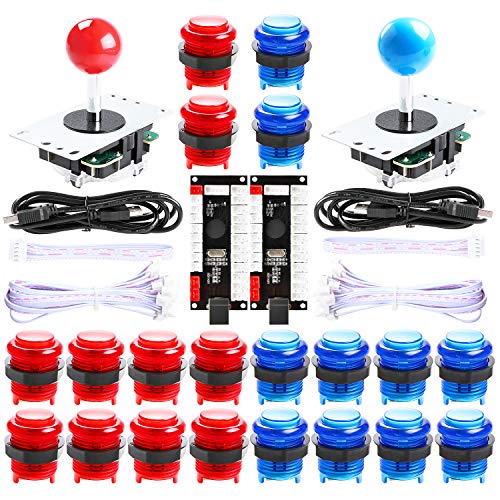
Qenker 2-Player LED Arcade DIY Kit

2 Player Arcade Joystick Buttons Retropie Cabinet Kit
A Closer Look At Each Pick
Five illuminated buttons in five colors is a tidy way to test the waters on a first arcade build. The set runs on 5V, which lines up neatly with the USB power available on most PC, Raspberry Pi, and encoder-based projects. Each button fits a standard 30mm mounting hole, and the overall diameter across the plunger is around 33mm, so a drill press or step bit handles the work cleanly.
For hobbyists who want a small bartop or a single-player panel without committing to a full kit, this pack is a low-risk starting point. Compared to the EG STARTS Happ-style 30mm set reviewed later, the feel is lighter and more focused on visual flair than tournament-grade actuation.
Reasons It Performs
- Five distinct colors in one pack make it easy to color-code player actions, coin slots, or system buttons at a glance.
- The 5V rating drops straight into typical USB encoder setups, so no extra power wiring is needed.
- Standard 30mm mounting means these swap in alongside most other arcade parts in this list.
- Built-in switches remove the fiddly step of pairing buttons with separate microswitches.
Things To Consider
- Only five pieces means a full two-player panel needs a second set or a different kit entirely.
- Plunger travel feels softer than Happ-style buttons, so fighting game fans may want firmer action.
- No encoder or joystick is included, so this works best as an add-on, not a standalone build.
Key Specs
Who Will Love This
First-time builders putting together a single-player bartop or a small test panel on a Raspberry Pi.
Look Elsewhere When
The Qenker 2-Player LED Arcade DIY Kit is a smarter starting point when you want joysticks, encoders, and a full button layout in one box.
Chrome-plated buttons give a cabinet that mirror-finish retro look without the weight or cost of real metal housings. These come in at 32mm across the plunger and require a 24mm to 28mm mounting hole, which makes them well suited to thinner panels or compact bartop builds.
Maximum depth from plunger top to microswitch bottom runs about 65mm, so plan your panel thickness before drilling. Owners commonly pair these with 12V power supplies for a brighter glow, but the 5V option is also supported for USB-driven projects.
Good Reasons To Consider
- Reflective chrome finish creates that polished, classic-cabinet appearance in any lighting.
- Flexible 5V or 12V LED options let you match existing power supplies without rewiring.
- Each button arrives complete with fixing ring, spacer, and microswitch included.
- Smaller 24mm to 28mm hole range fits thinner panels better than 30mm-only alternatives.
Trade Offs
- The plating is decorative, so fingerprints and smudges show on the surface and need regular wiping.
- Four buttons per pack means larger layouts need multiple sets or a different kit.
Made For
Hobbyists building a compact bartop or any cabinet where the chrome aesthetic is the centerpiece.
Swap It Out When
The EG STARTS 2 Player Arcade Joystick Buttons Retropie Cabinet Kit includes chrome buttons and the rest of the wiring for a full two-player setup.
These are the buttons to reach for when you want the concave, springy feel of an American arcade cabinet. The design draws from the classic Happ Type style, with a vertically mounted microswitch rated for around 1,000,000 cycles. The 3/16″ (4.8mm) terminal is the standard tab size for JAMMA and MAME wiring harnesses.
The buttons are best used in 3/4″ wood control panels and mount cleanly into either wood or metal. The classic concave plunger lands in a 28mm hole, so plan your cutouts accordingly.
Why It Works Well
- Concave plunger profile cradles the fingertip, which is friendlier for long play sessions.
- Tested microswitch longevity of 1,000,000 cycles handles years of repeat pressing.
- 3/16″ terminals match most JAMMA harnesses, simplifying installation for retro builders.
- Six buttons per pack covers a typical single-player six-button fighter layout with no leftovers.
Points To Note
- Not illuminated, so dark rooms may need a separate LED solution or panel lighting.
- Red is the only color in this specific pack, so multi-button color coding requires mixing sets.
The Right Fit
Wood-panel builders focused on fight games and the traditional American arcade feel.
Skip It When
The EG STARTS Classic Arcade Cabinet Kit USB Encoder bundles Happ-style buttons with an encoder and joystick, saving you the wiring step.
This bundle brings together an 8-way joystick with a 35mm ball top handle, illuminated 5V buttons, and a USB encoder in one box. The encoder is the part that translates joystick and button presses into keyboard or gamepad signals the PC understands, so it removes the biggest wiring headache for first-time builders.
The joystick housing uses heat-resistant plastic and a twist-type design, with a separate body and lens cap for cleaner light transmission. Microswitches are rated for 10,000,000 cycles, which is well beyond what most home builders will see in a decade of play.
Practical Pluses
- Joystick plus buttons plus encoder in one kit means fewer trips to track down compatible parts.
- 10,000,000-cycle microswitches are overkill in a good way for any home cabinet.
- 35mm ball top handle gives a comfortable, classic Japanese arcade grip.
- Twist-type design on the LED body makes bulb swaps and maintenance straightforward.
Worth Noting
- Single-player focus only, so head-to-head setups need a second encoder and joystick.
- Heat-resistant plastic feels lighter than metal-shafted joysticks, depending on the build.
Who Should Grab It
First-time cabinet builders who want everything in one box for a single-player MAME or PC build.
Consider Something Else When
The 2 Player Classic Arcade DIY USB Encoder Kit from EG STARTS is a better starting point when two players are a must.
Two players, two joysticks, two USB encoders, 19 illuminated 30mm buttons, and the cables to wire it all up. The kit is built around zero-delay USB encoders, which means input lag (the small delay between pressing a button and the game responding) stays minimal during competitive play.
It’s aimed at MAME JAMMA-style builds on Raspberry Pi 1, 2, 3, and 3B, and most Windows systems. The 5-pin joysticks support 8-way movement, and the LED buttons run on 5V, which is convenient for projects already powered off USB.
Notable Gains
- Two independent USB controllers let each player get their own input channel with no interference.
- Zero-delay encoder design keeps inputs responsive for fighting and rhythm games.
- 19 buttons cover two six-button fighters plus start, select, and coin per side.
Points To Keep In Mind
- Button count is generous for fighters but tight for trackball or spinner-based games.
- Wiring diagrams aren’t always included, so plan time for referencing community pinouts.
Key Specs
Best Suited To
Living room builders who want plug-and-play head-to-head gaming on a Raspberry Pi or PC.
Not Your Match When
The Qenker 2-Player LED Arcade DIY Kit offers a similar count with a slightly different encoder setup, which may suit your software preferences better.
Sometimes the only piece missing from a half-finished build is the encoder, and that’s exactly what this listing covers. The board runs on 5V and works with PC, PS3, and Android setups, with PS2 support available through a separate cable.
The package includes the 3103 encoder board, a USB cable, and the harness wires for both joystick and button hookups. It’s a useful upgrade for anyone whose original encoder is glitchy or who is switching platforms mid-build.
Strong Points
- Multi-platform support covers PC, PS3, and Android from a single board.
- Zero-delay design keeps inputs snappy for skill-based titles.
- Included wiring harness removes the need to source separate cables.
Less Ideal Details
- No buttons or joysticks included, so this only fits people who already have the rest.
- PS2 support requires contacting the seller for a different cable, which adds a step.
Perfect Match For
Hobbyists replacing a faulty encoder or expanding an existing cabinet to another platform.
Where Another Pick Suits Better
The EG STARTS Classic Arcade Cabinet Kit is a better match when you need a full starter bundle rather than just the board.
This is a niche pick with a specific job: it lets a GRS Tron stick (a high-end joystick sold separately) mount into a control panel of up to 19mm thickness, opening the door to PC and arcade cabinet use. The kit also converts the stick between 2-way, 4-way, 8-way, and flight stick modes, so the same hardware covers different game genres.
Compatibility is specific, and the seller notes the first-wave Legend Ultimate Arcade Cabinet is supported. An extra ball top shaft is included for switching back to a traditional top.
What It Does Well
- Makes a GRS Tron stick usable in a cabinet without permanent modification.
- Multi-way switching supports fighting games, shooters, and flight sims from one joystick.
- Spare ball top shaft gives the option of traditional feel when needed.
Honest Caveats
- Only works with the GRS Tron stick, so it has no value without that specific joystick.
- Panel thickness is capped at 19mm, so thicker wooden panels won’t accept the kit.
Whose Shelf It Belongs On
Owners of a GRS Tron stick who want to drop it into a custom panel or first-wave Legend Ultimate cabinet.
Reach For A Different Pick When
The 2 Player Classic Arcade DIY USB Encoder Kit is the right starting point when you’re building from scratch rather than upgrading existing premium hardware.
The Qenker kit pairs a generous 20 illuminated LED buttons with two joysticks and two zero-delay USB encoders. Buttons come in blue and red, which gives the panel a strong visual identity without needing a custom color run.
It’s positioned for MAME JAMMA projects on both PC and Raspberry Pi. Heat-resistant plastic construction in the buttons is a small but real touch for any build that runs warm during long sessions.
The Upside
- 20 buttons cover a generous two-player fighter layout with extras for system controls.
- Zero-delay encoders keep input timing tight across both players.
- Color split between red and blue gives an instant visual distinction between player sides.
A Few Limitations
- Limited to red and blue, so themes using other colors require third-party buttons.
- Wiring diagrams are referenced online, which adds research time for first-timers.
Key Specs
Right Fit For
Raspberry Pi retro builders who want a high button count and clear player color coding out of the box.
Another Choice May Suit
The EG STARTS 2 Player Arcade Joystick Buttons Retropie Cabinet Kit offers a chrome-plated aesthetic if you prefer that look over mixed colors.
Every button in this kit wears a chrome plating finish, which gives the panel that showpiece, polished-arcade look the moment the LEDs switch on. Twenty chrome buttons cover two full player layouts plus coin slots, and each player gets a dedicated USB cable so multiplayer works cleanly on the same machine.
Zero-delay USB encoders and 8-way joysticks are included. The kit is set up for MAME, Retropie, and PC projects, with the buttons running on 5V full-color LED power.
Useful Highlights
- Chrome plating across all 20 buttons creates a unified, premium-looking panel.
- Dedicated USB cable per player keeps input channels cleanly separated for multiplayer.
- 8-way joysticks handle diagonal inputs reliably for fighting and arcade action.
Room For Improvement
- Chrome surfaces show fingerprints, so plan on a microfiber cloth as part of regular care.
- Buttons are not metal, so the look is aesthetic rather than heavyweight.
Key Specs
Built With In Mind
Builders who want the showpiece chrome look for a Retropie or MAME cabinet in a living room or game room.
A Better Fit Elsewhere
The Qenker 2-Player LED Arcade DIY Kit is a smarter choice when color variety matters more than a uniform chrome finish.
What Matters When Choosing Arcade Cabinet Kits
The first call is how far you want to take the build. A full two-player kit covers most fighting, shooting, and arcade titles, while a smaller button-and-joystick set is plenty for bartop projects. Builders focused on one player can save time and wiring with a single-encoder kit, while families or shared spaces benefit most from two-player bundles.
Look at button style next. Happ-style buttons have a concave, springy feel that suits American cabinets and fighters. Chrome or illuminated buttons lean toward visual impact and bartop builds. Microswitch ratings above one million cycles are a good sign for any cabinet that sees regular play, and zero-delay encoders are worth the small premium for anything skill-based.
Match the kit to your software. MAME, RetroPie, and PC builds all work with the same USB encoder standard, but specific firmware can call for specific boards. Raspberry Pi 1, 2, 3, and 3B support is common in the kits above, and the SJ@JX encoder adds PC, PS3, and Android coverage. Always confirm the encoder works with your OS version before drilling a single hole.
Finally, plan the panel before ordering. Mounting hole sizes range from 24mm to 30mm depending on the kit, and panel thickness affects which joysticks and buttons fit. Map your layout on paper, count the inputs you need, and order a kit that leaves room for one or two extras in case a favorite game needs a non-standard control.
Key Considerations Across These Picks
Mistakes Worth Dodging
Over-buying buttons is the most common slip in a first arcade build. Extra inputs feel useful until the project is finished and half the buttons never get mapped. Pick the games you want to play first, count the required inputs, and only add extras for the titles you actually run.
A close second is ignoring encoder compatibility. Not every USB encoder works the same way across MAME, RetroPie, and modern PC emulators, and a kit that runs beautifully on one platform can be stubborn on another. Check community feedback for your specific OS version before committing.
Where The Extra Money Goes
Higher-tier kits in this category usually upgrade three things: encoder quality, microswitch longevity, and finish materials. Zero-delay boards and ten-million-cycle switches translate to a noticeably crisper response over years of play, especially for fighting and rhythm games. Aesthetic upgrades like chrome plating or precision-molded housings don’t change the gameplay, but they make the cabinet something you’re proud to leave in the living room rather than hide in a workshop. The honest read is that paying more makes sense for a cabinet you plan to use often and look at daily, and matters far less for a tucked-away hobby project.



