


Shopping for Affordable Dj Headphones without overspending means knowing where to focus. You want a pair that handles long sessions, blocks club noise, and survives the bumps of travel, all without the boutique price tag. This roundup covers ten solid options that punch above their weight, whether you’re mixing in a bedroom, playing small gigs, or just need reliable cans for daily music work.
The Essentials At A Glance

Sony DJ Headphones 4334205465 Black

OneOdio Studio Max 1 Wireless DJ Headphones
Pioneer DJ HDJ-CUE1 DJ Headphones Black

OneOdio Wired DJ Hi-Res Over-Ear Headphones

OneOdio Monitor 60 Professional Studio Headphones

JOYO JMH-02 Studio Monitor Headphones 50mm

P PUPGSIS Wired DJ Over Ear Headphones

OneOdio A70 Bluetooth Over-Ear Headphones
OneOdio Monitor 80 Open-Back Headphones 250 Ohm

OneOdio Studio Max 2 Wireless DJ Headphones
Meet The Standout Selections
For decades, Sony’s closed-back studio cans have lived in radio booths, edit bays, and home setups, and this set carries that same lineage into DJ territory. The 40mm neodymium drivers (the small magnets that move the speaker diaphragm) deliver a clean, honest midrange that helps you catch muddy low-end before a crowd does.
Compared to the wireless options coming later, this one stays wired by design, and the 9.8-foot non-detachable cable is a deliberate choice for stable booth runs. The swiveling ear cups fold flat for transport, and the closed-ear seal noticeably reduces stage bleed during loud sets.
Practical Pluses
- Trusted closed-back isolation for noisy environments
- 40mm neodymium drivers offer a balanced, reference-leaning sound
- 9.8-foot cable reaches across most mixers comfortably
- Swiveling cups allow single-ear monitoring during transitions
- Gold-plated 1/4-inch adapter included out of the box
Worth Noting
- The non-detachable cable is a durability concern if it gets snagged hard
- Clamping force may feel tight during very long sessions
Key Specs
Who It Suits Best
Home producers and broadcasters who want a long-trusted closed-back reference at a sensible cost.
Where Another Pick Suits Better
Wireless-first users should consider the OneOdio Studio Max 1 Wireless DJ Headphones instead, since it adds Bluetooth flexibility at a similar tier.
The Studio Max 1 leans into wireless performance without pretending latency doesn’t matter. The 20ms response window, meaning the delay between audio signal and what you actually hear, is tight enough for casual DJ transitions, and the included transmitter makes pairing straightforward.
Where Sony’s wired option prioritizes purist monitoring, this OneOdio adds Bluetooth 5.3 for phones and tablets, plus 3.5mm and 6.35mm cables when you want a wired backup. Battery life is the headline feature at roughly 120 hours, which removes one common anxiety from long weekend gigs.
Notable Upsides
- 20ms low-latency mode keeps wireless mixes tight
- Up to 120 hours of battery life per charge cycle
- Bluetooth 5.3 pairing works with phones, tablets, and PCs
- Wired fallback via 3.5mm and 6.35mm cables
Trade Offs
- Sound tuning skews consumer-friendly rather than strictly neutral
- Closed-back design can warm up ears during summer sets
Made For
Mobile DJs and bedroom producers who want wireless freedom without giving up the option to plug in.
Skip It When
Strict reference mixers should pick the JOYO JMH-02 Studio Monitor Headphones, which carry a flatter response curve for honest monitoring.
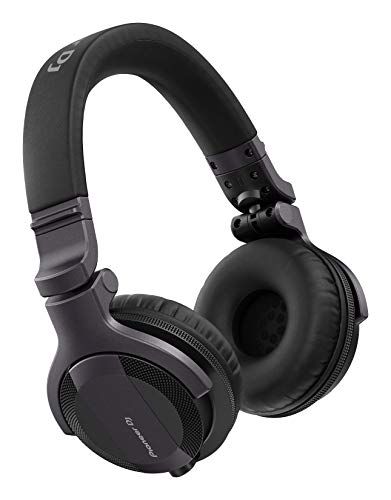
The HDJ-CUE1 is Pioneer DJ’s entry point, and that heritage matters if you care about how the brand’s flagship models feel and rotate. Build quality reflects the lineage without the flagship price, which is the entire pitch.
Where the OneOdio Studio Max 1 leans on wireless flexibility, the CUE1 stays wired and focuses on fundamentals like clean articulation, swiveling cups, and the rotational flexibility that lets you cue one ear at a time. For a first set of cans that won’t feel disposable, it earns its place.
Practical Advantages
- Swiveling ear cups allow easy one-ear cueing
- Pioneer DNA at a true entry-level price
- Closed-back seal handles moderately loud rooms
- Lightweight enough for multi-hour practice sessions
Honest Caveats
- Sound signature is colored toward low-end punch, not flat reference
- Wired only, no Bluetooth backup option
- Carrying pouch feels minimal compared to higher Pioneer tiers
Best Suited To
First-time DJs learning the craft on Pioneer-style gear without paying flagship money.
Not Your Match When
Cue-point hunters who need wireless flexibility should pivot to the OneOdio Studio Max 2 Wireless DJ Headphones instead.
This is the budget workhorse, the one that shows up in starter bundles and home studios worldwide. The 50mm drivers are larger than Sony’s 40mm units, and that extra surface area (the part of the speaker that physically pushes air) tends to push more low-end energy, which can flatter electronic genres.
Versus the Pioneer CUE1, this OneOdio trades brand cachet for raw driver size and price. The padded ear cushions and adjustable headband prioritize comfort during long practice nights, and the over-ear design naturally limits bleed into a recording mic.
The Helpful Details
- 50mm drivers deliver a bass-forward signature suited to EDM
- Soft padded cushions reduce ear fatigue over hours
- Adjustable, stretchable headband fits a wide range of head sizes
- Closed-back over-ear seal for basic noise isolation
Some Limits To Know
- Not a flat reference, so mix translation may mislead on acoustic material
- Plastic construction feels less rugged than the Pioneer option
- Wired only, no detachable cable swap if it frays
Who Will Love This
Home studio beginners and bedroom DJs who want big-driver sound at a starter price.
Look Elsewhere When
Mix engineers chasing accuracy should reach for the JOYO JMH-02 Studio Monitor Headphones, which aim for a flatter curve.
The Monitor 60 is built around the same OneOdio playbook but tilts harder toward the studio side. Closed-back ear cups handle the isolation work that tracking and overdubbing sessions demand, and the tuning tries to balance low-end weight with vocal clarity.
Compared to the entry-level OneOdio wired model, the 60 has a more disciplined approach to frequencies, leaning toward a flatter presentation. For a home recordist layering vocals or tracking acoustic instruments, the focus on isolation makes the difference.
The Value In It
- Closed-back cups reduce mic bleed during recording
- More disciplined tuning than the bass-heavy OneOdio entry
- Comfortable enough for long tracking and editing sessions
- Wired connection removes any battery concerns
Worth Bearing In Mind
- Sound still leans warmer than truly neutral studio references
- Build quality lands between budget and premium tiers
The Right Fit
Project-studio recordists and home producers who want isolation for tracking without a high spend.
A Better Fit Elsewhere
If you mostly listen rather than track, the OneOdio A70 Bluetooth Over-Ear Headphones offer a wireless day-to-day alternative at a similar feel.
JOYO’s JMH-02 targets the engineer who needs a flat response (a frequency output that doesn’t artificially boost or cut bass or treble). The 50mm neodymium drivers deliver a 20Hz to 20kHz range, which covers the full scope of human hearing and is the hallmark of a true monitoring tool.
Where the OneOdio Monitor 60 colors the sound toward warmth, the JMH-02 aims to reveal the mix as it stands. That makes it less flattering for casual listening, but more honest for editing decisions, especially in quiet home setups where you can’t crank monitors.
A Strong Showing
- Flat, balanced frequency response for honest monitoring
- 50mm neodymium drivers cover a wide frequency range
- Passive noise isolation supports focused editing sessions
- Includes 3.5mm and 6.35mm adapters for varied gear
Less Ideal Details
- Flat response can sound thin to listeners used to consumer tuning
- Not a feature-rich wireless option for casual use
Key Specs
Perfect Match For
Mixing and mastering engineers who need accuracy over flair in a quiet room.
Another Choice May Suit
Performers who need monitoring on stage should consider the Pioneer DJ HDJ-CUE1 DJ Headphones, which handle rotation and cueing better for live play.
The P PUPGSIS set is a generic take on the DJ headphone formula, with 50mm drivers, a claimed 20Hz to 20kHz range, and an over-ear build aimed at casual listening and light studio work. It doesn’t break new ground, but it covers the basics at a low entry point.
Against the better-known picks, this one is harder to verify in long-term use, and listings can be inconsistent. You may find it appealing if you want a low-stakes spare pair, but it shouldn’t be the only set you own for serious mixing.
The Case For It
- 50mm drivers deliver a familiar full-range sound
- Over-ear design offers basic passive noise isolation
- Useful as a backup pair for travel and casual sessions
Practical Considerations
- Brand support and documentation are limited
- Build quality varies more than established competitors
- Long-term durability is less predictable than named brands
Built With In Mind
Casual listeners and hobbyists who need a secondary pair without much spend.
Swap It Out When
Anyone tracking or mixing regularly should pick the OneOdio Monitor 60 Professional Studio Headphones, which offer stronger isolation for the same money.
The A70 is a hybrid, equally comfortable in Bluetooth mode for casual listening and wired mode for studio sessions. The 40mm neodymium drivers are paired with a custom aluminum fascia (the front plate covering the driver) that helps shape the sound profile.
Compared to the wired OneOdio Pro-10, the A70 trades pure wired simplicity for dual-mode flexibility. Battery life is generous at up to 72 hours in wireless mode, and you can switch to wired playback any time the battery runs low.
A Few Strong Suits
- Dual wireless and wired playback modes
- Up to 72 hours of battery life in Bluetooth mode
- Aluminum fascia adds a touch of premium feel to the build
- 40mm neodymium drivers tuned for balanced stereo playback
Trade-Offs To Consider
- Sound tuning leans consumer rather than studio-flat
- Closed-back design gets warm during summer sessions
Right Fit For
Anyone who splits time between casual wireless listening and occasional studio work.
Reach For A Different Pick When
Live DJs who need low-latency wireless should look at the OneOdio Studio Max 2 Wireless DJ Headphones, which prioritize timing accuracy.
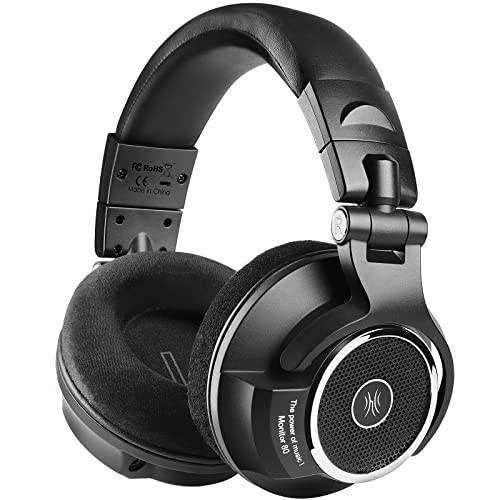
The Monitor 80 is the most specialized pick in this list, a 250-ohm open-back design (250 ohms refers to the headphone’s electrical resistance, and open-back means the ear cups have open grilles that let air and sound pass through) aimed at quiet-room critical listening. Open-back headphones trade isolation for a wider, more natural soundstage, and this one leans into that trade hard.
Versus every other closed-back option in this roundup, the 80 needs a dedicated headphone amp (an external amplifier that provides enough power to drive high-impedance headphones) to perform properly, and it leaks sound in both directions. Used in the right context, though, it offers a listening window that closed-back cans cannot match.
Everyday Advantages
- Open-back design delivers a wide, natural soundstage
- 250 ohm drivers offer stable, controlled output with proper amplification
- Hi-Res certified for high-quality audio playback
- Aluminum honeycomb grille protects the driver diaphragm
Where It Is Less Suited
- Requires a dedicated headphone amp to drive properly
- Open design leaks sound both in and out, unsuitable for shared rooms
- Not a fit for live or noisy monitoring environments
Key Specs
Whose Shelf It Belongs On
Critical listeners and mastering engineers with a quiet room and a proper headphone amp.
Where A Sibling Pick Shines
Performers who need isolation on stage will get more from the OneOdio Monitor 60 Professional Studio Headphones, which keeps sound contained.
The Studio Max 2 is OneOdio’s flagship-tier wireless, a 9ms latency (the delay between your action and the audio reaching your ears) over-ear design that targets DJs, video editors, and competitive gamers who need timing accuracy. The LDAC codec support is the standout spec, since LDAC is a Bluetooth codec that transmits roughly three times more audio data than standard Bluetooth, which matters for high-resolution wireless listening.
Compared to the original Studio Max 1, the Max 2 roughly halves the latency and adds Hi-Res LDAC support, which is a meaningful jump for anyone tracking precise cue points. The trade-off shows up in price and feature complexity, so it’s a better match for tech-comfortable users than beginners.
A Few Highlights
- 9ms ultra-low latency for precise wireless monitoring
- LDAC support for high-resolution Bluetooth audio
- Hi-Res certified for quality playback standards
- Wired fallback available for critical sessions
Potential Compromises
- Higher cost than most picks in this roundup
- LDAC benefits depend on your source device supporting it
- Feature set may be more than casual listeners need
Key Specs
Who Should Grab It
Tech-forward DJs and editors who need low latency and Hi-Res wireless in one package.
Consider Something Else When
Beginners may be better served by the Pioneer DJ HDJ-CUE1 DJ Headphones, which costs less and skips the wireless learning curve.
What To Weigh Before Picking Affordable Dj Headphones
Choosing DJ headphones is less about chasing specs and more about matching build, isolation, and tuning to how you actually work. Closed-back designs block stage noise and keep your mix private, which is the default for live use. Open-back cans, by contrast, give a wider soundstage but leak sound in both directions, so they only work in quiet, private rooms.
Driver size matters in the practical sense. A 50mm driver pushes more air and often delivers stronger low-end, helpful for EDM and hip-hop. A 40mm driver can be more disciplined in the midrange, which serves vocal-heavy mixing. If you play multiple genres, the 50mm size is the safer bet for versatility.
Wireless convenience has matured, but latency still varies. Anything under about 30ms feels acceptable for casual DJ transitions, while video editors and competitive gamers will notice anything above 15ms. Wired connections remain the most reliable path for live performance, since they remove battery and pairing concerns entirely.
Comfort is the hidden dealbreaker. Clamping force, ear cup padding, and headband adjustment all add up across long sets. If you practice for hours at a stretch, prioritize lighter builds with breathable pads, even if it means sacrificing some isolation. Conversely, if you mostly play short club sets, isolation can trump weight.
Common Shopping Slip Ups And How To Dodge Them
The easiest mistake is chasing the lowest price without checking driver specs and tuning intent. A bargain pair with hyped bass might sound exciting at first but translate poorly to a club system. Reading frequency response details, and understanding whether the curve is flat or colored, prevents that disappointment.
A second common slip is ignoring cable design. Non-detachable cables are fine for stationary studio work but become a real liability in mobile setups where snags happen. If you travel with your cans, look for a detachable cable, and consider carrying a spare.
When Paying More Actually Pays Off
Higher-tier DJ headphones earn their premium through better driver materials, tighter build tolerances, and lower wireless latency. The jump from a budget 50mm driver to a higher-tier design is most audible in midrange clarity and high-frequency detail, which matters when you’re separating layered mixes.
The wireless premium is the steepest. A 9ms low-latency connection costs more than a standard Bluetooth pair because the chipset and firmware optimization are specialized. For stationary home use, that premium is hard to justify. For mobile DJ booths and live performance, it can be the difference between tight transitions and noticeable lag.
Frequently Asked Questions
What impedance (the electrical resistance a headphone presents to its source) do Affordable Dj Headphones usually have?
Most picks in this roundup sit at lower impedance levels suited to phones and laptops. The OneOdio Monitor 80 is the exception at 250 ohms, which requires a dedicated amp to drive properly.
Can I use DJ headphones for regular music listening?
Yes, though the tuning may be more colored than a typical consumer pair. Closed-back DJ designs handle general listening well, especially in noisy environments like commutes or shared offices.
How important is wireless latency for DJ work?
Latency matters most during live transitions where you’re cueing tracks in real time. For casual bedroom practice, higher latency is forgivable, but for club or event work, anything under 20ms feels reliably tight.
Do open-back headphones work for DJing?
Generally no, because they leak sound and offer no isolation from stage noise. Open-back designs like the OneOdio Monitor 80 shine in quiet critical-listening setups, not in live performance.
How long should Affordable Dj Headphones last?
With moderate care, budget-tier DJ headphones typically last several years of regular use. Cable joints and ear pad wear are the most common failure points, and both are often replaceable on established models.
Final Verdict
The right Affordable Dj Headphones depend on where you’ll use them most. Bedroom producers get the most from flat-response picks like the JOYO JMH-02, while live performers benefit from closed-back isolation and rotational flexibility like the Pioneer HDJ-CUE1 offers. Mobile DJs should weigh the wireless picks carefully, since latency and battery life shape the real-world experience. Match the design to your room, your routine, and your genre, and the right pair will serve you well for years.



