


Hunting for the right DJ controller without draining your wallet is a familiar balancing act. You want something that feels solid under your hands, plays nicely with the software you already know, and won’t box you in once your skills level up. This roundup focuses on affordable DJ controllers and the support gear that helps them survive the road, from beginner-friendly two-channel units to portable, battery-powered rigs and the cases that keep everything safe between gigs.
The Main Contenders

Pioneer DJ DDJ-FLX4 2-Channel DJ Controller White Bundle

Hercules DJControl Inpulse 500 MK2 2-Channel Bundle
BOSSTIN DJ Controller Case with Wheels, Blue

BOSSTIN DJ Controller Case with Wheels, Red

Pioneer DJ DDJ-FLX4 2-Channel DJ Controller, White
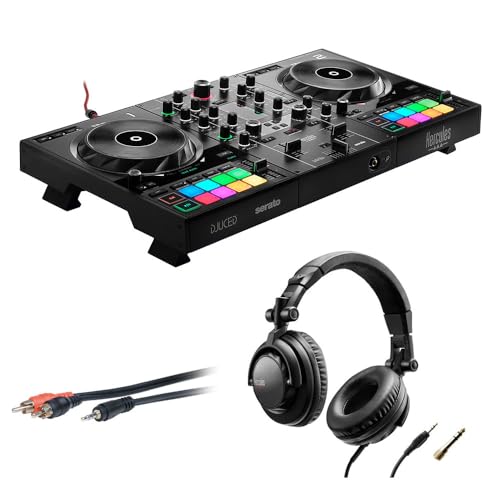
Hercules DJControl Inpulse 500 Headphones & Cable Bundle

Pioneer DJ DDJ-XP2 Add-On Pad Controller

Denon DJ PRIME GO+ Controller with DMX Lighting

DJ Cable Bag with Wheels for Equipment
The Details Behind The Selections
The white Pioneer DDJ-FLX4 in this bundle ships with a carrying case, headphones, an instrument cable, and a polishing cloth, so unboxing feels like a complete starter kit rather than a single box with extras to chase down later. The 2-channel layout borrows heavily from Pioneer’s club gear, meaning the muscle memory you build at home translates well when you eventually play out. Compared to the Hercules Inpulse 500 MK2 covered below, this one leans more on software familiarity than on guided light prompts, so users already comfortable with rekordbox will settle in fastest.
For bedroom DJs, dorm-room practice sessions, or anyone stepping up from a phone app, the included accessories remove the usual “what else do I need” guessing game. The polishing cloth hints at the white finish being a showpiece you’ll want to keep looking clean, and owners commonly report that fingerprints show on the surface after a few sessions.
Practical Advantages
- Full accessory bundle means no separate shopping trip for headphones, cable, or case
- White finish stands out in streams, photos, and home studio setups
- Rekordbox compatibility keeps your library portable to club-standard Pioneer gear
- Two-deck layout is approachable for first-time controllers with room to grow
- Headphones and cable included let you cue and monitor on day one
Honest Caveats
- White shell shows smudges and dust more than darker finishes, so the polishing cloth earns its keep
- Bundle packaging weighs a bit more to ship and store than a controller alone
Right Fit For
First-time DJs who want a single, all-in-one box that covers controller, audio monitoring, and basic transport from the first session.
Look Elsewhere When
Someone drawn to beatmatch light guides and coaching prompts should step up to the Hercules DJControl Inpulse 500 MK2 for a more guided learning experience.
The Inpulse 500 MK2 leans hard into the learning curve with built-in light guides on the jog wheels (the large circular dials you spin to nudge tracks) and tempo strips that help you line up two tracks by feel before you trust your ears. The bundle adds a hard case, a TRS-to-RCA breakout cable (a TRS cable carries a balanced stereo signal on a single plug, while an RCA pair carries unbalanced left/right), and a polishing cloth, making it ready for both home and travel use. Where the Pioneer DDJ-FLX4 above assumes some software comfort, this one meets you with prompts and on-deck coaching.
Its metal base plate and retractable feet give it a planted, sturdy feel on a desk, which matters for scratch practice where the unit shouldn’t scoot around. DJs moving from phone apps to their first real controller will likely appreciate the DJUCED software, which integrates the light guides directly into lessons.
What Helps Most
- Light guides near the platters act like training wheels for beatmatching
- Metal base plate keeps the unit anchored during scratch-heavy sessions
- Case and breakout cable remove the guesswork from a first mobile gig
Points To Note
- DJUCED learning curve is gentler than Serato, but migrating libraries later takes a small effort
- Retractable feet add bulk when collapsed, so flat transport in the case takes a bit of planning
Made For
Self-taught beginners who want visual cues while they develop ear training and timing.
Consider Something Else When
If you’d rather skip the coaching layer and go straight into Pioneer-style club workflow, the Pioneer DJ DDJ-FLX4 covered below offers that path more directly.
Measuring roughly 30 by 16.7 by 4.7 inches, this blue BOSSTIN case is built around larger Pioneer units like the DDJ-FLX10, DDJ-1000, and DDJ-800, plus several Pioneer Rev series controllers. The wheeled base and padded foam sides shift the burden of carrying heavy gear from your shoulders to the ground, which matters once you’re walking from a car to a venue in the rain. For anyone whose controller spend was already significant, the case becomes the cheaper insurance policy that protects the investment.
Its size fits the larger flagship controllers, so anyone carrying a smaller FLX4-style unit should measure first, since smaller gear shifts around inside if the foam doesn’t snug up. The blue shell is easy to spot on a crowded stage or back-of-house shelf.
The Helpful Details
- Wheeled design makes airport-style transport realistic for solo DJs
- Padded foam on all sides absorbs the small drops that happen between vehicle and stage
- Outer dimensions clearly support a long list of flagship Pioneer controllers
Worth Noting
- Outer dimensions are tuned for larger units, so compact controllers may slide inside without extra foam blocks
- Wheels add size to overhead-bin storage or closets compared to a flat soft case
Right Fit For
Mobile DJs running flagship Pioneer controllers who need gear that survives regular loading and unloading.
Skip It When
Owners of smaller two-channel controllers like the Pioneer DJ DDJ-FLX4 will find a tighter-fitting case, such as the bundle case in Pick 1, less wasteful of internal space.
The red version of the BOSSTIN wheeled case shares its core dimensions and protection layout with the blue model above, just wrapped in a louder exterior. Multi-layer foam guards the corners and faces of large Pioneer controllers like the DDJ-FLX10, DDJ-1000, and DDJ-800, while the integrated wheels and pull handle keep the load manageable. The red shell also serves a practical purpose: it’s easier to spot in a dimly lit green room or stacked gear pile.
It pairs naturally with the kind of controller you’d grab for a mid-sized venue or wedding gig, where gear takes a few more handling bumps per night. Owners commonly use the foam layers to also wedge in small accessories like USB cables, dongles, or a compact audio interface.
Advantages To Know
- Color-coded exterior is easy to identify in shared storage racks
- Multi-layer foam offers drop absorption around corners and face plates
- Pull handle height is set for adult-sized transport without hunching
Trade Offs
- Same large footprint as the blue version, so it isn’t ideal for compact two-channel gear
Best Suited To
Working DJs who need fast identification of their case among a crew’s shared gear, especially in low-light backstage areas.
Where Another Pick Suits Better
For a case matched to a smaller starter controller, the bundled soft case included with the Pioneer DJ DDJ-FLX4 in Pick 1 is a tighter, lighter match.
The standalone Pioneer DDJ-FLX4 drops the bundle’s extras and goes right at the hardware: 2 channels, 16 performance pads (the backlit rubber squares used to trigger hot cues, loops, and effects), and a layout pulled from Pioneer’s pro club line. Smart Fader and Smart CFX features smooth out transitions automatically, which is genuinely useful for newer DJs who haven’t yet built an instinct for EQ (equalizer, the bass/mid/treble knobs that shape a track’s tonal balance) moves. The white finish also carries over from the bundle, giving the same standout look for those who care about the visual side.
This is the controller that has probably done the most to anchor the entry-level two-channel category, and the software flexibility (rekordbox, Serato DJ Lite, or djay on iOS/Android) means you’re not locked into one ecosystem. For most people starting out, this single unit, with a pair of headphones, is enough to learn on for a year or more before feeling limited.
Where It Delivers
- Smart Fader helps new DJs pull off smooth crossfades between tracks of different tempos
- 16 performance pads give eight modes of triggering per deck for cues, loops, and slices
- Multi-software support (rekordbox, Serato DJ Lite, djay) means you can pick the platform you prefer
- USB-C bus power reduces cable clutter at small setups
- Layout mirrors higher-tier Pioneer gear, so the move to club decks feels natural later
Points To Keep In Mind
- White shell shows smudges and dust within a session, so a microfiber cloth becomes standard kit
- Smart features help newcomers but can mask real mixing technique if relied on long-term
- No included case or headphones in the standalone version, so factor those into setup costs
Feature Snapshot
Whose Shelf It Belongs On
Home and small-venue DJs who want a Pioneer-built path from bedroom practice to real club workflow without changing hardware later.
A Better Fit Elsewhere
If you need visual coaching built into the deck itself, the Hercules DJControl Inpulse 500 MK2 from Pick 2 is a more guided alternative.
The original Hercules Inpulse 500 ships here with HDP DJ45 over-ear headphones and a six-foot RCA cable, removing the “what else do I need” question for someone buying their first controller and audio setup in one shot. The 5.5-inch touch-reactive platters (the spinning metal disks you use to scratch and nudge tracks) include beatmatch light guides that pulse red or blue to show which track is ahead or behind, a feature that genuinely flattens the learning curve for timing. DJUCED and Serato DJ Lite both come supported, so you can pick the software that matches your library.
For home setups where the controller stays on a desk, the longer RCA cable gives you more freedom to place speakers away from your laptop. If you also travel, the hard-shell case from the MK2 bundle in Pick 2 is the more transport-ready pairing.
Practical Pluses
- Bundle includes the most-needed extras: monitoring headphones and a real cable length for speaker placement
- Light guides on the platters help train your ears to what beatmatching feels like
- Touch-reactive jog wheels support scratch techniques beyond simple nudging
Trade-Offs To Consider
- Without a dedicated case, transporting the unit means wrapping it in a bag or jacket for protection
- DJ45 headphones are functional rather than premium, so serious monitoring may eventually call for an upgrade
Feature Snapshot
Who It Suits Best
First-time DJs setting up a fixed home rig who want to unbox, plug in, and start learning without extra shopping.
Reach For A Different Pick When
If portable gigs are in your near future, the Hercules DJControl Inpulse 500 MK2 from Pick 2 ships with a hard case for that scenario.
The DDJ-XP2 isn’t a standalone controller; it sits beside a primary deck and adds 32 RGB performance pads, plus extra controls for loops, slicer, and effects. For DJs who already use rekordbox or Serato DJ Pro on a compatible primary unit, the XP2 unlocks the kind of finger drumming and live remix work that the 16 pads on a standard controller can’t quite cover. Its rubberized surround and solid build keep it from sliding on stage, which matters when you’re tapping fast rhythms.
It complements rather than replaces, so this is a step-two purchase, something to add once your main rig is already working for you. Think of it as the bridge between mixing tracks and actually performing them.
Everyday Wins
- 32 pads give you four banks of eight, enough for cue, loop, slicer, and sampler modes across one session
- Compatible with both rekordbox and Serato DJ Pro for cross-platform setups
- Sturdy rubberized base stays put under fast finger drumming
- Compact footprint fits alongside most two-channel controllers on a small table
Things To Weigh Up
- Requires a separate primary controller and supported software, so it isn’t useful on its own
- Power and USB cable management gets busier when you stack it with another deck
Feature Snapshot
Made For
Intermediate DJs who already own a compatible two-channel controller and want to expand into live remixing and finger drumming.
Swap It Out When
If you don’t yet have a primary controller, the Pioneer DJ DDJ-FLX4 in Pick 5 is the better starting point before adding an XP2.
The PRIME GO+ stands out in this roundup because it runs standalone on a built-in rechargeable battery, with Engine OS handling your library directly on the unit. That means no laptop is required, which is a real shift from every other pick on this list. The 7-inch HD touchscreen handles browsing and waveform control, and the integrated DMX (the standard protocol for controlling stage lighting) lighting controller syncs light shows to your set without a second piece of hardware. For outdoor weddings, club pop-ups, or any event where power and table space are tight, the all-in-one design simplifies the whole rig.
This is the premium end of the roundup, and the price reflects it, but the value shows up in mobility rather than the controller channel count. It is purpose-built for event pros who travel light and need lighting baked into the workflow.
Real Benefits
- Battery-powered operation removes the laptop and outlet dependency for off-grid sets
- 7-inch HD touchscreen speeds up library browsing and waveform inspection
- Built-in DMX lighting control cuts a piece of hardware and a cable from your rig
- Engine OS runs the show without a tethered computer
Some Limits To Know
- Higher cost than laptop-based controllers, so it’s a step up rather than a starter choice
- Battery runtime shapes event length, so longer sets need a charging plan
- Compact form factor leaves less room for sprawling multi-deck finger work than larger units
Feature Snapshot
Who Should Grab It
Mobile event DJs and small venue operators who want a single box that handles audio, browsing, and lighting in one.
Where A Sibling Pick Shines
For laptop-based learning or practice at home, the Pioneer DJ DDJ-FLX4 in Pick 5 offers a friendlier starting point at a lower cost.
Cables are the unsung gear of any DJ setup, and this rolling bag is built around them. At roughly 18 by 11.8 by 16 inches with removable dividers, it sorts power cables, RCA runs, USB-C spares, and small accessories into something you can actually find at a gig. The wheels matter more than they sound: a full bag of cables gets heavy fast, and rolling beats carrying when you’re already hauling a controller and stand.
It pairs well with the BOSSTIN controller cases in Picks 3 and 4, since those protect the main unit while this handles the supporting cast. Touring or weekly-gig DJs will likely appreciate it more than someone with a single home setup.
The Good Stuff
- Wheels and pull handle reduce strain on stairs and long venue walks
- Removable dividers let you reconfigure the interior for odd-shaped accessories
- Compact footprint fits under most tables or in car trunks alongside a controller case
A Few Limitations
- Interior space prioritizes cables and small gear, so larger items like subwoofers won’t fit
Feature Snapshot
Right Fit For
Touring and weekly-gig DJs who manage a working cable kit and want a single, rolling home for it.
Not Your Match When
If you only own a small home rig with a few cables, a simple zippered pouch will do the job without taking up floor space.
What To Weigh Before Choosing An Affordable DJ Controller
Two-channel hardware is the entry point for most newcomers, and the layout you learn on shapes how comfortable you feel when you eventually step up to club gear. Pioneer’s rekordbox ecosystem, which means the music library, cue points, and beatgrids you’ve built at home sync to club CDJs (Pioneer’s professional standalone multi-media players found in most clubs), while Hercules leans into DJUCED’s coaching features, and Denon runs on its own Engine OS without needing a laptop. Software support is the real long-term value, so check that your choice stays compatible with what you actually want to grow into.
Build quality separates the controllers that survive a few years of regular use from those that feel tired after a season. Metal base plates, retractable feet, and quality jog wheels all signal a unit that won’t rattle itself apart under scratch practice. The Hercules Inpulse models, in both the original and MK2 versions, lean hard on this side of the design, while the Pioneer DDJ-FLX4 trades some weight for portability and a cleaner desk footprint.
Connectivity matters more than it first appears. USB-C power simplifies cable management, Bluetooth support lets you cue from a phone in a pinch, and a real RCA or balanced output (a balanced connection, usually on XLR or TRS, rejects noise over long cable runs) lets you plug into a proper PA (public address, the venue’s main sound system) instead of a single portable speaker. The Denon PRIME GO+ goes a step further by removing the laptop entirely, which is a genuine game changer for mobile setups but at a much higher entry cost.
Bundles versus standalone purchases change the math considerably. The Pioneer DDJ-FLX4 bundle in Pick 1 ships with case, headphones, and a cable for a one-and-done setup, while the standalone version in Pick 5 assumes you already own or want to choose those accessories yourself. For absolute beginners, bundles reduce the chance of buying a controller and then realizing you need a cable you forgot.
Key Considerations Across These Picks
Common Shopping Slip Ups
A frequent misstep is choosing a controller based on the look alone, since a slick white finish doesn’t help if the software workflow doesn’t match how you learn. Another trap is underestimating the cost of the accessories: a controller alone rarely covers a working setup, and you typically still need headphones, cables, and a stable laptop. Skipping the case purchase to save money early on is tempting but often the most expensive shortcut once a fumble happens.
Where The Extra Money Goes
Stepping up from a two-channel starter to a four-channel flagship or a battery-powered standalone like the Denon PRIME GO+ buys you more headroom for complex mixes, better build materials, and features that matter once you start playing out. The premium tier also tends to include metal faceplates, smoother jog wheels, and broader software compatibility, all of which add up over years of regular use. For someone only practicing in a bedroom, the entry level is plenty. For working DJs, the upgrade often pays for itself in fewer headaches on the road.
Frequently Asked Questions
What should I look for in an affordable DJ controller?
Start with software compatibility, since that determines what library and ecosystem you’ll grow into. After that, look for a solid jog wheel feel, responsive pads, and a layout similar to pro club gear so your skills transfer later.
Do I need a laptop to use these controllers?
Most picks here do require a connected laptop, but the Denon PRIME GO+ in Pick 8 runs on its own battery and operating system. For everyone else, expect to install rekordbox, Serato DJ Lite, or DJUCED on a Mac or PC.
How important is the case and cable bundle?
A bundled case and cable remove a lot of first-day friction, especially for someone new to DJing. Even seasoned DJs report that a proper case pays for itself the first time the gear tumbles off a table.
Can I move from a beginner controller to club gear later?
Yes, and that’s a big reason the Pioneer DDJ-FLX4 has become so popular. The layout, rekordbox library, and cue workflow all carry directly to Pioneer club CDJs, so the skills transfer rather than reset.
Is a pad controller like the DDJ-XP2 worth adding?
For intermediate DJs who want to do live remixing and finger drumming, the extra 32 pads open up performance options that 16 pads on a primary controller simply can’t match. As a first purchase it isn’t useful, since it needs a main controller to work with.
The Takeaway
Your starting point depends on where you want to take the skill. The Pioneer DDJ-FLX4 in Pick 5 is the most balanced place to begin for most newcomers, while the Hercules Inpulse 500 MK2 in Pick 2 is the friendlier teacher. The Denon PRIME GO+ in Pick 8 is the right answer once your work moves off the laptop and into live events. Whatever you choose, the cases and cable management gear in Picks 3, 4, and 9 quietly protect the investment you just made.



