


A solid delay pedal changes how a guitar feels under your fingers, and the good news is you don’t need a flagship budget to find one that works hard. The ten compact effects below span analog warmth, digital precision, and tape-style character, so a working musician, a weekend player, and a studio tinkerer can each land on something that fits. Think of this shortlist as a map of what each circuit actually does, then pick the one that matches your playing style and board real estate.
The Picks In Brief

BOSS DD-8 Digital Delay Guitar Effects Pedal

Boss DD-7 Digital Delay Pedal

FLAMMA FC17 Analog Delay Pedal

Donner White Tape Stereo Delay Pedal
FLAMMA FC03 Delay Pedal

Donner Tutti Love Analog Chorus Pedal
FLAMMA FC02 Reverb Pedal

Donner Yellow Fall Analog Delay Pedal

Donner Verb Square Digital Reverb Pedal
Donner Mod Square II Modulation Pedal
The Picks, Examined More Closely
The BOSS DD-8 sits at the top of the BOSS compact delay line and pulls in players who want one box that handles almost every echo job. It drops into a standard pedalboard slot, works in mono or stereo rigs, and offers an unusually deep mode list for the category. Where smaller units give you one or two flavors, the DD-8 hands you a whole rack of textures from a single footswitch.
Compared with the older DD-7 below, the DD-8 stretches further into ambient and rhythmic territory, and the looper function adds songwriting and practice mileage. The stereo routing means it plays well with two-amp setups, home stereo recording, and anyone running a wet-dry rig.
Where It Helps
- Eleven delay modes cover everything from clean digital repeats to vintage analog-style wobble
- Stereo in and out expand your rig options without buying a second pedal
- Onboard looper gives solo players a sketchpad for practice and song ideas
- BOSS compact build tends to handle gigging, transport, and constant stomping well
Things To Consider
- More modes than a beginner may need on day one, so the learning curve is real
- Power supply is sold separately, so plan a DC adapter into your budget
Key Specs
Best Suited To
Intermediate and advanced players who want one delay that does nearly everything from slapback to ambient pads.
Consider Something Else When
The Donner Yellow Fall Analog Delay Pedal suits you better if you mainly want a simple vintage-voiced delay and a smaller price tag.
The DD-7 earned its place on countless boards the old-fashioned way, by being reliable gig after gig. It builds on the older DD series with a modeled analog mode, a modulation delay mode, and longer delay time than its predecessors. For a player who wants proven BOSS behavior with a few extra tricks, the DD-7 still makes plenty of sense.
Sitting just below the DD-8 above, it skips the looper and some of the newer ambient modes, but it keeps the core delay types that most guitarists actually use. External pedal support opens up tap-tempo and expression control without forcing a major rewiring.
What It Does Well
- Modeled analog and modulation modes add character beyond basic digital repeats
- External pedal inputs support tap-tempo and expression for live control
- Long delay time window handles ambient swells and longer rhythmic repeats
Points To Keep In Mind
- No built-in looper like the newer DD-8, so practice and sketch use is more limited
- Owner reports suggest the LED and footswitch take a bit of a beating on heavy gigging boards
Made For
Working guitarists who gig regularly and want a delay that has proven itself across many setups and styles.
Look Elsewhere When
The BOSS DD-8 is the better fit if you want the looper and the expanded mode count the DD-7 leaves out.
The FLAMMA FC17 is a tiny analog-voiced delay that targets players chasing vintage character without burning board space. The metal shell and true bypass switching aim to keep your dry signal clean when the effect is off. For a small board, a second guitar, or a grab-and-go setup, it stays out of the way until you stomp it on.
Compared with the multi-mode FC03 lower in this list, the FC17 narrows its job to a single analog character, which simplifies the controls to a handful of knobs. The trade-off is fewer flavors, but the upside is a smaller learning curve and a more focused sound.
Strengths Worth Knowing
- Analog-style repeats give a warm, slightly degraded character that suits rock and indie
- True bypass keeps the dry signal untouched when the pedal is off
- Mini enclosure leaves room on the board for additional effects
Trade-Offs To Consider
- Single delay character means you cannot switch to a clean digital repeat on the fly
- Short delay range suits slapback and medium echoes, less so long ambient swells
Key Specs
Right Fit For
Players building a small board who want a focused vintage-flavored delay without extra modes getting in the way.
A Better Fit Elsewhere
The FLAMMA FC03 Delay Pedal is a smarter pick if you want three delay flavors in one box at a similar size.
The Donner White Tape aims at players who like the warble and sag of vintage tape echo machines but want it in a modern pedal. Two independent channels with their own time, feedback, and level knobs give you serious routing flexibility for the price. The stereo capability also opens the door to wider, more atmospheric guitar parts.
Where the BOSS DD-8 above runs a tight digital operation, this one leans into musical imperfection, which suits indie, ambient, and lo-fi work. The catch is more knobs to learn, so it rewards a player who likes to tweak.
What Makes Sense
- Dual independent channels let you blend two delay voices or run stereo
- Tape-style emulation adds the wow, flutter, and warmth that digital delays can miss
- Useful for synth, drum machine, and bass players in addition to guitar
Worth Noting
- More knobs than a basic delay, so a beginner may take longer to dial in good sounds
- Tape character can be too colored for players who want transparent, glassy repeats
Perfect Match For
Musicians running stereo rigs or playing synth, bass, or drum machines who want a tape-flavored delay with real routing depth.
Swap It Out When
The BOSS DD-8 suits you better if you want broader digital control and a looper in the same box.
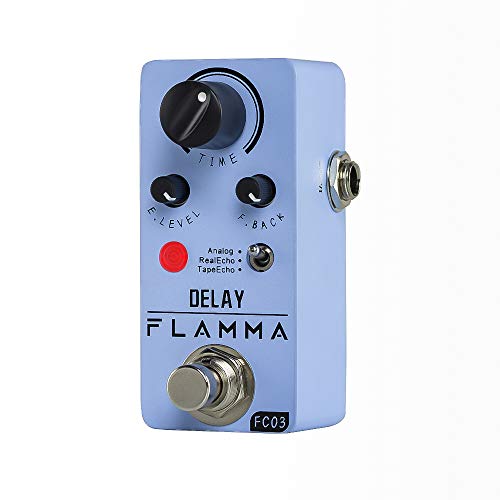
The FLAMMA FC03 packs three delay flavors into a mini enclosure, which makes it a useful single-box option for players still figuring out what they like. Analog, real echo, and tape modes cover most of the basics you would reach for in a small home setup. True bypass keeps your dry tone honest when the pedal is off.
Compared with the more focused FC17 above, the FC03 trades a bit of focus for versatility, so it works well as a first delay or as a multi-role tool on a crowded board.
Good Reasons To Consider
- Three delay modes give you variety without buying three separate pedals
- True bypass design protects the dry signal integrity
- Adjustable level and feedback let you shape repeats to taste
Practical Considerations
- Each mode is a starting point rather than a deep emulation, so tone purists may want more specialized pedals
- Mini shell feels light in the hand, which means cable yanks can shift it on a board without Velcro
Key Specs
Who It Suits Best
Players who want one small pedal that can handle most delay jobs without committing to a single sound.
Reach For A Different Pick When
The Donner Yellow Fall Analog Delay Pedal is a stronger match if you mainly want a dedicated vintage analog voice and very simple controls.
The Donner Tutti Love leans into warm, classic chorus rather than modern high-fi shimmer, which makes it a strong match for clean tones, jazz chord work, and 80s-style ballad parts. The extra level knob alongside depth and rate gives you more control over how loud the effect sits in the mix. The aluminum shell handles the typical bumps of a small board or a case.
Chorus and delay live well together, so this one earns its spot here as a complement to the delay units above and below. Run a touch of Tutti Love into a slapback delay and you have an instant vintage clean tone.
Advantages To Know
- Warm jazz-flavored chorus voice works well for clean electric and bass
- Three-knob layout (rate, depth, level) covers the main control needs without bloat
- Aluminum-alloy housing adds durability for transport and regular stomping
Where It May Fall Short
- Chorus is a different effect from delay, so it does not replace any of the delay pedals above
- Players who want a more modern, shimmery chorus may find this voice too rounded
Who Should Grab It
Guitarists and bassists who want a classic warm chorus to pair with a delay unit for layered clean tones.
Another Choice May Suit
The Donner Mod Square II Modulation Pedal is a smarter pick if you want many modulation flavors in one box instead of a single chorus voice.
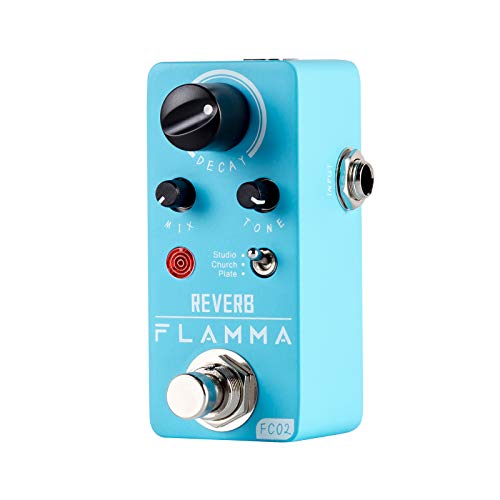
The FLAMMA FC02 gives you three practical reverb flavors in a small box, so it earns a place in any conversation about shaping space behind a delay. Church, plate, and studio modes cover the bread-and-butter sounds a guitarist is most likely to want. True bypass keeps your core tone intact when the pedal is off.
It is not a delay pedal, so think of it as the second half of a delay-and-reverb combo, the way many players build their core space section. Pair it with the FC03 above and you have a very compact ambient foundation.
What Works In Its Favor
- Three usable reverb modes instead of a single generic hall sound
- True bypass keeps the dry signal clean in a signal chain
- Mini form factor saves room on small boards
Some Limits To Know
- Three modes may feel limited if you already know you want spring, room, and mod textures
- Reverb, not delay, so it complements rather than replaces the delay pedals on this list
Key Specs
The Right Fit
Players building a small ambient foundation on a tight budget who want three usable reverbs and basic controls.
Where A Sibling Pick Shines
The Donner Verb Square Digital Reverb Pedal suits you better if you want seven reverb modes in one enclosure.
The Donner Yellow Fall is a small, friendly analog delay aimed at players who want vintage flavor without a lot of menu-diving. The yellow finish is easy to spot on a dark stage, and the aluminum shell handles the usual wear and tear. The simple control layout makes it a useful first delay for someone still learning what knobs do what.
Compared with the BOSS DD-8 higher up, the Yellow Fall narrows its job to one job done simply, which is the right trade for many home players and songwriters.
Benefits That Matter
- Vintage analog delay voice adds warmth to clean and crunch tones
- Straightforward knob layout shortens the learning curve for first-time delay users
- Mini enclosure suits compact boards and grab bags
Honest Caveats
- No tap-tempo or presets, so live tempo changes require hand-on-knob adjustments
- Power supply is not included, so a DC adapter adds to the total cost
Whose Shelf It Belongs On
New delay pedal owners and home players who want a focused vintage analog voice without extra modes in the way.
Not Your Match When
The BOSS DD-8 fits you better if you want tap-tempo, presets, and a looper at the cost of extra complexity.
The Donner Verb Square packs seven reverb modes into a compact pedal, covering the room, hall, church, spring, plate, studio, and mod flavors that show up on most reverb menus. The digital circuit and true bypass design aim to keep your dry tone clean, while the LED indicator shows working state at a glance. It earns its place in this list as a strong pairing partner for any of the delay units above.
For most players, that range is plenty to handle day-to-day recording, practice, and small gigs without dragging out a multi-effects unit.
Notable Upsides
- Seven reverb modes cover the most common spaces guitarists reach for
- True bypass design keeps the unaffected signal clean
- Mini format fits into most boards without a major reshuffle
Points To Note
- Reverb, not delay, so it works best paired with one of the delay pedals earlier in the list
- Power adapter is sold separately, so a DC supply is an extra purchase
Key Specs
Built With In Mind
Players who want one small reverb pedal that covers most of the usual spaces without reaching for a multi-effects unit.
Skip It When
The FLAMMA FC02 Reverb Pedal is the smarter buy if you only need a few reverb flavors at a lower cost.
The Donner Mod Square II crams sixteen modulation effects into one pedal, which makes it a playground for tone tinkerers. Chorus, phaser, tremolo, flanger, rotary, vibrato, and more sit behind a single set of controls, so you can A/B textures quickly during practice. The intuitive rate, level, and depth controls keep the learning curve manageable even with so many options.
It is not a delay unit, so think of it as the textural sidekick for the delay pedals on this list. A short delay plus a touch of rotary or chorus is a classic pairing for clean parts.
A Few Highlights
- Sixteen modulation modes cover chorus, phaser, flanger, tremolo, and more
- One set of knobs (rate, level, depth) controls every mode for consistent workflow
- Useful for guitar, bass, and synth players who want one multi-role modulation box
Practical Considerations
- With sixteen modes, scrolling and learning each one takes time before you find your favorites
- Modulation, not delay, so it pairs with rather than replaces the delay pedals in this guide
Who Will Love This
Curious players who want many modulation flavors in one box to experiment with alongside their main delay.
Look Elsewhere When
The Donner Tutti Love Analog Chorus Pedal is a better match if you only want a single classic chorus voice without the mode menu.
What Matters Most Before Choosing Affordable Delay Pedals
A delay pedal earns its place by matching how you actually play, not how the marketing copy describes it. The three angles below tend to decide whether a given pedal feels like a long-term tool or an awkward board guest.
Deciding Between Analog, Digital, and Tape
Analog-voiced delays like the FLAMMA FC17 and Donner Yellow Fall add warmth and gentle degradation, which suits rock, indie, and vintage-flavored parts. Digital units like the BOSS DD-8 keep repeats clean and clear, which works well for modern rock, pop, and rhythmic playing. Tape-style delays like the Donner White Tape add wow, flutter, and a looser feel that flatters ambient and lo-fi textures. Pick the family that matches the music you play most, not the one that sounds flashiest in a demo.
Matching Controls To Your Playing Style
Tap-tempo, presets, and expression control matter a lot in a live setting and barely matter in a bedroom. A simple three-knob delay often beats a complex menu-driven unit for songwriting and practice, because you spend more time playing and less time tweaking. Players who change tempo mid-song benefit from external tap-tempo support, which the BOSS DD-7 above and similar models offer.
Stereo, Mono, and Routing Needs
A mono delay fits most basic rigs, but stereo opens up wider guitar parts, dual-amp setups, and atmospheric recording. If you already run a stereo system, a pedal with stereo in and out will pay off, and a dual-channel unit like the Donner White Tape gives you extra routing flexibility for the price.
Key Considerations Across These Picks
Pitfalls Shoppers Hit
Treating delay type as decoration rather than a core tonal choice often leads to a pedal that sounds impressive in isolation but fights the rest of the rig. Test the pedal in your actual signal chain, with your amp and your guitar, before settling on it. Skipping the power-supply line item is another common slip, since most compact pedals in this category ship without an adapter.
Where The Extra Money Goes
Higher-priced delay pedals tend to add tap-tempo, presets, longer delay times, more accurate emulations, and tougher builds. A unit like the BOSS DD-8 costs more because it covers more ground in one box, while a budget single-mode pedal costs less because it does one thing simply. The upgrade pays off for players who gig, record, or change tempos often, and it pays off less for players who leave the pedal on a single setting for the whole set.
Frequently Asked Questions
What Is True Bypass And Does It Matter?
True bypass means the guitar signal passes through the pedal untouched when the effect is off, so your dry tone stays clean. It matters most in long signal chains, where buffered and unbuffered pedals can interact in unwanted ways.
How Much Delay Time Do Most Players Actually Need?
Slapback sits around 80 to 200 ms, rhythmic dotted-eighth delays sit around 300 to 500 ms, and ambient swells push past 600 ms. Most songs fit inside the 25 to 600 ms range covered by the compact pedals above.
Can One Delay Pedal Cover Live And Studio Use?
Yes, especially with a unit that offers multiple modes and stereo routing. Players who rely on one tone per song may prefer a simpler single-mode pedal for ease of use.
Do I Need A Separate Reverb And Modulation Pedal Too?
It helps, but it is not required for a working rig. Pairing a delay with a versatile reverb and a modulation unit covers a lot of ground without buying a multi-effects processor.
Are Mini Pedals Less Durable Than Full-Size Ones?
Mini pedals use smaller enclosures, but metal-shelled units like the ones on this list still handle regular stomping well. Adding Velcro or mounting tape to the board keeps them from sliding during gigs.
The Takeaway
The right delay pedal is the one that matches your amp, your guitar, and the kind of music you play most. Start with the sound you want to chase, then match the pedal to the rig you already own, and the choice usually narrows itself.



