


Making music at home used to mean a room full of gear, patch cables snaking across the floor, and a stack of gear that required a manual thicker than a phone book. The category has moved on. Today’s beat maker machines cover everything from classic drum-machine groove boxes to compact audio mixers and grid controllers that slot neatly into a laptop-based setup. Picking the right one really depends on what kind of music you want to make, and how hands-on you want the process to feel.
The list below leans on spec sheets, category norms, and widely reported ownership behavior. There is no single “right” answer for everyone, so the picks span a range of needs: dedicated rhythm instruments, all-in-one audio bundles for streaming creators, and grid-style performance controllers.
How The Shortlist Stacks Up

Roland TR-8S Rhythm Performer Drum Machine

TENLAMP G10 Audio Mixer Bundle with Dual Mics

TENLAMP G10 Audio Mixer Bundle with Dual Microphones

TENLAMP G10 Audio Mixer Bundle with Microphone

TENLAMP G3 Audio Mixer Bundle with Microphone
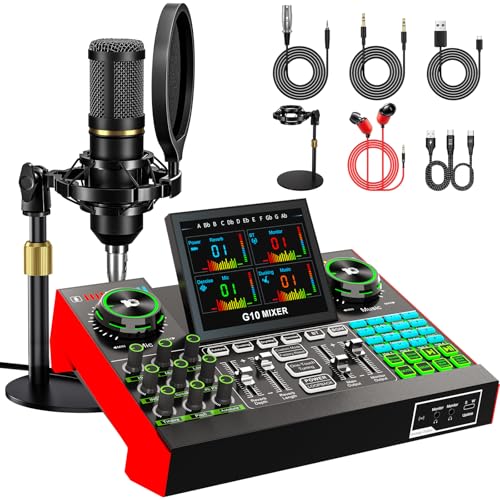
TENLAMP G10 Podcast Equipment Bundle with Microphone
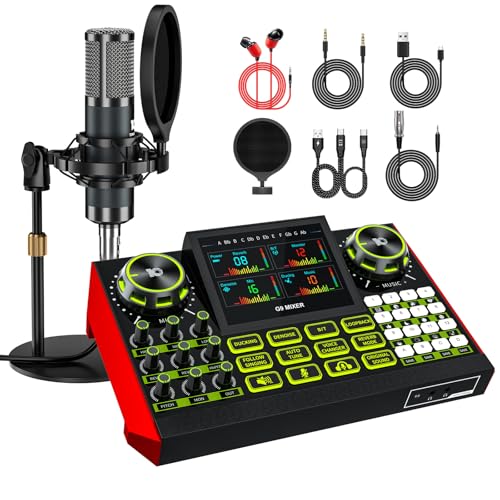
TENLAMP G9 Audio Mixer Bundle with Microphone

TENLAMP G3 Audio Mixer Bundle with Dual Microphones

Novation Launchpad X MIDI USB Grid Controller
The Strengths Of Each Pick
The Roland TR-8S sits at the top of the list because it is, in many ways, the most fully realized hardware drum machine in this price bracket. It carries the sound DNA of Roland’s classic TR units, which means the kicks, snares, and hats that defined house, hip-hop, techno, and trap all live inside a single chassis.
Producers who prefer working away from the laptop get a tactile experience here: dedicated knobs, step sequencer buttons, and hands-on effects shaping. Compared to the more creator-oriented audio mixers that follow on the list, the TR-8S demands actual beat-making intent rather than streaming or podcasting use.
A Few Highlights
- Combines classic Roland TR drum tones with modern sample-based layering for broader sound design range.
- Built-in effects let you sculpt each drum voice in real time, which is useful for shaping unique kits.
- Hardware sequencer feels immediate, with no need to boot up a DAW (digital audio workstation) to start a groove.
- Compact desktop footprint suits small home studios, and rugged construction tends to handle regular transport.
Worth Noting
- Heavier learning curve than the audio-mixer bundles below, which assume a more plug-and-play approach.
- Owners commonly report menu diving for deeper sound editing, which can interrupt creative flow at first.
Who It Suits Best
Dedicated beat makers who want a hardware-first workflow and value authentic Roland drum character over streaming features.
Where Another Pick Suits Better
The Novation Launchpad X is a stronger match for laptop-based producers who prefer a pad grid inside Ableton rather than a standalone drum machine.
This G10 bundle swaps the drum machine concept for a creator-oriented audio mixer paired with two condenser microphones. The use case is different: you are not sequencing drum hits, you are mixing voices for a podcast, livestream, or interview.
The matched pair of condenser microphones with desktop stands is the standout. Co-hosts, duets, and paired streamers can each have their own mic without buying extras, which is a meaningful upgrade over single-mic starter kits.
The Helpful Details
- Dual condenser microphones with stands cover the two-host setup that most podcasters actually need.
- Live sound card mixer routes audio to phone, tablet, or computer, simplifying livestream workflows.
- Voice effects, including a voice changer, add personality to streams without separate software.
- Built-in noise reduction aims to clean up typical home studio background noise.
Small Caveats
- Condenser microphones tend to pick up room noise, so acoustic treatment matters in untreated spaces.
- 3.5mm-based bundles can introduce latency, depending on the device you connect to.
Built With In Mind
Duo podcasters, co-hosted livestreams, and interview-format creators who need two matched microphones out of the box.
Not Your Match When
Solo creators should consider the TENLAMP G10 Creator Audio Mixer Bundle with Microphone instead, since one of the mics in this kit will simply sit unused.
This G10 variant offers essentially the same two-mic setup as the previous entry, but the configuration targets a slightly different creator profile. The mixer is a full live sound card with built-in voice changer and denoise functions, aimed at creators who stream regularly.
For someone running a two-person podcast, the experience is similar to Pick 2. The meaningful difference tends to show up in the streaming-focused features and connectivity layout, which often favor live broadcast setups over mobile recording.
Everyday Wins
- Bluetooth connectivity adds wireless audio source options for backing tracks or call-ins.
- Denoise function helps cut down on fan, traffic, and HVAC noise common in home setups.
- Voice changer opens up creative character work for gaming streams and skits.
- Compact sound board keeps desk real estate minimal in smaller creator spaces.
Points To Note
- Two mics only make sense if you actually use both, otherwise you are paying for unused hardware.
- Software updates and driver behavior can vary by connected device.
Best Suited To
Co-hosted interview podcasts and duo livestreams where both hosts want matched condenser mics and a streaming-friendly mixer.
A Better Fit Elsewhere
The TENLAMP G9 Audio Mixer Bundle is a smarter pick for solo creators who mostly stream alone, since it ships with one mic and a focused single-host feature set.
Now we move into solo creator territory. This G10 bundle is a single-mic setup, which makes it more useful for the majority of streamers and podcasters who work alone. The big selling point is the depth of effects built into the mixer.
Auto-tune, voice effects, noise reduction, and Bluetooth connectivity are all present, so the unit can do a lot of the work that would otherwise require a DAW plugin chain. Compared to the G3 bundle further down, this G10 leans more feature-heavy and creator-focused.
Benefits That Matter
- Auto-tune on the hardware itself saves streamers from running separate plugins.
- Bluetooth input makes it easy to add phone call guests or backing music wirelessly.
- Voice effects, including pitch and modulation, add production value to live content.
- Noise reduction helps compensate for typical home office or bedroom recording spaces.
Honest Caveats
- Effects-rich workflows have a learning curve, so expect to spend time dialing in presets.
- Single condenser mic picks up room reflections in untreated spaces, so placement matters.
Who Should Grab It
Solo livestreamers, singing creators, and podcasters who want an all-in-one audio station rather than a minimal mic-and-cable setup.
Reach For A Different Pick When
If you record co-hosted shows, the TENLAMP G10 Audio Mixer Bundle with Dual Microphones is a better fit since you would otherwise need a second mic separately.
Feature Snapshot
The G3 sits as the more accessible entry point in the TENLAMP creator mixer lineup. It still ships with a condenser microphone, voice effects, auto-tune, and Bluetooth, but the G-series positioning tends to mean a tighter feature set than the G10.
For beginners, that trade-off is often welcome. There are fewer menus to navigate, fewer inputs to manage, and the bundle arrives as a working setup right out of the box. In a small bedroom or dorm room, the G3 makes a sensible first audio station.
The Practical Payoff
- Lower price of entry into the TENLAMP ecosystem, useful for first-time creators.
- Auto-tune and voice changer provide playful effects for streaming and singing content.
- Bluetooth support adds wireless audio sources for music or remote guests.
- Round base stand keeps the mic stable on most desks without extra mounting hardware.
Worth Bearing In Mind
- Fewer inputs and routing options than the G10, which limits more complex setups.
- 3.5mm condenser mic is sensitive to room noise, so quiet recording environments help.
Right Fit For
Beginner streamers, casual podcasters, and content creators building their first setup without overspending.
Swap It Out When
Creators who want more routing options and a deeper effects engine should consider the TENLAMP G10 Audio Mixer Bundle with Microphone further up the list.
This bundle repackages the G10 sound board as a podcast-oriented kit, pairing it with a condenser microphone and a disc-style shock mount bracket. The included bracket reduces low-end rumble from desk bumps, which is a frequent annoyance in home podcasting.
The mixer supports both 3.5mm and 6.35mm microphones, and offers phantom power (48V) for more serious condenser mics, giving you room to grow beyond the included microphone if you want to upgrade later.
What Pays Off
- 48V phantom power support lets you use higher-end condenser mics down the road.
- Shock-mount bracket cuts down on desk-thump noise during energetic recording sessions.
- G10 sound board handles streaming, gaming, and podcast duties with the same firmware.
- Compact all-in-one bundle reduces cable clutter on a small desk.
A Few Limitations
- Single mic configuration means no built-in option for in-person co-hosts.
- Phantom power adds cost to the unit, which may be wasted on absolute beginners.
Whose Shelf It Belongs On
Solo podcasters and gamers who want a tidy, single-host setup with room to upgrade microphones later without replacing the mixer.
Consider Something Else When
Co-hosted shows benefit more from the TENLAMP G10 Audio Mixer Bundle with Dual Microphones, which includes two mics out of the box.
The G9 is positioned in the live sound and stage category of mixers, which gives it slightly different routing than the G3 and G10 creator units. It is a sensible choice for karaoke-style home sessions and live event streaming, where vocal presence matters more than DAW-style recording fidelity.
For someone running a small karaoke setup or a singer-led livestream, the G9 puts vocal processing front and center, with a single condenser mic included to get started.
A Few Strong Suits
- Live-sound design philosophy favors vocal-forward processing for singing and karaoke use.
- Single bundled mic keeps the starter cost reasonable for solo creators.
- Stream-friendly routing supports phone, tablet, and computer connections.
- Smaller learning curve than full studio mixers, friendly for first-time users.
Where It Is Less Suited
- Live-sound orientation means fewer deep editing features for podcast post-production.
- Single mic config can feel limiting once a creator scales to co-hosted content.
Made For
Karaoke hosts, singer-streamers, and home entertainers who prioritize vocal performance over multi-mic podcast production.
Where A Sibling Pick Shines
Multi-host podcasters will find the TENLAMP G10 Audio Mixer Bundle with Dual Microphones more practical for their format.
This G3 variant pairs the entry-level G3 sound card with two condenser microphones, offering a budget-friendly two-host setup. The G3 design supports up to two simultaneous voices and three connected devices, which is meaningful for live streamers who mix in phones, tablets, and computers at once.
The dual-mic version keeps the G3’s compact, plug-and-play character, which is a strong fit for karaoke duets, couple gaming, and two-person streams. The catch is that the G3 has fewer advanced effects than the G10, so very effect-heavy creators may outgrow it.
Good Reasons To Consider
- Two-mic configuration supports duet, couple, and co-host formats out of the box.
- Three-device simultaneous streaming removes the need for a separate audio switcher.
- Real-time mixing on the sound card gives hands-on control without extra software.
- Compact form factor suits bedrooms, small studios, and portable setups.
Trade-Offs To Consider
- Fewer onboard effects than the G10, so advanced vocal processing needs external tools.
- Dual condenser mics amplify room noise in untreated spaces, so acoustic placement matters.
Perfect Match For
Duo streamers, karaoke duets, and couple-format creators who want a two-mic setup without jumping to the G10 price tier.
Look Elsewhere When
Creators who want richer onboard effects should consider the TENLAMP G10 Audio Mixer Bundle with Dual Mics higher up the list instead.
Quick Facts
The Novation Launchpad X closes the list on a different note: it is a MIDI (Musical Instrument Digital Interface) controller, not a mixer or a drum machine. It is the entry point into a grid-based performance workflow, particularly inside Ableton Live.
Where the Roland TR-8S is a self-contained beat-making instrument, the Launchpad X is a tactile surface for launching clips, playing drums, and controlling mixer functions inside your software. For laptop producers, the 64 RGB-backlit pads open up a fast, visual way to build and perform tracks.
What Helps Most
- 64 velocity-sensitive RGB pads give expressive, visual control over clips and drum racks.
- Dynamic note and scale modes make it easier to stay in key when performing live.
- USB bus-powered design means no separate power brick, helpful for portable setups.
- Tight Ableton Live integration reduces friction between idea and execution.
Possible Compromises
- Requires a connected computer and DAW to do anything, unlike the standalone TR-8S.
- Best experience is inside Ableton, so producers on other DAWs may get less out of it.
Who Will Love This
Laptop-based producers and electronic music makers who want a tactile performance surface to pair with Ableton Live.
Skip It When
Hardware-only producers who want a self-contained instrument should look at the Roland TR-8S instead, which works without a computer attached.
Feature Snapshot
Picking The Right Setup For Your Kind Of Music Making
The single biggest fork in the road is hardware versus software-centric. Hardware drum machines like the Roland TR-8S give you a self-contained instrument that can run without a computer, which is great for live performance and tactile production. Software-tied controllers like the Novation Launchpad X make more sense if you already work primarily inside Ableton Live and want a more expressive performance surface.
If your work is content creation rather than beat production, the mixer bundles in the middle of the list are the right starting point. Single-mic bundles suit solo podcasters, gamers, and livestreamers who mainly need clean vocal capture. Dual-mic bundles are the right call for co-hosted shows, duets, and interview formats, where having two matched microphones from day one avoids mismatched tone between hosts.
The third axis is expandability. Some of the bundles include 48V phantom power, which supports higher-end condenser microphones if you decide to upgrade later. Others stick strictly to 3.5mm plug-in power (a lower-voltage mic power method that suits smaller condenser capsules), which is enough for casual streaming but limits future microphone choices.
A final consideration is your recording environment. Condenser microphones are sensitive and tend to capture room reflections, so untreated bedrooms and home offices benefit from quieter positioning, soft furnishings, or a basic acoustic panel. Dynamic microphones are more forgiving in noisy spaces but require more gain, which is why most entry-level bundles favor condensers.
Key Considerations Across These Picks
Common Shopping Slip Ups
A typical mistake is buying a dual-mic bundle when only one person will be speaking. The second microphone is not just extra cost, it is extra desk clutter and a second device to manage levels for. Match the bundle to your actual format, single or dual, before comparing prices.
Another frequent issue is overlooking microphone power requirements. A 3.5mm condenser mic draws power from the mixer through plug-in power, while an XLR condenser needs 48V phantom power. Picking the wrong type means the microphone will not perform properly, or at all.
Where The Extra Money Goes
Higher-tier mixer bundles typically add phantom power, more inputs, deeper effect engines, and better shielding against electrical noise. The Roland TR-8S, for example, charges a premium for authentic modeled drum circuits, hands-on knobs, and a metal chassis that stands up to regular gigging. The Launchpad X, on the other hand, costs less because it is a controller, not a sound generator, and routes everything through your computer.
For most people, the upgrade is worth it when you record often enough that workflow friction becomes a real bottleneck. If you only record occasionally, the entry-level bundle will likely serve you well for a long time.
Frequently Asked Questions
What Is The Difference Between A Drum Machine And An Audio Mixer?
A drum machine generates and sequences drum sounds on its own, while an audio mixer routes and balances external audio sources like microphones and instruments. Pick a drum machine for making beats and a mixer for managing voices and live audio.
Do I Need A Computer To Use These Beat Maker Machines?
The Roland TR-8S works as a standalone instrument, but the Novation Launchpad X requires a connected computer and DAW software. Most mixer bundles work with or without a computer, depending on whether you are streaming or recording.
What Is Phantom Power And Why Does It Matter?
Phantom power is a 48V electrical supply sent through a microphone cable to power condenser microphones. It matters because it allows you to use higher-end studio microphones that need that voltage to operate.
Can One Mixer Bundle Handle Two Hosts?
Bundles that include two condenser microphones, like the TENLAMP G10 with Dual Mics or the G3 with Dual Microphones, are designed for two-host formats. Single-mic bundles are built for solo creators.
Are Condenser Mics Good For Home Recording?
Condenser microphones capture vocal detail well, which suits podcasting and streaming, but they also pick up room noise. They perform best in reasonably quiet spaces, ideally with some soft furnishing or basic acoustic treatment.
The Takeaway
The right pick really depends on what you are trying to make. Hardware drum machines and grid controllers suit producers and performers, while audio mixer bundles fit creators focused on vocals, podcasts, and streams. Match the format to your use case, check the microphone power type, and think about how often you will actually use the extra features before paying for them.



