


Retro nostalgia has fully merged with modern smartphone silicon, and the result is a new generation of pocket-sized rigs that can emulate everything from arcade classics to modern Android games. Picking the right one comes down to screen quality, chipset muscle, battery life, and how much tinkering you want to do. This roundup covers ten solid options across budgets and form factors, from a phone-mounted controller to a metal-cased emulator powerhouse, so you can match the gear to your play style without overpaying for features you won’t touch.
A Fast Comparison Of The Options

Anbernic RG476H Retro Handheld Game Console 4.7-inch LTPS Android 13

Retroid Pocket Classic Retro Handheld 3.92″ OLED (Retro)
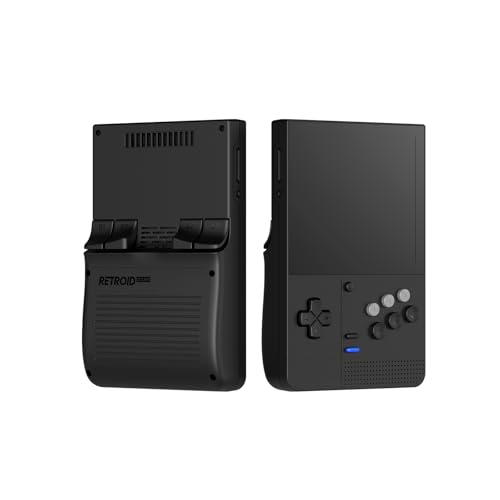
Retroid Pocket Classic Retro Handheld 3.92″ OLED (Classic 6 GS)

RG477M Retro Handheld Aluminum CNC Dimensity 8300 Android 14

Retroid Pocket 5 Retro Handheld 5.5″ 1080p Snapdragon 865

Retroid Pocket 4 Pro Retro Handheld 4.7″ D1100 (Black)

Anbernic RG 476H Retro Handheld 4.7″ 120Hz IPS Android 13

Voacle Anbernic RG353V Retro Handheld Dual OS (Purple)

BACKBONE One Mobile Gaming Controller
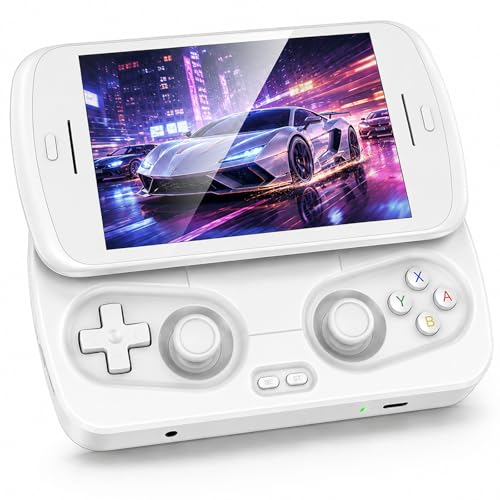
RG Slide Handheld Retro Console Android 13 4.7″ 120Hz
The Details Behind The Selections
The Anbernic RG476H lands as a confident middle-ground pick for anyone who wants modern Android flexibility without diving into flagship pricing. A 4.7-inch LTPS in-cell display (a panel tech that bonds the touch sensor directly to the LCD for sharper visuals and better brightness) keeps games crisp, while the 3D Hall Effect joysticks use magnetic sensing rather than physical contact, which means far less stick drift over years of use. Pair that with WiFi, Bluetooth, and both HD and TV output, and you’ve got a handheld that can quietly become a living-room emulator when docked.
Running Android 13 on a Unisoc T820 chip with 8GB of RAM, the RG476H handles most 8-bit through 32-bit era games comfortably. The 128GB of internal storage leaves room for a sizable library, and the 5000mAh battery should carry a long-haul flight or a full day of commute play. Owners commonly report that the Hall sticks feel noticeably more precise than the resistive sticks on older handhelds, especially for fighting and platformer genres.
The Practical Payoff
- Hall Effect joysticks (magnetically sensed, drift-resistant) extend usable life for daily play.
- 128GB internal storage holds a generous retro library without immediate expansion needs.
- HD and TV output turn the unit into a couch setup when you’re done playing on the go.
- Android 13 with WiFi and Bluetooth opens streaming and sideloading for tinkerers.
Worth Noting
- No game card or preloaded titles, so you’ll need to source and load ROMs (game backups) yourself.
- 4.7-inch screen is fine for portable play but tight for split-screen or text-heavy games.
- Battery life in the six-hour range is solid, though heavier Android games drain faster than pure emulators.
Who It Suits Best
Retro enthusiasts who want a modern, drift-resistant handheld with Android flexibility and don’t mind setting up their own game library.
Consider Something Else When
Shoppers wanting a larger, higher-resolution display should look at the Retroid Pocket 5, which pairs a 5.5-inch 1080p panel with flagship-class horsepower.
Retroid built its reputation on feature-dense handhelds, and the Pocket Classic leans into that legacy with a punchy 3.92-inch OLED display at 1240×1080. OLED tech (organic light-emitting diode) means each pixel lights itself, producing true blacks and saturated colors that make pixel-art games glow. For commuters and small-bag travelers, the pocketable form factor feels right: small enough to disappear in a jacket pocket, big enough to play Game Boy Advance and SNES-era titles comfortably.
Android 14 keeps the OS current, and 6GB of RAM with 128GB of storage leaves headroom for app installs, streaming clients, and a hefty emulator lineup. The 5000mAh battery is generous for the screen size, and WiFi 5 covers wireless streaming. Compared to the larger Retroid Pocket 5 later in this list, the Classic trades raw power and screen real estate for pure portability.
Features That Help
- OLED touchscreen delivers richer colors and deep blacks than comparable LCD handhelds.
- Compact 3.92-inch shell slips easily into a coat or cargo pocket.
- Android 14 with full Google Play support broadens streaming and app options.
- 5000mAh battery stretches play sessions beyond shorter commutes.
Small Caveats
- Smaller screen makes text-heavy RPG menus feel cramped, depending on the game.
- No preloaded games means setup time before your first real session.
Built With In Mind
Travelers and commuters who prize pocket-friendly size and OLED image quality over larger displays or maximum emulation headroom.
Skip It When
Gamers who want a flagship 1080p experience for more demanding systems should step up to the Retroid Pocket 5, which adds a 5.5-inch display and a Snapdragon 865.
The “Classic 6 GS” variant of the Retroid Pocket Classic shares the same 3.92-inch OLED panel and Android 14 platform as its sibling, so the visual experience and app ecosystem remain identical. What shifts is the configuration flavor, giving shoppers a second option if a particular listing is out of stock or priced more attractively. For most buyers, the choice between the two Retroid Pocket Classic SKUs comes down to availability rather than feature differences.
That shared DNA means you get the same vivid OLED colors, 6GB RAM, 128GB storage, and 5000mAh battery. The unit is a natural fit for long flights or train rides where every gram of pocket space matters, and WiFi 5 keeps cloud streaming within reach. If you find one variant cheaper or shipping faster, there’s no meaningful performance penalty either way.
What Works In Its Favor
- Same OLED-rich display as the other Classic variant, no visual compromise.
- Lightweight 3.92-inch chassis travels well in small bags and pockets.
- Android 14 unlocks modern app and streaming compatibility.
Points To Note
- Functionally similar to the other Retroid Pocket Classic, so compare listings before committing.
- Smaller screen limits visibility for detailed 3D-era titles.
Whose Shelf It Belongs On
Frequent travelers who want a compact OLED handheld and don’t mind choosing between two nearly identical Retroid Pocket Classic SKUs based on availability.
Look Elsewhere When
Buyers who want maximum horsepower and a bigger display should consider the Retroid Pocket 5, which targets higher-end emulation with its Snapdragon 865 chip.
The RG477M is the most ambitious Android handheld in this roundup, and you can feel it the moment you pick it up. The aluminum CNC (computer-numeric-control machined) shell gives it a dense, premium heft that puts it closer to a mini gaming PC than a typical plastic toy. Inside, the MediaTek Dimensity 8300 is a 5G-class SoC (system-on-chip) built on a 4nm process, paired with 8GB of LPDDR5X RAM and 128GB of UFS 4.0 storage. That combination pushes emulation further than most Android handhelds can reach, and the Hall Effect joysticks plus RGB lighting add polish where it counts.
Android 14, WiFi 6E, and Bluetooth 5.3 round out the modern connectivity stack, and a 5300mAh battery is the largest in this lineup. The trade-off is weight and complexity: this is a tinkerer’s device, not a casual plug-and-play gift. Owners should expect to spend time optimizing emulator settings, and the lack of preloaded games means front-end setup is on you.
Where It Helps
- Dimensity 8300 chip tackles demanding emulators and modern Android games comfortably.
- Aluminum CNC body feels sturdier and cooler-running than typical plastic shells.
- Hall Effect sticks and RGB lighting add long-term precision and visual flair.
- WiFi 6E plus Bluetooth 5.3 future-proofs wireless accessories and streaming.
Practical Considerations
- Heavier metal chassis can feel bulky during long one-handed play sessions.
- No preloaded games, so the initial setup curve is steeper than simpler handhelds.
Key Product Details
Best Suited To
Power users and tinkerers who want a flagship-class Android chip in a metal shell and don’t mind a heavier device.
Not Your Match When
Casual players seeking a lighter, simpler plug-and-play experience should look at the Anbernic RG 476H, which is easier to live with day to day.
Retroid’s Pocket 5 sits at the center of the brand’s lineup, and the spec sheet explains why it earned the top slot here. A 5.5-inch 1080p touchscreen pairs with the Snapdragon 865, a former flagship mobile chip (found in 2020-era phones) with an Adreno 650 GPU, giving it headroom for everything from PS2-era emulation to cloud streaming and modern Android games. 8GB of RAM keeps the OS and emulators running smoothly, and 128GB of storage covers a solid starter library.
Android 13, WiFi 6, and Bluetooth 5.1 round out the modern connectivity stack. The screen is the real upgrade over 4.7-inch competitors, making text-heavy RPGs and 3D titles far more comfortable. One nuance worth flagging: owners report that the unit can enter a battery protection mode after long idle periods, requiring an extended initial charge to wake up the cell. Plan to plug it in early on first setup.
A Favorable Mix
- 5.5-inch 1080p display gives breathing room for menus and 3D-era games.
- Snapdragon 865 plus Adreno 650 covers demanding emulators and modern Android titles.
- WiFi 6 and Bluetooth 5.1 support current wireless standards.
- 8GB RAM handles multi-app workflows and streaming clients.
Trade Offs
- First-time setup may require a long initial charge if the device sat idle for months.
- No preloaded games, so the first session requires library setup.
- Battery protection mode can confuse shoppers who expect instant-on out of the box.
Perfect Match For
Gamers who want a do-it-all Android handheld with a sharp 1080p screen and enough chip muscle to handle current and retro systems alike.
Where Another Pick Suits Better
Buyers wanting a smaller, lighter, OLED-rich pocket form should consider the Retroid Pocket Classic instead.
The Retroid Pocket 4 Pro is a proven workhorse that has earned a loyal following since launch. The MediaTek Dimensity 1100 chip pairs four high-performance A78 cores at 2.6GHz with a Mali-G77 MC9 GPU, which translates to smooth performance across most emulators up through the PSP and Dreamcast era. 8GB of LPDDR4X RAM keeps the OS responsive even with multiple apps installed.
A 4.7-inch display keeps the chassis pocketable, and a 5000mAh battery provides all-day play. The 4 Pro is the kind of handheld that you can recommend without much hand-wringing: it works, the community supports it, and replacement parts are widely available. Compared to the newer Retroid Pocket 5, you trade a sharper 1080p screen and the Snapdragon 865 for a lower entry price, which makes it a smart choice if 1080p isn’t a must-have.
Practical Pluses
- Dimensity 1100 chip handles most popular emulators comfortably.
- 4.7-inch form factor is genuinely pocketable for everyday carry.
- 5000mAh battery supports long play sessions without daily charging.
- Established Retroid community offers plenty of setup guides and accessories.
Honest Caveats
- 720p-class screen feels dated next to the 1080p Retroid Pocket 5.
- No preloaded games, so the first session needs ROM setup.
Who Should Grab It
Mid-range retro fans who want proven, well-supported performance without paying flagship pricing.
Swap It Out When
Buyers who care about a sharper 1080p display and a newer chipset should stretch to the Retroid Pocket 5 instead.
The IPS (in-plane switching) variant of the RG 476H swaps the LTPS panel for a 120Hz refresh-rate screen, and that bump matters more than specs alone suggest. At 1280×960, the resolution is sharp for 4:3 content, and the 120Hz refresh makes scrolling menus and side-scrolling games noticeably smoother. OCA (optically clear adhesive) full lamination bonds the touchscreen to the LCD directly, reducing glare and the air gap that makes cheaper screens feel hollow.
You get the same Unisoc T820 processor and 5000mAh battery as the LTPS sibling reviewed earlier, plus 1080p DisplayPort output for a desktop-style experience. The longer battery life (8+ hours) is a nice surprise compared to the LTPS version’s 6-hour figure, and 5V/2A charging tops the unit up in roughly 3.5 hours. If you spend long stretches in menus or play side-scrollers heavily, the 120Hz upgrade earns its place.
The Value In It
- 120Hz refresh rate delivers smoother motion than the standard 60Hz panels on competitors.
- 8+ hour battery life outlasts most handhelds in this roundup.
- 1080p DisplayPort output adds a true desktop mode for monitors and TVs.
- OCA lamination keeps the touchscreen visually tight and responsive.
Worth Bearing In Mind
- Higher refresh rate draws more power during heavy Android gaming sessions.
- No preloaded games, so first-use setup is required.
Feature Snapshot
Right Fit For
Players who value smooth motion and long battery life and want a desktop output option for TV play.
A Better Fit Elsewhere
Tinkerers chasing maximum raw horsepower should look at the RG477M, which uses the Dimensity 8300 chip instead of the T820.
The RG353V is a few years old now, but it remains a popular entry point for shoppers new to retro handhelds. The dual-OS design pairs Linux and Android 11, so you get a clean, focused Linux frontend for classic emulators plus the full Android experience for streaming and apps. A 64GB SD card loaded with thousands of pre-staged game files means you can start playing within minutes of unboxing.
That pre-staged library is the key selling point here: most competing handhelds ship empty, which is a real barrier for first-timers. The 5G WiFi and Bluetooth 4.2 cover wireless streaming and controllers, and TV output expands the use case. The hardware is older, so don’t expect to push beyond 8-bit and 16-bit era systems smoothly, but for the price and convenience it’s a sensible first handheld.
What Stands Out
- Pre-staged 64GB SD card with thousands of classic games ready to play.
- Dual OS gives a clean Linux option plus full Android app access.
- 5G WiFi supports low-latency streaming from local sources.
Trade-Offs To Consider
- Older hardware struggles with PSP, Dreamcast, and N64-era games that newer handhelds handle easily.
- Plastic shell feels less premium than the metal RG477M in this roundup.
Made For
First-time retro shoppers and gift-givers who want a friendly, out-of-box experience without a complex setup process.
Reach For A Different Pick When
Experienced users wanting stronger emulator headroom should consider the Retroid Pocket 4 Pro, which handles more demanding systems with ease.
The BACKBONE One takes a different route entirely: instead of a dedicated handheld, it turns your existing smartphone into one. You snap your phone into the controller cradle, plug in via the appropriate port, and your screen becomes the display. The companion app organizes your game library and streaming services into a unified launcher, which is genuinely useful if you bounce between Xbox Game Pass, cloud streaming, and local emulation.
There’s no internal battery, no display, and no chipset to worry about, since your phone handles all of that. That keeps the hardware simple and long-lasting, and you may find the total cost of entry lower if you already own a recent flagship phone. The catch is obvious: it’s useless without a compatible phone, and the form factor is bulkier than a single-piece handheld. Cloud and subscription gaming enthusiasts will get the most out of it.
Notable Gains
- Uses your phone’s display and chipset, so there’s no extra device to charge or update.
- Companion app unifies game libraries and streaming services in one launcher.
- Compact when not in use, easier to pocket than a dedicated handheld.
Where It Is Less Suited
- Requires a compatible smartphone, adding to the total cost of ownership.
- Battery life depends entirely on your phone, which may drain quickly during heavy play.
Who Will Love This
Phone-first gamers who already subscribe to cloud gaming services and want a cleaner controller experience than touchscreen input.
Where A Sibling Pick Shines
Buyers who want a self-contained handheld with no phone required should look at the Retroid Pocket 4 Pro, which runs entirely on its own hardware.
The RG Slide earns its name from a smooth sliding rail with an automatic spring mechanism: the controls physically slide to reveal or hide the screen, giving it a gadget-like charm that fixed-form handhelds can’t match. The compact body remains easy to carry in a bag for travel, commuting, or just daily life. Inside sits the same Unisoc T820 chip paired with 8GB of LPDDR4X RAM and 128GB of UFS 2.2 storage, so performance sits comfortably in the mid-tier range.
The 4.7-inch 120Hz panel is the second highlight, matching the Anbernic RG 476H IPS for smooth motion. Android 13 keeps the OS modern. The honest read is that the sliding mechanism is a clever design touch but adds a moving part that could wear over years of daily sliding, so treat it with a little care. For shoppers who value a unique form factor and a high-refresh screen, it’s a refreshing change from the usual rectangle.
Where It Delivers
- Sliding rail design adds tactile novelty and a smaller footprint when closed.
- 120Hz display keeps motion smooth across menus and side-scrolling games.
- Compact body suits travelers and commuters who want something pocketable.
- Unisoc T820 plus 8GB RAM handles most popular emulators comfortably.
A Few Limitations
- Sliding mechanism introduces a moving part that may wear with heavy daily use.
- No preloaded games means manual library setup before first play.
The Right Fit
Travelers and design-curious shoppers who want a unique form factor with a high-refresh screen in a pocketable shell.
Where A Sibling Pick Shines
Gamers chasing top-tier chip performance for the most demanding emulators should consider the RG477M, which pairs a much faster Dimensity 8300 chip with a metal CNC shell.
What To Weigh Before Picking Your Android Handheld
Screen Tech and Size Matter More Than You Think
OLED panels produce richer colors and true blacks, which makes pixel-art games pop, while 120Hz IPS displays deliver smoother motion during scrolling and fast gameplay. Screen size affects comfort directly: 3.92-inch displays like the Retroid Pocket Classic suit Game Boy Advance and SNES-era titles, while 5.5-inch screens like the Retroid Pocket 5 give menus and 3D-era games room to breathe. Pick the smallest screen you can comfortably read for an hour, and pick OLED if image quality matters more to you than peak refresh rate.
Chipset, RAM, and Storage Drive What You Can Emulate
A Unisoc T820 or Dimensity 1100 covers most 8-bit through 32-bit and select 64-bit systems, while the Dimensity 8300 in the RG477M pushes into the demanding end of emulation. RAM affects how many apps and emulators you can keep in memory at once; 6GB works for most, 8GB is the safer middle ground. Storage is a personal library size question: 128GB covers a sizable retro collection, and many handhelds let you expand further via microSD.
Battery, Build, and Extras Shape Daily Use
A 5000mAh or larger battery is the practical floor for portable play, and 8-hour runtime is the goal if you take long flights or train rides. Hall Effect joysticks resist drift longer than traditional resistive sticks, and metal shells like the RG477M’s aluminum CNC body feel more durable. TV or DisplayPort output turns a handheld into a living-room setup, and built-in WiFi 6 or 6E keeps streaming snappy. For a phone-as-handheld route, the BACKBONE One skips all of these and just hands the work to your phone.
Key Considerations Across These Picks
Pitfalls Shoppers Hit
Rookie shoppers often focus on the chipset and overlook the stick tech, then deal with drift a year later. Hall Effect joysticks (magnetically sensed, no physical contact to wear out) are worth the small price premium if you play daily. Another common slip: assuming the device ships with games, when most modern Android handhelds arrive empty, so the first session is always setup work. Buying a pre-staged model like the Anbernic RG353V avoids that. Finally, ignoring battery protection mode on units like the Retroid Pocket 5 leads to confusion when the device won’t turn on out of the box; plan for an extended initial charge.
Where The Extra Money Goes
Higher-tier models like the Retroid Pocket 5 and RG477M put your money into faster chips, sharper screens, and premium build materials. The Snapdragon 865 inside the Pocket 5 was a flagship mobile processor in its day, which means smoother performance on PSP-era and beyond, and 1080p output that budget chips can’t match. The RG477M’s Dimensity 8300 plus aluminum CNC shell target enthusiasts who want both speed and durability. Pay more when you actually want the most demanding emulators, a sharper display, or a metal body that lasts; skip the premium if you mainly play 8-bit and 16-bit classics.
Frequently Asked Questions
What should I look for when buying an Android handheld game console?
Focus on the chipset, screen quality, and stick technology. A mid-range processor like the Unisoc T820 handles most popular emulators, while Hall Effect joysticks resist drift far better than traditional sticks. Battery life above 5000mAh and at least 128GB of storage cover most daily needs.
Do Android handhelds come with games preloaded?
Most modern Android handhelds ship without games, so you need to source and load your own library. Some models like the Anbernic RG353V include a 64GB SD card pre-staged with thousands of classic game files for an out-of-box experience.
Are these handhelds good for cloud gaming and streaming?
Yes, the Android operating system means you can install cloud gaming apps, streaming clients, and emulators on the same device. WiFi 6 or 6E support on models like the Retroid Pocket 5 and RG477M helps keep streaming latency low.
How is the BACKBONE One different from a traditional handheld?
The BACKBONE One is a controller cradle that uses your smartphone as the display and processor, so there’s no internal battery or chipset to worry about. It’s a smart pick for phone-first cloud gamers, but useless without a compatible phone attached.
Which handheld has the best display?
The Retroid Pocket 5 leads with a 5.5-inch 1080p touchscreen that balances sharpness and size well, while the Retroid Pocket Classic and Anbernic RG 476H (IPS variant) offer 3.92-inch OLED or 4.7-inch 120Hz IPS panels for richer colors and smoother motion respectively.
The Takeaway
The right Android handheld depends on how you actually play. Travelers and commuters will appreciate the Retroid Pocket Classic’s OLED-rich compact form, while power users chasing the most demanding emulators should look at the RG477M and Retroid Pocket 5. First-timers who want a frictionless experience can start with the pre-staged Anbernic RG353V, and phone-first cloud gamers will feel at home with the BACKBONE One. Whichever route you take, plan for some setup time since most modern units arrive without a preloaded library, and match the screen and chipset to the games you actually want to play.



