


There’s a moment every retro-curious person hits: you want to play a six-generation library without juggling six consoles. Dedicated Android-powered handhelds handle that job natively, while solid Bluetooth pads turn a phone or tablet into something that actually feels like a controller. The picks below cover both paths, plus a travel case that keeps the hardware safe between couch sessions and commute days.
A Closer Look At The Lineup

Anbernic RG476H Retro Handheld Game Console 4.7-inch LTPS Screen 128G Android 13

Retroid Pocket Classic Retro Handheld 3.92-inch OLED (PKM Yellow)
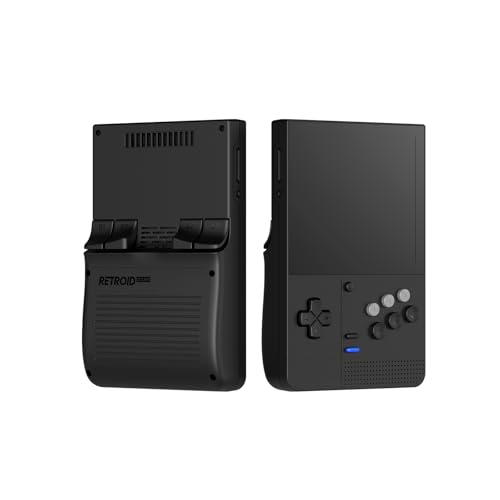
Retroid Pocket Classic Retro Handheld 3.92-inch OLED (Classic 6 GS)

Travel Case for RG353V RG35XX RG353VS R36S Handheld Emulator

Retroid Pocket 5 Retro Handheld 5.5-inch 1080p Snapdragon 865

Retroid Pocket 4 Pro Retro Handheld 4.7-inch D1100 (Black)
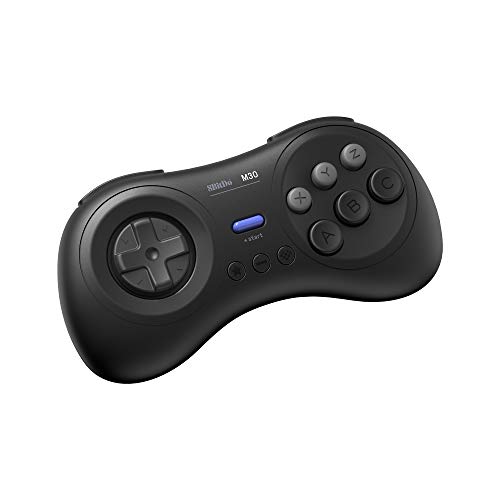
8Bitdo M30 Bluetooth Controller 6-Button (Black)

Anbernic RG 476H Retro Handheld 4.7-inch IPS Android 13

GameSir Nova Lite 2.4G Controller (White)

8BitDo Ultimate Mobile Gaming Controller Hall Effect (Black)
More On The Choices That Made The List
The Anbernic RG476H arrives with the kind of silicon that usually sits a tier above budget handhelds. A Unisoc T820 processor (the main brain that handles app instructions) pairs with a quad-core Mali-G57 GPU (the graphics chip that paints every frame) and 8GB of LPDDR4X RAM, which is the working memory that keeps emulators smooth when switching between titles. Storage lands at 128GB of UFS 2.2, a faster read standard than older eMMC chips, so load times on heavier PSP and Dreamcast ROMs feel snappier than you might expect.
Android 13 sits underneath, which matters because it opens the door to the Google Play Store and sideloaded APKs (Android app installation files) alike. Owners who already tinker with frontends like Daijishō or ES-DE will feel at home mapping controls and curating box art. The 5000mAh cell is rated around six hours of continuous play, which should cover a coast-to-coast flight or a long weekend unplugged. For anyone chasing demanding emulators without jumping to flagship-tier pricing, this one’s a strong first stop.
Benefits That Matter
- Hall-effect joysticks resist stick drift, a common failure on older handhelds
- 8GB of RAM keeps background apps and emulator cores from clashing
- 128GB of fast UFS storage handles large multi-platform ROM libraries
- Android 13 grants access to the Play Store and modern controller APIs (programming hooks that let games and pads talk to each other)
- HD and TV output let you push games to a bigger screen for couch sessions
Points To Note
- No game card is included, so you’ll need to source your own ROMs and apps
- The 4.7-inch screen is sharp, though it may feel small for split-second fighting-game inputs
Key Advantages
Who It Suits Best
Tinkerers who want flagship-grade emulation headroom without paying flagship prices.
Skip It When
You’d rather grab a small-form pick like the Retroid Pocket Classic and stick to lighter 8-bit and 16-bit catalogs.
The Retroid Pocket Classic shrinks the form factor without stripping the soul out of the experience. A 3.92-inch OLED touchscreen (a self-lit display panel that produces its own light per pixel) renders at 1240×1080 at 60fps, which is a sharp, color-rich canvas for 8-bit and 16-bit sprites, plus 4:3 arcade titles. The pocket-sized shell fits a jacket pocket, a travel pouch, or the side pocket of a backpack without printing a bulge.
Running Android 14, the device enjoys the most recent app compatibility, including Play Store access for streaming and cloud gaming clients. With 6GB of RAM and 128GB of internal storage, there’s room for a generous library of ROMs (digital game files) and saves, while a 5000mAh battery stretches into multi-hour sessions. Compared to the bigger Retroid Pocket 5 reviewed later, the Classic leans into portability over raw horsepower, which is exactly the trade-off many commuters want.
The Value In It
- OLED panel delivers deeper blacks than LCD-based rivals
- Android 14 keeps the OS current with security and Play Store support
- 5000mAh battery supports extended travel play
- Pocket-friendly footprint disappears into a small bag
Trade Offs
- The 3.92-inch screen may feel cramped for RPGs with dense menus
- No games are preloaded, so setup requires some manual work
Right Fit For
Commuters and travelers who want a bright, pocketable OLED and prioritize portability over flagship specs.
A Better Fit Elsewhere
Power users chasing 1080p output and high-end Android games should look at the Retroid Pocket 5 instead.
The Classic 6 GS variant of the Retroid Pocket Classic is essentially the same hardware wrapped in a more neutral shell. You get the 3.92-inch OLED panel, Android 14, and a 6GB-plus-128GB memory and storage combination, with WiFi 5 for streaming and downloads. For shoppers who want the OLED pop but prefer a low-key finish over the bright PKM Yellow, this colorway is the path of least resistance.
The display’s 1240×1080 resolution scales classic 4:3 content cleanly, and Android 14 unlocks the full Play Store for sideloaded launchers, frontend apps, and cloud gaming clients. At 5000mAh, the battery matches its sibling, so most users can expect similar runtimes during 8-bit and 16-bit playthroughs. Think of it as a wardrobe choice with identical internals.
Noteworthy Benefits
- Same OLED clarity as the PKM Yellow variant
- Android 14 provides long-term app and security support
- WiFi 5 keeps store downloads and streaming snappy
Possible Compromises
- No preloaded games means manual setup time on first boot
- Smaller screen isn’t ideal for games with tiny text or dense HUDs
Feature Snapshot
Made For
Shoppers who love the OLED Pocket Classic but want a more subtle, desk-friendly colorway.
Consider Something Else When
You’d like a dedicated d-pad for arcade fighters, in which case the Anbernic RG476H is worth a look.
A handheld without a case is a scratch waiting to happen, and this YIHAOBOX shell solves the problem for several popular devices in one go. The travel case is molded for the RG353V, RG35XX, RG353VS, and R36S, with a mesh pocket for cables, a USB-C cord, or a small game card adapter. The rigid outer layer and soft inner lining work together to keep the screen and shoulder buttons from rattling around inside a backpack.
Owners commonly report that the case’s snug fit keeps the handheld from shifting mid-transit, which matters when you toss the bag under an airplane seat or into a crowded commuter tote. The mesh accessory pocket is the small touch that pays off: instead of fishing through the case for a charging cable, you can stash it in the inner pouch. It’s a sensible companion to any of the handhelds on this list, even if it doesn’t cover every model.
A Few Strong Suits
- Cross-compatible with four popular handheld models
- Mesh pocket keeps cables and adapters organized
- Semi-rigid build shields screens from backpack pressure
Less Ideal Details
- Not sized for larger 5-inch or 5.5-inch handhelds like the Retroid Pocket 5
Quick Facts
Best Suited To
Commuters and travelers who want one case that follows them across multiple handheld upgrades.
Look Elsewhere When
You own a 5.5-inch device like the Retroid Pocket 5, which calls for a larger pouch.
The Retroid Pocket 5 is the heavyweight of the family, and the spec sheet explains why fast. A Snapdragon 865 processor, the same flagship-class chip that powered 2020-era phones, sits behind a 5.5-inch 1080p touchscreen, while an Adreno 650 GPU handles Android-native games and tougher emulators like GameCube, Wii, and early 3DS. With 8GB of RAM and 128GB of storage, multitasking between launchers and cores feels stable rather than stretched.
WiFi 6 and Bluetooth 5.1 round out the modern connectivity, which makes sideloaded streaming apps, controller pairing, and game downloads feel responsive. The 5000mAh cell handles the higher power draw of the bigger screen, though heavy users may find a top-up helpful during long play sessions. Compared to the Anbernic RG476H from earlier, this one trades some battery life for a higher-resolution display and a stronger graphics pipeline.
Well-Handled Touches
- 1080p touchscreen makes text-heavy RPGs more readable
- Adreno 650 handles GameCube and Wii emulation comfortably
- WiFi 6 delivers faster downloads on modern routers
- Bluetooth 5.1 maintains stable connections with wireless pads
A Few Limitations
- First-charge protocol needs 8 hours to wake a deeply drained battery
- The 5.5-inch shell is less pocket-friendly than the Pocket Classic
Who Will Love This
Emulation enthusiasts who want flagship Android horsepower and a full-HD display on a single handheld.
Where A Sibling Pick Shines
Buyers wanting something cheaper and more pocketable should pivot to the Retroid Pocket 4 Pro, which is reviewed below.
The Retroid Pocket 4 Pro carves a thoughtful middle path between the pocket Classic and the full-fat Pocket 5. Inside lives a MediaTek Dimensity 1100, an octa-core chip (eight processing cores working in parallel) with four high-power A78 cores at 2.6GHz, paired with a Mali-G77 MC9 GPU at 836MHz. Combined with 8GB of LPDDR4X RAM, the platform can chew through PSP, Dreamcast, and lighter GameCube libraries with confident frame pacing.
The 4.7-inch display keeps the chassis manageable, and the 5000mAh battery is generous for that screen size. Android flexibility means streaming apps, sideloaded launchers, and even light cloud gaming all run on the same device. The honest read is that you give up the 1080p output of the Pocket 5, but you gain a friendlier grip and a more approachable entry into Android-powered retro handhelds.
Real-World Strengths
- Dimensity 1100 balances emulation power with reasonable battery draw
- 4.7-inch chassis fits adult hands comfortably
- 8GB of RAM keeps emulation cores from competing for resources
- 5000mAh battery stretches across long play sessions
Things To Weigh
- Display resolution is below the Pocket 5’s full-HD panel
- No games are preloaded, so plan for some setup time
Spec Overview
Perfect Match For
Multi-platform emulation fans who want a balanced price-to-performance sweet spot.
Another Choice May Suit
Shoppers craving the brightest, most color-accurate screen should check the Retroid Pocket Classic’s OLED instead.
The 8Bitdo M30 is built for a specific nostalgia: the six-button Genesis layout that defined a generation of console fighters and arcade ports. Bluetooth pairs it with the Switch, Windows 10 or above, Android devices, and Raspberry Pi builds, so the same pad can move between handheld, phone, and PC setups without re-mapping. A rechargeable battery and firmware upgrade support keep the controller in service across hardware swaps.
For Android users running emulators, the M30 maps cleanly to titles that expect three face buttons plus a start/mode layout, and the turbo function (a feature that fires repeated inputs with one press, useful for older run-and-gun games) speeds up grinding sessions in shoot-’em-ups. The build quality feels closer to a serious peripheral than a casual add-on, which is rare at this size. Versus the larger 8BitDo Ultimate covered later, the M30 wins on portability and price.
Key Advantages
- Six-button layout mirrors the original Genesis pad
- Bluetooth pairs across Switch, Windows, Android, and Raspberry Pi
- Rechargeable battery and firmware updates extend its lifespan
- Turbo function speeds up older games that demand rapid-fire inputs
What To Consider
- Turbo doesn’t function on Switch titles
- The D-pad favors 2D games over modern 3D layouts
Built With In Mind
Arcade and Genesis fans who want a pad that feels right for 16-bit titles and ports of classic fighters.
Reach For A Different Pick When
You mostly play modern mobile shooters and want Hall-effect sticks, in which case the 8BitDo Ultimate is the upgrade path.
The second RG 476H entry swaps the LTPS panel for a 4.7-inch IPS multi-touch screen with OCA full lamination, a bonding process that fuses the touch layer directly to the display to reduce glare. The 1280×960 resolution and 120Hz refresh rate combine to deliver cleaner motion than typical budget handhelds, which is a real upgrade for side-scrollers and fighting games where input lag matters.
The Unisoc T820 processor and Android 13 stack stay consistent with the first RG 476H covered above, so app and emulator support line up. 1080p DisplayPort output is a meaningful perk, because it lets you push the picture to a TV or monitor for couch sessions without buying a separate dock. Battery life is the standout here: owners commonly report over eight hours of play per charge, with 5V/2A charging filling the tank in roughly 3.5 hours.
Where It Helps
- 120Hz refresh rate reduces input lag in fast-paced games
- OCA-laminated screen cuts glare for outdoor use
- 1080p DisplayPort output supports TV or monitor hookup
- Eight-hour battery life outlasts most budget handhelds
Small Caveats
- Resolution is lower than the LTPS variant’s pixel count
- No game card ships in the box, so first-boot setup is required
Whose Shelf It Belongs On
Daily players who want long battery life and the option to dock to a TV for multiplayer nights.
Swap It Out When
Pixel density matters more than refresh rate to you, in which case the first RG 476H with the LTPS panel fits better.
The GameSir Nova Lite is a wallet-friendly option for casual Android play. A 2.4G wireless dongle pairs the controller to PCs, Android boxes, and select smart TVs without depending on Bluetooth, which can be useful on older devices that don’t expose a Bluetooth stack. The white finish keeps it visually distinct from the sea of black pads in the same category.
It lacks some of the premium touches of the 8Bitdo options, but for couch gaming on a smart TV or a casual streaming session, the price-to-feature ratio is hard to beat. The straightforward plug-and-play setup means a quick start, which suits households that just want something working in five minutes. If your gaming diet skews to weekend sessions rather than daily marathons, the Nova Lite earns its keep.
Notable Gains
- 2.4G dongle works on devices without Bluetooth
- Plug-and-play design reduces setup friction
- Lightweight shell is comfortable for long sessions
Honest Caveats
- Lacks Hall-effect sticks found on higher-tier pads
- Limited button layout compared to pro-tier controllers
Right Fit For
Casual gamers who want a no-fuss wireless pad for a smart TV or an older Android box.
Not Your Match When
You want a premium build with pro paddles, in which case the 8BitDo Ultimate makes more sense.
The 8BitDo Ultimate is the top-tier Android pad on this list, and the spec list reads like a checklist for serious mobile gamers. Hall-effect joysticks and triggers use magnetic sensors instead of physical contact, which virtually eliminates stick drift, a common failure on cheaper pads. Two pro back paddle buttons sit behind the grip, and refined bumpers and a tactile D-pad round out the inputs.
It clamps to phones ranging from 100mm to 170mm in length, covering most modern Android handsets, and wear-resistant metal joystick rings extend the lifespan over plastic alternatives. Support for the 8BitDo Ultimate Software V2 means you can remap buttons, tune stick curves, and update firmware as the app evolves. Compared to the M30 reviewed earlier, this is a full-fledge modern controller, while the M30 remains a love letter to the Genesis era.
Practical Pluses
- Hall-effect joysticks and triggers resist drift over time
- Pro back paddles enable claw grip and faster inputs
- Metal joystick rings add long-term durability
- Configurable via the 8BitDo Ultimate Software V2 app
Trade-Offs To Consider
- Larger footprint compared to the 6-button M30
- App-based configuration adds a small learning curve for new users
Who Should Grab It
Cloud gaming and emulation users who want drift-proof sticks and full remapping on an Android phone.
Where Another Pick Suits Better
Pure 16-bit fans on a tighter budget may prefer the 8Bitdo M30’s six-button layout.
What Matters Most Before Choosing Android Emulators For Games
A handheld’s processor is the single biggest factor, because it determines which console generations run well. Older 8-bit and 16-bit systems (NES, SNES, Genesis) run on anything, but PSP, Dreamcast, and GameCube start to require chips like the Dimensity 1100 or Snapdragon 865 to feel smooth. The display type matters more than people expect: OLED panels (organic LED, with self-lit pixels) deliver deeper blacks and better contrast, while IPS screens (a backlit LCD technology) often win on refresh rate and outdoor visibility.
RAM and storage round out the platform story. 6GB handles most setups, while 8GB gives you room to multitask between an emulator and a streaming app. Storage of 128GB covers a generous multi-platform ROM library without forcing an SD card from day one. If you plan to output to a TV, look for DisplayPort or HDMI-out support, which turns the handheld into a living-room console for free.
Controllers deserve a separate evaluation. Hall-effect joysticks are worth prioritizing because they sidestep drift, the slow degradation of analog inputs that plagues traditional potentiometer-based sticks. For mobile setups, the clamping range (the range of phone sizes the holder can grip) decides whether your device fits, so measure before committing. Match the controller’s layout to the games you play most: six-button pads favor 16-bit fighters, while modern dual-stick layouts suit third-person action and shooters.
Key Considerations Across These Picks
Where Shoppers Go Wrong
Picking the cheapest handheld without checking its chip often leads to underwhelming PSP or Dreamcast performance. A $20 savings doesn’t matter when games stutter, so the processor tier should drive the decision more than aesthetics. Another common slip: ignoring the controller’s stick technology and inheriting drift within a year of light use.
The Case For Spending Up
Higher-tier handhelds like the Retroid Pocket 5 add flagship chips, larger batteries, and 1080p output, which translates to smoother emulation and more comfortable TV play. The upgrade is worth it for users who want one device to cover everything from 8-bit classics to Android-native games. Casual players who mostly replay NES and SNES titles can stay lower and still be happy.
Frequently Asked Questions
Do I Need A Powerful Handheld For Older Console Games?
No. 8-bit and 16-bit systems run well on entry-level Android chips, so a budget option can cover NES, SNES, and Genesis libraries. The processor starts to matter more for PSP, Dreamcast, and GameCube emulation.
Are Pre-Installed Games Common On Android Emulators?
Not typically. Most handhelds ship without ROMs, and the listings above explicitly note no preload content. You will need to source and load your own games and apps.
What Is Hall-Effect Joystick Technology?
Hall-effect joysticks use magnetic sensors to detect stick position, rather than physical contact parts that wear out. The result is a stick that resists drift over years of use, even with heavy gaming.
Can These Handhelds Output To A TV?
Some can, but not all. The Anbernic RG 476H and the Retroid Pocket 5 list HDMI or DisplayPort output, while smaller models like the Retroid Pocket Classic focus on portable play. Check each listing for the specific output type.
Do Bluetooth Controllers Work With All Android Emulators?
Most modern emulators support Bluetooth input, and the 8Bitdo M30 and 8BitDo Ultimate pair cleanly with Android. A few obscure apps may require manual mapping, so verify support for your preferred software.
Final Verdict
Android gaming has grown into a surprisingly rich corner of the handheld world, and these picks cover the full spectrum from pocket OLEDs to flagship 1080p beasts. Match the device to the consoles you actually play, lean toward Hall-effect controllers for long-term reliability, and grab a travel case if you commute with your gear. The right setup depends on your library, your grip, and how often you take the games on the road.



