


Ambient reverb pedals shape the air around your notes, turning dry signal into cathedral-sized washes, shimmer-soaked pads, and ghostly trails that hang in the room long after you lift the pick. The challenge with this category is separating genuine creative tools from glorified delay-with-splash units, especially when every brand claims to deliver the “ultimate” atmosphere.
This lineup covers ten pedals at every price point, from studio-grade flagships like the Strymon BigSky to budget workhorses like the FLAMMA FC02. You’ll see what each one actually does with a signal, where it tends to shine, and where the trade-offs live. Whether you play ambient at home, gig with a worship band, or score film in a small project studio, there’s a fit here worth your attention.
A Quick View Of The Lineup
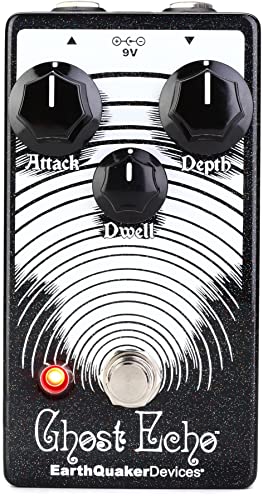
EarthQuaker Devices Ghost Echo V3 Vintage Reverb Pedal

Strymon BigSky Multidimensional Reverb Pedal

BOSS RV-6 Reverb Guitar Pedal
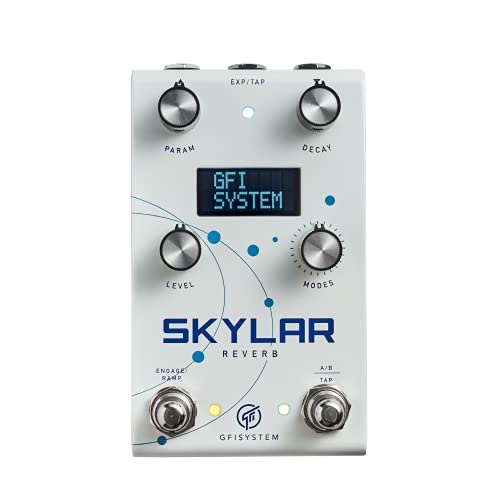
Skylar Stereo Reverb Pedal (GFI Systems)

Eventide Blackhole Reverb Pedal
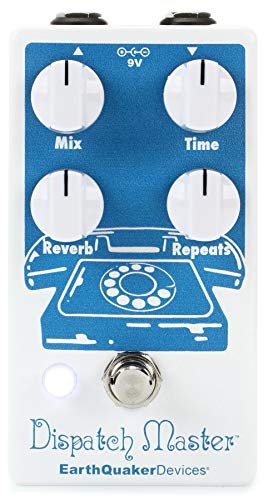
EarthQuaker Devices Dispatch Master V3 Delay & Reverb

FLAMMA FC17 Analog Delay Pedal

JHS Pedals 3 Series Octave Reverb
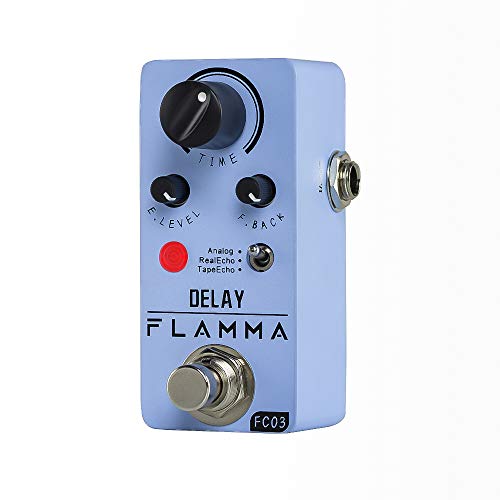
FLAMMA FC03 Delay Pedal
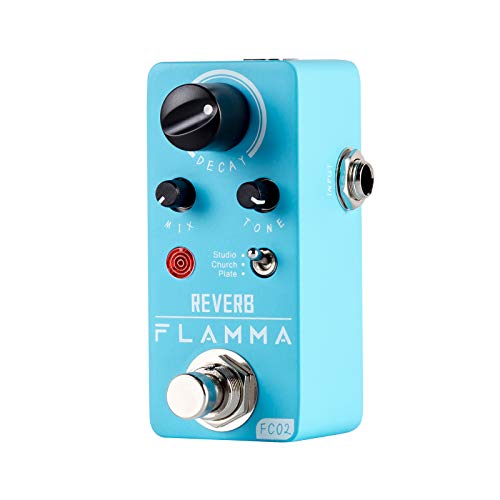
FLAMMA FC02 Reverb Pedal
The Strengths Of Each Pick
The Ghost Echo V3 leans into a haunted amplifier tone rather than chasing cathedral-sized ambient washes. If you play surf, blues, or indie rock and want the kind of splash and dimension that a vintage tube combo used to give you, this pedal lands right in the sweet spot. Unlike the Strymon BigSky further down the list, which aims for vast cinematic spaces, the Ghost Echo keeps things intimate and amp-like.
EarthQuaker built it as a digital recreation of the spring reverb tanks that defined classic guitar records, then upgraded the internal op-amps in V3 for a cleaner signal path. The “dwell” control, which determines how long the reverb sustains, can even be pushed into self-oscillation for noise-rock textures. In a home studio, it tends to sit beautifully in a mix without overwhelming the dry signal.
What Makes Sense
- The Dwell control lets you push the reverb into controlled self-oscillation for experimental textures
- Spring reverb character pairs naturally with single-coil pickups and clean amp settings
- Compact enclosure fits on crowded boards where the Boss RV-6 might feel redundant
- Updated op-amps in V3 reduce the hiss that older revisions could produce
- True bypass wiring means the pedal leaves your dry tone untouched when disengaged
Trade Offs
- Limited to spring-style ambience, so players seeking huge plate or hall reverbs may find it narrow
- No stereo output, which can be a constraint for ambient players running two amps
Right Fit For
Players who want vintage splash and surf-style character without diving into deep menu-diving or algorithm editing.
Reach For A Different Pick When
You need a reverb that can do convincing hall, plate, and shimmer modes in a single box, in which case the Strymon BigSky serves that role better.
Strymon built the BigSky for players who treat reverb as a primary compositional tool rather than a finishing touch. If you record ambient guitar, score short films, or run a stereo rig, the BigSky’s depth and signal quality are hard to match. The Ghost Echo we just covered delivers charm, but the BigSky delivers an entire room, hall, or galaxy on demand.
Where most pedals give you three or four flavors, the BigSky offers a full library of reverb types covering room, hall, plate, spring, shimmer, and more, all shaped by powerful onboard processing. It runs in true stereo with full MIDI support, which matters for players who automate patch changes from a controller. The aluminum chassis feels like it could survive a tour van, though it’s notably larger than the compact FLAMMA pedals on this list.
Key Advantages
- Twelve reverb machine types give you genuine range rather than minor variations of the same algorithm
- Full stereo I/O lets you route two amps or use a stereo studio monitoring setup
- MIDI compatibility means the pedal fits into larger setups and patch-change workflows
Honest Caveats
- The enclosure occupies significant pedalboard real estate, which matters on smaller boards
- The depth of options can overwhelm players who want a single knob to tweak and forget
- True bypass is selectable, but high-quality buffered mode tends to suit long cable runs better
Feature Snapshot
Who Should Grab It
Working studio players and serious ambient guitarists who want flagship-grade depth and are willing to invest the time to learn the interface.
Swap It Out When
You mostly play small club gigs with a single amp and need a simpler, smaller unit, in which case the Boss RV-6 offers a friendlier path.
Few pedals have earned the kind of long-term trust that BOSS commands, and the RV-6 carries that legacy into the reverb category. If you want a single box that covers subtle room, classic plate, and modern shimmer without scrolling through menus, this pedal was designed for exactly that purpose. Compared to the Strymon BigSky, the RV-6 trades depth for immediacy, and many working players prefer that trade.
The pedal runs in stereo, supports expression pedal control for real-time parameter sweeps, and uses the standard BOSS buffered bypass that many players already rely on across their boards. For gigging musicians who switch between songs with different reverb needs, the RV-6 makes sense because each mode is one knob turn away.
Where It Helps
- Eight reverb modes cover the most common stage and studio needs without menu diving
- Expression pedal input allows real-time control over decay or effect level during a performance
- Stereo I/O supports dual-amp rigs and wider panning effects
- Standard BOSS build quality holds up well to frequent transport and stage use
Points To Note
- No preset memory means manual knob adjustments between songs
- Buffered bypass may subtly color your dry signal compared to true bypass designs
Best Suited To
Working guitarists who need reliable, song-to-song versatility without spending time on deep editing.
Where Another Pick Suits Better
Players who want a more experimental, textural reverb should look at the Eventide Blackhole instead, since it specializes in unusual soundscapes.
GFI Systems has a reputation for pedals that sit at the intersection of guitar and synth culture, and the Skylar stereo reverb reflects that lineage. The onboard LCD screen is a major differentiator compared to the knob-only layouts of the Boss RV-6 and the FLAMMA FC02, giving you visual feedback as you adjust parameters. For players who like to sculpt reverbs in detail rather than rely on preset modes, the Skylar provides real editing depth.
The compact enclosure houses four core reverb algorithms, stereo I/O, and a USB port for firmware updates and deeper parameter access. It works equally well on a pedalboard, in a desktop studio, or paired with a synthesizer rig. Owners commonly note that the screen makes preset saving and recalling far more intuitive than footswitch-only workflows.
Why It Works Well
- Onboard LCD provides clear visual feedback for parameter editing
- USB connectivity allows firmware updates and future-proofing
- Compact pedal format fits on a standard guitar board despite the editing depth
- Stereo routing works well for both guitarists and synth players
Softer Spots
- More menu-based editing means a steeper learning curve for new players
- Power requirements can differ from standard 9V pedalboard supplies, so check compatibility before integrating
Whose Shelf It Belongs On
Synth players, sound designers, and guitarists who want detailed control over reverb parameters rather than fixed modes.
Consider Something Else When
You want plug-and-play operation with no menu scrolling, in which case the JHS Pedals 3 Series Octave Reverb is a friendlier entry point.
Eventide has long been associated with studio rack gear used on countless records, and the Blackhole pedal brings that lineage to a stompbox format. The pedal excels at sounds that don’t exist in conventional reverbs, including the kind of massive, hovering drones that work beautifully in ambient and cinematic contexts. Compared to the BigSky’s broad utility, the Blackhole commits hard to experimental textures.
Two different infinite reverb modes let you sustain notes well past their natural decay, while built-in modulation adds movement to otherwise static tails. Hi and lo tone controls shape the character of the reverb, which matters when you want the effect to feel distant rather than close. The pedal pairs well with delay and volume pedals to build evolving soundscapes.
The Helpful Details
- Infinite reverb modes let you sustain notes indefinitely for ambient drones
- Onboard modulation adds motion and chorus-like movement to reverb tails
- Tone controls shape the reverb’s frequency content for varied placements in a mix
- Compact format fits Eventide’s reputation for studio-quality processing in pedal form
Worth Bearing In Mind
- The experimental focus means traditional hall and plate sounds are less prominent
- Single-footswitch operation may require planning during live performance transitions
Feature Snapshot
Made For
Ambient guitarists, film composers, and experimental players who want otherworldly textures rather than realistic room simulations.
Look Elsewhere When
You mostly want traditional plate or hall reverbs for cleaner genres, in which case the Boss RV-6 covers that ground more directly.
The Dispatch Master takes a different approach from the rest of this list: it combines a digital delay and a dynamic reverb into a single enclosure. If pedalboard space is at a premium, or you simply want delay and reverb to live in the same box with a unified character, this pedal removes a lot of decision-making. The Ghost Echo covered earlier offers pure spring reverb, but the Dispatch Master adds slap-back and ambient echo territory in the same footprint.
Up to 1.5 seconds of delay time covers everything from quick slap-back to longer ambient echoes, and the reverb side ranges from natural room sounds to deep, cavernous washes. Each effect has its own dedicated knob, and the two run independently or together depending on your needs.
Everyday Perks
- Combines delay and reverb in one enclosure, saving valuable pedalboard space
- 1.5 seconds of delay time covers a wide range of musical applications
- Independent effect knobs make it easy to dial in the right balance for each song
Small Caveats
- Delay and reverb cannot be isolated into separate signal paths without a splitter box
- The shared interface can feel limiting compared to dedicated delay or reverb units
Perfect Match For
Players who want a single pedal covering both delay and reverb duties, especially on smaller boards where space matters.
Not Your Match When
You want dedicated, deep control over each effect, in which case pairing the Boss RV-6 with a dedicated delay pedal works better.
The FLAMMA FC17 belongs in a different category than the rest of this list: it’s a pure analog delay, not a reverb. Still, it appears here because delay and ambient reverb often work hand in hand, and the FC17 handles the delay side of ambient soundscapes at a remarkably approachable cost. Its tiny footprint makes it a natural partner for a dedicated reverb pedal like the Boss RV-6 or the FLAMMA FC02.
The delay time ranges from 25ms to 600ms, which covers everything from subtle thickening to longer, evolving repeats. True bypass wiring keeps the dry tone completely uncolored when the pedal is off. Owners commonly appreciate the metal shell, which feels more durable than typical mini pedals in this class.
The Upside
- True bypass keeps your dry signal completely unaltered when the pedal is off
- Compact metal enclosure fits on even the most crowded pedalboards
- 25ms to 600ms delay range covers most musical applications
Things To Consider
- Analog delay character means darker repeats compared to digital units
- No tap-tempo function, which can be limiting in live tempo-based situations
Who It Suits Best
Travelling players and small-board builders who want warm analog delay character in a space-saving format.
Where A Sibling Pick Shines
For pure ambient reverb needs, the FLAMMA FC02 is a closer fit and shares the same compact design language.
JHS designed the 3 Series to give players high-quality effects without intimidating menus or steep price tags. The Octave Reverb combines two distinct effects into a single, easy-to-use pedal: a clean octave effect and a lush reverb. For a beginner building a first pedalboard, the simplicity of three knobs and a toggle switch is genuinely useful. The Boss RV-6 we covered earlier offers more modes, but the JHS wins on immediate approachability.
The pedal is hand-built in Kansas City, which appeals to players who want a human touch behind their gear. The 3 Series line consistently delivers sound quality that punches above its price class, and the Octave Reverb fits that pattern well.
Noteworthy Benefits
- Three-knob layout with one toggle makes operation immediately intuitive
- Built in the USA with quality-control standards that match higher-priced offerings
- Octave-and-reverb combination covers two common effect duties in one box
A Few Limitations
- The octave effect is a fixed character, so you cannot switch to pure reverb without it
- Limited algorithm variety compared to the Strymon BigSky
Feature Snapshot
Built With In Mind
First-time pedal owners and players who want immediate, usable sounds without diving into complex menus.
A Better Fit Elsewhere
Players focused purely on ambient reverb will find the FLAMMA FC02 a more dedicated reverb option at a similar entry-level price.
The FLAMMA FC03 gives you three different delay types, Analog, Real Echo, and Tape Echo, all in a small enclosure at a notably low cost. For a beginner exploring delay for the first time, the variety here is generous. Like the FC17 covered earlier, this is a delay pedal rather than a reverb, but delay plays a major role in ambient soundscapes and pairs well with dedicated reverb units.
Delay times range from 5ms to 600ms, covering both subtle thickening and longer ambient echoes. True bypass keeps your dry signal clean when the effect is off. Owners commonly use this pedal as a stopgap while deciding whether to invest in higher-end units.
What Works In Its Favor
- Three distinct delay types in a single pedal offer genuine variety at the price
- True bypass keeps the dry signal fully transparent when disengaged
- Compact metal enclosure fits easily on smaller boards
Points To Keep In Mind
- Build quality, while solid for the cost, does not match professional-tier options
- The three delay modes lack the depth of dedicated single-mode delay units
Who Will Love This
Beginners building a first pedalboard who want delay variety without a major financial commitment.
Another Choice May Suit
For a similar budget in a dedicated reverb unit, the FLAMMA FC02 is a more direct fit for ambient players.
The FLAMMA FC02 closes out this list as a genuinely useful entry point into the reverb category. Three classic modes (Studio, Church, and Plate) cover the most common reverb flavors without overwhelming a new user. Compared to the Boss RV-6, the FC02 has fewer modes, but it lands at a much friendlier price and takes up far less board space.
True bypass keeps the dry signal untouched when the pedal is off, which matters on simple rigs where the pedal sits near a clean amp. The compact metal enclosure and standard 9V power requirement make the FC02 a natural fit for starter boards.
Positive Takeaways
- Three classic reverb modes (Studio, Church, Plate) cover the most-requested flavors
- True bypass keeps the dry signal transparent when the pedal is off
- Compact metal enclosure suits small pedalboards and travel setups
Trade-Offs To Consider
- No stereo output, which limits use in dual-amp or studio stereo applications
- Only three modes, so players seeking shimmer or experimental sounds will need to look elsewhere
Feature Snapshot
The Right Fit
Budget-conscious players and beginners who want classic reverb flavors without a complex interface.
Skip It When
You want to explore experimental or cinematic reverbs, since the Eventide Blackhole is purpose-built for that territory.
What Separates A Great Reverb Pedal From The Rest
Choosing an ambient reverb pedal comes down to understanding how a few key attributes map to your playing context. The “pre-delay” parameter, which sets the time between the dry note and the start of the reverb tail, shapes how close or far the perceived space feels. Shorter pre-delay values make reverb feel intimate, while longer values push the effect backward in the mix, which works well for ambient and cinematic styles.
For home studio players, stereo I/O and routing flexibility tend to matter more than for gigging musicians, who usually prioritize quick knob access and roadworthy construction. MIDI support becomes valuable once you start building presets or syncing with other pedals, but most beginners can skip it entirely. If you play in a worship or cover band context, a workhorse like the Boss RV-6 will likely serve you well, while a film composer or ambient artist may need the deeper textural control of the Strymon BigSky or Eventide Blackhole.
Finally, consider your signal chain. Reverb placement after distortion or modulation shapes how those effects interact, and a buffered pedal can affect long cable runs differently than a true bypass design. Matching the pedal to your amp and existing pedals matters more than chasing the most expensive option on the market.
Key Considerations Across These Picks
Mistakes Worth Dodging
First-time buyers often reach for the most expensive pedal assuming it will solve every problem, but a flagship like the Strymon BigSky can overwhelm a player who just needs a simple room reverb. Equally common is grabbing the cheapest option and finding the algorithm depth too shallow for serious work. Match the pedal to your playing context: a small practice rig and a recording studio demand different tools. Also, ignoring power supply requirements trips up many first-time builders, since some digital pedals need higher current than a basic daisy chain provides.
Where The Extra Money Goes
Premium pedals earn their cost through better digital signal processing, more accurate algorithm modeling, and sturdier hardware that survives years of gigging. The BigSky’s deeper algorithm library and the Eventide Blackhole’s experimental processing represent genuine engineering investments, not just brand markup. When your playing demands nuance, flexibility, or unusual soundscapes, the upgrade is worth the spend. For straightforward, gig-ready tones, mid-tier options like the Boss RV-6 deliver professional results without the flagship price tag.



