


A great ambient reverb pedal turns a simple guitar line into a room, a canyon, or a memory. You don’t always need a wall of rack gear to get there; a few well-chosen stompboxes and one or two smart multi-effects units cover most of the ground. The list below covers reverb-focused pedals, delay-plus-reverb combos, multieffects platforms with strong ambient engines, and the pedalboard hardware that holds the whole rig together.
A Side-By-Side Look
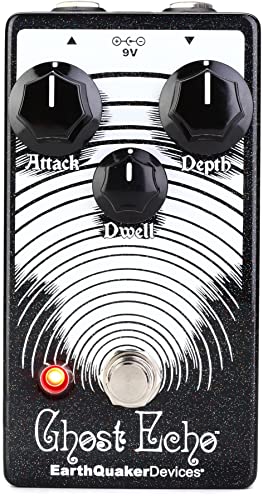
EarthQuaker Devices Ghost Echo V3 Vintage Reverb Pedal

BOSS RV-6 Reverb Guitar Pedal
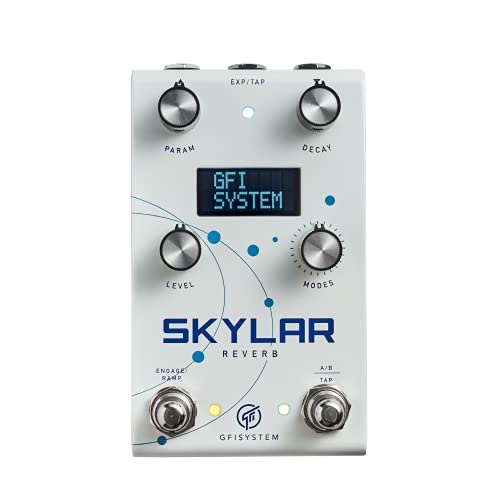
Skylar Stereo Reverb Pedal

SOYAN 14″ x 10.6″ Pedal Board With Carry Bag

MOOER GE100Pro Li Multi-Effects Pedal

Eventide Blackhole Reverb Pedal
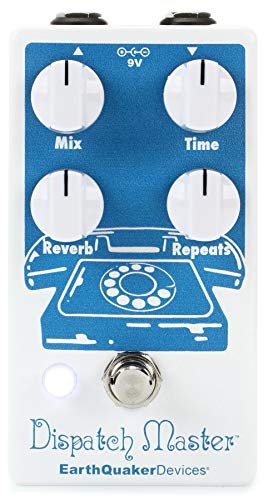
EarthQuaker Devices Dispatch Master V3 Delay & Reverb

MOOER F40i Smart Guitar Amp 40W

MOOER GE1000Li Smart Multieffects Pedal
The Picks, Examined More Closely
Spring reverb has a particular character: surf splash, drip, and the metallic wobble of a vintage amp top. The EarthQuaker Devices Ghost Echo V3 chases that voice rather than clean digital shimmer, and it leans into the haunted side of the spectrum with self-oscillation built into the Dwell control.
It slots easily into a small board, runs on standard 9V power, and responds to playing dynamics in a way that more clinical reverbs often miss. For a player building a small ambient rig around a single delay and one reverb, this is a strong starting point.
What Pays Off
- Updated op-amp design lowers hiss and tightens the signal chain.
- Doubled output gives the spring character more space to bloom.
- Recalibrated Dwell control opens up controlled, swelling feedback.
- Compact footprint, friendly to small boards like the SOYAN 14″x10.6″.
Points To Note
- Not aimed at the clean hall-reverb crowd; players wanting shimmer or crystalline pads may want the Eventide Blackhole instead.
Right Fit For
Indie and surf-leaning players who want spring character and don’t mind a bit of grit at the tail of every note.
Skip It When
The BOSS RV-6 suits you better if you want a wider range of stock reverb modes in one box, from subtle room to modern shimmer.
The RV-6 sits in the “no drama, sounds good on anything” category that BOSS has built its name on. It covers a broad spread of reverb flavors in one enclosure, from tight room ambience through plate and hall to a modern shimmer and a long, evocative pad mode that drifts in the background of a mix.
For players who don’t want to commit to a single reverb character, the RV-6 is the kind of pedal that stays on the board for years. In a compact ambient rig it pairs well with a delay-only unit, since the reverb is already doing the heavy spatial work.
Positive Points
- Wide range of algorithms, covering most studio reverb flavors in one pedal.
- Standard BOSS build quality, with a chassis that’s widely reported to handle years of gigging.
- Simple knob layout makes it approachable for newer pedal users.
Trade Offs
- Lacks the experimental, cinematic reach of pedals like the Eventide Blackhole.
- Power draw and footprint are typical for the category; not a concern on a SOYAN-style board, but worth budgeting for on a tiny one.
Best Suited To
Working guitarists who want one reverb pedal to cover traditional and modern ambient duties on the same gig.
Look Elsewhere When
The EarthQuaker Devices Ghost Echo V3 is a better match if your taste leans toward spring character and self-oscillating textures.
The GFI Systems Skylar crams four reverb algorithms into a compact pedal that can run true stereo. The included LCD screen keeps the menu navigation straightforward, and the unit is small enough to fit alongside three or four standard stompboxes on a mid-sized board.
For a player who wants more than one flavor of reverb without stacking multiple pedals, the Skylar reads as a focused, menu-driven alternative to a fully featured multieffects unit like the MOOER GE1000Li.
The Upside
- Four distinct reverb algorithms for different musical contexts.
- True stereo I/O opens up wider, more immersive ambient fields.
- LCD screen lowers the learning curve for the deeper modes.
Worth Noting
- Menu-based editing is less immediate than knob-per-function pedals like the BOSS RV-6.
- Stereo routing may be wasted on a single-amp setup; you’ll want two amps or a stereo rig to hear the full benefit.
Made For
Stereo-rig players and home-studio users who like menu-driven editing and want varied reverb flavors in a single box.
Consider Something Else When
The BOSS RV-6 is a better fit for traditional mono setups or players who prefer to dial in tones by feel rather than screen.
A pedalboard is the silent partner of every ambient rig. The SOYAN 14″ x 10.6″ board is a steel platform with a slight angle, sized to host a starter spread of around six to eight standard-size stompboxes. It comes with a carry bag and shoulder strap, so the whole setup can travel as one unit.
Mounting tape is included for fixing pedals in place, and there’s clearance beneath the surface to strap a small isolated power supply. This is the kind of accessory that holds the rest of the picks above together.
The Value In It
- Steel construction handles foot stomps and travel weight well.
- Sloped surface gives easier foot access during playing.
- Carry bag and shoulder strap protect the rig on the way to gigs.
Points To Keep In Mind
- Six to eight pedals is the comfortable limit; larger rigs will need a bigger platform.
- Mounting tape holds firmly but tends to leave residue if pedals are rearranged often.
Key Specs
Who Should Grab It
Anyone starting an ambient board from scratch who needs a stable, travel-ready platform for a small pedal collection.
Swap It Out When
The MOOER GE1000Li is a more compact option if you only plan to use a single floor multieffects unit, since a full board becomes unnecessary.
The MOOER GE100Pro Li is a floor multieffects unit with a 3.5-inch color display and an onboard AI preset helper. The bigger screen makes the deep preset list more approachable than relying on tiny LED readouts, and the unit consolidates amp models, modulation, delay, and reverb into a single enclosure.
For an ambient player who’d rather carry one box than a chain of five or six pedals, the GE100Pro Li reads as a sensible all-in-one starting point, though it sits below the GE1000Li in MOOER’s lineup in terms of preset depth.
What Helps Most
- Larger display cuts down menu diving during live use.
- AI-assisted preset suggestions speed up initial tone dialing.
- Reverb and delay engines cover typical ambient needs in one unit.
Possible Compromises
- Not as deep a preset library as the larger MOOER GE1000Li.
- Single-pedal editing workflow can feel clunky for players used to a row of dedicated stompboxes.
Right Fit For
Home and rehearsal players who prefer a single floor unit over building a multi-pedal chain and value a readable screen.
Reach For A Different Pick When
The MOOER GE1000Li suits you better if you want the deepest preset library and a battery-powered option for grab-and-go sessions.
The Eventide Blackhole is built for unusual verbs: massive drones, infinite decay, modulation that moves the tail like a slow chorus. It supports two different types of infinite reverb, so layered textures can build up over a sustained tail rather than dying off naturally.
Hi and Lo tone controls let you fine-tune where the effect sits in the mix, which is genuinely useful when blending it with a clean dry signal. This is the pick for sound designers, post-rock players, and anyone who treats the reverb as the instrument.
Where It Helps
- Two distinct infinite-reverb modes for layered ambient textures.
- Modulation adds animated movement to the tail.
- Hi and Lo tone controls keep the effect from muddying a mix.
Less Ideal Details
- Learning curve is real; expect time spent before sounds feel musical rather than chaotic.
- Power-hungry compared to simpler reverbs; isolated supply recommended.
Core Details
Best Suited To
Players who treat reverb as a primary voice rather than an effect, including ambient composers and cinematic guitarists.
Not Your Match When
The BOSS RV-6 is a better fit if you want a versatile, more forgiving reverb that sounds musical on the first dial-in.
The Dispatch Master V3 is a hi-fi digital delay and a wide-ranging reverb sharing a single enclosure. The delay side can hold up to 1.5 seconds of repeats, enough for stacked ambient echoes, while the reverb side moves from natural room ambience into deeper, more cavernous territory.
Each side can run independently or together, which makes the pedal useful for players who want one box to handle both time and space. On a board built around the SOYAN platform, it tends to take the place of two separate units.
A Strong Showing
- 1.5 seconds of delay time covers most ambient echo needs.
- Reverb range stretches from natural room to cavernous wash.
- Saves board space by combining two essential ambient effects.
Small Caveats
- Delay and reverb can’t be fully tweaked independently in the same way as separate pedals.
Who Will Love This
Players with limited board real estate who still want both a usable delay and a versatile reverb from one unit.
Where A Sibling Pick Shines
The EarthQuaker Devices Ghost Echo V3 is a better match if your sound leans entirely on spring character without delay in the mix.
The MOOER F40i is a 40W smart guitar amp with a touchscreen interface and onboard voice and AI-driven effects presets. It targets bedroom players, small jam sessions, and home studios where carrying a pedalboard and a separate amp isn’t practical.
It can serve as the central hub of a minimal ambient rig, removing the need for a multieffects floor unit entirely. For travel, it pairs especially well with a compact pedal like the EarthQuaker Devices Ghost Echo V3 or the Dispatch Master V3.
Real Benefits
- 40W output is loud enough for small gigs and home use.
- Touchscreen interface simplifies preset selection.
- Built-in effects engine reduces the need for separate pedals.
Honest Caveats
- Not aimed at the stage-amp crowd; larger venues will need a different rig.
- Touch controls can be less immediate than physical knobs during fast preset changes.
Made For
Bedroom and small-room players who want a single all-in-one amp and effects solution without a full pedalboard.
Consider Something Else When
The MOOER GE1000Li is a better fit if you want a battery-powered floor unit that can be swapped between amps and headphones.
The MOOER GE1000Li is a deep multieffects unit with a wide preset library, AI preset helpers, and a rechargeable battery for grab-and-go sessions. It covers amp models, EQ, modulation, delay, and reverb in a single unit that can sit on a small board or run straight into a desktop amp.
For an ambient-leaning player, the combination of a battery, a deep preset list, and on-board EQ makes the GE1000Li a strong travel-friendly hub. It also pairs with a small pedal like the Eventide Blackhole for players who want both menu-driven flexibility and one truly dedicated reverb character.
Useful Highlights
- Battery operation removes the need for a wall outlet on small gigs.
- Large preset library covers a wide range of ambient starting points.
- Onboard EQ shapes tones without external processors.
Things To Consider
- Menu depth can overwhelm players who prefer knob-per-function pedals like the BOSS RV-6.
- Battery runtime depends on screen brightness and effect use.
Feature Snapshot
Best Match For
Traveling players and tone tweakers who want a battery-powered hub for ambient presets in one floor unit.
A Better Fit Elsewhere
The Eventide Blackhole is a stronger choice for ambient players who want one purpose-built reverb rather than a deep multieffects platform.
Matching Pedals To Your Ambient Setup
The first question to settle is whether you want a single specialized pedal or a flexible multieffects platform. A purpose-built reverb like the Eventide Blackhole goes deeper into ambient texture than any multieffects unit can, and a delay-and-reverb combo like the EarthQuaker Devices Dispatch Master V3 covers most of what an ambient guitarist actually needs in two knobs’ worth of real estate. Players who switch between genres often find that a multieffects unit, such as the MOOER GE1000Li or the GE100Pro Li, is more practical, even if its individual reverbs don’t reach the same extremes.
Stereo routing changes the picture quickly. The GFI Systems Skylar only shows its full value on a true stereo rig, while mono players will get more usable character out of a BOSS RV-6 or a Ghost Echo V3. If your guitar lives mostly in a single-amp practice setup, prioritize pedals that sound great in mono.
Power and board space are easy to overlook until pedals start arriving. High-current units like the Blackhole and the GE1000Li benefit from an isolated power supply, and a steel platform like the SOYAN 14″ x 10.6″ pedalboard keeps the chain mechanically stable, especially on tour or in a small rehearsal room.
Key Considerations Across These Picks
Traps First Timers Fall Into
A common mistake is buying a pedal purely for its preset count, then realizing the sound is muddy through a smaller amp. Match the pedal’s tone-shaping controls to your rig; a Blackhole without proper Hi/Lo balance will smear in a small mix. Another slip-up is ignoring stereo until after a pedal is mounted; a Skylar is wasted in a single-amp setup, and discovering that mid-session is frustrating.
When Paying More Pays Off
Higher-tier ambient pedals like the Eventide Blackhole offer infinite-decay modes and modulation that cheaper units don’t replicate. The extra cost reflects a more powerful processor, more controllable modulation, and the ability to layer textures in performance. For a player who’s already committed to ambient as a primary style, the upgrade usually pays for itself in tone quality and creative range. For a casual player who just wants a touch of reverb on clean chords, a BOSS RV-6 already covers the job without the learning curve.
Frequently Asked Questions
What does an ambient guitar pedal actually do?
An ambient guitar pedal is typically a reverb, delay, or combination of both, designed to extend the natural sound of the guitar into a wider, more atmospheric space rather than coloring the dry tone itself.
Do I need a stereo rig to use ambient pedals?
Stereo isn’t required, but it does help. A stereo reverb like the GFI Systems Skylar sounds wider and more immersive in a two-amp setup, while mono reverbs like the BOSS RV-6 work perfectly well in a single-amp rig.
Are multieffects units good for ambient playing?
Modern units like the MOOER GE1000Li and the GE100Pro Li carry deep reverb and delay engines that suit ambient playing well, especially for travel or rehearsal where a smaller footprint is helpful. Dedicated pedals still offer a wider range of character, though, in many cases.
Can I power ambient pedals from a small supply?
Most ambient pedals run on 9V at moderate current. Higher-end units like the Eventide Blackhole pull more current and benefit from an isolated supply with separate taps, especially when sharing a board with digital delays.
How much should I spend on a starter ambient pedal?
A versatile mid-tier pedal such as the BOSS RV-6 covers most common ambient and traditional reverb duties without overspending. The bigger investment in something like the Eventide Blackhole makes more sense once you’ve clearly identified the textures you want.
Bottom Line
Start with the texture you want to hear, then pick the pedal that makes that texture easiest to dial in. A spring-leaning player will be happy with the Ghost Echo V3, a working guitarist rarely goes wrong with the BOSS RV-6, and an ambient composer gets the most from the Eventide Blackhole. The right board and power setup tie the rest together.



