


Building or buying a PC around an RTX 3070 Ti means balancing real gaming muscle with the rest of your system. Some shoppers want a turnkey tower ready to game out of the box. Others would rather build a small-form-factor rig and drop in their own GPU. This roundup looks at both ends of that spectrum, with five compact KAMRUI mini PCs and one full-size CyberpowerPC build that ships with the 3070 Ti already inside. The goal is simple: help you match the right kind of machine to the way you actually use a desktop, whether that’s a tidy home office that doubles as a gaming station or a dedicated battlestation under your desk.
The Leading Options At A Glance

KAMRUI AM21 Mini PC Ryzen 7 8745HS 16GB 1TB

KAMRUI E3B Mini PC Ryzen 5 7530U 16GB 512GB
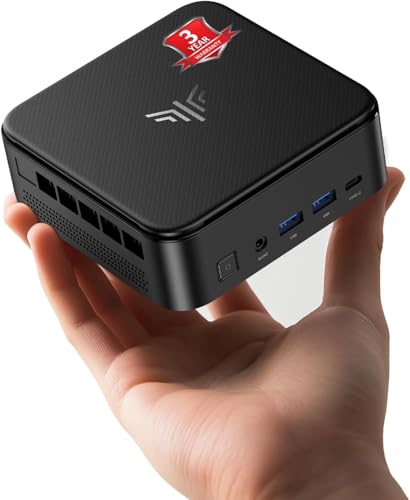
KAMRUI Mini PC Ryzen 7 7735HS 16GB 512GB
KAMRUI Hyper H1 Mini PC Ryzen 7 6800H 32GB 1TB
KAMRUI E3B Mini PC R7 7730U 16GB 512GB Win 11 Pro

CYBERPOWERPC Gamer Supreme RTX 3070 Ti Tower
Inside Each Recommended Option
The KAMRUI AM21 is the most ambitious mini PC in this lineup, built around AMD’s Ryzen 7 8745HS with eight cores and sixteen threads on the modern Zen 4 architecture. That CPU class is the same family you’d find in upper-midrange gaming laptops, so a desktop-class chip squeezed into a chassis you can hide behind a monitor is genuinely useful for anyone working from a small desk.
DDR5 memory at 16GB and a 1TB NVMe drive mean the storage side doesn’t bottleneck the processor. Owners pairing this with a 3070 Ti over Thunderbolt or USB4 will find plenty of headroom for creative workloads, though you should expect a small-form-factor build rather than a full tower.
Notable Upsides
- Eight-core Zen 4 chip handles heavy multitasking and code compilation without dropping frames in your streaming app.
- 1TB NVMe gives you room for a sizeable game library plus project files before you ever think about external storage.
- DDR5 RAM is forward-looking, so memory upgrades in a year or two won’t require a platform swap.
- Compact shell fits beside a monitor or even VESA-mounted, freeing desk space for a proper keyboard and mouse.
Things To Consider
- Mini PCs run warm under sustained loads, so plan a small clearance gap on either side for airflow.
- External GPU enclosures are an extra cost and don’t always hit the same bandwidth as a native PCIe slot.
Who It Suits Best
Power users running virtual machines, video editing timelines, or dozens of browser tabs who want desktop-class speed in a tiny box.
Swap It Out When
Shoppers who simply want a turnkey 3070 Ti experience should consider the CYBERPOWERPC Gamer Supreme tower instead, which ships with the GPU already installed.
The E3B with the Ryzen 5 7530U is the most approachable entry in this roundup. Six cores and twelve threads on the older Zen 3 design deliver the kind of responsive, low-fan-noise behavior people want from a living-room or dorm-room PC, especially when the workload is mostly browsing, Office files, and streaming.
16GB of LPDDR4X is plenty for those tasks, and the 512GB SSD keeps boot times snappy without crowding the budget. If your plan is to add a 3070 Ti later through an external enclosure, this little box is a friendly starting point.
Bright Spots
- Low 15W TDP keeps the fan quiet enough to live next to a TV or in a bedroom.
- 16GB of RAM covers most productivity apps without a memory-related slowdown.
- The Zen 3 architecture is mature and widely compatible with current software.
Honest Caveats
- 512GB fills up fast with modern games, so you may want to budget for an external drive.
- LPDDR4X is soldered in many mini PCs, so future memory upgrades may not be possible.
- Single-thread performance lags behind the Ryzen 7 chips in picks 1, 3, 4, and 5.
Quick Facts
Made For
Students and home-office users who want a quiet, compact machine for documents, video calls, and light creative work.
Look Elsewhere When
Anyone running heavier multi-threaded workloads will get more out of the KAMRUI AM21 with its eight-core Ryzen 7 8745HS.
The Ryzen 7 7735HS sits in a comfortable middle ground, an eight-core chip that doesn’t demand as much cooling as the 8745HS in pick 1, but still gives you plenty of threads for production work. Pair it with 16GB of LPDDR5 and you’ve got a responsive little machine for daily use, light photo editing, and indie or esports gaming through a connected 3070 Ti.
For most households, this is the sweet spot: faster than the budget E3B, less expensive than the AM21, and small enough to disappear behind a screen.
Positive Takeaways
- LPDDR5 memory offers higher bandwidth than the LPDDR4X in the E3B at a similar price tier.
- Boost clocks up to 4.75GHz keep single-threaded apps feeling snappy.
- The Zen 3+ refresh balances power draw and speed well for a fan-cooled mini case.
Points To Keep In Mind
- 512GB can feel tight once game installs start stacking up, so plan for an external SSD.
- Under long compile or render jobs, the chassis may warm up more than a full tower would.
Best Suited To
Home users splitting time between office apps, content streaming, and weekend gaming sessions.
Consider Something Else When
Shoppers who want a 3070 Ti system out of the box without buying an external enclosure will be happier with the CYBERPOWERPC Gamer Supreme tower.
The Hyper H1 is the most gaming-leaning of the KAMRUI mini PCs, pairing a Ryzen 7 6800H with a generous 32GB of LPDDR5 memory and a 1TB NVMe drive. That memory allotment is the headline feature, because it removes the kind of RAM bottleneck that can hold back a small-form-factor build paired with a 3070 Ti.
For esports and indie titles, this little box has the headroom to keep frame times steady. You still get the usual mini-PC caveat that high-end AAA games at maximum settings will lean heavily on whatever external or discrete GPU you attach.
Positive Points
- 32GB of RAM is uncommon in this size class and removes near-term upgrade pressure.
- The 6800H’s eight cores handle streaming, chat, and game capture at the same time.
- 1TB NVMe gives you real space for a few large titles without juggling installs.
- LPDDR5 at 6400MT/s keeps data paths quick between CPU and memory.
Worth Bearing In Mind
- The 6800H is a generation behind the 7735HS and 8745HS in single-thread speed.
- Mini-PC cooling fans can ramp up under sustained gaming, so placement matters.
Feature Snapshot
Who Will Love This
Esports players, indie game fans, and streamers who want a memory-rich mini PC to pair with an external or future-attached GPU.
A Better Fit Elsewhere
If raw CPU speed matters more than memory capacity, the KAMRUI AM21 with its newer Ryzen 7 8745HS is a smarter match.
This E3B variant shares the small-form-factor shell of pick 2 but steps up to a Ryzen 7 7730U and ships with Windows 11 Pro. The Pro license matters if you plan to use BitLocker, Remote Desktop, or group policy in a small business setting, since those features are stripped from the Home edition.
For most households the Home edition works fine, but Pro earns its place once you’re managing a couple of accounts or connecting back to a work network. The 7730U brings eight cores to the table, so multitasking feels less constrained than the six-core 7530U.
Advantages To Know
- Windows 11 Pro unlocks business-friendly features like BitLocker and Remote Desktop out of the box.
- The 7730U’s eight cores handle many browser tabs and Office apps without slowing down.
- Up to 4.5GHz boost keeps single-threaded apps responsive during focused work sessions.
Practical Considerations
- 512GB is a modest allotment for a working professional, so cloud or external storage is likely.
- The 7nm chip is efficient but lags behind the Zen 4 silicon in pick 1 in raw throughput.
Key Attributes
The Right Fit
Remote workers, freelancers, and small business owners who want Pro features without buying a bulky tower.
Not Your Match When
Gamers who want a 3070 Ti already installed should skip this and go straight to the CYBERPOWERPC Gamer Supreme.
The CYBERPOWERPC Gamer Supreme is the only entry in this roundup that ships with an RTX 3070 Ti already in the case. That alone changes the audience, since this is for shoppers who want a finished 1440p gaming rig on day one, not a small-form-factor box to tinker with.
Under the hood is an AMD Ryzen 7 5800X, an eight-core chip that has aged well and still handles modern games without breaking a sweat. The liquid cooler helps the CPU sustain boost clocks during long sessions, which matters more in a tower than in a mini PC.
Well-Handled Touches
- RTX 3070 Ti 8GB delivers solid 1440p performance in current AAA titles, with ray tracing available when you want it.
- The 5800X’s eight cores keep frame pacing steady when you’re gaming and recording at the same time.
- 1TB NVMe plus a 2TB HDD splits fast and slow storage sensibly for game libraries.
- Full tower airflow and a liquid CPU cooler extend sustained performance during long sessions.
Trade Offs
- The tower takes up meaningful floor or desk space, which is a step back from the KAMRUI mini PCs above.
- Windows 10 Home is the listed OS, so upgrading to Windows 11 is something to factor in.
- 16GB of DDR4 is the starting point for serious gaming builds, and you may want to add RAM later.
Built With In Mind
1440p gamers who want a complete tower with the 3070 Ti already installed and don’t mind dedicating real space to it.
Reach For A Different Pick When
Anyone working in a small apartment or shared space may find the KAMRUI Hyper H1’s mini form factor easier to live with.
What Matters Most Before Choosing 3070 Ti Pcs
CPU and GPU Pairing
A 3070 Ti only shines when the processor feeding it isn’t holding it back. Pairing the card with a Ryzen 7 5800X-class CPU keeps frame times smooth at 1440p, while pairing it with a six-core chip can leave a few frames on the table. The mini PCs in this list all use modern Ryzen 7 chips, so attaching a 3070 Ti through an external GPU enclosure should keep performance reasonable, though a native PCIe slot always wins.
Memory and Storage
16GB of RAM is the practical minimum for gaming in 2026, and 32GB removes any near-term pressure, as seen in the Hyper H1. Storage matters too: an NVMe drive keeps load times short, while a secondary HDD or external SSD is fine for archival. The CYBERPOWERPC tower pairs a 1TB NVMe with a 2TB HDD, which is a sensible split for a large game library.
Form Factor and Use Case
A full tower gives you native GPU bandwidth and easy upgrades but eats desk space. A mini PC stays tidy and quiet but usually needs an external GPU enclosure for serious gaming. Match the form factor to your room and your willingness to tinker, not just to the spec sheet.
Connectivity and Ports
For a 3070 Ti setup, look for USB4 or Thunderbolt on mini PCs to support an external GPU enclosure at usable bandwidth. Towers get full PCIe bandwidth natively, but you still want enough USB ports, HDMI, and DisplayPort outputs to drive your monitors without adapters.
Key Considerations Across These Picks
Pitfalls Shoppers Hit
A common mistake is choosing a mini PC without confirming external GPU support, then expecting a 3070 Ti to perform at full speed through a generic USB-C dongle. Another is underestimating storage: 512GB disappears fast with modern game installs, so plan ahead for an external drive. Finally, don’t overlook the operating system. Windows 11 Pro in pick 5 unlocks features Home users may not realize they’re missing until they need them.
Where The Extra Money Goes
Higher-end models in this category spend money on newer CPU architectures, faster DDR5 memory, larger SSDs, and bigger RAM allotments. The premium on the AM21, for instance, reflects the jump to Zen 4 silicon rather than a simple storage bump. For shoppers who don’t push their systems hard, a midrange pick delivers most of the experience at a lower cost. For those who run heavy creative workloads or want a future-proof foundation, the extra spend on the higher tiers pays off in headroom you can feel.



