


A proper F1 sim rig turns living-room driving into something close to the real thing, and a few well-chosen accessories push the experience further than just a wheel on a desk. This lineup mixes full racing cockpits, wheel-and-pedal sets, support stands, seat hardware, and a couple of LEGO display builds for fans who want the look without the pedals. Whatever your budget or setup, there’s a starting point here that fits a real-world sim space.
The Main Contenders

LEGO Editions Scuderia Ferrari HP Charles Leclerc Helmet (43014)

Logitech G29 Driving Force Racing Wheel, Pedals & Shifter Bundle

LEGO Speed Champions F1 ACADEMY Race Car (77258)

LEGO Technic McLaren MCL39 F1 Car (42228)
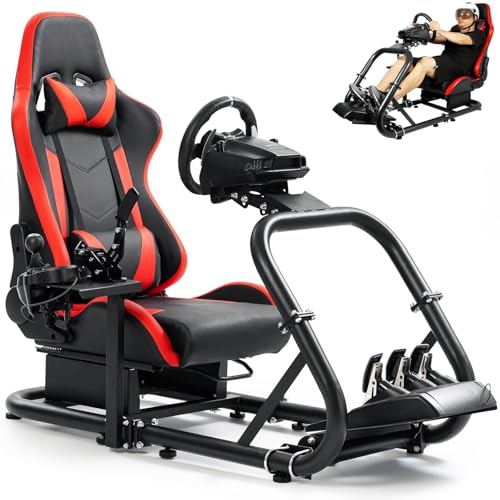
Marada Racing Simulator Cockpit with Red Seat
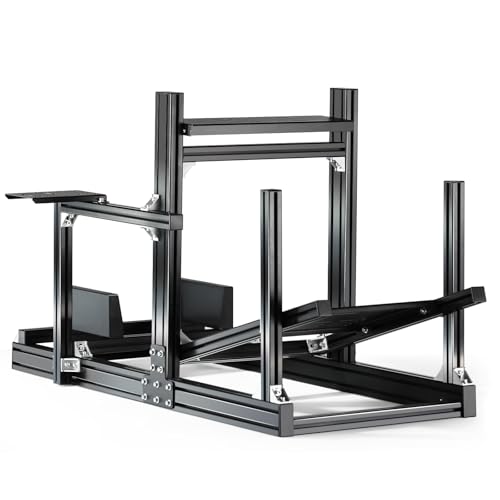
Anman GT/F1 Sim Racing Cockpit 8040 Aluminium Profile Stand
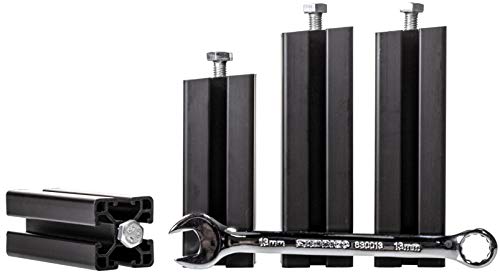
OpenWheeler Seat Lift Kit 5-Inch Risers
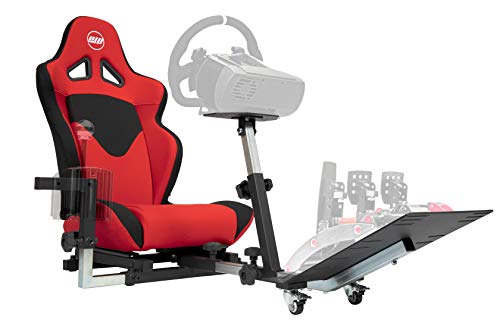
OpenWheeler Advanced Racing Simulator Seat with Gear Shift Mount
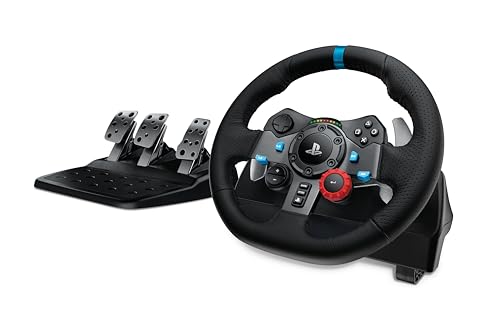
Logitech G29 Racing Wheel and Pedals for PS5/PS4/PC
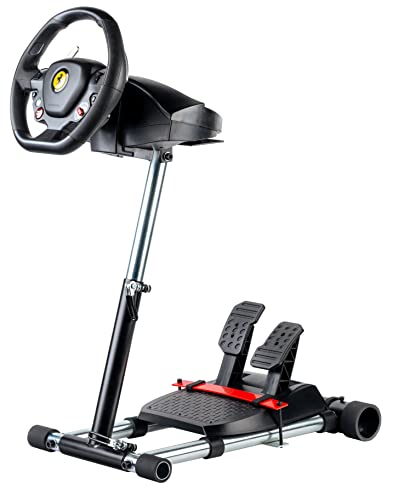
Wheel Stand Pro F458 Wheelstand
A Deeper Look At The Lineup
This 43014 build sits on a shelf rather than under your racing seat, but it earns its place in any F1-themed room. Aimed at ages 14 and up, the kit recreates Charles Leclerc’s race lid in Ferrari’s classic Rosso Corsa red, with the Prancing Horse, his driver number, and a Papa Jules deco painted in brick form. The finished model is essentially a scaled display piece for a desk, bedroom, or office corner.
Building it takes a few hours, and the final look reads more “showcase” than “toy.” Owners commonly place it beside gaming peripherals or other F1 memorabilia, where the color does the heavy lifting. It’s a natural counterweight to the working wheel-and-pedal sets in this lineup, since one piece drives the immersion and the other anchors the room’s visual identity.
Reasons It Performs
- Replica helmet finished in Ferrari’s signature Rosso Corsa, instantly readable as a Scuderia piece
- Branded elements baked into the build, including the Prancing Horse and Charles’ driver number
- Papa Jules deco adds a personal touch that dedicated fans will recognize
- Stable display footprint that suits a monitor shelf or trophy-style setup
- Build complexity tuned for ages 14 plus, which makes it engaging without feeling repetitive
Worth Noting
- Purely a display item, so it adds nothing to actual sim performance
- Larger finished footprint than a typical LEGO brick set, so plan shelf space before building
Right Fit For
Fans building an F1-themed office, bedroom, or trophy shelf who want a Ferrari-flavored centerpiece next to their gaming gear.
Look Elsewhere When
You want a working steering setup, in which case the Logitech G29 Driving Force Racing Wheel, Pedals & Shifter Bundle makes far more sense.
The G29 trio pairs a force-feedback wheel, a three-pedal floor set, and the dedicated Driving Force Shifter into one cohesive console rig. Helical gearing (a tooth design that keeps the wheel tight and quiet under load) keeps steering smooth, and the leather-wrapped rim is the kind of detail you feel during long stints. For PS5, PS4, and PC users, this bundle essentially drops in and works.
What makes the bundle worth picking over a standalone wheel is the H-pattern shifter. Manual-equipped cars in iRacing, Gran Turismo, and Assetto Corsa finally feel like real hardware rather than paddle pulls. The wheel clamps to most desks, and the pedals sit flat on the floor with a non-slip base. For racers who want one box to start serious F1 sim sessions, this is the package.
What Makes Sense
- Force feedback through helical gears, which stays quiet and tight even during heavy kerb strikes
- Hand-stitched leather rim that holds up to sweaty palms and long sessions
- Matching H-pattern shifter gives a true manual experience in supported sims
- Pressure-sensitive pedals, including a clutch pedal for cars that need heel-toe downshifts
Things To Consider
- Desk clamp works on thick tables, but flimsy surfaces will flex under hard braking
- Not compatible with Xbox consoles, which limits it to PS5, PS4, and PC households
- Force feedback strength is solid for the price, though direct-drive owners will want more
Best Suited To
Console and PC sim racers ready to graduate from paddle shifters to a proper H-pattern setup.
Consider Something Else When
You already own a force-feedback wheel and only need the cockpit frame, in which case the Marada Racing Simulator Cockpit with Red Seat is the better next step.
The 77258 set marks the F1 ACADEMY series’ debut in LEGO form, so the build is a small slice of current racing history. Aimed at ages 10 and up, the kit recreates an official 2026 ACADEMY car with details like a rear wing, a halo, and a cockpit, plus a female driver minifigure with helmet, wig, and wrench. “Pirelli” imprinted tires are a nice nod for parents who know the real series.
As a Speed Champions model, it works as both a play piece and a shelf toy. Kids get a minifigure they can swap between ACADEMY and other F1-themed garages, while the build itself reads well on a bookshelf. It also bridges nicely to the more display-oriented LEGO Helmet in this lineup, just at a younger skill level.
What Helps Most
- Authentic ACADEMY replica, including halo and rear wing details that mirror the real car
- Driver minifigure adds play value beyond a static model
- Pirelli-branded tires are a fun detail for parents who follow the series
- Manageable build time for the age range, often an evening or a weekend afternoon
Trade Offs
- Small brick count means the finished model is roughly palm-sized, so plan for a display shelf rather than a desk centerpiece
- Stickers rather than printed parts in some areas, depending on the production run
Who It Suits Best
Younger F1 fans and parents looking for a buildable, screen-free racing project to share with kids.
Skip It When
You want something with mechanical functions, in which case the LEGO Technic McLaren MCL39 F1 Car (42228) offers a much deeper build.
Set 42228 steps firmly into adult-builder territory with a 1:8 scale replica of the McLaren MCL39. The kit includes working push-rod and pull-rod suspension, steering that actually turns the wheels, and a differential. For motorsport fans, the appeal isn’t just the finished display piece, it’s the mechanical logic you assemble along the way. Compared with the smaller Speed Champions ACADEMY car earlier in this list, the difference is the gap between a toy and a model.
Build time is long, often several evenings for a focused hobbyist, and the finished size commands a real shelf. Owners commonly report placing it in a home office or living-room display case, where the papaya orange livery becomes a focal point. The mechanical functions also make it more interactive than static display models, since you can roll it back and forth and watch the suspension articulate.
Everyday Advantages
- Functional push-rod and pull-rod suspension mirrors the real MCL39 geometry
- Working steering that turns the front wheels in proportion to the wheel input
- Functional differential, a meaningful upgrade over single-axle display models
- 1:8 scale gives the finished model genuine presence on a desk or shelf
Minor Gripes
- Long build that demands patience and a dedicated workspace
- Premium price bracket that places it well above standard LEGO kits
Made For
Adult Technic fans and McLaren supporters who want a working engineering model rather than a static display.
Where Another Pick Suits Better
You need an actual driving rig, not a display model, in which case the Logitech G29 Driving Force Racing Wheel, Pedals & Shifter Bundle is the more practical choice.
The Marada cockpit is built around a 50×50mm round-tube steel frame with a four-hole flange connection, which is the language of real fixed rigs. The red racing seat reclines from 90 to 180 degrees and ships with neck and lumbar pillows, so longer stints don’t end with a stiff back. It’s rated to handle 12Nm direct-drive wheels, which covers most enthusiast bases.
Adjustability is the headline. The seat slides forward and backward, and the wheel mount accepts the usual pedal and shifter layouts. Compared with the Anman aluminium profile stand also in this list, the Marada trades modularity for a more traditional welded look. For owners who want a planted frame that doesn’t shift under hard braking, the heavier steel construction earns its keep.
Standout Benefits
- 50×50mm round-tube steel frame with four-hole flanges for a stable base
- Reclining seat from 90 to 180 degrees for varied driving positions
- Included neck and lumbar pillows reduce fatigue on long sessions
- Direct-drive compatibility up to 12Nm for serious wheel bases
Honest Caveats
- Heavier than aluminium-profile rigs, so moving it between rooms takes effort
- Bulkier footprint, which matters in tight apartment corners
Who Will Love This
Direct-drive owners running 12Nm wheel bases who need a stable frame that won’t shift mid-race.
Swap It Out When
You want a lighter, more modular rig, in which case the Anman GT/F1 Sim Racing Cockpit 8040 Aluminium Profile Stand is the friendlier build.
The Anman rig leans into 8040 aluminium profile construction, the same extrusion standard used across the sim-racing aftermarket. That choice pays off in two ways: the frame is light enough to move without a second person, and T-slot rails accept standard brackets, pedals plates, and shifter mounts. The frame supports direct-drive wheels without deforming during long sessions.
Stepless seat adjustment lets you dial in the right driving position without preset holes, and the wheel plate typically tilts to match your preferred angle. Owners commonly pair this stand with mid-range wheel bases and pedal sets, then add accessories as the build grows. The modular nature means you can also strip it down for storage, which beats the heavier Marada cockpit in tight spaces.
The Helpful Details
- 8040 aluminium profile construction with T-slot compatibility for accessories
- Stepless seat adjustment for fine-tuned driving position
- Direct-drive ready without frame flex under load
- Modular layout that breaks down for storage or transport
Some Limits To Know
- Assembly takes longer than a fixed-frame rig, since the profile system is more parts
- Seating and accessories may not be included, so check the listing for the full bundle
The Right Fit
Builders who like to tinker, swap parts, and expand their rig over time without committing to one welded layout.
Another Choice May Suit
You prefer a pre-assembled steel frame with a seat already attached, in which case the Marada Racing Simulator Cockpit with Red Seat is more turnkey.
The 5-inch seat risers from OpenWheeler solve a simple but stubborn problem: getting your eye line right relative to the wheel. A sim seat that sits too low makes you crane your neck, which gets old after twenty minutes. The lift kit bolts between the seat base and the OpenWheeler frame, raising the cockpit into a more natural F1-style driving position.
Because the spacers are stackable hardware, taller drivers can layer them to dial in their eye level. The trade-off is added height at the seat base, which can push shorter drivers closer to the wheel than they’d like. It’s a niche fix, but for OpenWheeler owners who already like their setup and just need more elevation, the kit is essentially the only bolt-on answer.
The Practical Payoff
- Adds 5 inches of seat height for a more realistic F1 driving posture
- Stackable design for taller drivers who need extra lift
- Bolts onto existing OpenWheeler frames without major modification
Points To Keep In Mind
- Limited to OpenWheeler frames, so it’s not a universal cockpit part
- Adds height at the seat, which can affect pedal reach for shorter drivers
Whose Shelf It Belongs On
Existing OpenWheeler owners who need a taller seating position to match a realistic F1 eye line.
Reach For A Different Pick When
You don’t yet own an OpenWheeler frame, in which case the OpenWheeler Advanced Racing Simulator Seat with Gear Shift Mount is the more useful starting point.
The OpenWheeler Advanced Seat is a foldable, lightweight rig designed to work across every modern console plus PC. The gear shift mount can sit on either the left or right side, so left-hand-drive cars in iRacing or Assetto Corsa feel natural. The frame’s defining feature is portability: it folds down small enough to slide behind a sofa when not in use.
For console racers without a permanent sim corner, that folding design is the real selling point. Compared with the heavier Marada cockpit, this rig lives in a living room without dominating it. The trade-off is rigidity: the lighter frame flexes more under hard braking, especially with heavier wheel bases. Within its design envelope, though, it’s a tidy and broadly compatible solution.
What Pays Off
- Folding frame that stows behind furniture when not in use
- Shift mount configurable for left or right side, matching in-game car layouts
- Broad console and PC compatibility, including legacy systems
- Lightweight enough for one person to reposition around the room
Where It May Fall Short
- Frame flex is more noticeable than on the Marada or Anman rigs
- Pedal plate feels basic compared with a dedicated cockpit
Who Should Grab It
Console sim players in apartments or shared spaces who need a rig that disappears between sessions.
A Better Fit Elsewhere
You run a heavy direct-drive wheel base, in which case the Anman GT/F1 Sim Racing Cockpit 8040 Aluminium Profile Stand offers a stiffer platform.
The standalone G29 wheel-and-pedal set is the entry point most console racers start with. Force feedback runs through the same helical gearing found in the larger G29 bundle, and the leather-wrapped rim is comfortable across long stints. Pedals are pressure-sensitive, which gives realistic modulation under braking.
What you give up versus the bundle earlier in this list is the H-pattern shifter. Paddles take over manual duties, which is fine for many modern F1 cars but limiting for vintage road racing. For first-time sim racers who want one plug-and-play box that just works on PS5, PS4, or PC, this set is the path of least resistance into the hobby.
Real-World Strengths
- Force-feedback wheel with helical gearing for smooth, quiet operation
- Pressure-sensitive pedals, including a clutch for supported sims
- Leather-wrapped rim that holds up to regular use
- Plug-and-play setup on PS5, PS4, and PC
Practical Considerations
- No H-pattern shifter in this base set, so manual work happens on paddles
- Not Xbox compatible, so it slots into a Sony or PC household only
Perfect Match For
First-time sim racers who want a no-fuss wheel and pedal set for F1 games on console or PC.
Not Your Match When
You specifically want a shifter for manual cars, in which case the Logitech G29 Driving Force Racing Wheel, Pedals & Shifter Bundle is the upgrade path.
The Wheel Stand Pro F458 is a foldable wheel and pedal stand built around a long list of mid-range wheels, including Thrustmaster T80, T100, RGT, the Ferrari F430, and the Logitech Driving Force GT. Wheel and pedals aren’t included, so the stand assumes you’ve already picked a base. Compatibility is the headline: it covers a wide range of older and current Thrustmaster and Logitech wheels.
Setup is a key reason people choose this stand. It adjusts for different player heights and works around the user’s chair or sofa rather than replacing it. Owners commonly store it folded in a closet between sessions, which keeps the living room usable. Compared with the OpenWheeler foldable seat, the F458 skips the integrated seat entirely, which lightens the build further but pushes the seating decision to the user.
The Case For It
- Folding design that stows out of the way between sessions
- Wide compatibility with Thrustmaster and Logitech mid-range wheels
- Adjustable for different player heights and seating choices
- Light enough to reposition around a chair or sofa
Points To Weigh
- Wheel and pedals not included, so total cost climbs once you add them
- Stand flex shows up with heavier wheel bases, especially under hard braking
Built With In Mind
Sim racers with an existing mid-range wheel who need a compact, foldable stand for a small living space.
Where A Sibling Pick Shines
You need a seat included with the rig, in which case the OpenWheeler Advanced Racing Simulator Seat with Gear Shift Mount is the more complete package.
Building a Sim Setup That Actually Fits Your Space
Where You Mount the Wheel Sets the Tone
A wheel that clamps to a desk feels great in a spare room, but the same wheel on a flimsy table will rock the monitor during heavy braking. Stand-mounted setups like the Wheel Stand Pro F458 and OpenWheeler Advanced Seat keep the wheel stable without committing to a fixed cockpit, and they fold down when you need the room back. Full cockpits such as the Marada and Anman frames are the right call once the rig becomes the room’s primary feature.
Pedal placement matters as much as wheel position. A pedal plate that slides forward lets shorter and taller drivers share the rig without re-drilling holes, and that flexibility is one reason aluminium-profile frames have become the standard for serious sim setups. Choosing a rig or stand with adjustable seat rails and pedal plates protects the investment if your driving position changes later.
Force Feedback Versus Direct Drive
Force-feedback wheels like the G29 use motors and gears to push back against your hands, and helical gearing keeps that resistance smooth and quiet. Direct-drive wheels mount the wheel directly to a large motor, which delivers stronger, more detailed feedback. The Marada cockpit is rated for 12Nm direct-drive bases, while the Anman aluminium profile frame handles direct drive without flex.
For console racers, force feedback is the practical ceiling, since most console games and wheels top out there. PC users running iRacing, Assetto Corsa, or Rennsport can move up the ladder, and the cockpit needs to keep up. Match the wheel base to the frame, not the other way around.
Budget Tiers and What They Buy
Entry-level packages like the standalone G29 cover the basics: a force-feedback wheel, three pedals, and console compatibility. Mid-range bundles add an H-pattern shifter, which unlocks manual transmission work in sims that support it. From there, the spend shifts from input hardware to the cockpit frame, where aluminium profile or welded steel keeps the rig planted under heavy inputs.
Display and decor choices like the LEGO Ferrari Helmet and the LEGO Technic McLaren MCL39 sit outside the driving experience but anchor the room’s identity. Most serious sim spaces blend both, with a working wheel in front of the driver and a display piece on the shelf behind it.
Key Considerations Across These Picks
Pitfalls Shoppers Hit
A common mistake is buying a wheel first and a frame second, then discovering the cockpit can’t handle the wheel’s torque rating. Direct-drive bases in the 10 to 12Nm range need a frame rated for that output, otherwise the rig walks across the floor under load. The Marada and Anman frames both specify direct-drive support, while the OpenWheeler foldable rigs lean toward lighter wheels.
Another trap is ignoring pedal placement. A wheel upgrade often gets the attention, but pedals that slide around on carpet ruin consistency between sessions. Look for a pedal plate with grippy backing or mounting holes before committing to a frame.
Where The Extra Money Goes
The jump from a standalone wheel to a wheel-plus-shifter bundle covers manual transmission, which alone transforms how vintage and GT cars feel. Stepping up again to a dedicated cockpit frame is where input hardware stops moving around mid-corner, and that stability makes every other upgrade more useful. Direct-drive compatibility is the next tier, and aluminium profile construction keeps the rig future-proof as wheels and pedals change.
Frequently Asked Questions
What does “force feedback” mean in a sim racing wheel?
Force feedback uses motors inside the wheel base to push back against your hands, simulating the steering weight, kerb strikes, and tyre slip you’d feel in a real car. The strength and detail of that feedback depends on the motor and gearing inside the base.
Do I need a cockpit to enjoy F1 sim racing?
A cockpit isn’t required, but it dramatically improves consistency. A clamped wheel works for casual sessions, while a frame keeps the wheel and pedals planted during hard braking and aggressive kerb use.
Are the LEGO F1 sets compatible with actual sim racing?
No. The LEGO Ferrari Helmet, the Speed Champions ACADEMY car, and the Technic McLaren are display and play sets. They sit alongside a sim rig rather than inside it.
Can a beginner start with a mid-range wheel and pedals?
Yes. The standalone G29 is a common starting point for first-time sim racers, and it covers most console F1 games at the entry level. Upgrading to a shifter or cockpit can come later as the hobby develops.
What’s the benefit of aluminium profile rigs over welded steel?
Aluminium profile rigs use a T-slot standard, so accessories bolt on without drilling or welding. That makes them easier to expand, reposition, and break down for storage, at the cost of slightly more assembly time.
The Takeaway
A good F1 sim setup starts with a wheel and pedals that match your platform, then grows into a frame that holds everything steady. Casual console racers can stop at a clamped wheel, while PC enthusiasts running direct-drive bases need a planted cockpit. The pieces in this list cover display builds, foldable stands, full cockpits, and entry-level wheels, so the right starting point depends less on budget and more on how often you’ll be in the seat.



