


Emulation has quietly turned into the most affordable way to revisit gaming history, and a good controller changes the entire experience. Run an old arcade favorite through a Raspberry Pi, relive PS1 classics on your laptop, or play modern Switch games in the same setup, and you feel the difference immediately. The right pick depends on what you play, what you already own, and how much tinkering you enjoy. This list rounds up ten solid options across pad styles, wireless receivers, DIY encoders, and a couple of software-tunable companions that cover most emulation setups.
An Overview Of The Picks

Final Fantasy X|X-2 HD Remaster (Switch)

Sega Classic Six-Button USB Controller (Windows)

8Bitdo Bluetooth Retro Receiver (PS1/PS2/Windows)

Arduino Leonardo with Headers (A000057)
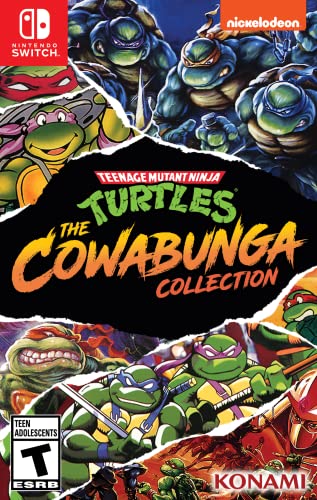
Teenage Mutant Ninja Turtles Cowabunga Collection (Switch)

Retro-Bit SEGA Genesis 8-Button USB Controller (Black)

8Bitdo SN30 Pro Bluetooth Controller (Hall Effect, Gray)

8Bitdo Pro 2 Wireless Controller (Hall Effect, Transparent Blue)

8Bitdo Ultimate 2C Wireless Controller (Dark Blue)

Quimat Zero Delay Arcade USB Encoder (QR05)
The Details Behind The Selections
Final Fantasy X and X-2 together remain one of the most substantial JRPG packages on Switch, and this remaster leans into the original presentation while sharpening the textures. The package pairs two full campaigns, so you can settle in for roughly 40 to 50 hours per title without hunting for a second cartridge. It runs natively on Switch hardware, which keeps load times reasonable and lets the game wake from sleep almost instantly between commutes.
Compared to the more specialized controller picks later in this list, this entry is a software title rather than a pad, but it sets the tone for how a strong pairing of game and control scheme should feel. Anyone with a Switch Pro Controller or a comfortable Bluetooth pad (such as the 8Bitdo Pro 2 covered below) gets a clean handheld-to-TV experience.
Features That Help
- Two complete games, saving you from buying each separately.
- Switch-native build keeps the experience portable and dock-friendly.
- You can pick between the original score or the rearranged soundtrack.
- Estimated 40 to 50 hours of play per title, strong value per session.
Things To Consider
- Owners of the PS4 version may notice visual updates that are modest rather than dramatic.
- You will want a comfortable pad for the long dungeon stretches.
Who It Suits Best
JRPG fans who want a deep, two-game package on Switch without juggling multiple downloads.
Consider Something Else When
Skip this pick if you primarily play on PC, where the 8Bitdo Ultimate 2C or the Zero Delay Arcade USB Encoder would be a more useful add to your setup.
The Sega Classic Six-Button USB pad is the cleanest way to bring a 16-bit feel to a modern desktop. Sega’s six-button layout (three action buttons per row) is the configuration that defined the Genesis era, and fighting games in particular really do play better when you can reach all six without shifting your thumb. Plug it into a Windows PC and most emulators recognize it without extra mapping.
The trade-off is the form factor, which mirrors the original 1990s pad rather than a modern grip. Long sessions may feel cramped for anyone with larger hands, but for the right fan that authentic shape is part of the appeal.
A Few Highlights
- Faithful six-button layout mirrors the original Sega design.
- USB plug-and-play keeps setup quick on Windows machines.
- Ideal for fighting games and action titles from the Genesis library.
Worth Noting
- The retro shape can feel small during multi-hour sessions.
- Not wireless, so your seating position depends on the cable length.
Made For
Sega-era enthusiasts who want an authentic layout for arcade ports and Genesis emulators on PC.
Look Elsewhere When
Grab the Retro-Bit SEGA Genesis 8-Button USB Controller instead if you also want shoulder buttons for modern emulators.
8Bitdo’s Bluetooth Retro Receiver is the small adapter that turns a stack of old PlayStation and PC gaming into a wireless experience. You plug it into a PS1 or PS2 controller port (or a Windows machine via the supported mode) and pair it with a modern Bluetooth pad, including Xbox One, Series, and Elite controllers, PS4 and PS5 pads, Wii U Pro, and Switch Pro. The result is a clean coffee table setup with no extra dongles cluttering the receiver.
Unlike the standalone pad picks above, this one is about extending hardware you already own. For anyone holding a PS2 collection but unwilling to fish for a wired DualShock, it is a smart middle ground.
Everyday Wins
- Adds Bluetooth to PS1 and PS2 hardware without modifying the console.
- Broad controller support covers Xbox, PlayStation, and Switch Pro pads.
- Small enough to live behind your console permanently.
Honest Caveats
- Some 8Bitdo Bluetooth controllers and arcade sticks are only partially compatible.
- You will need to keep firmware updated for the smoothest behavior.
Right Fit For
Owners of original PS1 or PS2 hardware who want to use modern wireless pads without a tangle of cables.
Skip It When
Skip this pick if you only emulate on PC, where the 8Bitdo Pro 2 already handles wireless duties out of the box.
The Arduino Leonardo is a microcontroller board that speaks USB directly, which makes it uniquely useful for custom input projects. The built-in USB communication and HID (Human Interface Device) support let it appear to a PC as a keyboard, mouse, or gamepad, so makers routinely use it to build arcade sticks, custom fight pads, or button boxes for emulators. The 16MHz ATmega32U4 chip with 20 digital I/O pins and 7 PWM (Pulse Width Modulation) channels gives you plenty of room to wire buttons, joysticks, and LEDs.
Compared to the plug-and-play picks earlier in this list, this is a build-it-yourself path. If you enjoy soldering and want a controller that fits your hand perfectly, the Leonardo is the heart of that project.
Key Advantages
- Native USB HID support means no extra drivers for most projects.
- 20 digital I/O pins support sizable button and joystick layouts.
- Programmable through the standard Arduino IDE on Windows, macOS, and Linux.
Trade Offs
- You supply the buttons, joysticks, enclosure, and code.
- Programming skill is required to make it appear as a gamepad.
Quick Facts
Best Suited To
Makers who want to design a fully custom controller, fight stick, or input device from scratch.
Reach For A Different Pick When
Pick the Quimat Zero Delay Arcade USB Encoder if you want a similar arcade-build path without writing any code.
The Cowabunga Collection gathers thirteen classic Konami TMNT titles into a single Switch release, which is a remarkable value for anyone who grew up on the arcade and NES versions. Online play has been added to certain titles, and local couch play is included, so it works well as a social or solo trip down memory lane. Save Anytime and Rewind features soften the difficulty spikes of older games.
Like the Final Fantasy X|X-2 remaster earlier, this is software rather than a pad, but it earns its place because the right controller really does change these old games. Pair it with a comfortable Bluetooth pad such as the 8Bitdo SN30 Pro and the 16-bit titles feel right at home.
Reasons It Performs
- Thirteen games cover arcade, NES, SNES, and Genesis eras.
- Online and local multiplayer expand the social value.
- Button Mapping, Save Anytime, and Rewind ease the old-school difficulty.
Some Limits To Know
- Eleven regional variants are included, which can be overwhelming to navigate.
- Some titles show their age, so patience is part of the experience.
Whose Shelf It Belongs On
Longtime TMNT fans who want a deep library of classic Konami games in one Switch cart.
Where Another Pick Suits Better
Skip the collection if you only want a controller upgrade, the 8Bitdo SN30 Pro is a more practical pick for a small upgrade.
Retro-Bit’s 8-Button USB pad is an officially licensed SEGA design that adds L and R shoulder buttons to the classic six-button face layout. That extra configuration is genuinely useful for the Sega Genesis Mini, where several titles map functions to the shoulder buttons for menu navigation or shortcuts. It also works on Switch, Switch 2, PC, Mac, Steam, RetroPie, and Raspberry Pi setups, so one pad covers a lot of bases.
Compared to the Sega Classic Six-Button pad reviewed earlier, this one trades some purity for flexibility. Holding the Start button for five seconds swaps between D-Input and X-Input, the two main USB input standards, which is the kind of detail that matters when a pad refuses to talk to a particular emulator.
The Value In It
- Officially licensed SEGA design, so the build feels period-appropriate.
- Shoulder buttons add configuration options for modern emulators.
- Switches between D-Input and X-Input with a five-second Start hold.
Factors To Consider
- Wired-only, so plan around cable routing on your desk.
- The 8-button face layout may feel busy if you mostly play 3-button titles.
Spec Overview
Perfect Match For
Six-button purists who also want shoulder buttons for the Sega Genesis Mini and modern emulators.
Swap It Out When
Choose the 8Bitdo SN30 Pro instead if wireless freedom matters more than an officially licensed face layout.
The 8Bitdo SN30 Pro borrows the SNES face-button shape and adds modern conveniences: Hall Effect joysticks (which use magnetic sensors that resist stick drift far longer than standard analog sticks), Bluetooth wireless, and dual analog sticks for 3D titles. It talks to Switch, PC, Mac, Android, and Steam, which makes it an easy travel companion for someone who plays across devices.
Compared to the larger Pro 2 covered next, the SN30 Pro is the more pocketable option. The 16-button layout with dual analog sticks keeps it functional for shooters and 3D platformers, while the compact shell feels closer to a classic 16-bit pad.
Strengths Worth Knowing
- Hall Effect joysticks help reduce drift over years of use.
- Compact shell fits smaller hands and travel bags comfortably.
- Bluetooth connectivity spans Switch, PC, Mac, Android, and Steam.
Worth Bearing In Mind
- Motion controls are present, but not as full-featured as on the Pro 2.
- The smaller grip can feel cramped during long 3D sessions.
The Right Fit
Travelers and couch players who want a small, SNES-style pad with modern wireless support.
A Better Fit Elsewhere
Pick the 8Bitdo Pro 2 if you prefer a full-sized grip and more programmable buttons for daily play.
The 8Bitdo Pro 2 is the full-sized sibling of the SN30 Pro, and the one most people will reach for as a daily driver. It pairs via Bluetooth with Switch, Switch 2, PC, MacOS, Android, Steam, and Raspberry Pi, which makes it useful for a wide range of setups. Hall Effect joysticks again keep drift in check, and the 6-axis motion sensor adds motion aiming for Switch ports.
Unlike the smaller SN30 Pro above, the Pro 2 has a deeper grip, more programmable buttons, and a transparent shell that makes the internals part of the look. Modifiable vibration and an anti-slip texture round out the design.
Notable Gains
- Multi-platform Bluetooth covers Switch, PC, Mac, Android, and Steam.
- Hall Effect joysticks and triggers hold up well to heavy use.
- Motion controls and rumble add immersion on supported titles.
Points To Keep In Mind
- Larger footprint than the SN30 Pro, so it is less travel-friendly.
- You will want to install the latest firmware for the most reliable behavior.
Who Will Love This
Multi-platform households that need one pad to cover Switch, PC, and Steam without swapping gear.
Not Your Match When
Pick the 8Bitdo Ultimate 2C instead if you want a 1000Hz polling rate (how often the pad reports its position to the host, measured in reports per second) for competitive play on PC.
The 8Bitdo Ultimate 2C is the speed-focused member of the lineup, aimed squarely at Windows and Android gamers. It supports Windows 10 and above along with Android 9.0 and above, and a mode switch on the pad flips between 2.4GHz wireless and Bluetooth depending on the host. A 1000Hz polling rate over 2.4G and wired connections keeps input lag low for fighting games and shooters.
Compared to the more relaxed Pro 2, this pad leans competitive. Hall Effect joysticks and Hall triggers (which use magnetic sensors rather than physical contact) resist wear, and the metal joystick rings add a bit of extra durability. Extra R4 and L4 bumpers at the back of the grip give you more inputs to remap on the fly.
Positive Points
- 1000Hz polling rate over 2.4G and wired modes for low-latency play.
- Hall Effect sticks and triggers, plus metal rings, support long-term durability.
- Extra R4 and L4 bumpers give more inputs without extra software.
Less-Strong Areas
- No native Switch support, so it is not ideal if you split time with a Switch.
- Turbo and remapping happen on the pad itself, which can feel fiddly at first.
Key Product Details
Who Should Grab It
PC and Android players who want a responsive wireless pad for fighters, shooters, and fast emulators.
Where A Sibling Pick Shines
Choose the 8Bitdo Pro 2 if you need Switch compatibility as well as PC support.
The Quimat Zero Delay Arcade USB Encoder is a small board that translates arcade button and joystick inputs into standard USB gamepad signals. Each encoder typically handles a player, so a two-player cabinet uses two boards. It works with any joystick and push button that uses 4.8mm terminals, which covers the vast majority of arcade parts. Plug a wired cabinet into a Windows PC or a Raspberry Pi running RetroPie and MAME, and the whole thing becomes a plug-and-play arcade setup.
Compared to the Arduino Leonardo covered earlier, this is the no-code path to a similar outcome. You skip the firmware and the IDE in favor of simple wiring, at the cost of custom programming options.
What Makes Sense
- Accepts standard 4.8mm arcade terminals for broad part compatibility.
- Works across Windows and Raspberry Pi RetroPie projects.
- No coding required, just connect buttons and joysticks.
Practical Considerations
- Wiring takes patience, especially in a multi-player cabinet.
- You supply the buttons, joysticks, and enclosure separately.
Built With In Mind
DIY builders assembling a home arcade cabinet with MAME or a similar emulator.
Another Choice May Suit
Pick the Arduino Leonardo instead if you want full control over firmware and per-button behavior.
What To Weigh Before Picking Emulation Controllers
Match The Pad To The Library
Emulation spans everything from 8-bit platforms to modern Switch ports, and the right pad depends on which era you spend the most time in. Six-button Sega-style pads suit fighting games and 16-bit action titles, while modern dual-stick controllers handle 3D and analog-heavy games. For older 2D titles, a compact SNES-style pad often feels better than a full-sized modern controller, simply because the inputs map more directly. Consider what fraction of your playtime leans retro versus modern, then lean toward the pad that suits the larger share.
Connection Type And Latency
Wired pads remain the most reliable, but Bluetooth and 2.4GHz wireless have caught up for most genres. A 1000Hz polling rate (the number of times per second the pad reports its position to the host) matters more in fighting and shooting games than in slower-paced RPGs, so budget expectations accordingly. Wireless receivers like the 8Bitdo Bluetooth Retro Receiver add convenience to older consoles without forcing you to replace the original controllers you already like.
Build And Long-Term Wear
Hall Effect joysticks and triggers use magnetic sensing, which means no physical contact to wear out, and they tend to outlast standard analog sticks. For pads you plan to use daily, that difference adds up over years. Wired pads with strain reliefs and thicker cables also tend to survive rougher household use than slim wireless shells. For arcade builds, the encoder choice matters less than the quality of the buttons and joysticks you wire to it.
Compatibility Across Hosts
Most pads now support multiple platforms, but the depth of that support varies. Some controllers treat Switch as a first-class citizen, while others work through a software layer that loses features like motion control or HD rumble. Raspberry Pi and RetroPie are common emulator hosts, so confirming Linux compatibility before you commit saves a lot of fiddling later. If your setup spans a console, a PC, and a handheld, a multi-platform pad is usually worth the small premium over a single-system option.
Practical Pointers For Emulation Controller Shoppers
Common Buying Slip Ups
One of the easiest mistakes is buying a pad with a layout that does not match the games you actually play. A modern dual-stick controller can feel awkward for 16-bit titles that expect a tight face-button cluster, and a six-button pad can leave you reaching for shoulder buttons that are not there. Another frequent miss is assuming every wireless pad works on every system out of the box, when in reality some require firmware updates or extra dongles. Always double-check the platform list before checkout, and keep an eye on polling rates if you care about input lag in fast games.
When Paying More Pays Off
Higher-tier pads usually earn their keep through Hall Effect sticks, better triggers, and sturdier shells. For a daily driver you will use for years, that durability often justifies the extra cost. The same logic applies to encoders and microcontrollers for cabinet builds: spending a bit more on quality buttons and a reliable encoder saves you from cracked parts and flaky connections down the road. The honest read is that mid-tier and premium options both have a place, but a cheap pad pressed into daily service tends to show its limits fast.
Frequently Asked Questions
What Is The Best Type Of Controller For Retro Emulation?
It depends on the era you emulate most. Six-button Sega-style pads work well for 16-bit fighting games, SNES-style pads feel natural for 16-bit action titles, and modern dual-stick pads cover 3D games and newer emulators. Many enthusiasts end up with two pads, one retro and one modern.
Do Wireless Pads Add Noticeable Input Lag?
Modern Bluetooth and 2.4GHz pads are usually fast enough for casual play, and 2.4GHz options with 1000Hz polling rates are competitive with wired pads for fighting and shooting games. For the most demanding scenarios, a wired connection still removes any wireless variability.
Can I Use A Modern Console Controller With Old Emulators?
Most modern pads work through standard USB or Bluetooth, and emulators like RetroArch, MAME, and standalone cores typically support them. The main thing to check is whether your emulator supports the specific pad’s input mode, since some require D-Input and others work better in X-Input.
What Is A Hall Effect Joystick?
A Hall Effect joystick uses magnetic sensors to detect stick position rather than physical contact. Because there is no contact to wear down, Hall Effect sticks resist the stick drift that affects standard analog sticks over time, which makes them popular in modern controllers and emulators.
Are Arcade Encoders Hard To Install?
Basic arcade encoders are designed for straightforward wiring, you connect each button and joystick to a labeled terminal and plug the board into USB. The most time-consuming part is usually the physical build of the cabinet, not the electronics themselves.
Wrap Up
The right emulation controller depends less on a single best product and more on the games you reach for most often. Pair a six-button Sega pad or a compact SN30 Pro with a classic-heavy setup, lean on the Pro 2 or Ultimate 2C for modern multi-platform play, and let the Arduino Leonardo or Zero Delay encoder open the door to fully custom arcade builds. Start with the library you actually play, then pick the pad that matches it, and the rest tends to fall into place.



