


Compression is one of those subtle tools that quietly shapes how a guitar sits in a mix. The right pedal evens out your attack, tames runaway peaks, and adds a touch of sustain without smothering your dynamics. The wrong one squashes the life out of your playing. After digging through the current pedalboard staples, the list below focuses on compressors that earn their space, alongside a few related dynamic effects that solve similar problems for different players.
The Main Contenders

Donner X MIYAVI Dimension Weaver Triple Pedal
Empress Effects Bass Compressor Effects Pedal

Xotic SP Compressor Pedal

Donner Fuzz Mini Effect Pedal

Donner Morpher Mini Distortion Pedal

Donner Dumbal Drive Overdrive Pedal

Donner Tutti Love Analog Chorus Pedal

Donner Lax Comp Compressor Pedal
Donner Ultimate Comp 2-Mode Compressor
Donner Mini Auto Wah Pedal
What Each Pick Brings To The Table
Compression sits at the heart of most signal chains, but adding chorus, delay, and reverb on top of it usually means a crowded board. The Dimension Weaver folds all three modulation-style effects into a single triple-stomp enclosure, so a player working with limited real estate can shape their core tone in one spot. Each block runs independently, which means you can stack them in any order without rewiring the board.
For bedroom producers and small-club performers, the appeal is straightforward. You get three usable time-based and modulation effects in roughly the footprint of one large pedal. In a cover band situation where you need a touch of chorus on the verses and a slap of delay on the lead break, having those tools under one foot can save you from a tap-dancing routine mid-song.
Useful Touches
- Three independent footswitches mean you can engage each effect on the fly, useful when a song calls for a sudden wash of reverb on the outro.
- Combining chorus, delay, and reverb in one enclosure cuts down cable clutter, which matters on a homemade pedalboard where patch cables eat signal.
- Working with a MIYAVI co-developed voicing gives the modulation a slightly distinctive character compared to generic multi-effects boxes.
- The all-in-one layout lowers the cost of entry for newcomers who would otherwise need to buy three separate stomp boxes to get the same palette.
Worth Noting
- Without a dedicated compression circuit of its own, this is not a true substitute for any of the dedicated compressors further down the list.
- Stacking all three effects at once can quickly overwhelm a dry signal, so some dialing back is likely needed in live use.
- Being a multi-function unit, switching between banks to recall settings may take more menu work than a player used to one-knob-per-function pedals expects.
Key Attributes
Who Will Love This
Players with cramped boards who want chorus, delay, and reverb in one enclosure will get the most mileage from this multi-function unit.
Look Elsewhere When
If a true dedicated compressor is the priority, the Donner Lax Comp covers that specific job with more focused control.
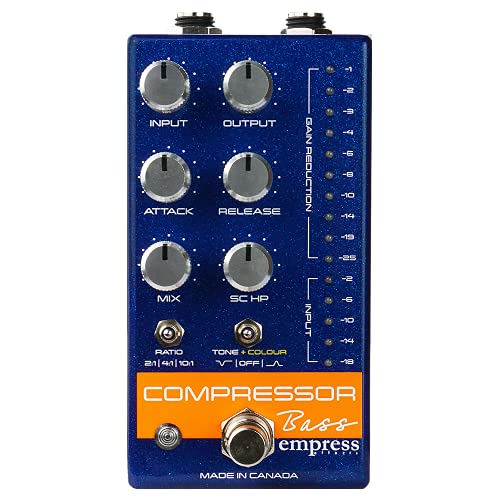
Bass signals have a much wider frequency range than guitars, and most guitar-oriented compressors struggle to handle the low end without pumping or choking. The Empress Bass Compressor was designed from the ground up around that problem, offering a deep control set aimed at bassists who want their compression to feel like it belongs in a studio rack. The blue CPBB finish gives it a recognizable look on a crowded stage.
For working bassists, the appeal is the depth of shaping. You can dial in subtle, transparent leveling for slap passages, or push the threshold harder for the punchy squash that suits fingerstyle funk. In a live context where you need the bass to sit evenly under the guitars, this kind of fine control tends to pay off night after night.
The Value In It
- Tuned specifically for the bass frequency range, so low notes stay full rather than getting thinned out by aggressive compression.
- Detailed control set lets a working bassist dial in subtle leveling or hard squash without swapping pedals mid-set.
- Empress has a long track record with the original compressor platform, so the bass-focused version benefits from years of refinement.
- Useful in studio work where you want the bass to feel as controlled as if you were tracking through a rack compressor.
Trade Offs
- The deep control set has a real learning curve, and beginners may spend more time scrolling through modes than playing.
- It commands a higher price than simpler single-knob compressors, which may not suit every hobbyist budget.
- Being bass-focused, electric guitar players looking for a quacky country squash might find the voicing too polite.
Feature Snapshot
Best Suited To
Working bassists and studio players who want detailed low-end control will find this pedal meets the brief.
Skip It When
Players looking for a simpler one-knob squash may find the Donner Ultimate Comp easier to live with day to day.
Some compressors color your tone heavily, and some try to disappear into the signal chain. The Xotic SP sits firmly in the second camp, offering a transparency that lets the natural voice of your guitar and amp shine through. Based on a classic Ross-style compression circuit, it has earned a place on countless professional boards over the years for its musical, even response.
For gigging guitarists who switch between clean rhythm and cutting leads, that transparency matters. You can leave the pedal on for an entire set and barely notice it working, which is exactly the point. The harmonic sparkle often mentioned in studio write-ups adds a touch of life to the high strings without coloring your base tone.
Benefits That Matter
- Transparent compression keeps your guitar’s natural voice intact, useful for players with a prized amp tone they don’t want masked.
- The 3-position compression switch gives a quick way to shift from light limiting to more obvious squash without menu diving.
- Variable blend control lets you mix the dry signal back in, preserving pick attack that harder compressors tend to blunt.
- Internal dip switches unlock deeper tonal shaping for players who want to fine-tune the response beyond the front-panel knobs.
Points To Note
- Getting the most out of the dip switches requires opening the pedal, which may not appeal to players who prefer plug-and-play setups.
- It sits in a higher price tier than most beginner compressors, so budget-focused shoppers might look elsewhere first.
- For players chasing obvious, in-your-face compression squish, the transparent character may feel almost too subtle.
Whose Shelf It Belongs On
Tone-conscious players who want invisible, musical leveling on a gigging board will get the most from this pedal’s transparent character.
Consider Something Else When
If you specifically want the classic squashy peak-limiter vibe, the Donner Lax Comp is built for that exact response.
Compression is the main story here, but fuzz and compression share a long history on classic records. Before compressors sat in front of every amp, fuzz pedals did some of the same dynamic shaping work by hard-clipping the signal. The Donner Fuzz Mini is a true bypass fuzz that pairs naturally with the dedicated compressors later in this list, especially if you want a vintage voice.
For garage and indie players running small boards, the mini footprint helps. A fuzz and a dedicated compressor, side by side, can cover a lot of stylistic ground without eating much real estate. The Bass, Treble, Level, and Volume knobs give enough shaping to move from woolly doom to cutting classic-rock bark.
Where It Delivers
- The mini enclosure leaves room on a crowded board, which matters when you are already running a compressor plus other essentials.
- Four-knob control set covers tone, level, and fuzz intensity, giving decent shaping in a small package.
- True bypass wiring means the signal stays clean when the effect is off, preserving the character of your dry tone.
- Works for both electric guitar and bass, so a bassist chasing classic fuzz tones can plug straight in.
Honest Caveats
- True fuzz circuits can interact unpredictably with buffered pedals upstream, so placement in the chain matters more than with a typical overdrive.
- The mini size means smaller knobs, which can be fiddly to adjust mid-song if you like tweaking on the fly.
- It is not a compressor, so anyone buying it expecting to even out dynamics will need to pair it with one of the dedicated units in this guide.
The Right Fit
Garage, indie, and stoner-rock players who want classic fuzz character in a small box will find this pedal slots in easily.
Reach For A Different Pick When
Players whose main goal is smooth dynamic leveling should pair this with the Donner Ultimate Comp rather than expecting the fuzz to do both jobs.
Distortion and compression are close cousins on a high-gain board. Slap a compressor in front of a distortion and you can tighten response, push solos, and add sustain. The Donner Morpher Mini offers three voicing modes aimed at players who like to swing between clean-ish crunch and heavier rhythm tones without swapping pedals.
The classic-cruch mode sits in that sweet spot for 80s-style hard rock, while the tight and natural modes cover lower-gain territory. For players running a single-channel amp who want three different distortion flavors available at the stomp of a switch, the Morpher’s three-mode layout cuts down on pedal count considerably.
A Few Strong Suits
- Three voicing modes give you natural, tight, and classic crunch tones in a single enclosure, useful for varied setlists.
- The mini form factor keeps the board lean, which pairs well with a dedicated compressor placed upstream.
- Aluminum-alloy housing feels solid enough to survive being kicked on stage, a real concern for active players.
- True bypass wiring keeps the dry signal clean when the pedal is disengaged.
Things To Consider
- Mini knobs are a tighter fit for players with larger fingers, especially when tweaking between songs under stage lighting.
- The voicing leans toward hard-rock territory, so players chasing modern djent or ultra-tight metal tones may want a different unit.
- Like most analog distortions, the power supply is usually an external adapter, so you will need a spot on your daisy chain or isolated supply.
Who Should Grab It
Hard rock and glam-metal players who want three flavors of crunch in one small box will appreciate the mode-switching layout.
A Better Fit Elsewhere
Players focused purely on compression without high-gain needs may find the Donner Lax Comp a more direct answer to that brief.
Dumble amplifiers are legendary for their creamy, singing overdrive, and the Dumbal Drive aims to bring that character to a stomp box. Running a low-gain overdrive in front of a clean amp is a classic rig setup, and adding a compressor upstream is a great way to even out the attack before the overdrive stage shapes the sound. The pedal’s two-band EQ boost helps push solos without changing the underlying voicing.
For blues and fusion players who like to play with touch sensitivity, the Dumbal’s response rewards picking dynamics. Light picking gets clean, articulate notes, and harder picking pushes into smooth sustain. That kind of feel is exactly what most compressors in this guide are designed to preserve rather than squash.
What Stands Out
- The Dumble-style voicing produces a creamy singing sustain that rewards expressive picking dynamics.
- Two-band EQ plus a boost gives solo shaping options without crowding the front panel with extra knobs.
- Pure analog circuitry appeals to players who want the warmth that digital emulations sometimes miss.
- True bypass switching keeps the dry signal clean when you kick the pedal off for cleaner rhythm passages.
Small Caveats
- The voicing is intentionally smooth, so players who want a sharper, more aggressive drive character will need to look elsewhere.
- As with most analog drives, you will need a dedicated power supply slot, which matters for players running isolated supplies.
- It is an overdrive, not a compressor, so you will likely want to pair it with one of the dedicated compression pedals in this guide for full dynamic control.
Made For
Blues and fusion lead players who want singing, touch-sensitive sustain from a small analog box will enjoy the Dumbal’s character.
Where Another Pick Suits Better
Players whose priority is gentle transparent leveling should start with the Xotic SP Compressor Pedal before adding any drive.
Chorus and compression are often placed at the start of a signal chain together, with the compressor evening out the input before the chorus adds its gentle modulation. The Tutti Love delivers an analog-style warm chorus with a natural wave curve, which sits well in jazz, indie, and clean rock contexts. Adding a Level knob on top of the standard Depth and Rate controls makes blending the effect easier.
For home players recording direct, the analog character of the chorus tends to translate well to a mix. The classic warm voicing flatters clean electric guitar tones, and for jazz-influenced players it adds a touch of movement without overwhelming the chord work.
Notable Upsides
- Analog circuitry produces a warmer modulation character than many digital chorus emulations, flattering clean tones.
- An extra Level knob on top of Depth and Rate makes blending the effect simpler when you switch between rhythm and lead.
- Aluminum-alloy housing gives the pedal a solid feel that holds up to frequent transport in a gig bag.
- True bypass switching keeps the dry signal unaffected when the effect is disengaged.
A Few Limitations
- It is a chorus, not a compressor, so it will not even out your dynamics on its own and is best paired with one of the dedicated units in this list.
- The warm voicing is intentionally subtle, so players looking for a more obvious 80s-style chorus shimmer may find it too polite.
- External power is needed, which means a spot on your supply or a 9V battery, depending on your board setup.
Perfect Match For
Jazz, indie, and clean-rock players who want a warm, analog-flavored chorus to sit alongside a compressor will appreciate the voicing here.
Not Your Match When
Players whose only goal is dynamic leveling without modulation should head straight for the Donner Ultimate Comp instead.
FET-style compressors built around the peak-limiter topology have a long history in both studio and stage work. The Donner Lax Comp draws on that lineage, offering dedicated Sustain, Attack, Level, and Limit knobs for a fairly wide range of dynamic shaping. The two-band EQ boost is a welcome extra for solos, since it lets you push the compressed signal forward without affecting the rest of the chain.
For slide players and country guitarists who rely on a long, even sustain, this kind of dedicated FET voicing tends to feel right at home. Slide notes can swell without sudden drops in volume, and clean picked passages stay even from the softest fingerpicking to harder strums.
A Few Highlights
- Four dedicated knobs cover Sustain, Attack, Level, and Limit, giving a wide range of usable compression settings.
- The two-band EQ boost helps solos cut through a busy mix without changing the core compressed tone.
- Pure analog circuitry delivers the warm, colored character that FET compressors are known for.
- Works with both electric guitar and bass, so a bassist who wants classic squash can use the same pedal.
Things To Weigh
- FET-style squash is more colored than transparent, so players wanting invisible leveling may prefer the Xotic SP instead.
- The four-knob layout takes a bit more dialing in than a single-knob compressor, which may feel like overkill for beginners.
- Like most analog pedals, it requires an external power supply, which can matter for travel boards with limited outlets.
Quick Facts
Who It Suits Best
Slide and country players who want colored FET-style squash with a dedicated boost will get plenty of mileage from this pedal.
Swap It Out When
Players seeking transparent, studio-style leveling should compare this with the Xotic SP before committing.
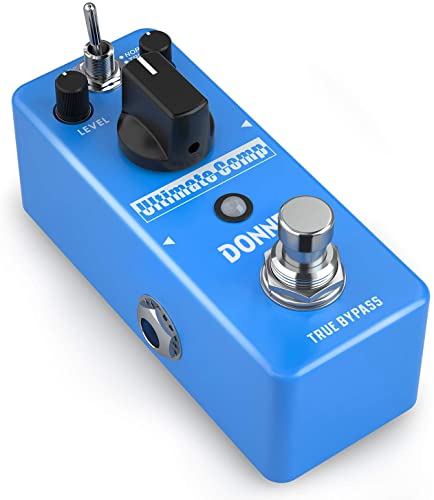
First-time compressor shoppers often get overwhelmed by deep control sets, and a simpler two-mode design can be a friendlier entry point. The Donner Ultimate Comp keeps things approachable with COMP, TONE, and LEVEL knobs covering the essentials, plus a two-mode switch that lets you choose between two compression characters. Pure analog circuitry keeps the tone musical rather than clinical.
For a player building their first pedalboard, the appeal is straightforward. You plug in, set the COMP knob to taste, adjust the tone to match your guitar and amp, and you are playing with even dynamics. That kind of simplicity is hard to overvalue when you are still figuring out what compression even does.
What Helps Most
- Three-knob layout (COMP, TONE, LEVEL) is friendly for first-time users who do not want to learn a deep control set.
- Two-mode compression switch gives you a quick way to compare two characters without menu scrolling.
- Pure analog design keeps the tone warm and musical, which suits a wide range of guitars and amps.
- Works for both electric guitar and bass, so it can stay on the board if you switch instruments.
Points To Keep In Mind
- With only three front-panel knobs, fine-tuning complex compression profiles is more limited than on the Empress or Xotic options.
- External power is required, so a power supply slot matters if you are running a tight travel rig.
- Players who later want more control may outgrow the simplified layout fairly quickly.
Built With In Mind
First-time compressor shoppers and players building a starter pedalboard will find this pedal’s three-knob layout easy to live with.
Where A Sibling Pick Shines
Players who later want deeper control should step up to the Donner Lax Comp for its four-knob FET-style shaping.
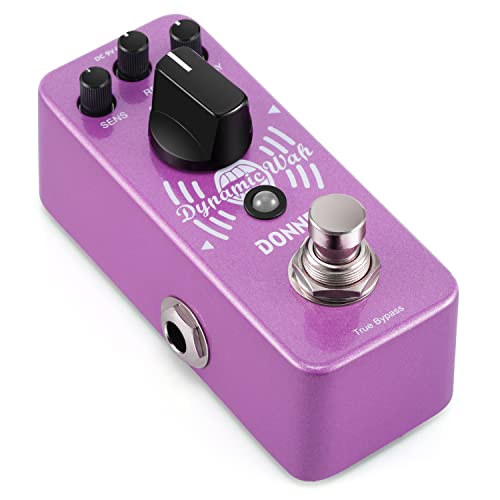
An auto-wah is an envelope filter, which means it opens and closes based on how hard you play. While it is not a compressor in the strict sense, the dynamic element does similar work to a fast compressor, shaping your signal based on input. The Donner Mini Auto Wah packs SENS, RES, DECAY, and RANGE knobs into a tiny enclosure, which is rare for a pedal this small.
Funk and experimental players who like to weave movement into clean rhythm work will find this kind of touch-sensitive filter expressive. Pairing it upstream of a slow compressor can create interesting swells, since the filter is shaping the harmonic content before the compressor evens things out.
Good Reasons To Consider
- Four dedicated knobs in a mini enclosure is unusual, and gives meaningful control over the envelope response.
- True bypass wiring keeps the dry signal unaffected when the effect is off.
- Touch-sensitive response rewards expressive picking dynamics, ideal for funk and rhythm work.
- LED indicator shows the working state, which is helpful on dark stages where it is hard to see the footswitch position.
Soft Spots
- It is a filter, not a compressor, so if you need even dynamic leveling you will need to pair it with a dedicated unit like the Donner Ultimate Comp.
- The mini knobs are tighter than full-size, which can be fiddly when adjusting under stage lighting.
- The tracking is fast but not instant, so very fast hammer-ons may not trigger the filter as cleanly as slower passages.
Feature Rundown
Right Fit For
Funk and experimental players who want touch-driven filter movement in a small box will enjoy the responsiveness of this pedal.
Not Your Match When
Players needing straightforward compression should look at the Donner Lax Comp for a more traditional dynamic-shaping tool.
Picking The Right Compressor Pedal For Your Setup
Choosing a compressor comes down to how much coloring you want, how detailed the controls need to be, and where the pedal sits in your signal chain. The Xotic SP Compressor Pedal is the right fit when you want transparent leveling that lets your guitar and amp do the talking. If you prefer a more colored, vintage-flavored squash, the Donner Lax Comp offers that classic peak-limiter character with enough control for slide and country work. Bassists with deep control needs should consider the Empress Effects Bass Compressor, while the Donner Ultimate Comp is the friendlier entry point for first-time shoppers.
True bypass versus buffered bypass is another consideration. True bypass designs, like several entries here, keep the dry signal untouched when the pedal is off, which suits players with shorter cable runs. Buffered designs can help long cable runs and complex boards, so think about where the pedal will live in your chain.
Power requirements matter on smaller boards. Most of the analog pedals in this guide need an external 9V supply, so plan for an isolated power source if you are running several units. Form factor also counts. Mini pedals like the Donner Fuzz Mini and the Auto Wah leave room for larger compressors beside them, but their smaller knobs can be fiddly in live use.
Finally, think about what the pedal needs to do beyond compression. A few entries in this list, like the Donner X MIYAVI Dimension Weaver, fold multiple effects into one box, which is great for cramped boards. Single-purpose compressors, on the other hand, give you more focused control and tend to last longer in a signal chain as your needs grow.
Smart Considerations Before You Buy
Where Shoppers Go Wrong
A common mistake is buying a compressor for its own sake, without thinking about where it sits in the chain. Placing a compressor after a high-output fuzz can lead to harsh peaks, while putting one before a clean boost can flatten the dynamics you might want to keep. Test placement by ear and let the rest of the board inform your compressor choice.
Another trap is chasing the most knobs. A deep control set is useful, but only if you actually use those parameters. Beginners often do better with a simple two- or three-knob design, and many of the more complex pedals in this list can sit unused on settings for months at a time. Match the control set to your playing style rather than to the spec sheet.
What The Higher Tier Buys
The premium compressors in this list, like the Xotic SP and the Empress Bass Compressor, tend to earn their higher cost through transparency, detailed parameter control, and durable construction. That matters most for gigging and recording players who rely on consistent tone night after night. For a casual bedroom player, the value-tier options like the Donner Ultimate Comp or Lax Comp often deliver more than enough musical performance for the price.
The honest read is that you do not need to spend at the top of the market to get usable compression. Most players will be happy with a mid-tier analog unit, while professionals chasing a specific voicing will find the premium tier earns its keep through subtlety rather than flash.
Frequently Asked Questions
What does a compressor pedal actually do? A compressor pedal evens out the volume differences between your loudest and softest notes, adding sustain and keeping your playing consistent. It is one of the most common dynamic-shaping tools in any player’s chain.
Should a compressor go before or after distortion? Placing a compressor before distortion tightens the input signal and can add sustain, while placing it after evens out the distorted output. Most players find it more useful at the front of the chain, but experimentation is part of the fun.
Is true bypass important for a compressor? True bypass keeps the dry signal untouched when the pedal is off, which matters for players with short cable runs and tone-conscious rigs. Buffered designs can help long cable runs, so the right choice depends on your board.
Can one compressor work for guitar and bass? Most analog compressors handle both instruments, though bass-specific units like the Empress Bass Compressor offer tuning that better suits the low end. A general-purpose pedal like the Donner Ultimate Comp works for both.
Do I need a power supply for these pedals? Most analog pedals in this guide require an external 9V supply, so plan for a spot on an isolated power source or a multi-output adapter when building your board.
Final Verdict
A good compressor pedal is one you stop noticing after a while, because it quietly keeps your playing even while letting the rest of your tone breathe. For most players, the Xotic SP and the Donner Lax Comp cover the two ends of the spectrum: transparent studio character and colored vintage squash. Bassists should look at the Empress unit, while beginners will find the Donner Ultimate Comp an easy starting point. Match the pedal to your playing style, give yourself room to experiment with placement, and the right compressor will quickly become the part of your chain you never turn off.



