


Most sim racers start at a kitchen table with a clamped wheel, a stack of cookbooks for a pedal base, and a chair that slides every time the torque kicks in. A purpose-built cockpit fixes that entire mess in one weekend afternoon. The picks below keep the budget honest while still giving you a stable, adjustable platform that won’t walk across the floor mid-race.
An Overview Of The Picks
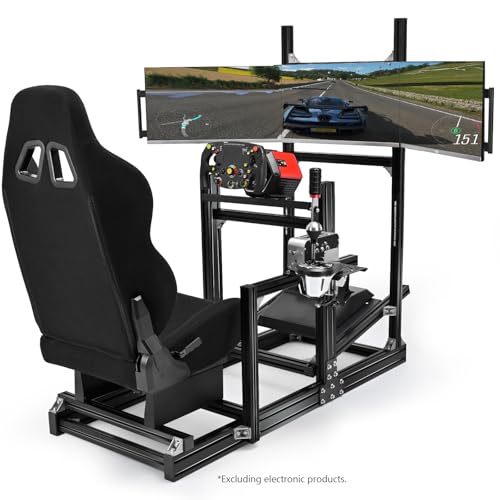
Anman Aluminum Profile Sim Cockpit with Triple TV Mount
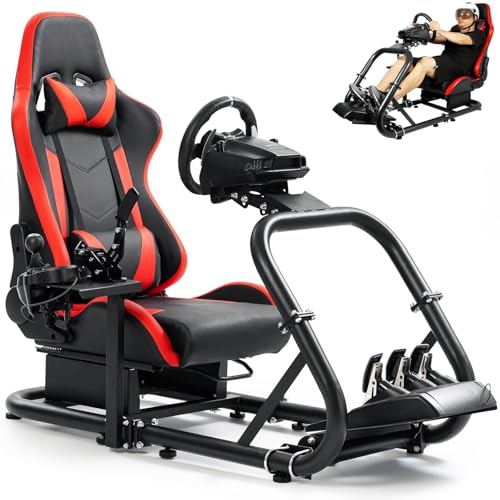
Marada Racing Sim Cockpit for 12Nm Direct Drive
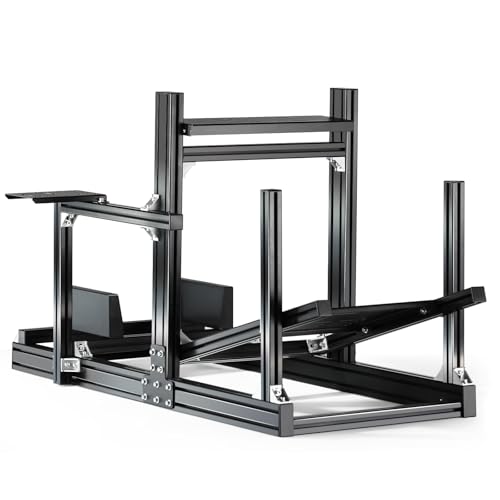
Anman GT/F1 Sim Racing Cockpit 8040 Aluminium Stand

Dardoo G29 Adjustable Sim Cockpit with Red Seat

ARES WING Racing Simulator Cockpit with Seat, Blue

CAMMOO High Compatibility Sim Racing Cockpit

Extreme Sim Racing Wheel Stand SGT Cockpit

Playseat Evolution Pro Sim Racing Cockpit

Playseat Challenge Foldable Sim Racing Cockpit

Marada Flight Racing Sim Cockpit with Red Seat
A Deeper Look At The Lineup
The Anman aluminum-profile rig leans into the “build-it-once, keep-it-forever” mindset. The frame uses slotted aluminum extrusions rather than welded steel, which keeps the build surprisingly light for its footprint and makes future bolt-on upgrades far easier than a fixed-weld cockpit.
A triple-screen mount sits up top, and a support bar across the wheel deck helps the structure resist the side-loading that wears out cheaper rigs over time. For someone running an older Logitech or a mid-tier Thrustmaster with three monitors, this hits a useful middle ground between entry-level wheel stands and the high-tier aluminum profiles.
Well-Handled Touches
- Aluminum extrusion frame resists flex during hard braking zones
- Triple-screen mount comes integrated, removing a separate purchase
- Frame stays light enough to break down and reposition for cleaning
- Modular rail design lets you add side mounts without drilling new holes
Where It May Fall Short
- Triple-screen mounting adds weight that demands careful desk or floor placement
- Aluminum slotting can develop small burrs after repeated re-tightening
Best Suited To
Sim racers who already own three identical monitors and want a single integrated mount without buying a separate triple stand.
Where Another Pick Suits Better
The Playseat Challenge Racing Simulator Cockpit works better for apartment dwellers who need to fold the rig out of sight between sessions.
Marada’s cockpit is built around the assumption that your wheelbase pulls hard. A direct-drive wheel (a base that bolts to the desk and pushes the rim with real motor torque, no gear noise) can deliver up to 12 newton-meters of force, and many budget rigs shake themselves apart trying to absorb that load.
The 50x50mm round-tube frame with a four-hole flange connection gives the wheel deck a wide, planted base. The included seat reclines from roughly 90 to 180 degrees, and a lumbar pillow plus a neck pillow are bundled in. Owners commonly report the seat fabric holding up well through multi-hour endurance runs.
Real-World Strengths
- Frame stiffness tuned for 12Nm direct-drive torque without noticeable flex
- Reclining seat and bundled pillows make long stints easier on the lower back
- Wheel deck height and shifter position both adjust for tall and short drivers
- Wider stance than typical entry-level rigs, reducing slide on smooth floors
Honest Caveats
- Larger footprint than the Playseat Challenge, so room planning matters
- Seat upholstery can feel firm in cooler rooms before breaking in
The Right Fit
Owners of mid-torque direct-drive bases who have already committed to a high-end wheel and now need a frame that won’t punish the upgrade.
Skip It When
The Dardoo G29 Adjustable Sim Cockpit is a smarter fit for someone running a Logitech G29 or G920 who doesn’t need direct-drive-grade stiffness.
Anman’s second entry in this roundup is a different animal from the triple-screen rig. The 8040 aluminum profile refers to a specific extrusion size (80mm x 40mm) commonly used in industrial framing, and it gives this cockpit a quiet, premium feel under hand.
Stepless adjustment on the seat rails (sliding forward and backward without fixed detents) makes it easy to dial in a precise GT or F1 seating position. Where the Marada leans into raw direct-drive stiffness, this one targets the sim racer who switches between road cars and open-wheelers on the same evening.
Where It Delivers
- Stepless seat adjustment enables quick swaps between GT and formula posture
- 8040 aluminum profile resists twist under heavy braking better than round tubing
- Open rail system accepts standard T-slot hardware for custom mounts
- Light enough to relocate without disassembling the whole frame
Points To Keep In Mind
- No monitor mount included, so a separate screen solution is part of the build
- Aluminum slot edges can collect dust that needs occasional cleaning
Who It Suits Best
Sim racers who run both GT and F1 content weekly and want one rig to handle both without constant reconfiguration.
Reach For A Different Pick When
The Marada Racing Sim Cockpit is the better call for anyone whose priority is brute direct-drive stiffness over fine seating adjustment.
Dardoo’s cockpit is the most approachable pick in this lineup. The carbon-steel frame is intentionally simple: square tubing, bolted joints, and a red bucket seat that bolts straight on. The name says it all, this rig is built around Logitech G-series wheels and the gearing inside them.
Eight rubber feet on the base keep the rig planted on carpet or hardwood, and the wheel-deck height adjusts to fit most adults. Owners commonly report a 60-to-90-minute assembly for one person using the included hardware.
Notable Gains
- Height-adjustable wheel deck accommodates drivers from roughly 5’2″ to 6’2″
- Shifter mounts on either side, useful for left-hand-drive sims
- Carbon steel frame handles Logitech G29, G920, and G923 without complaints
- Rubber feet protect hardwood floors from frame scratches
Less-Strong Areas
- Not rated for direct-drive wheels, so upgrading to a high-torque base requires a new rig
- Seat recline range is limited compared to the Marada cockpit
Made For
First-time sim racers pairing a Logitech G29 or G920 with a starter cockpit who want a quick, no-fuss build.
Consider Something Else When
Anyone planning to upgrade to a direct-drive wheel within a year should look at the ARES WING Racing Simulator Cockpit instead.
ARES WING markets the cockpit as compatible with stronger direct-drive bases, and the frame design backs that up. The reinforced wheel deck uses thicker gauge steel than the Dardoo, with eight non-slip support feet underneath the chair to stop it from drifting during hard launches.
The blue fabric seat is a small touch that helps the cockpit feel less like industrial equipment. For someone planning to keep their rig for years, the extra frame weight here translates directly into fewer creaks and less readjustment over time.
Positive Takeaways
- Thicker steel frame holds up to repeated direct-drive torque cycles
- Eight support feet under the chair prevent rearward drift on smooth floors
- Wheel and pedal mounting positions adjust for tall drivers
- Blue seat fabric wears well and resists showing minor stains
Trade-Offs To Consider
- Heavier than the Playseat Challenge, so it’s not ideal for frequent room moves
- No integrated monitor mount in the base configuration
Who Will Love This
Long-term sim racers who treat the cockpit as a permanent piece of furniture and want a frame that won’t loosen after a season of use.
Look Elsewhere When
The Playseat Challenge Racing Simulator Cockpit is the smarter pick for renters who need to stow the rig in a closet between sessions.
The CAMMOO cockpit goes wide on wheel and shifter compatibility. A 31-hole wheel plate and a 26-hole shifter plate give you a much better chance of bolting up an unusual wheel base or a side-mount handbrake without drilling new holes.
A monitor mount sits up top, and the rig ships in a single box with hardware blister-packed for easy sorting during assembly. The honest read is that this is a parts-rich cockpit aimed at people running handbrakes, sequential shifters, and other peripherals beyond a standard wheel-and-pedal pair.
Practical Pluses
- 31-hole wheel plate accepts unusual mounting patterns from various wheel bases
- Shifter plate holes support left or right handbrake positioning
- Single-box delivery with organized hardware saves a messy unboxing
- Integrated monitor mount reduces the need for a separate desk
Softer Spots
- Two-person assembly is recommended for proper alignment
- Frame weight sits between the Dardoo and the Marada, with no monitor mount strength specs listed
Perfect Match For
Peripheral-heavy setups running handbrakes, sequential shifters, or less common wheel bases that need flexible hole patterns.
Where A Sibling Pick Shines
The Extreme Sim Racing Wheel Stand SGT Cockpit is a better fit for someone who only needs a clean wheel-and-pedal mount and nothing else.
Extreme Sim Racing takes a different approach: the cockpit arrives almost fully assembled, and the steel-tubing frame folds up for storage. A powder-coat finish (a baked-on paint layer that resists chips) keeps the frame looking clean even after months of sliding in and out of a closet.
The wheel deck includes a shifter mount and a built-in cup holder, which sounds small until you’re 40 minutes into a stint and need somewhere to put a drink. The frame is drilled for Logitech, Thrustmaster, and Fanatec wheels, so most people won’t need adapter plates.
A Strong Showing
- Arrives mostly pre-assembled, cutting setup time dramatically
- Folding frame design slides against a wall or under a bed when not in use
- Anti-slip rubber feet grip both carpet and hardwood
- Built-in shifter mount and cup holder on the wheel deck
Points To Note
- Pedal deck doesn’t match the rigidity of full aluminum-profile rigs
- Color editions may show wear on high-contact edges over time
The Right Fit
Apartment dwellers and renters who need a cockpit that disappears between sessions and reassembles in minutes.
Another Choice May Suit
The Playseat Challenge Racing Simulator Cockpit is the obvious comparison for folding-frame portability, and it weighs even less for shared-space living.
Playseat sits in a different bracket than most picks here, and the Evolution Pro shows why the brand has stuck around. The cockpit is a licensed, upgraded version of the original Evolution, with reinforced frame hardware and a seat designed with input from professional drivers.
Head stabilizers, wider adjustment ranges, and a stable mounting platform for any major wheel base give this rig a polished feel. The trade-off shows up in the price tier: this is the most expensive pick in the roundup, and it’s worth knowing that going in.
A Few Highlights
- Frame rigidity matches what most direct-drive wheels actually demand
- Seat design uses professional driver feedback for posture support
- Head stabilizers reduce neck fatigue during longer sessions
- Compatible with all major wheel bases and pedal sets on the market
Honest Caveats
- Higher cost than every other cockpit in this roundup
- Stock configuration may show limited availability depending on region
Best Suited To
Console-first households on PlayStation or Xbox who want a polished, brand-backed cockpit without a custom build.
Reach For A Different Pick When
The Marada Racing Sim Cockpit delivers most of the rigidity at a noticeably lower price for shoppers willing to skip the Playseat badge.
The Playseat Challenge is the lightest cockpit in the roundup, weighing around 8.5 kilograms. It folds flat, leans against a wall, and pulls out for a session in a few minutes. The frame design supports both F1 and GT seating positions.
It’s worth knowing that this cockpit is built for portability first and rigidity second. Mid-torque direct-drive wheels will push the limits of what the frame can comfortably absorb, but a Logitech G29 or a Thrustmaster T150 sits right in the wheelhouse.
What Earns Its Place
- Folding frame slips behind furniture or in a closet between uses
- Lightweight build makes transport up or down stairs manageable
- Adjustable seat accommodates F1 and GT posture without tools
- Compatible with all major wheel bases and pedal sets
Practical Considerations
- Frame flex is more noticeable with high-torque direct-drive wheels
- Pedal deck doesn’t match the rigidity of the Playseat Evolution Pro
Who Should Grab It
People in studios or one-bedroom apartments where a permanent sim rig simply isn’t realistic and folding storage is the priority.
Not Your Match When
The ARES WING Racing Simulator Cockpit is the better choice for anyone running a high-torque direct-drive base daily.
Marada’s flight-and-race hybrid rounds out the roundup with a genuinely unusual feature: five interchangeable mounting panels that swap the cockpit between a flight sim configuration and a racing configuration. The frame uses 40mm square tubes with right-angle welding for added stiffness at the joints.
For someone who splits time between DCS World and Assetto Corsa, this is a clever solution. The honest read is that dedicated racers will prefer a purpose-built racing rig, but the panel-swap system is hard to find elsewhere at this price point.
Everyday Advantages
- Swappable panels cover both flight sim and racing sim configurations
- 40mm square tube frame adds rigidity where joints meet
- Adjustable columns fit a wide range of seating positions
- Red bucket seat is removable for cleaning or replacement
Possible Compromises
- Panel swaps take longer than adjusting a single-mode cockpit
- Frame doesn’t include a monitor mount in the base configuration
Built With In Mind
Sim enthusiasts who fly commercial or combat flight sims on weekends and race on weeknights, and want one frame to handle both.
Swap It Out When
The Anman Aluminum Profile Sim Cockpit with Triple TV Mount is the cleaner fit for racers who only ever run driving sims and want integrated screens.
What To Weigh Before Spending On A Sim Cockpit
Wheel Torque And Frame Strength
The single most important match is between your wheel base and the frame. A gear-driven wheel like the Logitech G29 produces around 2 to 3 newton-meters, which almost any cockpit can handle. A direct-drive base, by contrast, can produce 8 to 12 newton-meters, and that force loads the wheel deck every time you correct a slide. Picking a frame that’s undersized for your wheel is the most common way to end up with a wobbly rig six months in.
Seat Position And Adjustability
The right seat position depends on the cars you drive. GT cars want a relatively upright posture with the wheel close to your chest. Formula cars want the wheel farther away and your legs slightly raised. A cockpit with stepless seat rails and adjustable wheel-deck height lets you move between both without re-drilling holes, which matters more than people expect.
Footprint And Storage
A full-size cockpit can easily span 1.4 meters wide and 1.8 meters long. Measure the room before you commit, and account for the chair’s reclined position. Folding frames like the Playseat Challenge and the Extreme Sim Racing stand exist for renters and shared-space living, and they trade some rigidity for the ability to disappear between sessions.
Compatibility With Your Wheel Base
Most modern cockpits list the wheels they’re drilled for, and the common names include Logitech, Thrustmaster, and Fanatec. Less common bases, including older Thrustmaster TS-PC models and some Moza wheels, may need adapter plates. The CAMMOO cockpit’s wider hole patterns solve this for unusual setups, but a quick check against your specific base saves a return.
Key Considerations Across These Picks
Where Shoppers Go Wrong
The most common mistake is buying a cockpit rated for belt-driven or gear-driven wheels and then upgrading to a direct-drive base a year later. By that point, the frame has already started to flex, and a full replacement is the only fix. Check the maximum wheel torque your cockpit supports before you buy, and pick the rig that matches the wheel you’re likely to own two years from now, not the one you own today.
Where The Extra Money Goes
Higher-tier cockpits spend the budget in three places: thicker steel or aluminum profiles, more precise welding, and better seat upholstery. The Marada and ARES WING rigs put that into frame stiffness for direct-drive torque. The Playseat Evolution Pro puts it into licensed design and finish quality. The honest read is that the upgrade pays off most clearly for daily multi-hour sessions, where frame flex and seat comfort start to matter in ways a 30-minute test never reveals.
Frequently Asked Questions
What Is A Sim Cockpit?
A sim cockpit is a purpose-built frame that holds a steering wheel base, pedals, and a seat at the correct height and distance for sim racing. It replaces a desk clamp or a wheel stand with something stable enough to handle the wheel’s torque.
Do Budget Racing Sim Cockpits Work With Direct-Drive Wheels?
Some do, but not all. Budget rigs in this roundup like the Dardoo are built for gear-driven or belt-driven wheels, while the Marada and ARES WING models are rated for direct-drive torque up to 12 newton-meters. Always check the manufacturer’s torque spec before mounting a high-power base.
How Much Space Does A Sim Cockpit Take Up?
A full-size cockpit typically needs 1.4 meters of width and 1.8 meters of length, plus clearance for the chair’s reclined position. Folding frames like the Playseat Challenge reduce that footprint to roughly the size of an office chair when collapsed.
Are Sim Cockpits Difficult To Assemble?
Most cockpits in this roundup take between 60 and 120 minutes for one person using the included hardware. The Extreme Sim Racing stand arrives mostly pre-assembled, while the CAMMOO is easier with two people aligning the larger panels.
How Long Should A Sim Cockpit Last?
A carbon-steel or aluminum cockpit with a powder-coat finish typically holds up for several years of regular use, assuming bolts are re-checked every few months. Folding mechanisms are the most likely wear point on collapsible models, and owners commonly report hinges loosening after a year or two of daily folding.
Closing Remarks
A good cockpit changes the entire feel of sim racing: the wheel stays where you put it, the pedals don’t slide, and the seat stops being a distraction. Match the frame to the wheel you actually own, measure your room before you buy, and let the specs on this list guide you toward the rig that fits both your hardware and your living space.



