


A good delay pedal shouldn’t cost as much as the guitar you play it through. For players building a first pedalboard, adding space effects on a tight budget, or simply wanting a second delay without draining the wallet, today’s affordable stompboxes deliver far more than they used to. The ten options below cover everything from vintage-style analog warmth to modern digital textures with tap tempo, loopers, and expression control, all without venturing into flagship pricing. Each pick here represents a genuinely useful tool for home practice, gigging, and studio work, with honest trade-offs called out so you can match the right pedal to your style and rig.
A Closer Look At The Lineup

Fender Hammertone Delay Pedal

BOSS DD-8 Digital Delay Pedal

BOSS DD-3T Digital Delay Pedal

Boss DD-7 Digital Delay Pedal

MXR Carbon Copy Analog Delay

Electro-Harmonix Canyon Delay & Looper

Walrus Audio Fundamental Series Delay

FLAMMA FC17 Analog Delay Pedal
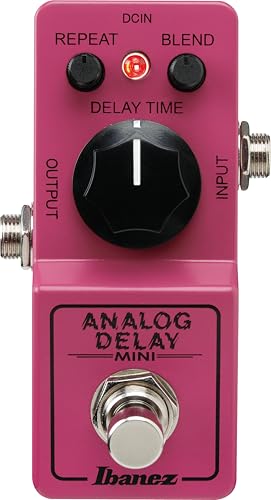
Ibanez Analog Delay Mini Pedal

TC Electronic Flashback 2 Delay
Fresh delay users often want classic repeats without a wall of knobs, and the Hammertone Delay answers that call neatly. Its layout keeps things approachable while still offering up to 950ms of delay time, enough for everything from country slapback to long ambient swells. The three-mode selector covers the flavors most players reach for first, and the Analog Dry-Through circuit keeps your untouched guitar signal pure when the effect engages.
Unlike the deep menu-diving of the BOSS DD-8 covered later, the Hammertone stays analog in feel, simple, and forgiving. You can dial in a usable sound in under a minute, which matters for a first stompbox.
Well-Handled Touches
- Up to 950ms of delay covers subtle echoes and wide ambient textures
- Three delay voices in one box reduces menu diving for new players
- Analog Dry-Through preserves your core tone when the effect is active
- Simple knob layout shortens the learning curve at practice sessions
Worth Bearing In Mind
- Lacks tap tempo, so rhythmic dotted-eighth patches require careful knob tuning
- Single preset means live players will dial between songs rather than recall
- Effects-loop routing isn’t specified, so plan signal placement by ear
Key Specs
Right Fit For
Players buying their first delay pedal who want classic sounds without studying a manual for an hour.
Where Another Pick Suits Better
Performers who need tap-tempo precision should reach for the BOSS DD-3T instead, since its tap control handles live tempo changes more reliably.
The BOSS DD-8 is the heavyweight of affordable delays, packing eleven modes, generous delay time, and a built-in looper into the standard BOSS stomp footprint. It slips into mono or stereo rigs without fuss, which is a real bonus for players running two amps or wet/dry setups. Compared with the simpler Hammertone above, the DD-8 trades beginner-friendly minimalism for sheer range.
Owners who like sculpting their sound will appreciate the deep control set, though casual players may find themselves using two or three modes and ignoring the rest. The pedal is built around long-term reliability rather than fleeting novelty, which matches the way BOSS designs its compact line.
Positive Points
- Eleven delay modes cover vintage, modern, and exotic textures in a single stomp
- Built-in looper adds practice and songwriting value beyond core delay duties
- Stereo I/O integrates cleanly with two-amp rigs and wet/dry setups
- Standard BOSS chassis tolerates the bumps of gigging backpacks
Practical Considerations
- Eleven modes can overwhelm players who only need one or two core sounds
- Menu-based mode selection takes practice to navigate mid-song
- Power supply typically sold separately from the pedal itself
Built With In Mind
Tone hunters who want one pedal to handle tape, analog, lo-fi, shimmer, and standard digital repeats across studio and stage work.
Skip It When
Someone shopping for an easy, no-menu analog warm-up should look at the MXR Carbon Copy, which keeps the control set to three knobs.
The DD-3 has been a stage staple since the mid-1980s, and the DD-3T preserves that heritage while adding tap tempo, both onboard and via an external footswitch. The original control layout stays intact, so veterans won’t have to relearn anything. Where the more elaborate DD-8 above offers a deep menu of modes, the DD-3T keeps things focused, lean, and dependable.
You get three beat subdivisions for tap-tempo work, which covers most rhythm-driven lead lines. The pedal feels right at home in a small, gig-ready board where reliability matters more than versatility.
Useful Highlights
- Tap tempo on the stomp itself or via an external footswitch for hands-free control
- Three beat subdivisions match common song structures without extra setup
- Original DD-3 control layout means seasoned players adapt instantly
- BOSS build quality translates well to life on a working pedalboard
Honest Caveats
- Delay time ceiling is shorter than the DD-8, limiting long ambient swells
- No stereo output, so wet/dry rigs will need a different solution
Whose Shelf It Belongs On
Gigging guitarists who tap in delay tempos often and want a road-tested pedal that doesn’t demand menu study.
Consider Something Else When
Studio players chasing long ambient washes should consider the BOSS DD-8, which offers greater delay time and more voices.
The DD-7 took the well-loved DD-6 and added a modulation delay mode, a modeled analog mode, and external pedal control options, which expanded the creative palette without bloating the layout. Compared with the newer DD-3T, the DD-7 leans more toward tonal variety than tap-tempo utility. Players who want a wider range of textures in a familiar BOSS chassis tend to land here.
External pedal support lets you assign tap functions to a remote switch, useful in larger rigs where you keep your hands near other effects. It’s the kind of pedal that rewards sitting down with it for an afternoon of experimentation.
Standout Benefits
- Modulation delay mode adds movement to repeats without external effects
- Modeled analog mode delivers warmer character from a digital platform
- External pedal control supports remote tap-tempo on a larger board
- Longer delay time than earlier BOSS compact delays, useful for ambient work
Points To Keep In Mind
- Single preset design still requires knob tweaks for song changes on the fly
- Not as deep in mode count as the DD-8, so ambitious players may outgrow it
Best Suited To
Players who want BOSS reliability with a broader tonal range than the DD-3T and a feature set geared toward home studio exploration.
Another Choice May Suit
Live performers who need many sounds at the tap of a footswitch should look at the TC Electronic Flashback 2, which combines presets with expression control.
The Carbon Copy leans fully into analog character, built around a bucket-brigade circuit that produces warm, slightly degraded repeats. With 600ms of delay time and optional modulation, it covers everything from short slapback to the longer, Gilmour-ish washes the pedal is famous for. Compared with the digital precision of the BOSS DD-8, this one trades clarity for musical warmth.
Two internal trim pots adjust the modulation’s width and rate, which means you’ll need a small screwdriver and a few minutes of patient tweaking. For guitarists who prize vibe over spec sheet, that’s a fair trade.
What Makes Sense
- Bucket-brigade analog circuitry produces warm repeats that digital emulations chase
- 600ms of delay time covers slapback and longer ambient swells
- Three-knob layout (Delay, Mix, Regen) keeps control immediate
- Optional modulation adds a gentle chorus-like movement to repeats
Smaller Caveats
- Internal trim pots require opening the chassis to fine-tune modulation
- No tap tempo, so rhythm-locked delays need careful manual adjustment
- Analog circuitry won’t deliver pristine, modern digital clarity
At A Glance
Who Should Grab It
Vintage-minded guitarists running blues, indie, or classic rock tones who want the organic character of analog repeats.
Where Another Pick Suits Better
Players needing tap-tempo for rhythm-locked parts will find the BOSS DD-3T more useful, since analog character gives way to tempo precision.
The Canyon stuffs ten delay modes and a 62-second looper into a single compact pedal, giving ambient and experimental players plenty of ground to cover. Modes include digital, modulated, multi-tap, reverse, Deluxe Memory Man, and tape, which is a serious spread for the price. The looper makes it a useful songwriting tool beyond its core delay role.
Tap tempo input lets you lock rhythmic delays to song tempo, addressing a real shortcoming of older EHX designs. You may find the menu knob more intuitive than a five-button interface, but the sheer number of options rewards patient exploration.
Key Advantages
- Ten delay modes span digital, tape, reverse, multi-tap, and Memory Man styles
- Built-in looper records up to 62 seconds for layering and songwriting
- Tap tempo input supports rhythmic delay patches that lock to song tempo
- One pedal covers delay duties and looper tasks, saving board space
Where It May Fall Short
- Ten modes plus looper controls can confuse first-time users at first glance
- Power supply requirements are particular, so plan a compatible adapter
Feature Snapshot
Who Will Love This
Ambient players and sonic tinkerers who want many delay flavors and a looper in one chassis for creative experimentation.
Where A Sibling Pick Shines
Players wanting plug-and-play simplicity should consider the Walrus Audio Fundamental Series Delay, which trims modes down to a more approachable count.
Walrus Audio designed the Fundamental series to live on a pro board while staying friendly to new users, and the Delay carries that brief cleanly. Three sliders handle core parameters, and a three-way toggle switches between pedal modes. Where the Canyon above invites deep menu diving, this one gets out of the way.
For guitarists stepping into their first delay or looking for a clean secondary stomp, the streamlined control set removes a lot of friction. You may find the slider layout more precise than knob turning for small adjustments.
Real Benefits
- Three-slider layout delivers precise control without knob-twist guesswork
- Three-way mode switch keeps the pedal approachable for new effect users
- Tonal integrity designed to live alongside more expensive pedals on a board
- Compact chassis fits comfortably on crowded pedalboards
Trade Offs To Consider
- Mode count is lower than the BOSS DD-8 or EHX Canyon, so versatility is limited
- No built-in tap tempo, so rhythmic patches require manual timing
Right Fit For
First-time delay users who want clean slider-based control and a pedal that holds its own in a professional setup.
Where Another Pick Suits Better
Players craving ten delay voices in one box will get more mileage from the Electro-Harmonix Canyon, which offers a much wider mode range.
The FC17 is a mini analog delay aimed at players who need vintage character without spending much or sacrificing pedalboard real estate. Delay time spans 25ms to 600ms, which covers short slapback through longer, more atmospheric repeats. True bypass circuitry keeps your signal transparent when the pedal is off.
Compared with the MXR Carbon Copy, the FLAMMA trades some of the refined analog character for a much smaller footprint and a lower entry cost. It’s a sensible pick for students, second-board owners, and anyone wanting a backup delay that doesn’t dominate the floor.
Everyday Perks
- Compact mini enclosure fits into cramped pedalboard layouts
- True bypass keeps your dry signal completely untouched when disengaged
- 25-600ms range covers slapback to long ambient repeats in one stomp
- Durable metal shell stands up to transport in a gig bag
Honest Caveats
- Analog character is less refined than established circuits like the MXR Carbon Copy
- No tap tempo, so rhythm-locked work is harder to manage
Best Suited To
Players on tight budgets or with small boards who want genuine analog-style repeats in a compact, no-fuss enclosure.
Swap It Out When
Tone purists chasing the deepest analog character should look at the MXR Carbon Copy, which delivers a more celebrated bucket-brigade sound.
The Ibanez ADMINI is a compact reissue of the classic AD9 analog delay from the early 1980s, distilling that warm, natural character into a mini enclosure. Players chasing the delay tone heard on countless recordings of that era will recognize the sonic fingerprint immediately. The mini format fits anywhere on a crowded board.
Where the BOSS DD-8 brings digital precision, the Ibanez leans into a specific vintage character that the reissue handles with grace. You may find the lack of frills a feature rather than a limitation, depending on your playing style.
Advantages To Know
- Mini format maximizes pedalboard space for players running many effects
- Recreates the warm, natural analog character of the original AD9
- Simple control layout supports quick on-stage adjustments between songs
- Clear signal path preserves the integrity of your core guitar tone
What To Weigh
- Delay time is shorter than full-size analog options, limiting long swells
- No tap tempo, so rhythmic delays need careful manual tuning
Made For
Players building space-conscious boards who want the unmistakable character of a classic analog delay reissue.
Reach For A Different Pick When
Anyone needing longer delay times for ambient work should consider the Fender Hammertone Delay, which extends well past 950ms for expansive swells.
The Flashback 2 distills TC Electronic’s delay legacy into a single stomp, with a pressure-sensitive MASH footswitch that adds expression control to a standard delay box. The Crystal delay effect is a newer addition, and TonePrint support lets you load custom algorithms from the company’s library. For players who want one pedal that can shift behavior on the fly, this is hard to beat at the price.
Compared with the menu-driven DD-8 covered earlier, the Flashback 2 relies on a more hands-on, footswitch-controlled interface. The honest read is that this pedal rewards players who like expressive, real-time control more than preset recall.
A Favorable Mix
- MASH footswitch adds expression control without a separate pedal
- TonePrint support opens access to custom delay algorithms via the app
- Crystal delay effect adds shimmering, atmospheric texture beyond standard repeats
- Compact blue chassis fits comfortably on a standard pedalboard layout
Some Limits To Know
- MASH pressure response takes practice to control smoothly in performance
- TonePrint editor requires a computer or phone, which adds setup time
Feature Card
Perfect Match For
Performing guitarists who want expression control, custom algorithm support, and a flexible single stompbox for varied setlists.
A Better Fit Elsewhere
Players who prefer classic three-knob analog character should look at the MXR Carbon Copy, which trades versatility for tonal simplicity.
What To Weigh Before Buying Budget Delay Pedals
Analog Character Versus Digital Versatility
Analog circuits, like the bucket-brigade designs in the MXR Carbon Copy and Ibanez ADMINI, produce warm, slightly degraded repeats that feel organic. Digital pedals, such as the BOSS DD-8 and TC Electronic Flashback 2, deliver precise, clean repeats and far more modes. Players chasing vintage vibe should anchor on analog designs. Tone hunters wanting many flavors benefit from digital flexibility.
Delay Time And Mode Range
Long ambient swells demand generous delay time. The Fender Hammertone offers 950ms, which covers most ambient work, while compact analog units typically cap around 600ms. Mode count matters too: the EHX Canyon offers ten modes, while simpler units offer one or three. Match the range to the music you play, not to a spec sheet.
Tap Tempo And Live Utility
Rhythm-locked delays for live performance call for tap tempo. Pedals like the BOSS DD-3T and TC Electronic Flashback 2 handle tempo on the fly. The Hammertone and Carbon Copy lack tap, so you’ll tune by ear. Performing musicians benefit from prioritizing tap control at the buying stage.
Board Footprint And Power
Mini enclosures like the FLAMMA FC17 and Ibanez ADMINI save precious real estate. Standard BOSS and MXR chassis need more room but offer rugged builds and easy integration. Plan your power supply, since some pedals require specific voltage or current ratings that don’t match a basic daisy chain.
Key Takeaways Before You Buy
Common Shopping Slip Ups
New players often chase the deepest mode count, ending up with a pedal they never fully explore. Buying a delay that exceeds your actual needs adds menu overhead and wastes board space. The honest path is matching mode count to the genres you play, not to a wish list.
Where The Extra Money Goes
Stepping up from budget to mid-tier delay pedals usually buys longer delay time, tap tempo, stereo I/O, and more rugged construction. The MXR Carbon Copy and BOSS DD-7 sit at the higher end of affordable, adding build quality and tonal refinement that cheaper mini pedals can’t quite match. For gigging players, that extra investment pays back in reliability and tone. Casual home users can comfortably stay at the entry level and still get genuine musical value.



