


Body tracking turns a VR rig from “good enough” into something your hands, hips, and feet can actually act out. Full body setups matter when you dance, swing a sword, or mocap a fight scene, and the accessories around those trackers decide whether the signal stays clean or falls apart mid-session. You need parts that hold up to repeated movement, sit comfortably for hours, and play nicely with the headset you already own. This roundup covers straps, batteries, base stations, USB hubs, IR lights, and motion-tracker kits built for PC VR and standalone rigs. Expect a mix of Vive-friendly accessories, replacement parts, and full wireless systems. Read on to find the combo that matches your play space, your tracker count, and your tolerance for fiddly setup.
An Overview Of The Picks

Rebuff Reality Trackstraps for Vive Tracker VR Full Body Tracking
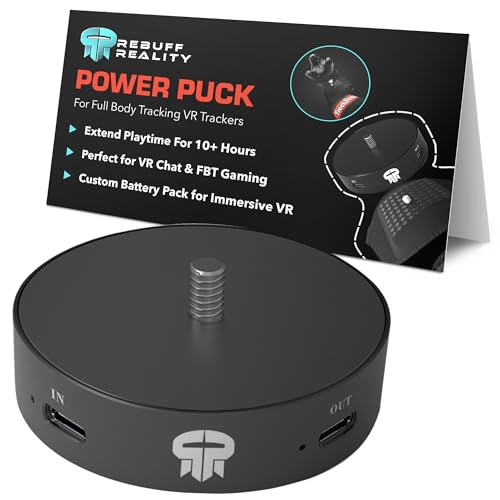
Rebuff Reality Tracker Power Puck VR Battery for Vive & Tundra

Sensor Pro Base Station 1.0 Bracket Tracker for HTC Vive
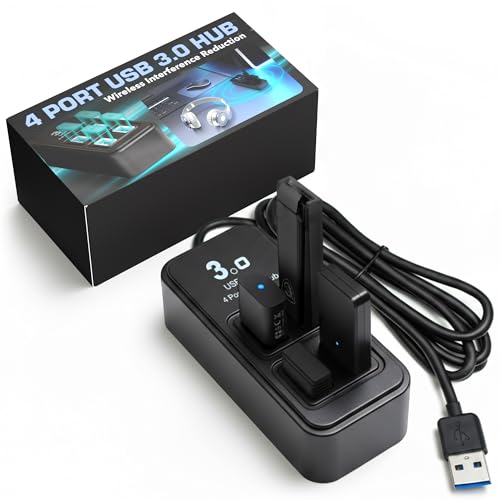
Rebuff Reality 4-Port USB 3.0 Hub for Wireless VR Dongles

Infrared Light for VR, Enhances Hand Tracking for Quest 3/3S

GEEKRIA VR Tracker Waist Belt and Hand Strap for Vive

Wireless Body Tracking Kit, 6 LSM6DSV VR Motion Trackers with Dock

Wireless Body Tracking Kit, BNO085 IMU VR Motion Trackers (3 Pcs)
A Closer Look At Each Pick
Vive trackers are dense little pucks, and the wrong strap makes them sag, spin, or press into your wrist mid-swing. The Rebuff Reality Trackstraps solve that specific pain by giving you padded, body-shaped mounts that hug your hands, feet, and waist without twisting out of position. Each strap uses hook-and-loop closures that tighten firmly but release in seconds, so swapping between dance sessions and rhythm-game marathons takes no thought at all.
For anyone running full-body tracking on an HTC Vive or Vive Pro, these straps keep the trackers seated at the right height, which directly improves skeletal mapping in games like VRChat and Blade & Sorcery. Compared to elastic-band competitors, the Rebuff straps hold their shape over years of sweat and stretching, and the rigid tracker pockets stop the pucks from rattling.
Features That Help
- Adjustable hook-and-loop closures fit a wide range of wrist, ankle, and waist sizes.
- Rigid tracker pockets prevent the Vive pucks from rotating during fast movements.
- Padded contact points reduce skin pressure during hour-long mocap or dance sessions.
- Multiple strap lengths included so a full-body setup uses one purchase rather than piecing it together.
Worth Noting
- Designed specifically for Vive trackers, so they aren’t useful with non-Vive puck-style trackers.
- Hook-and-loop can collect lint and pet hair, which means occasional cleaning for long-term grip.
Key Specs
Right Fit For
Vive owners building a full-body rig for VRChat, Blade & Sorcery, or mocap who want straps that survive sweaty, repeated sessions.
Where Another Pick Suits Better
The GEEKRIA VR Tracker Waist Belt and Hand Strap works better if you prefer a lighter, single-belt style with a simpler break-down for travel.
Standard Vive trackers sip battery, but anyone running a four or six-tracker setup knows how quickly the cells die mid-session. The Rebuff Reality Tracker Power Puck addresses that by adding an external power base that clamps onto the tracker, turning the puck into a continuously-powered unit. For streamers, instructors, and event hosts, that removes one of the most common mid-session interruptions.
Available in multi-packs and TrackStrap bundles, the Power Puck targets users already invested in the Rebuff Reality ecosystem. The Tundra compatibility widens its appeal for newer tracker adopters. Compared to swapping disposable batteries, a single Power Puck base cuts the per-session cost dramatically and avoids the question of whether the next tracker will make it to the end of the playlist.
The Practical Payoff
- Adds roughly 10 to 15-plus hours of continuous runtime per charged base.
- Multi-pack format covers an entire waist-and-feet tracker set with one purchase.
- Works with both Vive trackers and Tundra trackers, giving you cross-platform flexibility.
- Reduces the recurring cost and waste of disposable coin-cell batteries.
Trade Offs
- Adds a small amount of bulk to the tracker, which may require a slightly wider strap pocket.
- Requires periodic recharging, so a charged spare is helpful for back-to-back events.
Made For
Long-session VRChat hosts, professional mocap users, and event runners who can’t afford a tracker dying in the middle of a routine.
Skip It When
The Wireless Body Tracking Kit with 6 LSM6DSV VR Motion Trackers makes more sense for anyone building a tracker setup from scratch and wanting built-in rechargeability rather than an add-on battery.
Base stations define the entire Lighthouse tracking volume, and a wall-mounted bracket decides how wide and how tall that volume becomes. The Sensor Pro Base Station 1.0 Bracket is a single-unit mount designed to hold an HTC Vive locator securely at the correct angle for accurate whole-body motion capture. It targets owners of Vive Pro, Vive Pro Eye, and Cosmos Elite setups who want a clean, fixed installation rather than a clamp-on tripod.
Where the earlier Vive Trackstraps focus on the body, this bracket focuses on the room. A well-anchored base station reduces tracking jitter, especially when the player crouches or reaches overhead, which matters for rhythm games, sports titles, and mocap recording. For most home play spaces, you may find the included hardware sufficient, but high ceilings or angled walls may require additional mounting hardware you source separately.
Well-Handled Touches
- Sturdy wall-mounted design keeps the base station at the manufacturer-recommended angle.
- Single-bracket format suits both replacement and full-room installation.
- Compatible with Vive Pro, Vive Pro Eye, and Cosmos Elite headsets and controllers.
- Improves whole-body motion capture accuracy compared to ad-hoc mounting solutions.
Honest Caveats
- Limited to a single bracket, so a 360-degree room typically requires two.
- Best suited to 1.0 base stations, not SteamVR 2.0 lighthouse units.
Who Will Love This
Vive Pro and Cosmos Elite owners building a dedicated tracking room who want their base stations anchored once and forgotten.
Reach For A Different Pick When
The Rebuff Reality 4-Port USB 3.0 Hub for Wireless VR Dongles and Gaming is a better fit for anyone whose bottleneck is wireless signal quality rather than base-station placement.
Wireless VR setups run on USB dongles, and stacking those dongles on a generic unpowered hub is the fastest way to invite tracking dropouts. The Rebuff Reality 4-Port USB 3.0 Hub was designed specifically for this scenario, with widely spaced, upright ports that keep each Vive dongle separated from neighboring USB 3.0 interference. The result is a stable signal chain that survives twitchy shooters and full-body mocap sessions alike.
For most gamers, a powered hub with four ports is the sweet spot: enough for a Vive wireless adapter plus three tracker dongles, without the cable spaghetti of a daisy-chained setup. The trade-off shows up in desk real estate, since the upright design takes more vertical clearance than a flat hub. Mounting it behind the monitor or under the desk keeps the install tidy.
Practical Pluses
- Upright, wide-spaced ports reduce cross-interference between USB 3.0 devices.
- Four ports cover a full wireless Vive adapter and tracker dongle loadout.
- Useful for mice, keyboards, and headsets in addition to VR gear.
- Aids stream and esports setups where input lag matters.
Points To Keep In Mind
- Requires external power, so the cable count grows beyond a passive hub.
- Upright footprint may not fit every cramped entertainment center.
Feature Snapshot
Perfect Match For
Wireless Vive users who suffer random dropouts and need a hub that treats dongle spacing as a first-class concern.
Swap It Out When
The Sensor Pro Base Station 1.0 Bracket is the better pick if your core problem is room coverage, not signal cleanliness.
Quest 3 and Quest 3S headsets lean heavily on inside-out cameras for hand tracking, and dim rooms break that system fast. The PDClnyck Infrared Light floods the play area with structured IR illumination, giving the cameras the contrast they need to read fingers and wrists even with the house lights off. Ten brightness levels let you dial in the right glow for the room, and a 160-degree coverage angle handles most single-person play spaces.
Compared to leaving a lamp on for visibility, an IR floodlight stays invisible to you while still lighting you up for the headset. Late-night gaming sessions no longer mean stumbling over a coffee table, and shared households stop complaining about bright living-room bulbs. Where this falls short is any setup that depends on full-body Lighthouse tracking, since those systems use a different sensing approach entirely.
Useful Strengths
- Improves Quest 3 and 3S hand-tracking accuracy in low-light rooms.
- Ten brightness settings adapt to play space size and ambient light.
- 160-degree coverage reaches a single-user play area.
- Stays invisible to the wearer, so immersion is preserved.
Soft Spots
- Useful mainly for inside-out hand tracking, not Lighthouse base-station setups.
- Coverage assumes a single player; multi-person play spaces may need additional units.
Quick Facts
Best Suited To
Quest 3 or 3S owners who play in dim rooms and need hand tracking that does not stutter or lose fingers.
Not Your Match When
Owners of the Wireless Body Tracking Kit with 6 LSM6DSV VR Motion Trackers should skip this, since their rig uses IMU sensors rather than camera-based hand tracking.
The GEEKRIA VR Tracker Waist Belt and Hand Strap covers the core full-body positions with a single adjustable kit. The belt wraps the waist, and the hand straps secure trackers to the back of each hand, with the option to add ankle or foot mounts for a true six-point setup. Padded contact points absorb sweat and minor impacts, which helps during rhythm-game sessions and dance workouts where the trackers take a beating.
For HTC Vive users, the compatibility is straightforward: any standard Vive tracker drops into the mounts. The Rebuff Reality Trackstraps are a stiffer alternative, while the GEEKRIA kit leans softer and more flexible. Depending on your body type and how aggressively you move, one may sit more comfortably than the other, and that choice tends to be the deciding factor.
The Upside
- Adjustable belt and strap design fits a wide range of body sizes.
- Padded contact points reduce vibration and improve tracking stability.
- Works across waist, hand, and foot positions for varied setups.
- Compatible with the standard HTC Vive tracker form factor.
Potential Drawbacks
- Soften over time with heavy use, so long-term durability depends on how often you play.
- Designed for Vive trackers specifically, not Tundra or third-party pucks.
Whose Shelf It Belongs On
Existing Vive owners who want an all-in-one belt-and-strap kit without buying separate mounts for each position.
Look Elsewhere When
The Rebuff Reality Trackstraps deliver a tighter fit, and a heavier user may prefer them for fast-paced combat titles.
The Wireless Body Tracking Kit with 6 LSM6DSV VR Motion Trackers is built for PC VR users who want a complete full-body setup without buying Vive pucks separately. Each tracker uses an LSM6DSV IMU sensor, an inertial measurement unit that detects acceleration and rotation, so the system tracks movement without depending on a fixed number of Lighthouse base stations. Eight total pieces and a charging dock come in the box, giving you room for a six-point rig plus spares.
Compared to the entry-level three-pack further down this list, the six-tracker kit offers full hip-and-foot coverage for dance, mocap, and combat games. The wireless design removes the cable drag that older wired trackers suffered, and the dock recharges the lot in one place. For most home players, that is a complete system on arrival rather than a starter expansion.
What Pays Off
- Six trackers cover a complete waist, leg, and foot full-body configuration.
- LSM6DSV IMU sensors deliver responsive motion detection.
- Wireless design removes cable drag during active play.
- Charging dock keeps all eight pieces powered in one location.
Where It Is Less Suited
- Designed for compatible PC VR setups, so it won’t drop into a Quest standalone flow.
- Full six-tracker coverage costs more than the three-tracker sibling kit.
Core Details
Built With In Mind
PC VR enthusiasts who want a turnkey full-body rig with wireless freedom and proper hip-and-foot coverage.
Where A Sibling Pick Shines
The BNO085 IMU VR Motion Trackers (3 Pcs) kit is the right alternative for budget shoppers who only need a starter three-point configuration.
The BNO085 IMU VR Motion Trackers (3 Pcs) kit offers an approachable entry into wireless body tracking. Each tracker uses a BNO085 IMU sensor, which combines accelerometer, gyroscope, and magnetometer data for accurate orientation, and the compact body fits comfortably on the waist, legs, or feet. The rechargeable design means a single charge supports repeated sessions, and three units cover the basic hip-and-foot positions for most VR titles.
For first-time tracker shoppers, the three-pack keeps the cost down while still giving you the most useful body positions. Compared to the six-tracker kit, you lose a couple of anchor points, but most dance and combat games work fine on a three-point rig. The catch is that the kit targets compatible PC VR setups, so Quest standalone players need to confirm their software supports third-party trackers before committing.
The Helpful Details
- BNO085 IMU sensor combines accelerometer, gyroscope, and magnetometer for accurate movement detection.
- Compact form factor fits waist, legs, and feet comfortably.
- Rechargeable design avoids the recurring cost of disposable batteries.
- Three trackers cover a basic hip-and-foot configuration for most VR titles.
Less Ideal Details
- Three trackers do not cover a full six-point mocap rig, so some animations will be inferred.
- Requires a compatible PC VR setup rather than standalone Quest headsets.
Who Should Grab It
First-time tracker shoppers on PC VR who want a compact three-point setup to test whether full-body tracking fits their play style.
Consider Something Else When
The Wireless Body Tracking Kit with 6 LSM6DSV VR Motion Trackers is the smarter buy for serious dancers and mocap users who need full hip-and-foot coverage from day one.
What To Weigh Before Choosing Body Tracking Gear
Sensor Type And Tracking Method
Full body tracking splits into two camps: Lighthouse systems that use base stations and IR pucks, and IMU systems that read movement through onboard accelerometers and gyroscopes. Lighthouse systems tend to deliver tighter absolute positioning in a defined room volume, while IMU setups free you from base stations and work in almost any environment. The picks above cover both styles, so the right choice depends on your headset and play space.
Comfort And Strap Engineering
Trackers sit on the body for hours, and a poorly designed strap turns every session into a chore. Look for padded contact points, hook-and-loop closures that release quickly, and rigid tracker pockets that keep the sensor seated in the right orientation. A mount that shifts during fast movement reads as jitter in-game, and that drift adds up across a long rhythm-game playlist.
Battery Strategy And Runtime
Disposable coin cells are cheap but die at the worst times, especially during long events. External power bases like the Rebuff Reality Power Puck extend tracker runtime dramatically, and IMU kits with their own rechargeable batteries remove the swap-and-replace cycle entirely. For most players, a rechargeable approach beats a battery-swap approach once you add up the cost over a year.
Ecosystem And Compatibility
Every tracker ecosystem assumes a specific headset and software combo. Vive trackers pair with SteamVR, Quest users depend on inside-out cameras or third-party support, and IMU kits need a software bridge that recognises the BNO085 or LSM6DSV sensor. Confirming your headset and software both support a tracker before buying saves the headache of returning a kit that simply will not pair.
Key Considerations Across These Picks
Common Shopping Slip Ups
Many first-time tracker shoppers focus on the puck and forget the rest of the chain. A perfect tracker still drops frames if the USB hub stacks dongles too closely, and a high-end Lighthouse system still wobbles if the base stations hang from a shelf. Plan the room, the hub, and the strap setup together rather than treating each as a separate purchase.
What The Higher Tier Buys
The six-tracker LSM6DSV kit costs more than the three-tracker BNO085 kit, but the upgrade buys you full hip-and-foot coverage, a charging dock, and two spare units for rotations. The Rebuff Reality Trackstraps cost more than generic elastic straps, and that difference shows up in how well the trackers stay seated during fast swings. The honest read is that the premium tier pays off for users who push their setups hard, while casual players get plenty out of the entry-level options.



