


Walking into PC gaming for the first time can feel like stepping into a foreign language: cores, threads, VRAM, AIO coolers, and storage acronyms everywhere. The right starter rig removes that friction without boxing you in a year later. These four picks cover very different entry points, from a budget tower for casual play to a future-leaning build that should age gracefully into 4K and demanding creative work.
The Shortlist At A Glance

The Horizon Autherium Dragon RGB I9 Gaming PC
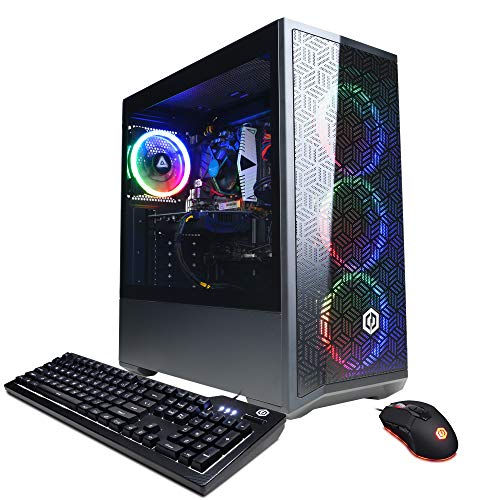
CyberpowerPC Gamer Xtreme VR Gaming PC

Skytech Gaming PC Storm

Lenovo Legion Tower 5i Gaming PC
The Picks, Examined More Closely
The Horizon Autherium Dragon RGB I9 arrives configured like a system aimed at newcomers who want one tower to last several hardware generations. A Core i9 unlocked processor pairs with an NVIDIA RTX 5070 OC, which is the kind of pairing that handles 1440p gaming today and should still hold up as future titles arrive.
Where this build separates itself from typical starter rigs is storage. The combination of a 1TB NVMe SSD (a fast solid-state drive that uses the M.2 slot for quick boot and load times) alongside a 4TB 7200RPM hard drive gives you a real library for a sizable game collection. The 360mm AIO liquid cooler helps the chip stay cool under sustained load, and 64GB of RAM leaves plenty of headroom for streaming, browser tabs, and creative work in parallel.
What Pays Off
- Core i9 unlocked CPU gives meaningful overclocking headroom for users who later want to tune performance manually.
- 64GB of RAM doubles what most mid-range starter builds ship with, which pays off for anyone juggling Discord, a game, OBS, and a browser at once.
- Dual storage layout means your OS and current titles load fast, while the larger HDD holds full game libraries without needing an external drive.
- RTX 5070 OC graphics card brings hardware ray tracing (real-time lighting that mimics how light behaves in the real world) and DLSS frame generation into the entry tier.
- Windows 11 Pro offers BitLocker drive encryption and Remote Desktop, useful features for students or remote workers.
Things To Consider
- The RGB-heavy case aesthetic may not blend with minimalist home office setups, and some owners report the stock fans lean louder under heavy gaming load.
- 5TB total storage is generous, but the 4TB mechanical drive is a traditional HDD, so large installed games on that drive will load noticeably slower than titles on the NVMe SSD.
At A Glance
Who Should Grab It
First-time builders who plan to keep the same tower for four to five years and want strong 1440p performance from day one.
Look Elsewhere When
The CyberpowerPC Gamer Xtreme VR Gaming PC suits shoppers whose budget is tighter and whose target is mostly 1080p esports titles.
The CyberpowerPC Gamer Xtreme VR Gaming PC takes a deliberately modest approach. The Intel i5-10400F is a six-core, twelve-thread CPU that still handles modern esports and many AAA games without breaking a sweat, even though it sits in an older product family.
Paired with a GTX 1660 Super, this system targets 1080p gamers who care more about smooth frame rates in competitive titles than cranking every visual setting to maximum. The 500GB NVMe boot drive keeps Windows responsive, and 8GB of DDR4 memory is enough for a focused gaming session. For newcomers curious about VR headsets, the GTX 1660 Super meets the minimum bar for headsets like the original Rift, which makes the “VR” in the name feel earned.
Strong Points
- The i5-10400F’s six cores handle modern games and everyday productivity comfortably for the price tier.
- 500GB NVMe SSD keeps boot and load times quick, a meaningful upgrade over spinning hard drives in older budget builds.
- GTX 1660 Super graphics card runs most esports titles well above 60fps at 1080p.
- Compact mid-tower form factor fits on a standard desk without dominating the room.
Honest Caveats
- 8GB of RAM is the realistic floor for modern gaming; owners commonly find a second stick helps when running a browser or Discord alongside a game.
- The GTX 1660 Super does not include hardware ray tracing cores, so titles that lean on RT effects will require lower settings or a future GPU upgrade.
- 500GB fills up fast with modern titles averaging 50GB to 100GB each, so budgeting for an external drive or SSD add-on is worth considering.
Made For
First-time builders and students on a tighter budget who mostly play esports or older AAA titles at 1080p and want to try entry-level VR.
Another Choice May Suit
The Skytech Gaming PC Storm is the better fit for shoppers who want newer generation hardware and a larger SSD out of the box.
The Skytech Gaming PC Storm hits a comfortable middle ground for newcomers. Its AMD Ryzen 5 5500 is a six-core, twelve-thread chip based on the Zen 3 architecture, which is the design generation that brought strong single-thread gains and solid gaming performance to mainstream buyers.
The RTX 5050 graphics card brings NVIDIA’s current generation features, including DLSS 4 and improved ray tracing efficiency, into a more approachable price tier. 32GB of DDR4 RAM is generous for a starter system and lets you keep a browser, chat apps, and a game open without memory pressure. The 1TB NVMe SSD gives you enough room for the OS plus a healthy rotation of installed games, and the no-bloatware approach means a cleaner out-of-box experience.
Benefits That Matter
- 32GB of RAM is double what most entry builds offer, paying off for multitaskers who keep chat and browser tabs open during play.
- RTX 5050 graphics card supports the latest DLSS 4 frame generation for smoother high-refresh gaming on supported titles.
- 1TB NVMe SSD is a meaningful storage floor for modern games, with no spinning hard drive to slow things down.
- No bundled bloatware streamlines the first-boot setup and keeps system resources free for games.
Trade Offs
- The Ryzen 5 5500 lacks integrated graphics, so a motherboard GPU failure leaves you without a fallback display path.
- The included air cooler handles stock operation well, but owners pushing sustained all-core loads may want a tower cooler upgrade for quieter operation.
Key Specs
Right Fit For
First-time buyers who want a current-generation graphics card with DLSS support, plus generous RAM and storage, for 1080p and entry 1440p gaming.
Where Another Pick Suits Better
The Lenovo Legion Tower 5i is the better fit for shoppers prioritizing a refined cooling system and a quieter tower for long sessions.
The Lenovo Legion Tower 5i lands as the most “grown-up” pick on this list, the one that feels closer to a long-term investment than a starter box. The Intel Core Ultra 7 265F is a current-generation Arrow Lake chip with a strong blend of efficiency cores (lower-power cores that handle background tasks) and performance cores for gaming and creative work.
The RTX 5070 Ti graphics card is a meaningful step up from the RTX 5070, with more CUDA cores (NVIDIA’s parallel processing units that handle game and rendering workloads) and additional VRAM (video memory dedicated to the graphics card) for higher resolution textures. Lenovo’s Legion Coldfront cooling system is designed to keep the system quiet under load, and the 3-month PC Game Pass inclusion helps newcomers fill out a library without extra software purchases.
The Value In It
- RTX 5070 Ti graphics card brings stronger 1440p and entry 4K performance to the lineup.
- Legion Coldfront cooling is engineered to keep noise low during long gaming or streaming sessions.
- 32GB of memory gives headroom for creative software like video editors and 3D tools alongside games.
- Three months of PC Game Pass adds immediate library value for anyone new to PC gaming.
- Intel Core Ultra 7 265F brings modern efficiency cores that handle background work without taxing the performance cores.
Points To Keep In Mind
- 1TB of storage fills quickly with modern games, so an internal or external drive upgrade is a likely early add-on for heavy installers.
- The 5070 Ti draws more power than the RTX 5050, so the system will need a robust wall outlet and a UPS (uninterruptible power supply) is worth considering for storm-prone areas.
Whose Shelf It Belongs On
First-time buyers who want a near-flagship experience with quiet cooling, modern connectivity, and room to grow into creative work or 4K gaming.
Not Your Match When
The Horizon Autherium Dragon RGB I9 is the better fit for shoppers who specifically want a 4TB secondary drive for a large existing game library.
What Matters Most Before Choosing First Gaming Pcs
Pairing CPU and GPU So Neither Wastes Money
A common first-rig mistake is overspending on one component while starving the other. A high-end graphics card paired with an older CPU creates a bottleneck, where the faster chip sits idle waiting for the slower one. For 1080p gaming, a six-core CPU and a mid-range GPU balance well. For 1440p and beyond, leaning harder on the graphics card tends to deliver more visible improvement per dollar.
Storage Planning Beyond the Boot Drive
Modern games regularly exceed 50GB, and live-service titles often push past 100GB after updates. A 500GB drive feels cramped within months, while 1TB tends to last a typical first-year user comfortably. Solid-state drives (SSDs) are now standard for the boot drive, and they dramatically reduce load times. Mixing an SSD for the OS and active games with a hard drive for media and archives is a common pattern for higher-capacity builds.
Cooling, Noise, and Room to Upgrade
AIO liquid coolers (all-in-one closed-loop liquid cooling units mounted to the CPU) and large tower air coolers both work for entry systems, but noise and clearance matter. Mid-tower cases usually fit standard coolers, while smaller cases may restrict radiator size. Picking a case with front-panel mesh and room for additional fans helps with thermals and keeps noise in check during long sessions.
Ports, Networking, and Future-Proofing
Front-panel USB-C, multiple display outputs, and Wi-Fi 6 or newer make daily use noticeably smoother. Newcomers often overlook networking, but a wireless card that supports current Wi-Fi standards avoids frustrating lag and disconnects, especially in apartments with crowded Wi-Fi channels.
Key Considerations Across These Picks
Where Shoppers Go Wrong
A frequent slip is chasing raw numbers like core count or RAM size without checking how those parts work together. Pairing a top-tier GPU with an older CPU leaves performance on the table, and overspending on RAM that a game never uses is a common newcomer trap. Match the system to the resolution and refresh rate of the monitor you actually own.
Where The Extra Money Goes
Stepping up to a higher tier typically buys quieter cooling, a more capable graphics card with more VRAM, and a chassis that allows future upgrades. For first-time builders, those upgrades often matter more than headline CPU speeds, because they extend the useful life of the system across several years of new game releases.
Frequently Asked Questions
Do I need to build my first PC myself?
Not at all. Prebuilt systems like the ones covered here arrive ready to plug in, with Windows installed and drivers configured. Building is a learning experience, but it adds time and risk that many newcomers prefer to skip on their first tower.
How much RAM does a starter gaming PC actually need?
16GB is the comfortable floor for modern games, while 32GB provides headroom for streaming, chat apps, and creative work running alongside the game. 8GB feels restrictive today and is the first upgrade most owners consider.
Is a 500GB SSD enough for a first gaming PC?
It works for one or two large titles plus the OS, but most new owners add a second drive within their first year. Starting at 1TB is a safer choice for anyone planning to install several modern games.
What is DLSS, and should I care as a beginner?
DLSS stands for Deep Learning Super Sampling, an NVIDIA technology that renders games at a lower resolution and uses AI to upscale the image, producing higher frame rates with minimal visual cost. It is worth caring about because it lets a mid-range card deliver performance close to a higher-tier one in supported games.
Should I worry about Wi-Fi on a gaming desktop?
Wi-Fi matters more than newcomers expect, especially in dorms or apartments where running an Ethernet cable is awkward. A system with current-generation Wi-Fi keeps latency low and avoids the dropouts older wireless cards can suffer in crowded networks.
Wrap Up
A first gaming PC should match the games you actually play, the monitor you sit in front of, and the length of time you expect to keep the tower. Budget shoppers do well starting simple, while newcomers planning to keep a system through several hardware generations benefit from leaning a bit heavier on the GPU and storage. Pick the system that fits the resolution and library you want, and you will be in good shape for years of play.


