


Your Steam library just hit 2 TB, and your boot drive is groaning. That’s the moment a good external hard drive earns its keep, holding massive installs, cold-stored campaigns, and 4K captures without turning load times into a coffee break. The right external hard drives for PC gaming stretch your SSD, organize screenshots, and let you swap libraries between rigs. Skip the wrong pick, and you’re stuck waiting on transfers every time you reinstall a single title.
The Lineup, Simplified

WD 2TB Gaming Drive for PS4 (WDBDFF0020BBK-WESN)

ADATA HV620S 1TB Slim External Hard Drive (Black)

SanDisk 4TB Extreme Portable SSD (SDSSDE70-4T00-G25)

Seagate 2TB Game Drive for PS4 (STGD2000100)

Seagate 4TB Game Drive for PS4 (STGD4000400)
SanDisk 1TB Extreme Portable SSD (SDSSDE70-1T00-G25)
SanDisk 2TB Extreme Portable SSD (SDSSDE70-2T00-G25)
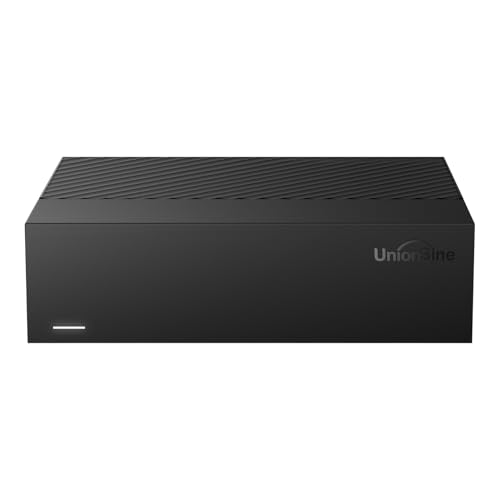
UnionSine 16TB Desktop External HDD (3.5″)
UnionSine 10TB Desktop External HDD (3.5″)
UnionSine 14TB Desktop External HDD (3.5″)
The Details Behind The Selections
Built primarily for PS4, this 2TB portable drive sidesteps the usual reformat headache by presenting a console-friendly profile out of the box. It connects over USB 3.0 (a fast data-transfer standard that handles typical game loads smoothly) and draws power from the port alone, so a separate brick never clutters your entertainment center. For PC users dipping into console crossover storage or anyone splitting time between rig and television, the format is forgiving.
The drive’s small footprint earns points in cramped TV stands. It runs cool enough for long sessions of suspended-download and idle data hoarding, though the lack of ruggedization means you’ll want a sleeve for travel. For most backpacks, the case feels sturdy enough to toss in with a controller and cable.
Practical Pluses
- 2TB holds roughly 50+ PS4 titles, so deleting old saves to make room for new releases becomes a thing of the past.
- USB 3.0 bus-powered design removes cable clutter near your TV.
- Compact 2.5-inch form factor (the small laptop-drive size) slides behind a console without crowding airflow.
- Plug-and-play setup means a brief format step on PS4, then full speed ahead.
Things To Consider
- Mechanical HDD speeds (a traditional spinning-platter drive, slower than flash-based SSDs) feel modest next to the SanDisk SSDs later in this list.
- No official rugged rating, so a padded pouch is wise for LAN parties.
- PC use requires reformatting from the PS4-friendly default to NTFS or exFAT for Windows or macOS.
Who It Suits Best
PS4 owners filling up launch-era libraries with modern downloads and DLC drops.
Consider Something Else When
Speed tops your list, in which case the SanDisk 1TB Extreme Portable SSD packs a much faster transfer profile into a similar form factor.
The HV620S lives up to its “Slim” name with an 11.5mm profile, thinner than most phones. That measurement is a real practical edge: it slips into jacket pockets and laptop sleeves that bulge around chunkier 2.5-inch drives. The reflective top finish gives it a clean, mirror-like look on a desk, while a subtle raised edge along the perimeter protects against scuffs when you set it down.
Owners who shuttle between dorms or coworking spaces tend to appreciate the bus-powered design. The blue activity LED signals transfers clearly without flooding a dark room. Against the WD 2TB above, this is a more portable but smaller-capacity option, and you may find 1TB tight if your Steam library is already 800GB deep.
What Pays Off
- 11.5mm thickness vanishes into slim laptop bags, a real perk for commuters carrying a 13-inch ultrabook.
- Raised edge guards the finish when the drive rests on a desktop or wooden shelf.
- USB 3.1 interface (a faster variant of the USB standard) keeps file transfers reasonably quick for an HDD.
- Game-console compatibility means it works as backup storage for titles you’ve already finished but want to revisit.
Points To Note
- 1TB caps out faster than most modern game installs demand, especially with 100GB+ AAA releases.
- Glossy finish picks up fingerprints during daily use, a minor cleaning chore.
- Mechanical internals make it more drop-sensitive than the SanDisk SSDs further down the list.
Best Suited To
Students and commuters who carry modest Steam or GOG collections between locations and value pocket-friendly hardware.
Look Elsewhere When
You need serious multi-TB headroom, in which case the UnionSine 16TB Desktop External HDD serves better as a stationary library vault.
SanDisk’s refreshed Extreme Portable SSD pushes the upper boundary of consumer external speed, with claimed transfer rates up to 2000 MB/s. That figure, real-world, translates into a 100GB install landing on the drive in well under a minute when paired with a USB 3.2 Gen 2×2 host (a high-bandwidth port capable of double the throughput of standard USB 3.0). For 4K video editors and shader-heavy game libraries, the gap over the WD 2TB HDD at pick 1 is enormous.
4TB of solid-state storage (flash-based, with no moving parts) covers a serious modern gaming footprint, including Unreal Engine 5 titles that often exceed 80GB each. The rubberized shell and IP-rated water resistance are genuine for outdoor gaming sessions and tabletop RPGs at the cabin. Compared with the Seagate 4TB HDD in pick 5, this is a quieter, cooler, and vastly faster unit.
Everyday Wins
- Up to 2000 MB/s read speeds slash install and load times for cold-stored titles.
- 4TB covers roughly 50–80 modern AAA games without juggling what stays installed.
- USB Type-C connectivity (a small, reversible connector standard) ensures compatibility with modern laptops and motherboards.
- Solid-state design means no fragile spinning platters, so backpack travel feels less risky.
Worth Noting
- Full speed requires a USB 3.2 Gen 2×2 port; older systems throttle to 1000 MB/s or lower.
- 4TB SSDs sit at a steep tier, so budget shoppers may find the 1TB or 2TB siblings friendlier.
- Heat builds during long sustained writes, a normal SSD behavior worth knowing for marathon transfers.
Key Product Details
Made For
Speed-driven PC gamers and content creators with large libraries who want near-instant transfers and cool, quiet operation.
Reach For A Different Pick When
Capacity per dollar matters more than speed, in which case the Seagate 4TB Game Drive for PS4 delivers much more storage for casual rates.
The Seagate 2TB Game Drive is officially licensed by Sony, which translates to seamless PS4 recognition without the firmware juggling that grey-market drives sometimes demand. Plug it in, follow the on-screen format prompt, and your library expands. The black-and-blue shell echoes the console’s own color scheme, a small aesthetic win for matching setups.
USB 3.0 handles the bus-power side, so no second cable snakes behind your TV. The 2TB ceiling lands roughly 50+ installed PS4 games, enough for most full backlogs. Against the WD 2TB in pick 1, this is a near-twin on capacity, but with the official license advantage some users find reassuring.
Useful Highlights
- Official PS4 licensing means Sony’s firmware is already configured to accept it without manual tweaks.
- 2TB holds a typical PS4 game library with room for downloadable add-ons.
- Plug-and-play USB 3.0 design gets you gaming within minutes of unboxing.
- Travel-ready compact chassis fits in a backpack sleeve alongside your console and controllers.
Room For Improvement
- HDD mechanics limit transfer speed compared with the SanDisk SSDs further down the list.
- PS4 firmware locking means the drive cannot double as extended PC storage without reformatting.
- Plastic shell feels lighter and less premium than the rubberized SSD alternatives.
Perfect Match For
Console loyalists who want zero-friction PS4 expansion and prefer officially licensed peripherals for warranty peace of mind.
Skip It When
You split time between PC and console, where the WD 2TB Gaming Drive covers both ecosystems with a simpler reformat path.
4TB on a console-friendly HDD is generous by any measure, and Seagate packages that capacity in the same officially licensed chassis as its 2TB sibling. The jump from 2TB to 4TB roughly doubles what you can keep installed, so cold-stored RPGs and classic PS Plus collection titles no longer demand constant re-downloads.
Plug-and-play over USB 3.0, this drive also works on PCs after a quick reformat to NTFS (a Windows file system) or exFAT (a cross-platform system). Against the 2TB version above, the only real shift is capacity per dollar and breathing room. The SanDisk 4TB SSD in pick 3 trades speed for premium pricing, while this Seagate keeps things in HDD-budget territory.
What Helps Most
- 4TB holds 100+ PS4 games, so your entire backlog can stay installed and ready.
- Official PS4 licensing avoids compatibility guesswork.
- USB 3.0 plug-and-play means no separate power brick.
- Classic black-and-blue styling matches the PS4 aesthetic.
Things To Weigh
- HDD spin speeds produce audible clicks during heavy read sessions, especially at night.
- Reformatting is required for PC use, locking it to one ecosystem at a time unless partitioned.
- Mechanical drive internals mean a drop on hard flooring can end the warranty fast.
Quick Facts
Who Will Love This
PS4 owners with massive libraries, plus gamers who want to keep entire franchise collections on a single drive without juggling re-installs.
Not Your Match When
Speed is non-negotiable; the SanDisk 4TB Extreme Portable SSD delivers flash-based performance for about the same space.
SanDisk’s 1TB Extreme Portable SSD is the smallest-capacity sibling in the refreshed family, but it inherits the same speedy internals and rugged build. For streamers and content creators who shuttle footage between rigs and editing bays, the 1TB size slots comfortably into a camera bag alongside a GoPro or mirrorless body.
Transfer rates up to 2000 MB/s pair nicely with USB Type-C laptops and modern desktops. The drive’s IP65 water and dust resistance (a rating meaning it tolerates light water jets and dust ingress) gives peace of mind for outdoor shoots and crowded LAN tournaments. Against the SanDisk 2TB version in pick 7, this trades capacity for a noticeably friendlier entry price.
Why It Works Well
- Up to 2000 MB/s reads make this faster than nearly every HDD on the list.
- USB Type-C connectivity works with current laptops, tablets, and phones without dongles.
- 1TB suits on-the-go creators who offload weekly rather than hoard long-term.
- Ruggedized shell and IP65 rating add genuine durability for travel-heavy use.
Honest Caveats
- 1TB fills up fast for users with multi-year Steam libraries, so you may outgrow it within a year.
- Top speeds require USB 3.2 Gen 2×2 host support, otherwise throughput drops to Gen 2 levels.
- 1TB SSDs still cost more per gigabyte than the UnionSine desktop HDDs further down.
Whose Shelf It Belongs On
Mobile creators, competitive gamers, and streamers who want pocket-sized speed for captures and fast cold-store access.
Swap It Out When
You need broader headroom without giving up SSD speed; the SanDisk 2TB Extreme Portable SSD strikes that middle ground well.
2TB lands as the sweet spot in the Extreme family, big enough for most active gaming libraries and modest capture archives, while keeping the per-gig cost reasonable compared with 4TB. The same 2000 MB/s ceiling applies, so this is essentially the 1TB drive in pick 6 with double the breathing room.
For mid-range PC builds using a 1TB internal NVMe (a fast internal drive format that slots into the motherboard) and wanting a matching external companion, 2TB keeps the workflow balanced. You move full games back and forth without juggling what fits. Against the Seagate 4TB HDD in pick 5, this trades four times the capacity for several times the speed.
Noteworthy Benefits
- 2TB suits active libraries of 30–50 modern games, with buffer for captures.
- USB Type-C interface ensures compatibility with current motherboards and laptops.
- Solid-state build shrugs off backpack bumps far better than spinning drives.
- Compact form factor slides into most controller cases and sling bags.
Trade Offs
- Costs more per gig than desktop HDDs, a fair trade for speed but a real budget consideration.
- USB 3.2 Gen 2×2 hosts are still rare, so many users see 1000 MB/s instead of the headline 2000.
- No hardware encryption features listed, so sensitive work files need software protection.
Feature Snapshot
Built With In Mind
Mid-range PC builders and creative hobbyists who want SSD responsiveness in a portable form without the 4TB price tag.
Reach For A Different Pick When
Capacity trumps speed entirely, in which case the Seagate 4TB Game Drive for PS4 quadruples storage at a fraction of the price per TB.
16TB in a single 3.5-inch desktop enclosure is a serious claim, and UnionSine pairs it with USB 3.0 MicroB (a compact USB connector variant) for theoretical read/write speeds around 130–270 MB/s. That is HDD territory, but the volume dwarfs every portable option above. For users with multi-decade libraries, 4K capture workflows, and family-shared media, 16TB removes the constant delete-and-redownload dance.
The unit needs its own power brick and desk space, so it’s not a portable pick. Compared with the 10TB UnionSine in pick 9, this 16TB sibling targets users with the heaviest storage demands, while 10TB suits families with more modest collections. The honest read: massive capacity at modest speed, anchored to a desk.
What It Does Well
- 16TB comfortably covers 200+ modern games, plus family media archives.
- Desktop form factor houses a 3.5-inch HDD (the standard desktop drive size) engineered for sustained operation.
- USB 3.0 connection offers broad compatibility with desktops, laptops, and even some smart TVs.
- Horizontal layout stacks neatly under monitors or beside routers.
Less Ideal Details
- Requires a dedicated power outlet, so it stays tethered to a desk.
- HDD speed feels glacial compared with the SanDisk SSDs in picks 3, 6, and 7.
- Spinning-platter design means careful handling during moves; the unit is best left in place.
Perfect Match For
Power users, multi-PC households, and small studios running shared game and media libraries from a single stationary vault.
Look Elsewhere When
You game on the go and want pocketable speed, in which case the SanDisk 1TB Extreme Portable SSD fits a backpack with no compromise.
The 10TB UnionSine slots into a middle ground between portable convenience and archival overkill. For a household juggling a few gaming PCs, a console, and a 4K-capable smart TV, 10TB spreads comfortably across all of them. Game installs, photo backups, and recorded streams fit without constant triage.
USB 3.0 MicroB provides the same 130–270 MB/s range as the larger siblings. The unit’s horizontal chassis sits tidily next to a router or under a monitor, and it does need a power outlet. Against the 16TB version above, this 10TB is the friendlier entry into multi-TB desktop storage when full archive needs are still a year or two away.
Useful Strengths
- 10TB handles around 100+ modern game installs alongside media backups.
- 3.5-inch desktop enclosure runs cooler than compact portables under sustained load.
- USB 3.0 interface pairs with most PCs and laptops without driver installs.
- Horizontal layout keeps the drive stable on crowded desks or shelves.
Possible Compromises
- External power brick adds one more outlet commitment to your setup.
- HDD read speeds are noticeably slower than SSD competitors for cold-stored game loads.
- Drive is stationary by design, so it suits a home office or media center rather than mobility.
Right Fit For
Families and shared households that want one drive to back up multiple gaming PCs, consoles, and media without monthly library pruning.
A Better Fit Elsewhere
Solo competitive gamers who game on the move; the SanDisk 1TB Extreme Portable SSD gives them the speed and form factor that desktop HDDs cannot.
14TB sits in an awkward middle child slot, but for capture-heavy creators and streamers, that awkward middle is actually useful. Plenty of room for 4K gameplay footage, raw screen recordings, and a long backlog of finished sessions, all without spinning up cloud subscriptions.
The same 3.5-inch desktop architecture and USB 3.0 MicroB interface as the 10TB and 16TB siblings apply. The 14TB tier is for those who find 10TB slightly tight and 16TB slightly excessive, a Goldilocks volume between the two. Against the SanDisk 4TB SSD in pick 3, this trades speed for an extra ten terabytes at a fraction of the price.
What Works In Its Favor
- 14TB covers multi-year capture archives plus current-gen game libraries.
- 3.5-inch form factor handles sustained read/write workloads common in streaming setups.
- USB 3.0 MicroB provides reliable throughput for backing up large media files.
- Horizontal case design integrates neatly with home office or studio gear.
Trade-Offs To Consider
- External power supply required, so no travel-friendly grab-and-go.
- HDD mechanics mean cold-stored game loads are slower than the SSD options in this list.
- Bulkier footprint than the Seagate 2TB or 4TB portable drives, so plan desk space accordingly.
At A Glance
Best Suited To
Streamers, content creators, and archival users who want maximum stationary capacity without jumping to the 16TB price tier.
Swap It Out When
Speed matters as much as capacity, in which case the SanDisk 2TB Extreme Portable SSD trades ten terabytes for flash-fast transfer rates.
What To Weigh Before Choosing Storage
Capacity, speed, and portability pull against each other in the external drive world, so the smartest pick matches your workflow rather than chasing the highest spec sheet. Start with where the drive lives: a stationary desktop unit like the UnionSine 16TB only makes sense near a power outlet, while a portable SSD earns its keep on a daily commute.
Speed comes down to how often you actually move games. A traditional HDD (spinning-platter drive) hits roughly 100–200 MB/s, which feels fine for occasional transfers but tedious for 100GB+ modern installs. SSDs (solid-state drives) push past 1000 MB/s, with newer USB 3.2 Gen 2×2 models (a high-bandwidth USB standard) claiming 2000 MB/s, ideal for active libraries.
Compatibility matters too. PlayStation-formatted drives work on consoles but need a reformat for PC use, while cross-platform file systems like exFAT (a file format readable by both Windows and macOS) handle mixed ecosystems. Match the connection type, USB Type-C, USB 3.0, or USB 3.2 Gen 2×2, to your hardware’s actual ports to unlock advertised speeds.
Key Considerations Across These Picks
Pitfalls Shoppers Hit
External drives often get sold on raw capacity, but the overlooked spec is sustained write speed. A 16TB HDD sounds great until you try to back up a 500GB capture folder, and you realize your “spacious” drive takes all night. Look at realistic throughput numbers, especially for stationary desktop units that look like bargains on paper.
Another common trap is buying a portable drive expecting SSD speeds. HDDs in slim 2.5-inch shells (the small laptop-drive form factor) still spin platters and click during reads. Read the spec sheet, not just the form factor photo, to know what you’re actually getting.
When Paying More Pays Off
The SSD premium, like the SanDisk Extreme family, buys you more than speed. Solid-state drives (flash-memory storage with no moving parts) have no fragile spinning components, so they shrug off backpack drops and travel jostling that end HDD warranties fast. They also run silent and cool, which matters in a quiet bedroom battlestation or a streaming setup where fan noise is already a concern.
The extra spend pays off most for users who move games regularly, edit on the go, or simply hate waiting on progress bars. If your drive lives in one place and only sees occasional file dumps, an HDD still does the job, and saves meaningful money for capacity you might actually use.
Frequently Asked Questions
Do external SSDs really load games faster than HDDs?
Yes, especially for cold-stored titles. A solid-state drive cuts load times significantly compared with a mechanical HDD, which has to physically seek data on spinning platters. The gap is most noticeable on open-world games and 4K-asset-heavy titles.
Can I use a PS4-formatted drive on a PC?
Not directly. PS4-formatted drives use a file system the PC doesn’t read by default. A quick reformat to NTFS (Windows) or exFAT (cross-platform) unlocks the storage for desktop use, though it wipes the drive clean, so back up anything important first.
What’s the difference between USB 3.0 and USB Type-C?
USB 3.0 is a speed standard (how fast data moves), while USB Type-C is a connector shape (a small, reversible plug). A drive can use USB 3.0 speeds through a Type-C plug, a traditional USB-A plug, or MicroB, so check both the protocol and the connector before buying.
Is a desktop HDD worth it over a portable SSD?
For pure capacity, yes. Desktop HDDs reach 10–16TB at prices portable SSDs cannot touch. The trade is speed, noise, and the need for a power outlet, so they suit stationary libraries more than daily travel.
How do I know if my laptop supports 2000 MB/s speeds?
Check your USB ports. USB 3.2 Gen 2×2 ports (often labeled “SuperSpeed 20Gbps”) unlock the fastest external SSD speeds. Older USB 3.0 or 3.1 Gen 2 ports will throttle the drive to roughly 500–1000 MB/s, still fast, but not the headline rate.
The Takeaway
External storage solves different problems for different gamers. Console loyalists find relief in officially licensed PS4 drives, mobile creators lean on rugged portable SSDs, and family-sized libraries breathe easier with multi-TB desktop vaults. The right pick is the one that matches your real workflow, not the one with the biggest number on the box. Start with where the drive will live, then pick the speed and capacity tier that fits how often you actually move files.


