


Getting into PC gaming without burning through your savings means making smart trade-offs. The picks below span tiny mini PCs that can hang on the back of a monitor, mid-tower desktops ready to push smooth frame rates, and a few clever middle-ground options that blur the line between casual play and serious hobby. Each one is mapped to a clear reader profile, so you can stop comparing spec sheets and start gaming.
A Snapshot Of The Selections
ACEMAGIC X3 Mini Gaming PC Ryzen 7 H 255 Radeon 780M 16GB 1TB Windows11 Pro
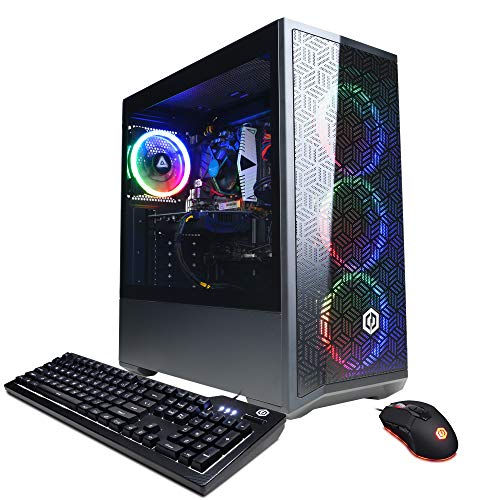
CyberpowerPC Gamer Xtreme VR Gaming PC Intel i5-10400F GTX 1660 Super

Skytech Gaming King 95 Intel Ultra 7 RTX 5070 Ti 32GB DDR5

ACEMAGIC M5 Mini PC Intel Core i7-14650HX 16GB DDR4 1TB

ACEMAGIC K1 Gaming Mini PC Ryzen 7 7730U 16GB 512GB

ACEMAGIC M1 Mini PC Ryzen 7 7735HS 24GB LPDDR5 1TB NVMe
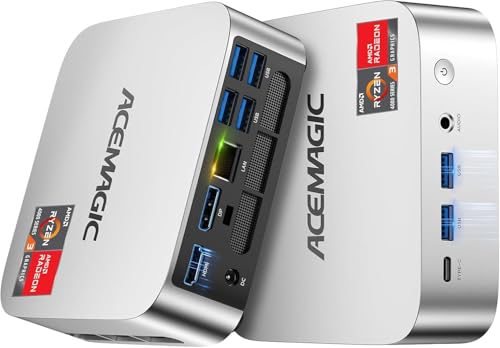
ACEMAGIC Mini PC AMD Ryzen 7330U 16GB 256GB Triple 4K
Why These Options Stand Out
The X3 reads like a desktop pretending to be a bookend. The Ryzen 7 H 255 is a laptop-class processor (a chip designed for thin gaming laptops) that holds high clock speeds under sustained load, paired with integrated Radeon 780M graphics that handle 1080p esports comfortably. Sixteen gigs of RAM and a full terabyte of NVMe storage (a fast solid-state drive that uses the NVMe interface for quick load times) means modern games and a decent library fit without any upgrades day one.
You mount it behind a monitor with VESA, plug in power and HDMI, and you are playing. It is the easiest entry point on this list for a dorm room, studio apartment, or anyone who refuses to dedicate a corner of the room to a tower.
Notable Gains
- Eight-core Ryzen chip clocks up to 4.9GHz for smooth 1080p in titles like Valorant and CS2
- Radeon 780M integrated graphics are the strongest iGPU (integrated graphics, meaning the GPU is built into the CPU) you will find at this tier, capable of light AAA gaming with tuned settings
- 1TB NVMe SSD keeps load screens short and the library roomy
- Tiny chassis fits in a backpack, mounts behind a monitor, and runs cool enough to live on a bookshelf
- Windows 11 Pro is preinstalled, so you skip the setup hassle
Things To Consider
- No discrete GPU slot, so demanding AAA titles require settings tuning or a cloud-gaming workaround
- Mini-PC thermals mean sustained loads can trigger gentle thermal throttling (the chip reducing speed to stay cool) under marathon sessions
At A Glance
Who It Suits Best
Esports and indie gamers running 1080p monitors who want a clean, tiny setup and do not mind tuning settings for the occasional AAA release.
Where Another Pick Suits Better
Streamers or anyone targeting high-refresh 1440p will find the Skytech Gaming King 95 a stronger match, because it pairs a desktop-class Intel Ultra 7 with a discrete RTX 5070 Ti graphics card.
The Gamer Xtreme is a traditional mid-tower with a traditional beginner story. The i5-10400F is an older 6-core chip (an “F” suffix means the chip has no integrated graphics, so it must rely on a dedicated GPU), but pair it with a GTX 1660 Super, and you get a system that still runs the most popular multiplayer games at comfortable frame rates.
For anyone whose gaming diet is mostly esports, indie hits, and a few years of older AAA, the math works out. You are not paying for silicon you will not use.
Useful Touches
- GTX 1660 Super is a known quantity for 1080p gaming and easy driver support
- NVMe boot drive (a fast SSD used as the main system drive) keeps the OS and load times snappy
- Standard mid-tower allows future GPU or RAM swaps without a specialty case
- WiFi ready out of the box for cable-free setups
Worth Noting
- The i5-10400F is two generations behind current chips, so it can bottleneck (hold back) a future GPU upgrade
- 8GB of RAM is the bare minimum for modern titles; expect to add another stick within a year
- Comes with Windows 10 Home, which is reaching end of mainstream support
Best Suited To
First-time PC gamers on a tight budget who mostly play competitive shooters, MMOs, and indie games at 1080p.
Swap It Out When
Anyone who can stretch the budget a bit should consider the ACEMAGIC X3 instead, since it bundles newer integrated graphics, more RAM, and a full terabyte of storage in a smaller package.
The King 95 is the build you graduate to once you know you will be gaming for years, not weekends. An Intel Ultra 7 270K Plus turboing to 5.4GHz is genuinely desktop-class silicon (full-power processor designed for towers with proper cooling and power delivery), and the RTX 5070 Ti with 16GB of VRAM (video RAM dedicated to the graphics card) chews through 1440p and entry 4K without breaking a sweat.
Add 32GB of DDR5 at 6000MT/s, a 360mm AIO liquid cooler (an all-in-one liquid CPU cooler with a 360mm radiator, meaning a closed-loop water cooling system), and an 850W Gold PSU (a power supply unit rated 80 Plus Gold for energy efficiency), and Skytech has built a tower ready for VR, streaming, and whatever the next five years of game releases throw at it.
Strengths Worth Knowing
- RTX 5070 Ti handles ray tracing (a rendering technique that simulates realistic lighting and reflections) and DLSS (Nvidia’s AI-driven frame generation, which renders fewer pixels and reconstructs the rest) for high-refresh 1440p
- 32GB DDR5 leaves headroom for modded games, browser tabs, and streaming software running at once
- 360mm AIO keeps the unlocked CPU cool under long sessions
- 850W Gold PSU gives upgrade room for a future flagship GPU
- WiFi 6 and Windows 11 round out a current-generation feature set
Trade Offs
- Full tower footprint demands dedicated desk space and good cable management
- ARGB lighting (addressable RGB, meaning customizable per-LED color) may not appeal to minimalist setups
- Overkill for anyone whose library stops at indie and esports titles
Perfect Match For
Enthusiasts and aspiring streamers who want one build that will stay relevant for multiple GPU generations.
Look Elsewhere When
Casual players in small apartments may prefer the ACEMAGIC X3, since it delivers playable frame rates in a fraction of the space.
The M5 is a curious middle child: a mini PC running Intel’s HX-class mobile chip, the same family that powers serious gaming laptops. You get 16 cores’ worth of multi-threaded muscle (the ability to handle many tasks simultaneously) for video work, code, and 3D modeling, plus a chassis that still tucks behind a monitor. Where the X3 leans into integrated gaming, the M5 leans into CPU-heavy creative work with gaming on the side.
You will want to pair it with a discrete GPU enclosure (an external box that holds a desktop graphics card, connected via Thunderbolt) or a cloud-gaming service for demanding AAA, but for strategy games, simulations, and competitive shooters at modest settings, it punches above its size.
Practical Advantages
- i7-14650HX with 16 cores handles heavy productivity tasks that bottleneck smaller chips
- 1TB SSD is generous for a mini PC at this tier
- Compact footprint keeps a hybrid work-and-play desk uncluttered
- HX-class chip means fewer compromises when running multiple virtual machines or compiling code
Points To Note
- Relies on integrated graphics for gaming, so a discrete GPU enclosure is the path to serious frame rates
- High-power mobile chips run warmer than typical mini-PC silicon; check ventilation around the chassis
Who Should Grab It
Hybrid users who split time between creative work and casual gaming, and who want a small box instead of a full tower on the desk.
Skip It When
Hardcore gamers targeting 1440p at high refresh should reach for the Skytech Gaming King 95 instead, since the RTX 5070 Ti is purpose-built for that workload.
The K1 is a tidy little box aimed at esports rosters and indie game libraries. The Ryzen 7 7730U is a power-efficient 8-core chip, the integrated Radeon graphics handle Dota 2, League, Stardew Valley, and similar titles at smooth frame rates, and the whole unit sips power quietly enough to live in a living room or shared dorm.
You will not run Cyberpunk on it, but you were never going to run Cyberpunk on a mini PC this small. For what it is, the K1 is honest about its lane.
What Works In Its Favor
- Low-wattage Ryzen chip keeps fan noise down for shared spaces
- 16GB RAM covers modern esports and indie games without upgrades
- Small chassis is genuinely portable for LAN parties or weekend trips
- Windows 11 Pro preinstalled
Honest Caveats
- 512GB fills up fast with modern game installs, so external storage becomes a near-necessity
- Demanding AAA games are out of reach without aggressive cloud-gaming reliance
- Only two SSD slots, limiting internal storage expansion
Right Fit For
Casual players who primarily enjoy indie hits, MMOs, and competitive esports at 1080p and want a quiet, low-maintenance setup.
Another Choice May Suit
Gamers who want more storage headroom in a similar mini form should consider the ACEMAGIC M1, since it ships with 24GB of RAM and a 1TB SSD out of the box.
The M1 is a storage-first mini PC. Twenty-four gigs of LPDDR5 RAM (low-power DDR5 memory soldered to the board for better energy efficiency) is a generous allotment for a system this small, and the 1TB NVMe drive gives you room for a real game library without external drives cluttering the desk.
It runs the same Ryzen 7 7735HS family as the K1 but with a notable RAM bump. If your day looks like spreadsheets, browser tabs, and After Effects, with a gaming session at 10pm, the M1 handles the multitasking gracefully.
Good Reasons To Consider
- 24GB of RAM is rare in this size class and prevents slowdowns with heavy multitasking
- 1TB NVMe leaves room for a sizable Steam library without expansion
- Supports an additional M.2 NVMe slot (a second small SSD slot inside the case) for future storage upgrades
- Low-power design runs cool and quiet in an office setting
Where It Is Less Suited
- LPDDR5 is soldered, so the RAM itself cannot be upgraded later
- Integrated graphics cap the ceiling for modern AAA titles at native resolution
Quick Facts
Whose Shelf It Belongs On
Productivity-first users who want a small PC for daily work and casual gaming after hours, without ever opening a desktop tower.
Reach For A Different Pick When
Pure esports performance matters more than RAM capacity, in which case the ACEMAGIC X3’s stronger integrated graphics pull ahead.
The base-tier ACEMAGIC mini is aimed at home office desks that occasionally double as gaming stations. The Ryzen 7330U is a 4-core chip with a 28W power draw, which keeps thermals tame and the fan quiet. Triple 4K display support through HDMI and other outputs is the standout spec for productivity users running multiple monitors.
Gaming is a side feature here. Older esports titles and indie games at 720p or low 1080p are realistic. Owners commonly rely on it more for spreadsheets, browser tabs, and light creative work than for a daily gaming habit.
A Strong Showing
- 28W TDP (thermal design power, the maximum heat the cooler must dissipate) keeps the unit cool and quiet under office workloads
- Triple 4K display support is rare in this class and ideal for productivity users
- 16GB of RAM is enough for browser-heavy multitasking
- Compact chassis fits in any home office or behind a monitor arm
Some Limits To Know
- 256GB SSD is the smallest on this list and will fill up fast with any serious game library
- 4-core chip struggles with modern AAA games even at reduced settings
- No discrete GPU option, so gaming ambitions require an external solution or streaming services
Made For
Remote workers and home office users who want a small, quiet PC with multi-monitor support and only casual gaming on the side.
A Better Fit Elsewhere
Gamers who want stronger integrated graphics in a similar form factor should look at the ACEMAGIC K1, since the Ryzen 7 7730U offers more headroom for actual gameplay.
Picking An Entry Level Gaming PC That Actually Fits
What The GPU Choice Really Means For You
The single biggest fork in the road is whether to go with integrated graphics (GPU silicon built directly into the CPU) or a dedicated graphics card. Integrated Radeon 780M and similar iGPUs handle 1080p esports and indie games beautifully, cost less, and let you keep the chassis tiny. Dedicated GPUs, like the RTX 5070 Ti in the Skytech Gaming King 95, push frame rates higher and unlock ray tracing, but they require a full tower, more power, and more cooling. Match the choice to the games you actually play tonight, not the ones you imagine playing in a year.
How RAM And Storage Affect Daily Use
Sixteen gigs of RAM is the current baseline for smooth gameplay with a browser and chat app open. Eight gigs (as in the CyberpowerPC Gamer Xtreme VR) starts to feel tight. Storage matters more than most shoppers expect. A 256GB SSD fills up after roughly three modern AAA installs, while a 1TB drive gives you a real library without constant uninstalling. Look for systems with a second M.2 slot if you think your library will grow.
CPU Generations And The Upgrade Cliff
An older 6-core chip like the i5-10400F still plays today’s games fine, but it can hold back a future GPU upgrade. If you plan to swap in a stronger graphics card two years from now, paying a bit more today for a current-generation CPU saves you from a full rebuild. Conversely, if you treat your first PC as a learning platform and expect to replace it within three years, a budget chip makes practical sense.
Form Factor And Where It Will Live
A mini PC on a bookshelf looks invisible. A full tower demands space, airflow, and cable planning. Consider where the system will sit, how it connects to your monitor, and whether you want it silent in a bedroom or visible in a gaming corner. The right answer is whichever setup you will actually use nightly.
Key Considerations Across These Picks
Where Shoppers Go Wrong
The most common mistake is chasing the largest GPU on a tight budget and skimping on RAM or storage. A RTX 5070 Ti paired with 8GB of system memory and a 256GB drive will choke on day-one installs, and the bottleneck (the slowest component that limits overall performance) becomes the cheap parts, not the GPU. Another trap is assuming integrated graphics can handle any modern AAA title at high settings. The iGPUs in this list are strong for their class, but they are not substitutes for a discrete card if you play demanding releases.
Where The Extra Money Goes
Spending up on a system like the Skytech Gaming King 95 buys you a real desktop-class CPU, a discrete GPU with its own VRAM, liquid cooling, and a power supply with upgrade headroom. Those components extend the useful life of the build. For a casual gamer, that premium is hard to justify. For anyone planning to play the latest releases at high refresh for the next three to five years, it is the difference between a quick first build and a long-term platform.
Frequently Asked Questions
Can A Mini PC Really Handle Modern Games?
Yes, within limits. Mini PCs with strong integrated graphics like the ACEMAGIC X3 handle esports and indie games at 1080p smoothly, and even some AAA titles at reduced settings. For consistent high-refresh or ray-traced gaming, a tower with a discrete GPU remains the better fit.
Is 16GB Of RAM Enough For Gaming In 2026?
For most gamers playing esports and indie titles, 16GB is still a comfortable baseline with a browser and chat app running. Heavy multitaskers, modders, and streamers benefit from 24GB or 32GB, while 8GB feels tight and often needs an upgrade within the first year.
How Long Will An Entry Level Gaming PC Stay Relevant?
Most entry-level builds handle current games well for roughly three to four years before settings need significant reduction. Systems with current-generation CPUs and a solid PSU, like the Skytech Gaming King 95, can stretch that window by accepting a future GPU upgrade without rebuilding the whole tower.
Do I Need Windows 11 Pro For Gaming?
For most gamers, Windows 11 Home covers the essentials. Windows 11 Pro adds features like BitLocker encryption (full-disk encryption that protects your data if the drive is stolen) and Remote Desktop, which matter more for productivity and business use than for gameplay.
What Accessories Should I Plan For With A New Gaming PC?
A 1080p or 1440p monitor with a refresh rate of at least 144Hz makes the most of any GPU in this list. A mechanical keyboard, a comfortable gaming mouse, and a headset round out the experience. Most desktops ship with basic peripherals, but a monitor is rarely included.
Wrap Up
The right entry level gaming PC is the one that matches the games on your wishlist, the space on your desk, and the budget you are comfortable spending. Mini PCs like the ACEMAGIC X3 and K1 shine in small spaces and lighter game libraries. Mid-towers like the CyberpowerPC Gamer Xtreme give you room to grow. And high-end systems like the Skytech Gaming King 95 keep you playing for years without a rebuild. Pick the one that fits your reality tonight, and the upgrade path will take care of itself.


