


Dynamic microphones have quietly become the go-to choice for gamers who want clean voice chat without the background hum of a busy room. Unlike condenser mics (which pick up every sound in the room), dynamic mics use a moving coil design that focuses on your voice and rejects keyboard clatter, fan noise, and that roommate shouting in the next room.
This roundup covers eight solid options spanning wired USB, dual USB/XLR setups, and full wireless kits. Most work straight out of the box, several include a boom arm, and a couple let you grow into a streaming rig with a mixer later. Whether you grind ranked matches, host a small Twitch audience, or just want Discord calls that don’t sound like a tin can, there’s a match here.
A Side-By-Side Look

FIFINE AmpliTank K688CT Podcast Microphone Kit, USB/XLR

FIFINE AmpliGame AM8T XLR/USB Gaming Microphone Set

FIFINE AmpliGame AM8 USB/XLR Dynamic Microphone

MAONO PD100W Wireless Dynamic Gaming Microphone

MAONO DGM20S Gaming Microphone with Noise Reduction

HyperX QuadCast USB Condenser Gaming Microphone
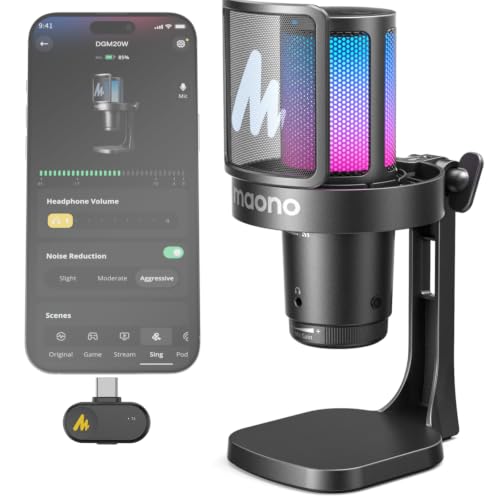
MAONO DGM20W Wireless Gaming Microphone

MAONO PD100X USB/XLR Podcast Microphone
The Strengths Of Each Pick
The K688CT sits in a useful middle ground for anyone who games tonight and records a podcast tomorrow. It runs through USB for a fast plug-and-play setup, then flips to XLR (the professional balanced audio connection found on mixers and audio interfaces) once you decide to invest in a real interface. The cardioid pickup pattern (capturing sound mainly from the front while rejecting the sides and rear) keeps your teammates focused on your callouts instead of your mechanical keyboard.
If your space doubles as a workstation and a streaming corner, the dual-connection design pays off quickly. You can start simple and level up without replacing the mic itself. The included boom arm keeps the capsule close to your mouth, which matters more than people think for clear voice capture.
Notable Upsides
- Dual USB and XLR output lets you start simple and grow into a mixer setup later
- Cardioid pattern naturally trims room noise and keyboard clatter from the sides
- 130 dB SPL (sound pressure level) handling means loud outbursts won’t clip the signal
- Boom arm in the box saves a separate purchase and keeps positioning flexible
Things To Consider
- XLR mode requires an interface or mixer you may not own yet
- Boom arm footprint takes up real desk space in smaller setups
Feature Snapshot
Who Will Love This
Hybrid creators who want one mic that handles both casual gaming sessions and more polished podcast recording as their setup matures.
Where Another Pick Suits Better
Streamers chasing RGB aesthetics and a brighter on-camera look will find the FIFINE AmpliGame AM8T a more visual fit for the frame.
Where the K688CT leans business-casual, the AM8T leans straight into streaming culture. The kit ships with a boom arm and the mic body itself carries RGB lighting that pops behind a facecam. Plug it into USB and you’re live in seconds; flip to XLR when your channel grows enough to justify a real interface.
For new streamers building a battlestation from scratch, the all-in-one nature of this set removes several shopping trips. The dynamic capsule handles the usual living-room noise sources better than most condensers in the same bracket.
Advantages To Know
- RGB lighting adds visual energy to streaming frames without extra accessories
- USB plug-and-play works on PC without driver installs
- Dynamic capsule keeps background fan and room noise out of your stream
- Boom arm included for proper mic positioning from day one
Points To Note
- RGB looks great on stream but adds nothing to actual audio quality
- Some users find the included arm stiff to reposition mid-session
- Dynamic design means you may need to speak close to the mic for full presence
Right Fit For
Streamers who want their mic to look as lively as their gameplay overlay and prefer an all-in-one kit over piecing parts together.
Skip It When
Anyone working in a quieter, more minimalist setup where RGB feels out of place should consider the cleaner-looking MAONO PD100W instead.
The AM8 is the streamlined sibling of the AM8T, dropping the bundled arm for a lower entry point. If you already own a boom arm or prefer a desk stand, this version hands you the same dual-connection core at a friendlier cost. The 50Hz to 16KHz frequency response (the range of sounds the mic can capture, from low to high) covers the human voice cleanly without exaggerating sibilance (the harsh “s” and “t” sounds) or bass.
For console players on PS5 or anyone broadcasting gameplay, the cardioid pattern trims room noise reliably. It’s the kind of mic you set up once and forget about, which is exactly what most people want from a daily driver.
The Upside
- Balanced 50Hz–16KHz response keeps voice natural without hyped frequencies
- Cardioid pattern reduces off-axis noise from keyboards and chat
- USB/XLR dual output matches the more expensive AM8T feature set
Honest Caveats
- No boom arm included, so factor one into your budget if needed
- Wired only, which may bother anyone eyeing a wireless setup
- You’ll likely need a pop filter (a mesh screen that softens plosive sounds like “p” and “b”) for the cleanest close-mic results
Quick Facts
Made For
First-time buyers stepping up from a headset mic who want real broadcast quality without a steep learning curve or hefty price.
Not Your Match When
Anyone wanting a completely cable-free desktop will find the MAONO PD100W wireless option a better personality match.
Most gaming mics still tether you to a USB cable snaking across the desk. The PD100W cuts that cord with a USB-C receiver that handles the wireless link, freeing you to push the mic aside when you need desk space or grab it for a quick IRL stream. The design feels purposefully minimal, all matte finish and clean lines.
If your battlestation leans toward the “clean cable management” side of the internet, this mic fits the aesthetic better than most. Audio quality holds up well for voice chat and casual streaming, though the wired MAONO PD100X remains a step up for serious production work.
A Favorable Mix
- Wireless USB-C receiver removes cable clutter from the desk
- Dynamic capsule stays focused on your voice in noisy rooms
- Minimalist matte design suits modern streaming setups
- Portable enough to relocate from desk to couch quickly
Some Limits To Know
- Wireless adds another device to charge or replace batteries on
- Potential for occasional signal hiccups in crowded 2.4GHz environments (the radio frequency band most Wi-Fi and wireless peripherals use)
Technical Highlights
Best Suited To
Streamers and remote workers with curated desk setups who value a cable-free look and occasional portability over maximum audio detail.
Look Elsewhere When
Studio-focused creators chasing the highest capture resolution should look at the wired MAONO PD100X instead.
Not every gaming space is sound-treated, and not everyone wants to fiddle with software noise gates (filters that automatically mute your mic when you stop talking, to cut silence noise). The DGM20S tackles that head-on with a one-click noise reduction button on the mic itself. Tap it and the onboard processing (digital sound cleaning handled inside the microphone) trims fans, AC hum, and general room buzz without making your voice sound like a robot.
The cardioid pattern handles the rest, focusing pickup on what’s directly in front of the mic. For shared apartments, dorms, and family homes where the gaming session competes with the dishwasher, this kind of set-and-forget convenience is the whole point.
Everyday Wins
- One-click noise reduction trims background distractions without software tweaking
- Cardioid pattern keeps focus on your voice for clear team comms
- Approachable price for first-time dedicated mic shoppers
- USB setup works the moment you plug in
Worth Noting
- Condenser design (uses a thin electrically charged diaphragm, more sensitive than dynamic mics) picks up more room character than dynamic alternatives
- Noise reduction is convenient but not as surgical as a proper treated room
Feature Card
Perfect Match For
Gamers sharing space with family, roommates, or street noise who want simple hardware-level noise control without learning audio software.
Consider Something Else When
Creators recording in already-quiet spaces may find the simpler FIFINE AM8 a more natural-sounding match for their voice.
The QuadCast has been a fixture in gaming setups for years, and the design still holds up. The shock mount built into the body, the tap-to-mute sensor on top, and the red LED glow make it feel like a piece of gaming gear rather than a generic microphone. Four polar patterns (cardioid, omnidirectional, bidirectional, and stereo, each suited to different recording situations) give it real versatility.
Cross-platform support covers PC, PS4, PS5, and Mac, so the same mic follows you between systems. The pop filter and shock mount are integrated, saving desk space and keeping the look tight.
Useful Touches
- Four polar patterns handle solo, interview, and group scenarios
- Tap-to-mute with LED indicator prevents accidental broadcast moments
- Built-in shock mount cuts vibration noise from desk bumps and keypresses
- Works across PC, PS4, PS5, and Mac without reconfiguration
Trade Offs
- Condenser capsule is more sensitive to room noise than the dynamic picks in this list
- USB only, so no XLR upgrade path for an eventual studio rig
Whose Shelf It Belongs On
Multi-platform creators who want one mic for gaming, streaming, podcasting, and the occasional group recording session at the same desk.
Another Choice May Suit
Streamers in untreated rooms chasing better noise rejection will likely prefer the dynamic MAONO PD100W or PD100X over a condenser design.
The DGM20W extends wireless freedom beyond the desktop, supporting both PC and smartphone connections. For creators who bounce between a gaming PC at home and a phone-based mobile stream on the road, the dual-mode 2.4GHz wireless link keeps the setup consistent in both worlds.
It shares the noise-reduction DNA of the wired DGM20S, making it a solid pick for travel content where you can’t control the room. Setup stays simple, the body stays compact, and the wireless range gives you room to move during IRL segments.
Why It Works Well
- Dual-mode wireless works with PC and smartphones
- Built-in noise reduction for unpredictable recording environments
- Compact form factor fits in a backpack or gear bag
- Quick setup avoids the driver hunt before a session
Practical Considerations
- Condenser sensitivity means loud outdoor environments can still leak in
- Battery management becomes part of your pre-stream routine
Spec Overview
Built With In Mind
Mobile-first creators who alternate between a home PC stream and on-the-go smartphone recording sessions on a regular basis.
Reach For A Different Pick When
Desktop-only gamers can save money and skip the wireless hardware by going with the wired FIFINE AM8 instead.
The PD100X is the spec-heavy option in this list, and the numbers tell the story. A 24-bit/48kHz sampling rate (how much audio detail the mic captures and converts into digital data per second) and a 40Hz to 16KHz frequency response put it ahead of most gaming-focused dynamic mics in raw resolution. For streamers who also produce edited content, that extra detail gives you more to work with in post.
Like the FIFINE AM8, it covers both USB and XLR connections, so the same mic handles a casual Twitch session today and a proper studio interface tomorrow. The cardioid capsule stays disciplined in untreated rooms, which matters when your “studio” is a corner of the bedroom.
Points In Its Favor
- 24-bit/48kHz capture preserves more vocal nuance than typical gaming mics
- Wider 40Hz–16KHz response adds low-end warmth without muddiness
- USB/XLR dual output supports a long upgrade path
- Cardioid capsule keeps noisy rooms from leaking into your stream
Less-Strong Areas
- Premium positioning may exceed casual chat needs
- Boom arm and shock mount sold separately on most listings
- Extra detail reveals poor mic technique if you’re not used to close-mic work
The Right Fit
Detail-oriented streamers and content creators who plan to grow into a proper interface setup and want a mic that grows with them.
A Better Fit Elsewhere
Pure casual gamers who only need Discord-quality voice chat will find the FIFINE AmpliGame AM8 a more cost-appropriate starting point.
Picking The Right Dynamic Mic For Your Setup
Choosing a gaming mic really comes down to three honest questions about how you use your space. First, how loud is the room around you? Dynamic capsules (which use a moving coil and magnet to generate signal) reject background noise better than condenser designs, so the busier the environment, the more you benefit from a dynamic model like the MAONO PD100W or PD100X. Condensers like the DGM20S or HyperX QuadCast pick up more detail but also more room clutter, so they suit quieter setups.
Second, do you want a cable-free desk or an XLR upgrade path? Wireless options like the PD100W and DGM20W clean up the look but add battery and signal considerations. USB/XLR hybrids like the K688CT, AM8T, AM8, and PD100X let you start simple and grow into a real interface without replacing the mic.
Third, how visible is the mic on stream? RGB-loaded picks like the FIFINE AM8T play well on camera, while minimalist designs like the PD100W disappear into a clean background. The right answer depends entirely on your frame and personal style.
Smart Considerations Before You Buy
Where Shoppers Go Wrong
The most common mistake is choosing a condenser for a noisy room and then blaming the mic for keyboard clatter in the recording. Dynamic capsules exist specifically for this situation, and no amount of post-processing fully fixes a poor source signal. The second trap is buying a wireless mic and forgetting it needs charging, often mid-session. Wired USB options like the FIFINE AM8 or MAONO DGM20S eliminate that risk entirely. A third overlooked detail is the boom arm: many “deals” on mics skip the arm, and a desk stand usually picks up more vibration than people expect.
What The Higher Tier Buys
The jump from entry-level to premium dynamic mics brings three real upgrades. Sample rate and bit depth (the two numbers that determine how precisely the mic digitizes your voice) climb from standard 16-bit/44.1kHz territory up to 24-bit/48kHz, preserving more vocal texture. Frequency response often widens on the low end, giving voices more warmth and presence. Build quality and capsule consistency also tend to improve, which matters if you stream daily and want the same sound a year from now as the day you unboxed it. The upgrade pays off most for creators doing edited content; pure casual chat may not justify the extra spend.


