


Building a rig from scratch takes patience, a steady supply of thermal paste, and the kind of patience that survives a BIOS flash gone sideways. Pre-built alternatives have grown up, though, and the picks below span everything from palm-sized mini PCs that disappear behind a monitor to a full Lenovo tower built for serious frame rates. These six options cover a wide spread of budgets, footprints, and use cases, so you can match a machine to the way you actually play, stream, and work.
The Choices Worth Comparing
ACEMAGIC X3 Mini Gaming PC Ryzen 7 H 255

ACEMAGIC M5 Mini PC Intel Core i7-14650HX

Lenovo Legion Tower 5i RTX 5070 Ti Gaming PC

ACEMAGIC K1 Gaming Mini PC Ryzen 7 7730U

ACEMAGIC M1 Mini PC Ryzen 7 7735HS
ACEMAGIC Mini PC Ryzen 7330U 16GB 256GB
Taking A Closer Look At The Options
The ACEMAGIC X3 Mini Gaming PC packs an unlocked AMD Ryzen 7 H 255 processor into a chassis you can hide behind a monitor, which matters if your desk space is already crowded with controllers and a capture card. With 8 cores and 16 threads boosting to 4.9 GHz, the chip leans into sustained workloads rather than brief benchmark spikes, so longer sessions in creative apps and modern games hold their frame pacing well.
Radeon 780M graphics handle 1080p esports at high refresh rates, and the 1TB NVMe drive leaves room for a healthy Steam library without an immediate storage upgrade. The 16GB of RAM is the practical sweet spot for most gaming workloads today, though creative pros rendering heavy timelines may eventually want more.
Strong Points
- Unlocked 54W TDP (the maximum power budget the CPU can draw, important because higher wattage usually means stronger sustained performance) lets the Ryzen 7 H 255 stretch its legs in long sessions
- Radeon 780M integrated graphics punch well above their weight for 1080p esports and lighter AAA titles
- 1TB NVMe storage holds a sizable game library out of the box
- Compact chassis disappears behind a monitor, freeing desk real estate for peripherals
- Windows 11 Pro arrives pre-installed, skipping a setup chore
Honest Caveats
- 16GB of RAM can feel tight when running a game plus streaming tools plus dozens of browser tabs
- Mini PC thermals in this class often run warmer under sustained load, so a well-ventilated desk helps
- Integrated graphics still trail a dedicated GPU for the most demanding AAA releases at ultra settings
Feature Snapshot
Made For
Gamers who want a small-footprint machine for esports, indie titles, and moderate creative work without giving up desk space.
Skip It When
The Lenovo Legion Tower 5i is a stronger match for anyone pushing 1440p or 4K AAA gaming with a dedicated GPU.
The ACEMAGIC M5 Mini PC borrows its brain from a proper laptop workstation, the Intel Core i7-14650HX. That HX-class chip (Intel’s high-end mobile tier with extra cores and higher power limits than standard H-series parts) is where this machine earns its keep, delivering 16 cores and 24 threads that flex during streaming, video editing, and heavily threaded game engines. Compared with the Ryzen 7 H 255 in the X3, the M5 leans more toward multi-core muscle than single-core boost.
The 1TB SSD keeps file transfers snappy, and the DDR4 memory standard trades a little raw bandwidth for broader compatibility with aftermarket upgrades. For anyone editing 4K timelines while a game runs in the background, the extra cores become obvious.
Useful Strengths
- 16-core, 24-thread i7-14650HX handles streaming, compiling, and creative workloads with headroom
- HX-class designation means higher power limits than standard mobile chips, helping sustained performance
- 1TB of internal storage handles large project files and game installs
- Compact mini PC form factor suits shared desks and small studios
Trade-Offs To Consider
- DDR4 memory is a step behind DDR5 in raw bandwidth, which shows in some memory-bound tasks
- Higher core counts drive higher heat output, so case airflow and fan profile matter
Right Fit For
Creators and streamers who need many CPU threads in a small box and don’t mind paying for HX-class silicon.
Look Elsewhere When
The ACEMAGIC X3 Mini Gaming PC suits budget-minded shoppers who want solid gaming without the premium for extra cores.
The Lenovo Legion Tower 5i is the only proper tower in this roundup, and it uses the extra volume well. The Intel Core Ultra 7 265F pairs with an NVIDIA GeForce RTX 5070 Ti, which is where the real value shows up: dedicated ray tracing (a rendering technique that simulates how light bounces in real time for more realistic reflections and shadows) and AI-driven upscaling (DLSS, or Deep Learning Super Sampling, which renders frames at lower resolution and reconstructs them cleanly to boost frame rates) push modern AAA titles at high settings with room to spare. This is the only pick here with a true discrete graphics card.
The 32GB of memory and 1TB of storage mean games load fast and multitasking never feels pinched. Coldfront cooling (Lenovo’s branded airflow and fan design) keeps thermals in check during long sessions, and the tower leaves headroom for future upgrades like a bigger SSD or extra RAM.
A Strong Showing
- RTX 5070 Ti delivers real ray tracing and DLSS acceleration for demanding AAA titles
- 32GB of RAM lets streamers run game plus OBS (broadcasting software) plus chat plus browser without sweating
- Full tower chassis offers easy paths for future storage or memory upgrades
- Coldfront cooling targets sustained thermal performance during long sessions
Points To Keep In Mind
- Full-size tower takes up real floor or desk space, unlike the mini PCs in this list
- Higher-tier specs draw more power, so a quality surge protector is a sensible add-on
Quick Facts
Best Suited To
Hardcore gamers and streamers who want high-frame-rate AAA performance in a pre-built tower they can upgrade later.
Another Choice May Suit
The ACEMAGIC M5 Mini PC is a better fit for small spaces where a full tower just won’t fit.
The ACEMAGIC K1 Gaming Mini PC slots into a comfortable middle ground. Its Ryzen 7 7730U delivers 8 cores and 16 threads with a 4.5 GHz boost, which is plenty for everyday gaming, productivity, and general multitasking. Compared with the beefier Ryzen 7 H 255 in the X3, the 7730U trades a little peak speed for cooler, quieter operation, a real win if your machine lives in a bedroom or shared office.
The 512GB SSD is the obvious compromise point, fine for a modest library but worth budgeting an external drive for if you collect big installs. Windows 11 Pro keeps setup painless.
Real Benefits
- Lower-power Ryzen 7 7730U runs cooler and quieter than H-class chips during daily use
- 16GB of RAM covers office, browsing, and most 1080p gaming
- Mini PC footprint fits anywhere a small media streamer would
Worth Noting
- 512GB of storage fills up quickly on a modern game library, so external storage is a likely add-on
- Lower power ceiling caps peak frame rates in the most demanding titles
- Cleaning dust from the intake vents every few months helps keep thermals steady
Whose Shelf It Belongs On
Light-to-moderate gamers and home office users who want a quiet, compact machine for everyday tasks and casual play.
Swap It Out When
The ACEMAGIC M1 Mini PC is a stronger match for users who want 24GB of memory for heavier multitasking loads.
The ACEMAGIC M1 Mini PC stands out for one big reason: 24GB of LPDDR5 memory (the latest RAM standard, offering higher speed and lower power draw than DDR4) is a rare spec in this price class. Most competing mini PCs stop at 16GB, so the M1 stays smoother when you push dozens of browser tabs, a chat app, and a game all at once. The Ryzen 7 7735HS brings 8 cores and 16 threads, similar in spirit to the K1’s 7730U but with a slightly higher boost ceiling.
The 1TB NVMe drive gives breathing room for a real game library, and an extra M.2 slot (a small internal connector for adding a second SSD) makes future expansion painless. Owners commonly appreciate that the RAM is soldered (permanently attached to the motherboard and not user-replaceable), so the 24GB ceiling is the ceiling for the life of the unit.
Notable Upsides
- 24GB of LPDDR5 RAM is generous for a mini PC and handles heavy multitasking gracefully
- 1TB NVMe SSD plus a second M.2 slot supports straightforward storage expansion later
- Ryzen 7 7735HS hits up to 4.75 GHz, giving 1080p gaming and productivity solid headroom
Practical Considerations
- LPDDR5 memory is soldered, so upgrading RAM later isn’t an option
Key Attributes
Who Should Grab It
Power users running heavy browser loads, VMs (virtual machines, or full simulated operating systems running inside your main one), and creative apps who want extra memory headroom in a tiny box.
A Better Fit Elsewhere
The Lenovo Legion Tower 5i is a smarter pick for gamers chasing maximum frame rates with a dedicated GPU.
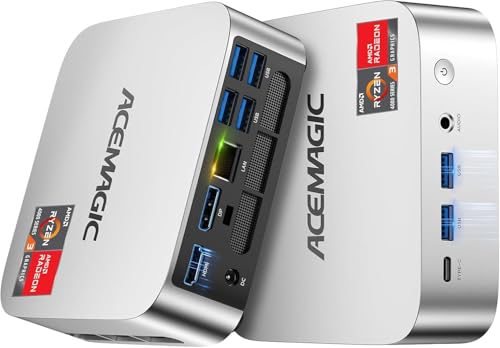
The ACEMAGIC Mini PC with Ryzen 7330U leans hard into the home office and business use case. Its 28W power ceiling (the maximum wattage the CPU is allowed to draw, directly affecting heat and noise) keeps the fan quiet enough for a bedside desk or shared workspace, and integrated graphics drive triple 4K displays (three monitors running at 4K resolution simultaneously) for spreadsheet-heavy work or stock-trading setups. With 4 cores and 8 threads boosting to 4.3 GHz, everyday productivity feels snappy.
The 256GB SSD is the real weak point for a gaming build, so this one skews toward users who stream and work more than they install 100GB titles. HDMI and LAN round out a tidy office-friendly package.
Useful Highlights
- 28W power draw keeps noise low and electricity costs modest
- Triple 4K display support suits multi-monitor productivity setups
- Compact chassis fits in cramped home office corners
Some Limits To Know
- 256GB of storage is tight for any serious gaming library, so external drives or cloud storage become necessary
- 4-core CPU trails the 8-core picks above in heavily threaded workloads
Perfect Match For
Remote workers, small business owners, and anyone running triple-monitor office setups who value quiet operation over gaming muscle.
Reach For A Different Pick When
The ACEMAGIC K1 Gaming Mini PC suits shoppers who want more storage and stronger general gaming capability in a similar compact form.
What To Weigh Before Picking Your Next Rig
A custom build gaming PC route takes real commitment: choosing parts, checking compatibility, and troubleshooting when something doesn’t POST (the Power-On Self-Test, the first check your machine runs to confirm its hardware is working). Pre-built systems trade some of that control for plug-and-play convenience, and the picks above split into two clear camps: compact mini PCs and full towers.
Think about your real environment first. A small dorm room or shared apartment favors a mini PC that disappears behind a monitor. A dedicated gaming corner with room for a tower and cable management favors something like the Lenovo Legion Tower 5i. Cooling is worth considering too: mini PCs depend heavily on good ventilation, and most owners benefit from a small desk fan or open shelving to keep ambient temps in check.
Portability is another quiet differentiator. Mini PCs in this list travel easily to LAN parties, between home and office, or into a bag for a remote-work stint. Towers stay put. Match the form factor to where you’ll actually use it, not where you imagine you might.
Common Pitfalls And Where The Money Goes
Pitfalls Shoppers Hit
The easiest mistake is chasing peak clock speed (the maximum GHz a single CPU core can reach, often advertised on the box) without looking at core count. Modern games and streaming workloads lean on multiple cores, so a 6-core chip at 5.0 GHz can lose to an 8-core chip at 4.5 GHz in real-world use. The second trap is underestimating storage: a modern AAA install can chew through 100GB, and a 256GB drive fills up before you’ve finished one game library. The third is ignoring the GPU, since integrated graphics handle esports fine but buckle under ray-traced AAA.
The Case For Spending Up
Premium picks like the Lenovo Legion Tower 5i justify their higher tier with a discrete GPU, more memory, and a chassis that can grow with you. A dedicated graphics card means ray tracing and DLSS, which together deliver visual quality and frame rates that integrated graphics simply can’t match. If you play AAA titles at high settings or stream for an audience, the upgrade pays off in smoother sessions and longer relevance. For esports, indie games, and office work, though, the ACEMAGIC mini PCs deliver the goods without the extra spend.
Key Considerations Across These Picks
Where Shoppers Go Wrong
Treating a mini PC like a console is the most common slip. These machines are real computers, and they need ventilation, occasional driver updates, and the same basic care as any desktop. Placing one in a sealed cabinet or stacking books against the vents leads to thermal throttling (a safety mode where the CPU deliberately slows itself down to avoid overheating), which cuts performance in half without warning. Clear airflow and an occasional dusting of the intake vents keep things steady.
What The Higher Tier Buys
A higher-tier system like the Lenovo Tower 5i buys you headroom. More RAM, a discrete GPU, and a full tower case mean a machine that ages gracefully as games get heavier and your workflow expands. For users who upgrade every five years or play the most demanding modern titles, that headroom matters. For casual gamers and office users, the ACEMAGIC mini PCs already cover the ground without the extra spend.
Frequently Asked Questions
Can a mini PC really replace a full gaming tower? For esports, indie games, and 1080p AAA at moderate settings, yes. For 4K gaming with ray tracing, a tower with a discrete GPU like the Lenovo Legion Tower 5i is the right tool.
How much RAM do you actually need for gaming in 2026? 16GB is the practical floor for modern titles, while 32GB is comfortable for streaming and heavy multitasking. The ACEMAGIC M1 Mini PC’s 24GB sits in a smart middle spot.
Are these pre-built systems upgradable? Mini PCs vary: some allow SSD swaps and second M.2 drives, while RAM is often soldered. Full towers like the Legion Tower 5i offer the most upgrade flexibility, including future GPU swaps.
Do integrated graphics handle modern games? Integrated Radeon 780M and similar chips handle esports and lighter AAA titles at 1080p. For ray-traced blockbusters, a discrete GPU remains the path to high settings and high frame rates.
Why pick a mini PC over a laptop? Mini PCs typically run cooler, offer more ports, and skip the battery and screen. They’re a strong choice for a fixed desk setup where a laptop feels like overkill.


