


Old-school consoles and home computers deliver a specific look and feel that modern flat panels just can’t match. Getting that authentic experience alive in 2026 means pairing the right consoles with the right cables, displays, and storage to keep your setup clean and signal-clean. This roundup covers the supporting cast: component cables, RCA leads, miniature replicas, and a console shelf that ties the whole corner together.
Your Options, Compared

HD Retrovision Premium YPbPr Component Video Cable for PlayStation 2/3
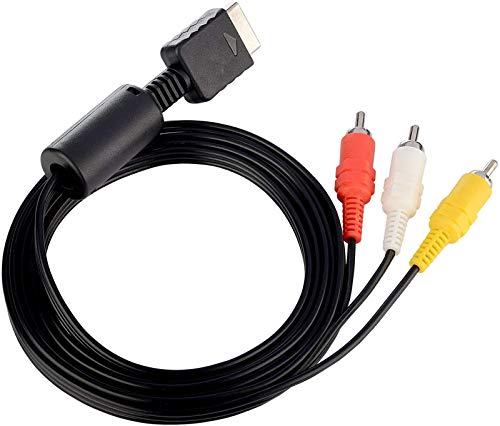
Trenro PS2 PS3 RCA Composite AV Cable 6ft

The A500 Mini (Electronic Games)

Ruaeoda VGA to VGA Cable 6ft Braided

BolAAzuL 3 RCA to 3 RCA RGB Component Cable 10ft

Ancable RCA Video Cable with RF TV Connector 6ft

X-cosrack 16.5″ Game Console Shelf with Outlet
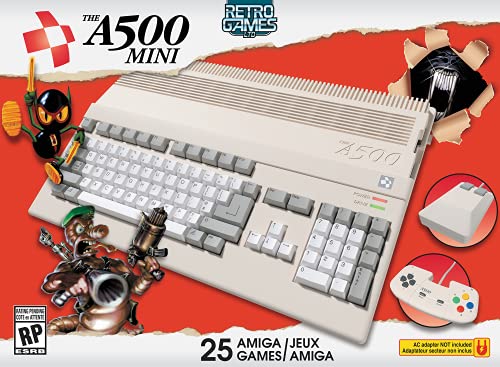
The A500 Mini

THEC64 Mini – Black Edition
A Closer Look At Each Pick
YPbPr, sometimes just called “component video,” splits the picture into three separate signals (one brightness, two color), which is why older consoles often look noticeably cleaner through it than through a single yellow RCA jack. The HD Retrovision cable is built specifically for the PlayStation 2 and PlayStation 3, designed to preserve that analog signal path on its way to a CRT or component-ready display.
Compared to the budget Trenro composite cable further down this list, this one is the choice for people who want genuine picture quality rather than just a working connection. Most owners pairing a PS2 with a PVM (professional broadcast monitor) or BVM (broadcast video monitor) end up reaching for a component cable like this one.
What Stands Out
- Properly engineered for PS2 and PS3 analog output, so you avoid the soft, blurry look of composite video.
- Fully shielded construction helps cut down on crosstalk, the unwanted bleed between audio and video channels.
- 75Ω impedance, a standardized resistance level that keeps the analog signal stable across the cable’s length, which matters on longer runs behind a TV stand.
- Plugs straight into a CRT’s component inputs, so no adapter chain is needed for picture-perfect retro sessions.
Things To Consider
- Priced noticeably higher than a basic composite lead, so it may feel steep for casual users.
- Limited to PS2 and PS3, with no support for earlier PlayStation hardware or other retro consoles.
Key Specs
Best Suited To
PS2 and PS3 owners running their consoles on a CRT, PVM, or component-capable display who want the cleanest analog signal they can get.
Look Elsewhere When
You mainly play original Xbox, SNES, or other non-PlayStation systems, in which case the BolAAzuL component cable covers a wider console mix.
Composite video bundles everything into a single yellow RCA plug, which makes it the lowest common denominator for older displays but also the easiest replacement cord to find. The Trenro PS2/PS3 cable is a 6-foot, plug-and-play lead aimed at people who simply need a working connection to a TV that doesn’t have component inputs, or a backup cable in a drawer.
The Trenro’s pitch is broad compatibility across PS1, PS2, PS2 Slim, and PS3, so it doubles as a one-cable-drawer solution for mixed PlayStation shelves. It’s the kind of cord you don’t think about until the original one disappears.
Everyday Perks
- True plug-and-play behavior, so no settings, drivers, or adapters are needed before gaming.
- 6-foot length gives enough slack for most TV stands and entertainment centers without strain on the ports.
- Works as a backup or replacement when the original PlayStation AV cable is missing or damaged.
Worth Noting
- Composite output looks softer and more washed-out than component, so picture quality is the trade-off for the lower cost.
- The build is more functional than premium, and owners commonly report that the cable works fine but feels light in the hand.
Whose Shelf It Belongs On
Anyone who needs a no-fuss replacement composite cable for an older PlayStation hooked up to a TV without component inputs.
Consider Something Else When
You want the sharpest possible image from a PS2 or PS3 on a CRT with component jacks, in which case the HD Retrovision cable is the better investment.
The A500 Mini is a half-scale recreation of the classic Commodore Amiga 500, the home computer that defined a generation of European gaming in the late 1980s and early 1990s. It comes preloaded with 25 built-in games covering genres from pinball to run-and-gun, and uses emulation, software that mimics the original hardware, to play them.
For people without an original Amiga to maintain, the A500 Mini is the most approachable way into that library, and it sits on a shelf looking the part while doing it. Compared to the THEC64 Mini later in this list, it’s a slightly deeper dive into the Amiga side of retro computing.
Real Benefits
- 25 built-in games offer a strong, curated slice of Amiga history without any extra purchases.
- USB support lets you load additional legally obtained games, extending the library well beyond the included titles.
- Save-and-resume functionality takes the pressure off notoriously difficult retro games, letting you pick up where you left off.
- Emulates the A500, A600, and A1200, so you get a wider view of the Amiga family than the original A500 alone.
Trade Offs
- Requires HDMI on your display, so older CRT-only setups will need a modern screen to use it.
- Limited to the included 25 games out of the box unless you’re comfortable sourcing WHDLoad files, a common Amiga game-installation format, on your own.
Made For
Curious newcomers and lapsed Amiga fans who want a plug-and-play window into 16-bit home computing without tracking down original hardware.
A Better Fit Elsewhere
You specifically want Commodore 64 nostalgia, in which case the THEC64 Mini is the more focused pick for that era.
VGA (Video Graphics Array) is the 15-pin analog PC video standard that dominated monitors before HDMI took over, and it’s still useful for retro PC builds, certain scaler setups, and older projectors. The Ruaeoda cable is a 6-foot lead with a nylon-braided exterior and aluminum connector shells, aimed at people who want something sturdier than the throwaway cord that came in the box.
It doesn’t directly connect to a console, but it earns a place in retro gaming rooms where a PC is being used as the source for emulators, or where a VGA switcher ties multiple sources into a CRT monitor. The 15-core design, the full set of pins used to carry color and sync data, helps avoid the ghosting and color drift that plague cheaper 9-core leads.
Strengths Worth Knowing
- Full 15-core architecture preserves every VGA signal line, reducing the color bleed common on stripped-down cables.
- Nylon-braided jacket and aluminum shells make the cable noticeably more durable than standard plastic-coated leads.
- 6-foot length fits most desk and entertainment center setups without excess slack.
Honest Caveats
- Not a console cable, so PS2, SNES, and Genesis owners will need an adapter chain or a different pick entirely.
- Braided cables can be stiffer than rubber, which makes routing through tight cable channels a bit more work.
Who Should Grab It
Retro PC gamers, scaler users, and anyone running a VGA monitor who wants a longer-lasting replacement cable for daily use.
Skip It When
You need a cable for a classic game console, in which case the HD Retrovision or BolAAzuL component leads are the more direct fit.
The BolAAzuL lead is a 10-foot, three-RCA component video cable (green, blue, red) built for vintage consoles and AV gear. Component video keeps the brightness and color signals separate, which gives older consoles a sharper, more colorful image than the single-plug composite standard can manage.
Where the HD Retrovision cable is locked to PS2 and PS3, the BolAAzuL is the multi-console compromise, working across NES, SNES, N64, Genesis, and PS1 setups that have been modded or otherwise output component. The 10-foot run is generous, which matters when the TV is wall-mounted and the console sits across the room.
A Few Highlights
- Three RCA connectors carry the full YPbPr signal without compression, so analog color stays accurate on capable displays.
- 10-foot length suits wall-mounted TVs and entertainment centers where shorter leads leave the console dangling.
- Color-coded connector housings make hookup straightforward, which is a real time-saver behind a crowded shelf.
- Plug-and-play design, so no software, power, or driver setup is required before play.
Soft Spots
- Some retro consoles need an internal mod to output component video, so this cable alone won’t upgrade every system on your shelf.
- The 10-foot length can introduce slack headaches in tighter setups where a shorter cable would route more cleanly.
Quick Facts
Right Fit For
Multi-console retro collectors with wall-mounted displays who want one component lead that works across several systems.
Another Choice May Suit
You’re exclusively a PS2 and PS3 household, where the HD Retrovision cable’s purpose-built engineering will outclass a generic three-RCA lead.
RF (radio frequency) is the oldest way to connect a console to a TV, modulating the video signal onto a coaxial channel, usually channel 3 or 4, the way an old VCR did. Most late-70s and early-80s consoles still rely on it, and the Ancable lead is a 6-foot RF cable plus connector built specifically for that era: Atari 2600 Jr, 7800, most Atari computers, Commodore 64, Colecovision, and Intellivision.
For collectors who refuse to mod their vintage hardware, this is one of the few off-the-shelf options that still works with original RF outputs. It’s a niche pick, but a necessary one for that specific corner of the hobby.
A Few Strong Suits
- Wide console compatibility covers the most common 8-bit systems that still rely on RF output.
- Nickel-plated copper adapter resists corrosion, which matters for gear that lives in storage between sessions.
- 6-foot length is appropriate for most CRT setups where the console sits close to the television.
Points To Note
- RF is the lowest-quality video connection, so the picture will look softer and noisier than composite or component alternatives.
- Doesn’t help with consoles that already have better output options, like the Sega Genesis or Super Nintendo, so its real audience is the oldest gear.
Perfect Match For
Owners of unmodded Atari 2600, 7800, Colecovision, and Intellivision consoles who want a working RF replacement cable in 2026.
Not Your Match When
You’re playing 16-bit or later consoles, where the BolAAzuL component cable or HD Retrovision lead will produce a noticeably better image.
The X-cosrack shelf is a narrow, 16.5-inch-wide, four-tier stand with a built-in power strip featuring four AC outlets and a 5-foot cord. It addresses the most common retro gaming pain point: too many consoles, too few power outlets, and nowhere clean to stack them.
Where the other items in this list are cables and consoles, this one is infrastructure, the piece that lets a multi-system retro corner actually fit in a small apartment. Its height-adjustable outlet mounting is the kind of detail that saves real frustration when you’re plugging in chunky power bricks.
Standout Benefits
- Four integrated AC outlets consolidate power for several consoles, a router, and charging cables in one spot.
- Narrow 16.5-inch footprint fits into corners and tight shelving gaps where wider AV furniture won’t work.
- Adjustable outlet height accommodates different power brick sizes, a common annoyance with fixed outlet strips.
Possible Compromises
- Compact tier spacing may not fit the tallest CRT consoles or large aftermarket power supplies without careful planning.
- Some assembly is required, so plan on a small chunk of setup time before the first gaming session.
At A Glance
Who Will Love This
Apartment dwellers and small-room retro collectors who need a vertical storage solution that doubles as a power hub.
Where A Sibling Pick Shines
You mainly need cables or actual retro hardware, in which case any of the console or cable picks above is the more relevant addition to your setup.
This A500 Mini listing covers the same core hardware as pick 3, the half-scale Amiga recreation, but it lands as a slightly different take: a more bare-bones retail configuration aimed at hobbyists who already know what they want from it. Both editions emulate the original A500, the Enhanced Chip Set (ECS) revisions, and the A1200’s Advanced Graphics Architecture (AGA).
Where the previous A500 Mini entry leaned into the 25-game library, this one is the variant for people who plan to side-load their own WHDLoad games, a popular Amiga install format, via USB. The 720p HDMI output and selectable CRT filter matter for anyone who wants the chunky-pixel look without giving up modern display convenience.
Advantages To Know
- WHDLoad support means hundreds of legally obtained Amiga games can be sideloaded through a USB stick.
- 720p HDMI output at 50 or 60Hz works on most modern TVs without extra scalers or adapters.
- Multiple scaling options and a CRT filter let you tune the look between sharp pixels and a soft vintage feel.
- Save and resume functions soften the difficulty of punishing classics, so sessions don’t have to be all-or-nothing.
Less Ideal Details
- Side-loading games requires some familiarity with WHDLoad and where to legally source titles, a barrier for absolute beginners.
- No RF or component output, so CRT purists using older TVs will need a compatible HDMI display or an external scaler.
Built With In Mind
Amiga hobbyists comfortable with USB-side-loaded WHDLoad setups who want a small-footprint recreation of the classic home computer.
Swap It Out When
You’d rather skip the tinkering and play the included 25 games right out of the box, in which case the other A500 Mini listing is the easier starting point.
The THEC64 Mini in its Black Edition is a half-scale recreation of the iconic Commodore 64, finished in a striking black that earns it display-shelf status. It comes with 25 built-in games, including newer homebrew titles like Sam’s Journey, plus HDMI output at 720p and 50 or 60Hz, so it slots into a modern living room without adapters.
Where the A500 Mini leans Amiga, this one leans C64, and the black finish gives it more of a desktop-artifact feel than a toy. For casual play, it’s also more approachable than the hobbyist-leaning A500 Mini variant, with simple save slots and a forgiving 4:3 or pixel-perfect display mode.
Where It Delivers
- Black finish gives the unit a display-piece quality that fits naturally on a shelf or desk.
- Four save-game slots per title make dropping in and out of sessions genuinely low-friction.
- 720p HDMI output with selectable 4:3 and CRT filter modes works cleanly on modern flat panels.
Worth Bearing In Mind
- Limited to the included 25 games out of the box, with a smaller side-loading community than the A500 Mini.
- HDMI-only output, so direct connection to a CRT isn’t possible without an external downscaler.
The Right Fit
C64 nostalgics and design-minded collectors who want a console that looks as good on the shelf as it plays on the screen.
Reach For A Different Pick When
You want the deeper Amiga game library and WHDLoad expansion that the A500 Mini editions offer out of the box.
Picking The Right Setup For Your Retro Corner
Match The Cable To The Console Output
The single biggest decision in retro gaming is which video signal you actually need. Composite (one yellow RCA) is the easiest to find but the softest picture. Component (three RCAs: green, blue, red) splits the image for a much sharper result, and YPbPr is just the technical name for that component standard. RF (a single coaxial screw-on connector) is what early Atari and Coleco consoles used. For PS2 and PS3, component is the sweet spot. For older 8-bit consoles, RF or composite is often your only option without modding the hardware.
Prioritize 75Ω Impedance And Shielding
When comparing analog cables, two specs matter more than fancy jackets. 75Ω impedance (a standard resistance level) keeps the signal stable across the cable’s length, and full shielding blocks interference from nearby power cords and Wi-Fi routers. A cable that lacks both will produce ghosting (faint duplicated images), color drift (shifting hues that won’t sit still), and snow on the screen. The HD Retrovision and BolAAzuL picks both emphasize these qualities, which is why they earn their place in the list.
Decide Between Real Hardware And Mini Replicas
Original consoles and CRT televisions deliver the most authentic look, but they take up space, need maintenance, and rely on increasingly rare component replacements. Mini replicas like the A500 Mini and THEC64 Mini trade a little authenticity for plug-and-play convenience, modern HDMI output, and tiny footprints. Your call depends on whether you want the experience of curating hardware or the experience of just playing the games.
Plan Storage And Power Early
A retro corner multiplies fast. A PS2, a Saturn, a Dreamcast, and a CRT are already four power plugs, before you add speakers and a router. A console shelf with built-in outlets, like the X-cosrack, prevents the rat’s nest of power strips that retro setups often devolve into. Most people underestimate how much vertical space and how many outlets they’ll need within the first few months of collecting.
Key Considerations Across These Picks
Common Slip-Ups To Sidestep
The most common mistake in retro gaming is buying the cheapest cable available and assuming it will look “close enough” to the original. A low-quality composite cable produces a soft, washed-out image that even a CRT can’t rescue, and the difference between a $6 lead and a properly engineered component cable is night and day on a PVM. Match the cable to the console’s best output, not to whatever’s in stock.
Where The Extra Spend Actually Pays Off
Stepping up from a budget cable to a properly engineered analog lead, or from a flat-panel adapter to a real CRT, changes the entire feel of retro games. Colors become saturated, scanlines become crisp, and motion looks the way it did in 1998. For casual play, the budget tier is fine. For people who want the closest thing to the original experience, the premium tier earns its keep quickly.


