


You want a wireless gaming keyboard that won’t drop frames, won’t tie you to a cable, and won’t drain your savings on day one. The challenge: most “budget” wireless boards cut corners where it hurts, like input lag, battery life, or build quality. This list pulls together nine options that balance price with the features that actually matter for gaming: low-latency wireless, hot-swappable switches, and layouts that fit real desks.
How The Shortlist Stacks Up

Logitech G713 Wired Gaming Keyboard with LIGHTSYNC RGB, GX Brown

GravaStar Mercury K1 Pro 75% Wireless Mechanical Gaming Keyboard

YUNZII C75 Cute 75% Wireless Mechanical Keyboard (Beige)

AULA F75 Wireless 75% Gaming Keyboard, Hot Swappable (Pink)

YUNZII C98 Cute Cake Wireless Mechanical Keyboard (Purple)

MechLands Aula F99 PRO 96% Mechanical Gaming Keyboard

KINESIS Gaming TKO Mechanical Keyboard, 60% Aluminum
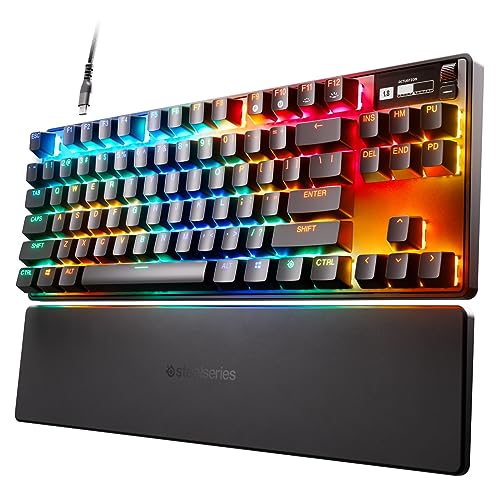
SteelSeries Apex Pro TKL HyperMagnetic Gaming Keyboard

GravaStar Mercury K1 75% Wireless Mechanical Gaming Keyboard
A Closer Look At Each Pick
The Logitech G713 sits at the top of the list not because it screams for attention, but because it handles the basics with rare composure. Its tenkeyless layout keeps your mouse hand closer to the action, and the included cloud-shaped palm rest genuinely softens long sessions. The White Mist finish blends into brighter desk setups without clashing with darker peripherals.
GX Brown tactile switches (mechanical switches that give a small bump without an audible click) strike a sensible middle ground for anyone who games and types in equal measure. You get feedback without the noise floor of a clicky board, which matters in shared rooms. For a wired board at this tier, the build quality feels notably stable on the desk.
What Earns Its Place
- TKL form factor frees up meaningful desk real estate for wide mouse sweeps in competitive shooters
- Tactile GX Brown switches offer typing-friendly feedback without the noise of clicky alternatives
- LIGHTSYNC RGB syncs lighting with other Logitech peripherals for a unified battlestation look
- Included palm rest reduces wrist fatigue during multi-hour gaming or work sessions
- PC and Mac compatibility removes the guesswork when switching between workstations
Things To Consider
- Wired-only connectivity may feel restrictive if you’ve already gone wireless elsewhere on your desk
- The White Mist finish shows dust and fingerprints more readily than darker boards, so regular wiping helps
Right Fit For
You game competitively on a desk that values mouse space over number pad utility, and you want a refined wired board with tactile feedback and zero wireless latency concerns.
Where Another Pick Suits Better
The AULA F75 Wireless Keyboard makes more sense if wireless freedom across multiple devices matters more to you than the G713’s premium palm rest and Logitech software polish.
The GravaStar Mercury K1 Pro looks like nothing else in this roundup, and that’s the point. Its aluminum alloy exoskeleton (a load-bearing metal frame) and skeletal open-frame design turn the keyboard into a desk centerpiece rather than a hidden tool. Hot-swap sockets mean you can pull switches and try new ones without a soldering iron, which is rare in this tier.
The 75% layout keeps the function row and arrow keys while trimming the numpad, a smart compromise for most desks. If you stream, create content, or just want a board that starts conversations, the cyberpunk aesthetic does the talking. Just note that the open frame shows dust faster than a sealed chassis, so a can of compressed air earns its keep.
Everyday Wins
- Aluminum alloy construction delivers a weighty, planted feel that cheaper plastic boards struggle to match
- Hot-swap compatibility lets you experiment with switch types without permanent commitment
- 75% layout preserves function and arrow keys in a footprint that still saves desk space
- Wireless connectivity removes cable clutter, useful for minimalist or streaming setups
Worth Noting
- Open-frame skeletal design shows debris between keys, requiring more frequent cleaning than closed boards
- Distinctive aesthetic may clash with traditional or corporate-looking workstations
Made For
You treat your desk as part of your personal brand and want a keyboard that doubles as industrial decor while still delivering hot-swap flexibility and wireless freedom.
Consider Something Else When
The KINESIS Gaming TKO is a smarter grab if you need a truly portable 60% board for tournaments and travel rather than a stationary statement piece.
The YUNZII C75 leans into personality in a way most budget boards avoid. Its beige “cake” styling looks like it belongs in a pastel setup, but the mechanical guts are no joke. Candy switches (linear-style switches with a smooth press) keep the typing sound soft, which helps in shared rooms or late-night sessions where clicky boards wake up the house.
This is a strong entry point for first-timers who want wireless mechanical feel without the price ceiling. The 75% layout keeps arrow and function keys accessible. One thing worth considering: cream-colored keycaps tend to darken over months of use, and owners commonly report that oil from fingers becomes visible faster than on darker caps.
Standout Benefits
- Cake-themed beige finish adds personality to setups dominated by black and gray hardware
- Candy switches provide a smooth, low-noise typing experience for shared spaces
- Compact 75% form factor suits small desks and laptop-adjacent gaming sessions
- Wireless connectivity eliminates the cable drag that can interfere with low-profile mouse pads
Points To Note
- Light-colored keycaps show oil and discoloration faster than darker alternatives
- Cake aesthetic may feel out of place in a serious, all-black battlestation
Best Suited To
You’re stepping into mechanical keyboards for the first time, prefer a softer switch feel, and want a wireless board that adds character without blowing the budget.
Not Your Match When
The SteelSeries Apex Pro TKL fits better if you’re an esports player who needs adjustable actuation (the depth at which a key registers a press) rather than a themed aesthetic starter board.
The AULA F75 punches above what its price suggests, mostly because it doesn’t force you to pick a single connection mode. Bluetooth 5.0, 2.4GHz wireless, and USB-C wired all run through the same board, and you can keep up to five devices paired at once. The 4000mAh battery is generous, and the auto-sleep after a minute of inactivity is a quiet battery saver.
LEOBOG Strawberry Mint switches (linear switches with a smooth, low-friction keystroke) come pre-lubed for a creamy sound profile that enthusiasts chase in custom builds. Hot-swap support for 3-pin and 5-pin switches (the two standard electrical pin configurations on mechanical switches) means tinkering is genuinely on the table. The pink finish is bold, though, so confirm the color matches before you commit.
Noteworthy Benefits
- Tri-mode connectivity (Bluetooth, 2.4GHz, wired) covers PC, laptop, tablet, and console use without dongle juggling
- 4000mAh battery supports long sessions between charges, with auto-sleep to extend runtime
- Pre-lubed switches deliver a creamy, satisfying sound out of the box
- Hot-swap base supports both 3-pin and 5-pin switches for easy customization
- 16.8 million RGB color options let you tailor lighting to mood or game genre
Trade Offs
- Pink colorway may not blend with darker or more neutral setups
- Macro programming requires wired mode on Windows, limiting flexibility for wireless workflows
Key Specs
Who Will Love This
You switch between a gaming PC, a laptop, and a tablet throughout the day, and you want one keyboard that pairs across all of them with minimal fuss.
Look Elsewhere When
The MechLands Aula F99 PRO makes more sense if you want a dedicated rotary knob and a numpad for media control and spreadsheet work.
The YUNZII C98 takes the cake-themed C75 formula and adds the one thing many compact boards skip: a full number pad. At 96% layout with 99 keys, it gives you numpad utility without stretching into full-size territory. For anyone who games and crunches numbers in the same evening, that balance is hard to beat.
Milk switches (light tactile switches with a softer bottom-out feel) keep the typing experience gentle on the fingers. PBT keycaps in a MOA profile (a rounded, spherical-cap shape that’s popular for both gaming and typing) resist the shine that ABS caps develop over time. The purple colorway is bold, so it works best if your setup already leans into color.
Bright Spots
- 96% layout includes a numpad while staying narrower than a full 104-key board
- PBT keycaps resist oil buildup and shine better than standard ABS alternatives
- Milk switches provide a soft tactile feel for long typing and gaming sessions
- Wireless connectivity cuts cable clutter for cleaner desk aesthetics
Room For Improvement
- 96% form factor is wider than 75% boards, requiring more dedicated desk space
- Purple colorway limits theme compatibility with neutral or monochrome setups
Perfect Match For
You split time between spreadsheets and shooters and want a wireless mechanical board that covers both without swapping to a separate numpad accessory.
Reach For A Different Pick When
The YUNZII C75 is a tighter fit if desk space is limited and you don’t need the dedicated numpad this C98 provides.
The MechLands Aula F99 PRO earns its “pro” tag mainly through the rotary knob, a small addition that changes how you interact with media and volume. Turn it for quick audio adjustments mid-game, or remap it for scrubbing timelines if you edit video. The 96% layout keeps the numpad without the wasted width of a full-size board.
A gasket structure (a mount system using soft pads between the plate and case to soften typing feel and sound) sits underneath the keys, giving each press a slightly cushioned landing that reduces finger fatigue. BT5.0, 2.4GHz, and USB-C cover the same tri-mode territory as the AULA F75, though the F99 PRO’s extra key and knob give it more programmable surface area.
Practical Advantages
- Rotary knob enables fast, tactile volume and media control without breaking game focus
- Gasket structure softens each keystroke for a less fatiguing typing experience
- 96% layout preserves numpad utility in a footprint smaller than a traditional full-size board
- Tri-mode wireless flexibility supports cross-device workflows with minimal pairing friction
- Extra programmable key offers additional customization surface beyond standard layouts
Minor Gripes
- Larger footprint than 75% boards may not suit minimalist or compact desk setups
- Rotary knob adds a slight learning curve for users new to programmable controls
Who Should Grab It
You want a numpad-equipped wireless board with a physical control knob for media and editing, and you value a cushioned typing feel over the absolute lightest switch action.
A Better Fit Elsewhere
The AULA F75 makes more sense if you prefer a 75% board and don’t need the extra numpad or rotary knob the F99 PRO provides.
The KINESIS Gaming TKO is built around one idea: serious competitive play on the road. Its 60% layout strips out everything that isn’t movement or action keys, freeing up enormous mouse space, which matters more than raw key count in shooters and MOBAs. The aluminum body adds weight you can feel, so it doesn’t slide around mid-match.
Kailh Box White clicky switches deliver an audible click and tactile bump that some players swear by for typing accuracy. A split spacebar (two separate spacebar keys side by side) lets you bind one half to crouch and the other to jump, a meaningful advantage in games like Counter-Strike. The SF Shock Limited Edition travel case bundled with it turns the TKO into a true tournament companion, though you may find the clicky switches too loud for shared hotel rooms.
The Value In It
- 60% layout maximizes mouse movement space for low-DPI aiming styles
- Aluminum body provides weight and rigidity for stable competitive play
- Split spacebar enables custom binds for crouch, jump, or voice commands
- Hot-swap switches allow personalized feel without soldering
- Bundled travel case simplifies transport to LAN events and tournaments
Honest Caveats
- Clicky switches are loud, potentially disruptive in shared spaces or late-night sessions
- 60% layout omits function row and arrows, requiring layer shortcuts for productivity tasks
Built With In Mind
You compete in FPS or MOBA titles where mouse space and split spacebar binds matter, and you travel often enough that a bundled case earns its inclusion.
Swap It Out When
The Logitech G713 suits you better if you need a tactile TKL board for both gaming and daily typing without giving up arrow keys or a palm rest.
The SteelSeries Apex Pro TKL sits in a different category than most of this list, and that’s intentional. OmniPoint 2.0 switches (magnetic switches that register keypresses via Hall effect sensing, the same contactless technology used in some electric throttles) replace traditional mechanical contacts entirely. The practical result: you can set each individual key’s actuation point anywhere from 0.1mm to 4.0mm, a level of control no spring-based switch can offer.
Rapid Trigger (a feature that resets and re-registers a key as soon as it moves back up, rather than waiting for a fixed reset point) makes this a real advantage in competitive shooters where quick re-strafing and counter-strafing define movement. The OLED screen displays in-game info, Discord status, or custom animations. PBT keycaps resist shine, and the integrated USB-C cable keeps connection standards modern.
The Good Stuff
- 40 levels of per-key actuation let you tune WASD lighter than ability keys for precision aiming
- Rapid Trigger technology enables faster directional changes in competitive shooters
- Hall effect switches (contactless magnetic switches with no metal-on-metal wear) last longer than traditional mechanical contacts
- OLED screen displays useful info without alt-tabbing out of games
- TKL layout frees mouse space while preserving function and arrow keys
Some Limits To Know
- Premium pricing puts it above most budget-focused shoppers in this roundup
- Per-key actuation software requires time investment to configure meaningful profiles
Feature Snapshot
The Right Fit
You play Valorant, CS, or other tactical shooters competitively and need actuation control that traditional mechanical switches physically cannot deliver.
Where A Sibling Pick Shines
The KINESIS Gaming TKO is a more affordable alternative if you want tournament-grade portability without the per-key actuation tuning the Apex Pro TKL offers.
The standard GravaStar Mercury K1 keeps the same sci-fi silhouette as the K1 Pro, trading some features for a friendlier entry point. The Sakura Pink finish (a soft pastel pink shade) is striking, and the dual-layer PBT keycaps (caps molded in two plastic layers so legends never fade or rub off) keep legends sharp even after months of use. If you stream or post desk photos, this keyboard reads as part of the brand.
The 75% layout sits in a smart middle ground for mixed-use desks. RGB backlighting adds a soft glow under the keys without dominating the room. You may find the open-frame design shows dust more readily than a sealed chassis, a small trade-off for the visual drama the skeletal aluminum frame provides.
Useful Highlights
- Sakura Pink aluminum frame delivers a unique aesthetic in a market dominated by black hardware
- Dual-layer PBT keycaps prevent legend fading over long-term use
- 75% layout balances function row, arrows, and compact desk footprint
- RGB backlighting adds ambient glow without overwhelming the workspace
Factors To Consider
- Open aluminum frame collects dust in hard-to-reach spots, requiring regular cleaning
- Sakura Pink colorway limits compatibility with darker or neutral color schemes
Whose Shelf It Belongs On
You curate a desk setup that doubles as content and want a wireless mechanical board that looks distinctive in photos without sacrificing everyday function.
Another Choice May Suit
The GravaStar Mercury K1 Pro fits better if you want hot-swap switch flexibility on top of the same aluminum frame design language.
What Matters Most Before Choosing Cheap Wireless Gaming Keyboards
Connection Modes And Latency
A wireless gaming keyboard lives or dies on its input lag, the delay between pressing a key and the action registering on screen. Look for boards offering 2.4GHz wireless over Bluetooth for gaming sessions, since Bluetooth introduces more latency (delay between input and on-screen response) than a dedicated 2.4GHz dongle. Tri-mode boards (Bluetooth, 2.4GHz, and USB-C wired) give you flexibility, but for actual competitive play, switch to the 2.4GHz connection or plug in the cable.
Switch Type And Feel
Linear switches (smooth press with no bump) feel fast for FPS gaming. Tactile switches (a small bump you can feel at the actuation point) work well for typing accuracy and RPG hotbar navigation. Clicky switches add an audible click that’s satisfying in private but disruptive in shared rooms. Hot-swap sockets let you change switch types later without soldering, valuable if your preferences evolve.
Layout And Desk Footprint
A 60% board maximizes mouse space and travel-friendliness but sacrifices arrow keys and function rows. A 75% board keeps arrows and function while trimming the numpad. A 96% or full-size board includes the numpad for productivity but demands more desk real estate. Match layout to the games you play and the desk you own.
Key Considerations Across These Picks
Where Shoppers Go Wrong
Buying on aesthetics alone is a common trap, especially with themed boards like the YUNZII C75 or GravaStar K1. A pretty keyboard with linear switches may frustrate you daily if you actually prefer tactile feedback. The reverse holds too: a great switch feel in an awkward layout can sour fast. The honest read is to prioritize switch type and layout first, then pick the colorway that fits.
When Paying More Pays Off
The jump from a $50 wireless board to something like the SteelSeries Apex Pro TKL funds real engineering. Hall effect switches (contactless magnetic switches) offer adjustable actuation that traditional mechanical switches physically cannot match. That matters in competitive shooters where every millisecond of key travel counts. For casual play, the budget tier delivers plenty. For tournament play, the upgrade pays for itself in measurable performance.
Frequently Asked Questions
Are wireless gaming keyboards good for competitive play?
Modern 2.4GHz wireless keyboards have largely closed the latency gap with wired boards, so competitive play no longer requires a cable. Bluetooth connections, however, introduce more input lag, so switch to a 2.4GHz dongle for serious gaming sessions.
What is hot-swap and why does it matter?
Hot-swap means you can pull a switch out of the keyboard and replace it with a different type without soldering. It matters because your switch preferences may change, and a hot-swap board lets you experiment without buying a new keyboard.
How long do wireless gaming keyboards last on a single charge?
Battery life varies widely by model and RGB usage. Boards with 4000mAh batteries and auto-sleep modes can last multiple days between charges, while always-on RGB cuts that significantly. Check for auto-sleep features to extend runtime passively.
Do mechanical switches wear out over time?
Standard mechanical switches are rated for tens of millions of keypresses, which translates to years of heavy gaming. Hall effect switches (contactless magnetic switches) like those in the SteelSeries Apex Pro TKL have no metal-on-metal contact, so they tend to outlast traditional mechanical designs.
What size keyboard is best for gaming?
There’s no universal best size, but 75% boards are the most popular compromise: they keep arrow keys, function rows, and most utility while saving desk space. Competitive FPS players often prefer 60% for maximum mouse movement room.
Closing Remarks
The right cheap wireless gaming keyboard depends on what you actually do at your desk. A competitive FPS player needs actuation control and low latency. A casual gamer who streams wants personality and a clean wireless look. A productivity-leaning user wants a numpad and quiet switches. Match the board to the workload, not the other way around, and the wireless life stops feeling like a compromise.


