


A new gaming rig no longer means draining your savings or settling for last decade’s parts. Today’s budget desktop scene covers everything from compact starter machines for casual play to proper 1440p builds running modern AAA titles. The trick is matching the silicon, memory, and storage to the games you actually run, not chasing spec sheets that look impressive on paper but throttle the moment you launch anything heavy. This roundup walks through nine prebuilt options that balance cost, component quality, and long-term upgrade paths, so you can pick a setup that fits your library and your wallet without the usual guesswork.
The Choices Worth Comparing
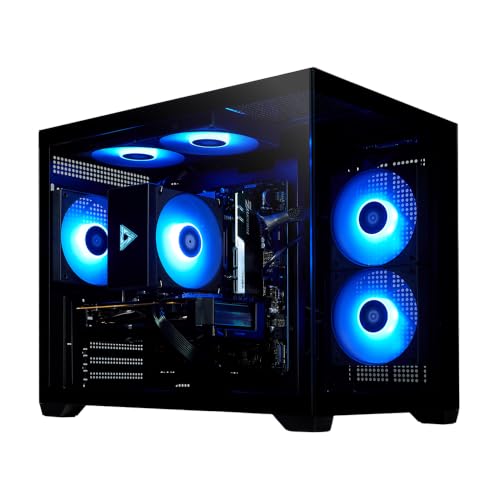
STORMCRAFT Sirius AI Gaming Desktop, Intel i5 14400F, Arc B570 10GB

HP OmniDesk Desktop, Ryzen 5, Radeon 740M, 16GB DDR5, 1.5TB Storage

Ultra 50 V3 Gaming PC, RTX 5080 16GB, Ryzen 7 9800X3D, 32GB DDR5

Horizon Autherium Dragon RGB I9 RTX Gaming PC, 64GB RAM, RTX 5070 OC
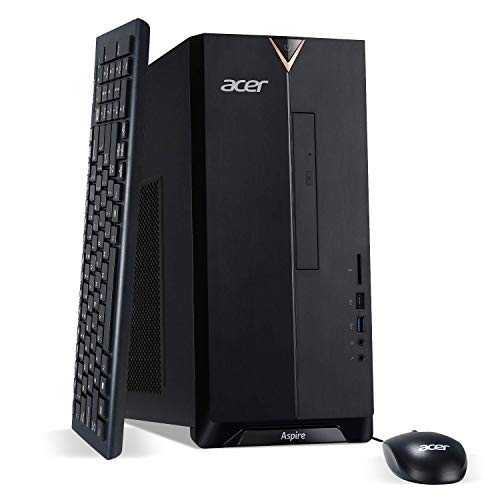
Acer Aspire TC-895-UA91 Desktop, 10th Gen i3, 8GB DDR4, 512GB SSD
HP OmniDesk Desktop, Ryzen 5, Radeon 740M, 64GB DDR5, 3TB Storage

HP OmniDesk Desktop, Ryzen 5, Radeon 740M, 32GB DDR5, 2TB Storage

Skytech Gaming PC Storm, Ryzen 5, RTX 5050, 32GB RAM, 1TB SSD
HP OmniDesk Desktop, Ryzen 5, Radeon 740M, 32GB DDR5, 3TB Storage
Inside Each Recommended Option
The STORMCRAFT Sirius lands in that sweet spot budget shoppers chase: modern Intel silicon, a discrete Arc B570 GPU with 10GB of VRAM (video memory, the dedicated pool a graphics card uses to store frame data), and a 1TB NVMe drive (a fast solid-state drive that connects through the motherboard’s PCIe lane) for boot and library. For most gamers running 1440p monitors, that combination handles today’s releases at medium-to-high settings without sounding like a jet engine.
16GB of DDR4 RGB memory is enough for current titles, and the Core i5 14400F’s 10 cores keep streaming and background tasks smooth during long sessions. Owners commonly report the case airflow staying reasonable under extended load, though you may want to clean the front intake filter every few months if your room runs dusty.
Notable Upsides
- 1440p-ready GPU with a generous 10GB frame buffer for texture-heavy games
- 10-core CPU handles gaming plus Discord and browser tabs without choking
- 1TB NVMe cuts load screens dramatically compared with older SATA SSDs
- RGB memory adds a touch of personality without forcing a premium
Things To Consider
- DDR4 is fine today, but limits future memory upgrades as titles demand more
- The Arc B570 driver stack has matured but still trails Nvidia’s compatibility coverage
Who It Suits Best
Mainstream 1440p gamers who want a balanced build without overspending on a flagship GPU.
Where Another Pick Suits Better
Shoppers wanting absolute top-tier frame rates at 4K should look at the Ultra 50 V3 instead.
HP’s OmniDesk slots into a category many shoppers overlook: the weekday workstation that doubles as an evening game console. The Ryzen 5 8500G APU (accelerated processing unit, a CPU with integrated graphics built in) packs Radeon 740M graphics, which means light esports and indie titles run without needing a separate GPU. For most home offices, that keeps the build quiet and the footprint small.
Wi-Fi 6 and Bluetooth 5.4 come standard, and quad-monitor support helps anyone running spreadsheets, chat windows, and reference docs side by side. The catch is real for anyone pushing 3D workloads: the 740M shares system memory, so the 16GB ceiling becomes tighter under gaming load.
What Pays Off
- Quad-monitor support makes it a strong productivity hub
- Modern Wi-Fi 6 and Bluetooth 5.4 reduce dongle clutter on the desk
- DDR5 memory (the current-generation RAM standard) leaves headroom for future upgrades
- Compact HP chassis fits easily under a monitor arm or beside a printer
Trade Offs
- Integrated Radeon 740M graphics limit modern AAA gaming to light settings
- 16GB fills up quickly with browser tabs and chat apps running alongside games
Made For
Remote workers and students who want one machine for documents, video calls, and casual gaming after hours.
Consider Something Else When
Gamers chasing high-refresh 1440p should step up to the STORMCRAFT Sirius AI Gaming Desktop for proper discrete graphics.
The Ultra 50 V3 from Andromeda Insights sits at the high end of the budget conversation, though calling anything with an RTX 5080 a “budget” build takes some imagination. The Ryzen 7 9800X3D’s 3D V-Cache (a stacked layer of extra L3 cache sitting on top of the CPU die, which dramatically speeds up game logic) is the closest thing the AM5 platform has to a gaming-only trick, and it shines in CPU-bound titles like simulation and strategy games. Pair that with 32GB of DDR5-6000 RAM, and frame pacing stays smooth even when the scene explodes.
The 850W Gold PSU (a power supply unit with 80 Plus Gold efficiency certification) leaves comfortable headroom for the RTX 5080’s power spikes, and ARGB fans give the case some visual flair without going overboard. Realistically, anyone buying this is more enthusiast than budget shopper, but the value calculation holds up against boutique builders who charge extra for the same parts.
Practical Pluses
- 3D V-Cache CPU dominates frame timing in cache-hungry genres
- 32GB DDR5-6000 keeps multitasking smooth during streams and downloads
- 850W Gold PSU handles the RTX 5080’s transient power spikes safely
- 2TB Gen4 SSD holds a sizable modern game library without juggling installs
Honest Caveats
- Premium component pricing puts it well above typical entry-level rigs
- ARGB lighting requires software setup, which can frustrate first-timers
Key Specs
Right Fit For
Enthusiast gamers running 4K monitors or 1440p panels at high refresh who want top-tier parts without paying boutique-builder markups.
A Better Fit Elsewhere
Shoppers on a tight budget will get far more value per dollar from the Skytech Gaming PC Storm.
The Horizon Autherium Dragon leans heavily into “more is more.” A Core i9 CPU with boost speeds up to 5.4GHz, 64GB of RAM, 5TB of total storage split between a 1TB NVMe and a 4TB HDD, and a 360mm AIO liquid cooler (an all-in-one closed-loop liquid cooler with a 360mm radiator) keep thermals in check during marathon sessions. For streamers, editors, or anyone juggling OBS, browser sources, and a heavy game, that memory ceiling removes the usual bottleneck.
The RTX 5070 OC handles 1440p gaming well, and the factory-overclocked GPU card tends to hold a small lead over reference models. Windows 11 Pro comes preinstalled, which matters if you need BitLocker or Remote Desktop without extra setup.
Strengths Worth Knowing
- 64GB RAM eliminates juggling memory during streams or video edits
- 5TB storage split lets you keep a fast NVMe pool plus bulk files on the HDD
- 360mm AIO keeps the Core i9 cool under sustained all-core loads
- Windows 11 Pro adds BitLocker and Remote Desktop out of the box
Small Caveats
- Larger AIO radiator needs a roomy case; check clearance before adding side fans
- 4TB HDD is great for archives, but mechanical drives need occasional health checks
Best Suited To
Content creators and streamers who run OBS, editing software, and games at the same time.
Not Your Match When
Pure gamers chasing peak frame rates at 4K may prefer the Ultra 50 V3 for its RTX 5080 advantage.
The Acer Aspire TC-895-UA91 is the honest starting point for a first gaming PC. A 10th-gen Core i3-10100 with 4 cores handles esports titles, older single-player games, and Minecraft-style builds without drama. The integrated UHD 630 graphics won’t run modern AAA games, but the 512GB NVMe boot drive keeps Windows snappy and patch installs quick.
Wi-Fi 6 comes built in, and the included USB 3.2 Type-C port on the front panel is a real convenience for newer peripherals. The honest read is that this is a “first PC” more than a “gaming PC,” but for kids, students, or anyone learning the ropes, it covers the basics without forcing a credit card conversation.
Useful Strengths
- NVMe boot drive makes Windows startup and app launches feel responsive
- Wi-Fi 6 keeps wireless networking current for years of router upgrades
- Compact case fits in dorms, kitchens, or small bedroom desks
- Front USB-C port is a nice touch at this price tier
Worth Noting
- Integrated graphics limit gaming to light or older titles
- 8GB of RAM feels tight with modern browsers and Discord running together
Whose Shelf It Belongs On
First-time PC owners, students, or families setting up a homework-and-casual-games machine.
Skip It When
Anyone planning to play current AAA games should skip ahead to the Skytech Gaming PC Storm for actual discrete graphics.
Same HP OmniDesk chassis and Ryzen 5 8500G foundation as its sibling picks, but this configuration bumps memory to a generous 64GB and storage to 3TB split across a 2TB SSD and a 1TB HDD. For power users running virtual machines, large Excel workbooks, or dozens of browser tabs, the memory ceiling stops being a daily constraint.
The Radeon 740M integrated graphics still keep AAA gaming modest, so this is a productivity-first rig with light gaming potential rather than a true gaming build. Quad-monitor support and Wi-Fi 6 make it a strong control-room or trading-desk candidate.
Bright Spots
- 64GB DDR5 supports heavy multitasking without swap file penalties
- 3TB total storage balances a fast SSD pool with bulk HDD space
- Quad-monitor output suits productivity and data-monitoring setups
- Modern wireless standards reduce desk clutter
Points To Keep In Mind
- Integrated graphics still cap modern gaming performance
- Higher configuration drives up the cost considerably over the 16GB sibling
Feature Snapshot
Who Should Grab It
Power users and home office pros who need a memory-rich daily driver with light gaming on the side.
Look Elsewhere When
Gamers wanting real frame rates should consider the STORMCRAFT Sirius instead, since its discrete GPU makes a real difference.
This middle OmniDesk configuration lands at a useful compromise: 32GB of DDR5 is the modern sweet spot for productivity plus light gaming, and 2TB of combined storage (1TB SSD + 1TB HDD) gives breathing room for software, documents, and a modest game library. For most households sharing one PC, that balance pays off over time.
Quad-monitor support makes family logistics easier when a parent works from home and a kid does homework at the same desk. The integrated Radeon 740M keeps esports and indie titles playable, but heavier modern games will need settings turned down.
Noteworthy Benefits
- 32GB DDR5 hits the productivity sweet spot without overspending
- 1TB SSD keeps Windows and active projects fast
- Quad-monitor output suits shared family workstations
- Wireless keyboard and mouse included saves a separate purchase
Soft Spots
- Integrated graphics still cap AAA game performance
- Bundled peripherals are functional but unremarkable
Perfect Match For
Families and shared-desk households wanting one machine for work, school, and casual gaming.
Reach For A Different Pick When
Solo gamers focused on modern titles should choose the Skytech Gaming PC Storm for true discrete graphics performance.
The Skytech Storm earns its place by bringing a current-generation RTX 5050 to a sensible price tier. The Ryzen 5 5500 isn’t a flagship, but paired with 32GB of DDR4 and a 1TB NVMe, it handles esports at high refresh and modern AAA games at 1080p with believable settings. For most living-room and bedroom setups running 1080p monitors, that’s the right battle to fight.
Wi-Fi 5 is slightly dated compared to the OmniDesk’s Wi-Fi 6, so you may want to wire in for big downloads. Skytech ships without bloatware, which is a real perk for anyone tired of cleaning preinstalled trial software on day one.
Useful Highlights
- RTX 5050 brings current-generation features to a budget build
- 32GB DDR4 handles modern titles without bottleneck
- No bloatware keeps the OS clean from first boot
- 1TB NVMe covers a healthy starter game library
Things To Weigh
- Wi-Fi 5 trails the Wi-Fi 6 found in competing prebuilts
- Ryzen 5 5500 is solid, but older architecture than newer Ryzen options
At A Glance
Built With In Mind
Esports players and 1080p gamers who want current-generation GPU features without breaking the bank.
Another Choice May Suit
Buyers who prefer Intel’s 14th-gen platform should look at the STORMCRAFT Sirius for a comparable 1440p-focused alternative.
The final OmniDesk variant doubles down on storage: 2TB of SSD for active projects and 1TB of HDD for archives means you can keep large media libraries, old projects, and a working game install all on one machine. For anyone whose PC doubles as a media hub, that’s a quieter kind of upgrade that pays off every day.
Performance sits where the other OmniDesk siblings do: strong on productivity, modest on integrated-graphics gaming. Pairing it with a 1080p esports display keeps things smooth without overspending on hardware the GPU can’t fully drive.
Real-World Strengths
- 3TB combined storage handles large media libraries without external drives
- 32GB DDR5 keeps multitasking smooth across work and play sessions
- Wi-Fi 6 and Bluetooth 5.4 are current wireless standards
- Compact HP chassis suits small desks and home office corners
Practical Considerations
- Integrated graphics cap modern AAA gaming at light settings
- Mechanical HDD benefits from occasional backup discipline
Feature Card
The Right Fit
Hybrid users who split time between work, school, and casual gaming and want generous storage for media collections.
Swap It Out When
Hardcore 1440p or 4K gamers will find the Horizon Autherium Dragon’s discrete GPU and 64GB RAM a better match for heavy titles.
Picking The Right Cheap Desktop Gaming Pcs For Your Setup
Choosing a cheap desktop gaming PC starts with honesty about what you actually play. Esports titles and older single-player games run fine on integrated graphics, while modern AAA releases demand a discrete GPU. The Ryzen 5 8500G APU in the OmniDesk family handles light gaming comfortably, but anything from the RTX 5050 upward makes a tangible difference in frame rates and visual settings.
Resolution matters as much as the games themselves. 1080p esports players can stretch a budget further, while 1440p monitor owners should plan for a dedicated graphics card with at least 8GB of VRAM. The STORMCRAFT Sirius and Skytech Storm both target 1080p-to-1440p gaming without overspending on flagship silicon.
Memory and storage choices are easier to weigh. 16GB is the modern minimum, 32GB gives headroom for multitasking and future titles, and 64GB matters only for creators and streamers. NVMe SSDs dramatically cut load times compared with older SATA drives, so prioritize systems that boot and run games from solid-state storage even if a secondary HDD handles archives.
Build quality and warranty coverage also matter when the price drops. A 2-year parts warranty with lifetime labor, like the Ultra 50 V3’s, can save real money if anything fails. Smaller builders like STORMCRAFT and Skytech tend to ship clean Windows installs without bloatware, which makes setup faster and avoids the trial software scavenger hunt.
Finally, think about upgrade paths. AM5 platforms and LGA 1700 boards accept newer CPUs down the line, so a system you buy today can grow with you. Proprietary cases and proprietary power supplies can limit that flexibility, so check the standard ATX form factor and PSU wattage before committing to a long-term platform.
Key Considerations Across These Picks
Pitfalls Shoppers Hit
One common trap is choosing a system with integrated graphics and assuming it will run modern games. The Radeon 740M in the OmniDesk family handles esports and indie titles, but it cannot match the RTX 5050 or Arc B570 in demanding releases. If modern AAA games matter, prioritize a discrete GPU even at the cost of less memory or storage.
Another mistake is underestimating storage. A 512GB drive fills up fast with modern installs, so a 1TB SSD minimum keeps things comfortable. Systems that pair a smaller SSD with an HDD for archives, like several OmniDesk variants, are worth the slight premium if you keep large media libraries on your PC.
What The Higher Tier Buys
Premium builds like the Ultra 50 V3 and Horizon Autherium Dragon justify their higher cost through CPUs with 3D V-Cache or unlocked multipliers, larger AIO liquid coolers, and graphics cards from the latest RTX 50-series. The frame-rate difference shows up most at 1440p and 4K, where CPU bottlenecks fade and GPU power takes over.
The upgrade also buys practical comforts: quieter thermals under sustained load, headroom for streaming and editing, and components that age more gracefully as game requirements climb. For most casual gamers, mid-range picks deliver better value, but enthusiasts running high-refresh monitors or pushing creative workloads often find the premium well spent.
Frequently Asked Questions
What specs matter most in a budget gaming PC?
The graphics card matters most for modern games, followed by the CPU and memory. At minimum, look for a discrete GPU with 8GB of VRAM, 16GB of RAM, and an NVMe SSD for the boot drive.
Can these prebuilt PCs be upgraded later?
Most use standard ATX components, so RAM, storage, and the GPU can typically be swapped. CPU upgrades depend on the motherboard socket, with AM5 and LGA 1700 offering the most future flexibility.
Is 16GB of RAM enough for gaming in 2026?
16GB still runs most current titles, but 32GB is becoming the comfortable choice as games and background apps demand more memory. Heavy multitaskers benefit from the extra headroom.
Do these systems come with Windows preinstalled?
Yes, all nine options ship with Windows preinstalled, though the version (Home versus Pro) varies by model. Windows 11 is standard across the modern selections.
How long should a budget gaming PC last?
A well-chosen budget build typically stays relevant for three to five years before games require settings compromises. Upgrading the GPU midway can extend that window further without replacing the whole system.
Bottom Line
The right cheap desktop gaming PC depends less on chasing specs and more on matching hardware to the games you actually play. A first-time setup or family workstation points toward the OmniDesk variants, while the STORMCRAFT Sirius and Skytech Storm deliver real gaming performance without stretching past mid-range budgets. Enthusiasts who want top-tier frame rates will find the Ultra 50 V3 hard to argue with, and the Horizon Autherium Dragon makes sense for anyone who streams or edits alongside gaming. Pick the rig that fits your library and your desk, then enjoy the games instead of the spec sheet.


