


Going wireless used to mean accepting lag, swapping batteries every other night, or paying a fortune for sub-millisecond response. That’s not really the landscape anymore. The picks below cover mice, pads, and accessories that genuinely fit a tighter budget, and the only wireless mouse on the list is the one that actually earns the word “wireless” in this category. The rest are wired options that pair naturally with a wireless setup, plus a couple of gear pieces worth knowing about.
How The Shortlist Stacks Up
How The Shortlist Stacks Up

Razer Gigantus V2 Cloth Gaming Mouse Pad (3XL), Classic Black

co2CREA Hard Case for Logitech G602 G604
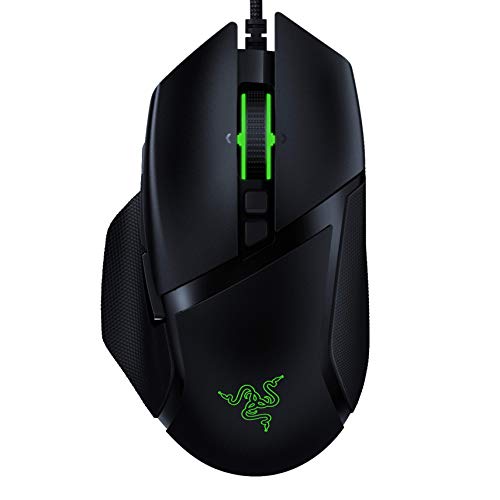
Razer Basilisk v2 Wired Gaming Mouse (Classic Black)

Razer Basilisk Essential Gaming Mouse (Classic Black)

Logitech G G840 XL Gaming Mousepad (Shroud Edition)

Glorious Model O Wired Gaming Mouse 67g (Matte White)

Razer DeathAdder V2 Gaming Mouse (Classic Black)

Redragon M612 Wireless RGB Optical Gaming Mouse

Razer Viper Mini Ultralight Gaming Mouse (Classic Black)
Taking A Closer Look At The Options
If you play with a low-DPI (dots per inch, a measure of how far the cursor travels per inch of mouse movement) setup or simply like a generous sweep area, the Gigantus V2 3XL is built to swallow your keyboard and mouse in a single sheet. The thick cloth lays flat on most desks and gives your forearm a softer landing during long sessions.
Pair it with the Razer Basilisk v2 if you crave consistency, or with the Glorious Model O if weight is the bigger concern. The pad doesn’t try to compete with the mouse for attention, and that’s the point.
Positive Points
- Massive surface means no edge catch when you sweep wide
- Textured micro-weave cloth balances glide and stopping power
- Thick padding softens wrist fatigue during multi-hour raids
- Works with optical and laser sensors without calibration fuss
Worth Noting
- Takes up serious desk real estate, so smaller workstations will struggle to fit it
- Cloth surfaces tend to collect oils and crumbs, so a quick wipe-down every few weeks keeps tracking honest
Whose Shelf It Belongs On
Low-sensitivity players who want one surface for keyboard and mouse.
Where Another Pick Suits Better
The Logitech G G840 XL covers a similar footprint with a more understated look for shoppers who don’t need the 3XL sprawl.
Snapping a hard case around your wireless mouse is a small move that pays off the first time a backpack gets shoved under a seat. The EVA shell (a semi-rigid foam that absorbs impact without much weight) keeps dust, splashes, and pressure off the G602 or G604 you paid real money for.
It’s a niche pick, sure, but if you commute to LAN events or toss your gear in a duffel between sessions, the protection stops being optional. Toss the dongle and a charging cable in alongside and you’ve got a clean travel kit.
What Works In Its Favor
- Shockproof, dustproof, and water-resistant shell for rough handling
- Lightweight EVA material doesn’t add bulk to your bag
- Molded fit holds the mouse snug without squeezing the buttons
Trade Offs
- Mouse and accessories are not included, so this is purely a case add-on
- Form-fit shape only works with the G602 and G604 models, nothing else
Right Fit For
Anyone regularly transporting a Logitech G602 or G604 between home and a meetup.
Not Your Match When
The Redragon M612 is a better fit if you want a wireless mouse that travels on its own without needing a separate hard shell.
For players who care about the numbers, the Basilisk v2 leans in hard. The 20K DPI optical sensor (a high-resolution tracking chip that can detect very fine movements) keeps aim consistent on the Gigantus V2 3XL below it, and the 11 programmable buttons mean your MMO rotation lives one thumb press away.
The Razer Speedflex cable is light enough to forget it’s there, which is a real edge if you came from heavier braided cords. Compared to the DeathAdder V2 in this list, the Basilisk v2 gives you more buttons to bind but a slightly narrower shape, so pick by grip style.
Practical Advantages
- Optical switches register clicks with light-based actuation, so debounce delay (the tiny pause the controller waits to filter out accidental double-clicks) is essentially gone
- 11 programmable buttons handle complex macro chains through Razer Synapse 3
- 20,000 DPI sensor auto-calibrates across the mat to reduce lift-off drift
- Speedflex cable drags far less than standard rubber-coated cords
Points To Keep In Mind
- Wired only, so you sacrifice the desk freedom the Redragon M612 offers
- Software setup requires installing Razer Synapse, which adds a background process
Feature Card
Feature Snapshot
Made For
Competitive FPS and MMO players who want sensor headroom and full button mapping.
Skip It When
The Razer Viper Mini is a smarter pick for small hands and claw grips where the Basilisk v2’s frame feels bulky.
The Essential version of the Basilisk trims the feature list just enough to land in a friendlier price bracket while keeping the silhouette and grip pattern that made the original popular. You still get 7 programmable buttons and a snappy 6,400 DPI sensor for everyday competitive play.
Set it on the Logitech G840 XL below and you’ve got a desk setup that feels high-end without the matching bill. The multi-function paddle is a quiet win for push-to-talk and reload binds, especially if you don’t want to dig for a keyboard macro mid-fight.
Notable Gains
- Multi-function paddle gives you a thumb shortcut for push-to-talk, melee, or DPI shift
- Mechanical switches rated for long-term click durability
- Chroma RGB lighting syncs with other Razer peripherals if you build out a setup
Honest Caveats
- 6,400 DPI ceiling is fine for most genres, but competitive FPS players chasing 20K DPI will want the Basilisk v2 instead
- No optical switches here, so the actuation speed falls a step behind the V2
- Wired design, so no wireless desk freedom
Who Should Grab It
First-time Razer shoppers who want a known chassis without the premium price.
A Better Fit Elsewhere
The Glorious Model O is worth a look if you prefer an ultra-light 67 g shell over the Basilisk Essential’s heftier body.
Logitech’s G840 XL is the more measured sibling of the Gigantus V2 above, sized at roughly 15.7 by 35.4 inches to cover a full keyboard and a wide mouse sweep zone. The Shroud Edition adds a graphic treatment that sets it apart from a plain black pad.
It’s a great home base for a Razer DeathAdder V2 or a Glorious Model O, and the consistent surface height means your keyboard and mouse line up on the same plane.
Noteworthy Benefits
- Performance-tuned cloth surface delivers even tracking for both laser and optical sensors
- Reinforced edges resist fraying where most pads start peeling first
- XL footprint gives you room to drop a full-size keyboard without breaking your mouse zone
Practical Considerations
- Cloth construction means oils and drink spills should be wiped quickly to avoid staining
- Print on the Shroud Edition is a matter of taste, so consider it a feature or a dealbreaker
Best Suited To
Full desk setups with a tenkeyless or larger keyboard that want one pad underneath everything.
Reach For A Different Pick When
The Razer Gigantus V2 3XL is a better match if you want a slightly larger 3XL canvas for extra-wide sweeping.
The Model O is one of those mice you pick up and immediately notice the missing grams. At 67 g with a honeycomb shell, it feels closer to a wireless mouse than most wired competitors, and the Pixart 3360 sensor is a known quantity for accurate tracking.
If the Basilisk v2 above is too button-heavy, the Model O trims the count and slashes the weight, which is exactly what fingertip grippers tend to want. Pair it with the G840 XL for a clean, airy setup.
Everyday Perks
- Honeycomb shell drops weight to 67 g, easing wrist strain on long sessions
- Pixart 3360 sensor is a proven performer for FPS precision
- Omron switches (mechanical click switches rated for millions of presses) handle rapid clicking without chattering
- Ambidextrous shape works for both left and right handers
Less Ideal Details
- Honeycomb design collects dust in the holes, so monthly cleaning is a real chore
- Wired only, so cable management still matters on a clean desk
Right Fit For
Fingertip and claw grip players chasing a light, fast-tracking mouse.
Swap It Out When
The Razer Viper Mini makes more sense for smaller hands that find the Model O’s frame a touch long.
The DeathAdder shape has been around long enough that the ergonomic curve basically defines palm-grip comfort. The V2 keeps the same sculpted right-hand fit and adds Razer optical switches plus a 20K DPI sensor for sharper response.
On a wide pad like the Gigantus V2 or the G840 XL, the rubberized side grips keep things planted even when your hand sweats through a long ranked match. Compared to the Basilisk v2, the DeathAdder V2 trades a couple of side buttons for a more comfortable, full-hand rest.
Well-Handled Touches
- Ergonomic right-hand shape supports palm grip for hours without cramping
- Rubberized side grips hold steady when your hand gets warm
- Optical switches carry a 70-million-click durability rating, so heavy clickers aren’t wearing them out anytime soon
- Speedflex cable keeps drag low enough to feel almost wireless
Where It May Fall Short
- Right-hand-only design leaves left-handed shoppers out of luck
- Wired, so no wireless freedom if you want a clean desk
Feature Card
Quick Technical Notes
Perfect Match For
Palm-grip players who game for hours and want a familiar, well-tested ergonomic shape.
Consider Something Else When
The Razer Basilisk v2 is a better fit if you want an extra side paddle for push-to-talk or DPI shift.
This is the one truly wireless mouse in the lineup, and the price makes it the natural fit for a budget-focused build. The M612 supports Bluetooth and 2.4 GHz wireless modes, with 5 DPI levels you can step through on the fly up to 8,000 DPI.
It’s not a Razered-out flagship, but for casual FPS nights and MMO grinding, the freedom from cables is a tangible upgrade over the wired Vipers and Basilisks in this list. Keep a charging cable handy, because wireless freedom always trades for battery checks.
What Helps Most
- Bluetooth and 2.4 GHz dual-mode wireless adapts to laptops and desktops alike
- 5 DPI presets cover most game genres without software tweaks
- Remappable buttons let you pull common shortcuts off the keyboard
- RGB lighting gives the desk a little flair without driving up the cost
Possible Compromises
- Wireless latency and battery life won’t match premium wireless flagship mice
- 8,000 DPI ceiling is below the 20K found on the Razer Basilisk v2 and DeathAdder V2
- Charging the battery between sessions is a regular ownership task, not an occasional one
Feature Card
Key Product Details
Who It Suits Best
Shoppers who want genuine wireless freedom at a budget price, and who don’t mind recharging between sessions.
Look Elsewhere When
The Razer Basilisk v2 is a stronger fit for competitive FPS players who want 20K DPI and a wired-grade sensor response.
The Viper Mini is the smallest mouse in the lineup, weighing just 61 g and trimmed down for claw and fingertip grippers with smaller hands. You still get Razer optical switches and an 8,500 DPI sensor, which is plenty for esports-style play.
If the Glorious Model O above feels just a touch too long in the hand, the Viper Mini is the natural step down. The Speedflex cable is also surprisingly forgiving on smaller desk footprints, so the wired design doesn’t feel like a punishment.
Real Benefits
- 61 g ultra-light build is among the lightest wired mice Razer makes
- Optical switches register clicks at the speed of light, so response feels instant
- Chroma RGB underglow adds visual flair without leaking into your grip
- Compact shell suits claw and fingertip grips for smaller hands
Some Limits To Know
- 6 programmable buttons is fewer than the Basilisk v2’s 11, so MMO-heavy players may feel the squeeze
- Mini frame is less comfortable for full palm grip on larger hands
- Wired design keeps you tethered even though it feels weightless
Feature Card
Core Details
Best Suited To
Small-handed claw and fingertip players who want a featherlight wired mouse for fast-twitch aim.
A Better Fit Elsewhere
The Razer DeathAdder V2 is a better match for larger hands and palm grips where the Viper Mini would cramp.
Picking the Right Wireless Mouse Without Overpaying
The wireless category is the one place where budget shoppers can still get burned. A cheap wireless mouse that drops inputs mid-match isn’t really saving you anything, so start with sensor and switch quality, then worry about the bells and whistles.
Sensor and Polling Rate
A mouse’s sensor determines whether your crosshair ends up where you wanted. The DPI rating tells you how sensitive the cursor is per inch of physical movement, while polling rate is how often the mouse reports its position to your PC, measured in Hz (hertz, or times per second). For budget wireless gear, 1000 Hz polling is the practical floor for competitive play. Anything below 500 Hz will feel sluggish in fast shooters.
Switches and Click Feel
Optical switches (Razer’s preferred tech in this list) use a light beam to register clicks, so they tend to outlast mechanical switches and avoid the debounce delay that causes missed double-clicks. Mechanical switches still work, but expect the click feel to soften over time and the actuation to lag a touch behind optical.
Battery and Wireless Modes
True wireless freedom comes with battery management. The Redragon M612 in this list supports both Bluetooth and 2.4 GHz wireless, with 2.4 GHz generally giving the lower-latency link for gaming. Whichever mode you pick, factor in a charging habit, since wireless mice that go dead mid-session are not a budget win.
Shape, Size, and Grip Style
Mice break down into three grip styles: palm (whole hand rests on the mouse), claw (fingers arch up at the back), and fingertip (only fingertips touch the mouse). Smaller-handed claw and fingertip players gravitate toward the Razer Viper Mini, while palm-grippers land on the DeathAdder V2. Trying to fit your hand to a mouse is the fastest way to develop wrist strain, so size up the shape before the spec sheet.
Key Considerations Across These Picks
Where Shoppers Go Wrong
The most common slip in this category is buying on DPI alone. A 20,000 DPI sensor doesn’t help if the mouse is the wrong shape for your hand, and a 6,400 DPI sensor on a perfectly fitting mouse will outperform it for actual play. Test grip feel before chasing numbers.
The other trap is skipping the pad. A great sensor on a worn-out, creased, or undersized surface will track poorly, no matter what the box claims. A solid XL pad like the G840 XL or the Gigantus V2 3XL protects both your sensor and your aim.
When Paying More Pays Off
The jump from the Redragon M612 to the Razer Basilisk v2 isn’t just about wireless versus wired. You’re getting a higher-tier sensor, optical switches, and a build that holds calibration longer. If you play ranked shooters or competitive MOBAs several nights a week, the upgrade typically earns its keep within a few months of better consistency and fewer missed inputs.
Frequently Asked Questions
Is a wireless gaming mouse actually lag-free these days?
Modern 2.4 GHz wireless on the Redragon M612 and similar mice is close enough to wired that most players can’t tell the difference in casual play. For competitive esports, wired still wins by a small margin, which is why the Razer Basilisk v2 and DeathAdder V2 lead the wired side of this list.
What’s a good DPI for FPS gaming on a budget?
For most FPS players, somewhere between 800 and 1,600 DPI on the Razers or around 1,000 to 2,000 on the Redragon M612 hits the sweet spot. Higher DPI exists for low-sensitivity sweeps, but most players will never push past 3,000 in regular use.
Do I really need an XL mousepad for gaming?
Not strictly, but an XL pad like the Logitech G G840 XL or the Razer Gigantus V2 3XL stops the mouse from catching an edge mid-sweep. For low-DPI players especially, the extra surface saves the day more than the mouse sensor does.
How long do optical switches last compared to mechanical ones?
Razer rates its optical switches around 70 million clicks for the V2 mice, which is roughly double the lifespan of typical mechanical switches. The light-beam actuation also skips the metal-on-metal wear that softens mechanical clicks over time.
Can a budget mouse work for MMO gaming too?
Yes, if you pick a mouse with enough buttons. The Razer Basilisk v2 with 11 programmable buttons covers most MMO action bars comfortably, and the Razer Synapse software lets you chain complex macros. Smaller mice like the Viper Mini will feel cramped for that workload.
Bottom Line
The honest read is that you don’t need to spend flagship money to get a solid gaming mouse, pad, or wireless option in 2026. Match the shape to your grip, match the sensor to your genre, and let the budget follow. The Razer Viper Mini handles small hands, the DeathAdder V2 handles long sessions, and the Redragon M612 handles wireless freedom, with everything in between covered by the rest of the list.


