


Long sessions demand a headset that keeps up without weighing you down, leaking sound, or dying mid-match. The picks below cover wired stalwarts, long-life wireless rigs, and a few crossover models that handle both PC and console without swapping accessories every night. Comfort sits next to audio quality, since a head-clamping driver set helps nobody at hour three. Read on for the standouts across budgets and play styles.
The Leading Options At A Glance

HyperX Cloud III Wired Gaming Headset (White)

HyperX Cloud Flight 2 Wireless Gaming Headset (White)

HyperX Cloud III Wired Gaming Headset (Pink)
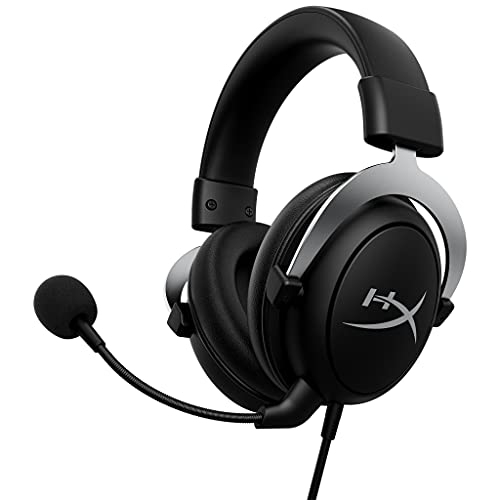
HyperX CloudX Xbox Licensed Gaming Headset

HyperX Cloud Alpha Gaming Headset (Red)

Aenllosi Hard Storage Case for SteelSeries Arctis (Black)

HyperX CloudX Stinger Core Wireless Gaming Headset

HyperX Cloud III S Wireless Gaming Headset (Black)
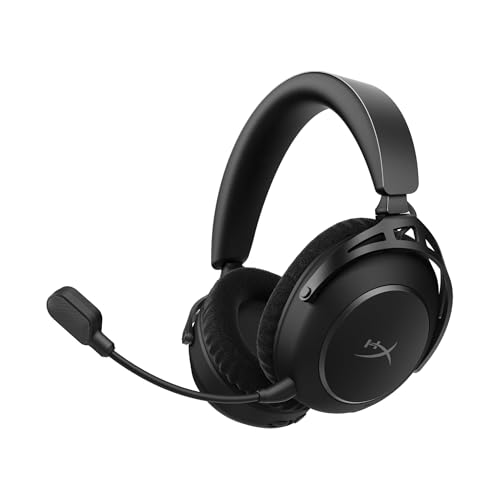
HyperX Cloud Alpha 2 Wireless Gaming Headset (Black)
Ordtop 2.4GHz Wireless Gaming Headset
The Details Behind The Selections
The white HyperX Cloud III leans on a long-running comfort formula and updates the audio side with angled 53mm drivers, the kind that aim sound slightly into the ear canal for a more directional stage. The 3.5mm plus USB-C and USB-A bundle means you swap from a PS5 controller to a PC without buying an extra cable, which is a small but real relief for households running mixed hardware.
You lose Bluetooth freedom here, so this is the choice for anyone parked at a desk or couch who values zero-latency audio. The 10mm mic handles team chat with a clean pickup, and the memory-foam headband stays comfortable through multi-hour raids. Where the Cloud Flight 2 (next pick) leans on RGB, this one focuses on the fundamentals.
Useful Touches
- Triple-connection bundle (3.5mm, USB-A, USB-C) for near-universal plug-and-play.
- Angled 53mm drivers stage directional audio so footsteps in shooters read clearly.
- Plush memory-foam padding across the headband and ear cups reduces pressure during long sessions.
- Upgraded 10mm mic delivers clean team-chat pickup without a boom-arm rig.
- Durable frame holds up to daily wear, depending on how careful you are with the cable.
Worth Noting
- Wired tethering can feel limiting if you want to stretch to the kitchen mid-match.
- White finish shows scuffs and bag wear more than darker variants like the Pink edition.
Feature Snapshot
Right Fit For
Multi-platform gamers who want one wired headset for PC, PS5, and Xbox without juggling dongles or cables.
Swap It Out When
Wireless freedom matters more, in which case the HyperX Cloud III S gives you Bluetooth and 2.4GHz in the same frame.
Where the wired Cloud III keeps things simple, the Cloud Flight 2 leans into personality. Magnetic ear-cup plates pop off without tools, so swapping a color or texture takes seconds, and the RGB lighting can store one profile on the headset itself. That makes the Flight 2 a strong fit for streamers and creators who want a consistent look across matches without configuring software each session.
Battery life stretches to roughly 100 hours with lighting off, which is the realistic claim worth chasing if you game four or five nights a week. Dual 2.4GHz and Bluetooth support means you can take a phone call without leaving the game audio queue. The wired Cloud III in white still wins on raw audio purity, but the Flight 2 trades a hair of fidelity for genuine flexibility.
Notable Gains
- Tool-free magnetic plates let you swap covers to match stream moods or team colors.
- Around 100 hours of battery with lighting off means weekly charging, not daily.
- Dual 2.4GHz plus Bluetooth supports a phone or tablet while the main audio plays.
- Onboard RGB profile storage works without software running, useful for cross-device setups.
- Multi-platform compatibility covers PC, console, and mobile through one headset.
Trade Offs
- RGB lighting and wireless drain battery faster when both run simultaneously.
- Plate magnets can loosen over years of daily swaps, depending on how often you change them.
Quick Facts
Best Suited To
Streamers and style-led players who want swappable plates and a long-life wireless rig.
Where A Sibling Pick Shines
Audio purists who don’t care about RGB should reach for the wired HyperX Cloud III instead for its lower-latency signal path.
The Pink Cloud III is functionally identical to its white sibling, sharing the same angled 53mm drivers, memory-foam padding, and triple-connection cable bundle. The difference is purely cosmetic, which matters if you’ve built a pink-and-white battlestation and want the headset to disappear into the aesthetic rather than clash with it.
For shoppers choosing between the two colorways, audio performance, mic quality, and build remain the same. If you care more about visibility of wear and tear over the years, you may find the white version shows scuffs more readily on lighter surfaces. The Pink edition stays disciplined about the same thing.
Real Benefits
- Same proven Cloud III audio and comfort as the white version, just recolored.
- Universal 3.5mm, USB-A, USB-C connection covers PC, PS5, and Xbox from one cable.
- Memory-foam headband and ear cups reduce pressure across multi-hour sessions.
- 10mm detachable mic keeps team chat clean and removes for solo listening.
Honest Caveats
- Color-matched variants sometimes run harder to find than the white version.
- Wired tethering is the same limitation as the white Cloud III.
Who Should Grab It
Players with a pink-themed setup who want the proven Cloud III formula in a matching finish.
Look Elsewhere When
Wireless flexibility tops your list, in which case the HyperX Cloud III S offers Bluetooth and 2.4GHz in a similar build.
The CloudX is built around an official Xbox license, so the 3.5mm plug drops directly into Xbox One and Series X|S controllers without adapter fuss. The detachable noise-cancelling mic frees the headset for music and movies when you step away from multiplayer, and in-line audio controls keep volume and mute one button away from your chin.
Where the Cloud III in white and pink leans on 53mm drivers, the CloudX steps back to a smaller driver set tuned for console use, which may feel less expansive in dense FPS firefights. Memory-foam ear cushions and an aluminum frame keep comfort and durability competitive, but the wired-only design assumes you’ll sit near the screen.
Strong Points
- Officially licensed for Xbox, so pairing is plug-and-play with no compatibility quirks.
- Detachable noise-cancelling mic lets the headset moonlight as a music pair.
- In-line audio controls keep volume and mute reachable mid-match.
- Aluminum frame and memory-foam cushions balance weight and comfort over hours.
Soft Spots
- Wired 3.5mm tethering limits how far you roam from the console.
- Smaller driver stage feels less roomy than the Cloud III’s 53mm setup.
Right Fit For
Living-room Xbox players who want a licensed, reliable wired headset with a removable mic.
Skip It When
You want a wireless Xbox experience, where the CloudX Stinger Core is the natural next step.
The Cloud Alpha has earned its reputation by doing one thing exceptionally well: separating bass from mids and highs through dual-chamber drivers, where each driver unit essentially contains two chambers handling different frequency ranges. The result is cleaner audio in chaotic FPS firefights, where muddied bass often buries footsteps and reload cues. A wide 15Hz to 25,000Hz frequency response aims to cover both the deep rumbles of explosions and the airy highs of distant ambient sound.
The aluminum frame, detachable mic, and braided cable signal a build meant for daily transport. Compatibility spans PC, PS4, PS5, Xbox One, Xbox Series X|S, Nintendo Switch, and mobile through a 3.5mm port. You trade wireless freedom for a wired connection that never needs charging, which some competitive players still prefer for the consistent latency.
What Earns Its Place
- Dual-chamber drivers separate bass and treble to reduce distortion in busy mixes.
- Aluminum frame with expanded headband balances toughness and weight.
- Detachable braided cable and detachable mic extend product life across years.
- Wide platform compatibility through 3.5mm keeps a single headset in rotation.
Things To Consider
- Wired-only design means no Bluetooth pairing with phones during a long stream.
- Older model without the angled driver refinement of the Cloud III series.
Spec Overview
Whose Shelf It Belongs On
Competitive FPS players who want a wired headset that prioritizes audio clarity over wireless convenience.
Another Choice May Suit
Anyone wanting wireless should pivot to the HyperX Cloud III S, which keeps the wired Cloud III formula and adds Bluetooth and 2.4GHz.
This entry breaks the headset-only pattern to cover the case that keeps a SteelSeries Arctis alive through LAN trips, daily commutes, and accidental drops. The hard shell resists crushing forces from backpacks and overhead bins, while the interior velvet lining cushions the headband and ear cups against scuffs. A built-in mesh pocket corrals USB dongles and charging cables, so a single grab gets you out the door.
It’s designed specifically for the Arctis 1, 3, 5, 7, 7X, 7P+, 9, 9X, and Pro families, which means the fit is tight rather than loose. If you carry a non-Arctis headset, the cut may not match the cable routing or earcup depth. A comfortable hand strap rounds out the design for short walks from car to setup.
Advantages To Know
- Hard outer shell absorbs impact during travel better than a soft pouch.
- Velvet-lined interior cushions the headband and ear cups against scuffs.
- Internal mesh pocket stores dongles and small cables alongside the headset.
- Carrying strap simplifies the grab-and-go routine between locations.
Worth Bearing In Mind
- Cut to fit SteelSeries Arctis models, not universal across all gaming headsets.
- Smaller form factor means no room for a large DAC or full-size keyboard accessory.
Made For
SteelSeries Arctis owners who travel with their setup to LAN parties, dorms, or shared workspaces.
Not Your Match When
You need a wireless gaming headset itself, where the HyperX Cloud III S or Cloud Alpha 2 is the relevant product to consider.
The CloudX Stinger Core skips a USB dongle entirely by pairing directly through Xbox Wireless, a protocol that talks to the console without extra hardware. That single-button setup is a relief for anyone who has fought a finicky 2.4GHz dongle in the back of a console. 40mm drivers paired with Windows Sonic spatial sound handle the audio side, which feels modest next to the Cloud III’s 53mm units but stays serviceable for casual play.
Memory-foam ear cushions with a leatherette cover land in the comfort column, and noise-cancelling on the mic helps cut room noise from televisions and kitchen clatter. The headset is built strictly for Xbox, so PC and PlayStation users should look at the Cloud III S instead. For its specific lane, though, the Stinger Core delivers wireless convenience at a friendly entry point.
Everyday Wins
- Direct Xbox Wireless pairing avoids a USB dongle that could get lost or knocked loose.
- Memory-foam and leatherette cushions balance comfort with passive noise isolation.
- Noise-cancelling mic reduces background chatter during team sessions.
- 40mm drivers with Windows Sonic spatial sound stage game audio cleanly.
Factors To Consider
- Limited to Xbox consoles, so PC and PlayStation setups will need a different model.
- Smaller 40mm drivers feel less expansive than the Cloud III’s 53mm angled units.
Perfect Match For
Casual Xbox players who want wireless freedom without juggling adapters or dongles.
Reach For A Different Pick When
You game across PC and console, where the multi-platform HyperX Cloud III S handles both through Bluetooth and 2.4GHz.
The Cloud III S is the natural wireless evolution of the wired Cloud III, keeping the same angled 53mm drivers and memory-foam comfort, then layering in 2.4GHz and Bluetooth radios. Battery life stretches to roughly 120 hours on 2.4GHz and 200 hours on Bluetooth, numbers that put weekly or even biweekly charging within reach for moderate players. For most weekly gaming schedules, that’s a real reduction in cable clutter.
Where the Cloud Flight 2 leans on swappable plates and RGB personality, the Cloud III S prioritizes the audio and endurance fundamentals. The detachable mic preserves the option to use the headset as a music pair on the commute, and select OMEN laptops pair through a HyperX Instant Pair shortcut. You trade the Cloud III’s zero-latency wired signal for the freedom to walk around without pausing the game.
Bright Spots
- 120 hours on 2.4GHz and 200 hours on Bluetooth reduce how often you reach for the charging cable.
- Same angled 53mm drivers as the wired Cloud III keep the audio signature familiar.
- Detachable mic lets the headset double as a music pair.
- Dual wireless options cover console, PC, and mobile through one headset.
Points To Note
- Higher cost than the wired Cloud III for the wireless convenience.
- Battery claims depend on lighting and mic usage, so heavy RGB can shorten real-world run time.
Feature Snapshot
Who Will Love This
Multi-platform players who want the wired Cloud III’s audio in a wireless package with marathon-grade battery life.
Consider Something Else When
Style-led streaming is the goal, where the HyperX Cloud Flight 2 offers swappable plates and RGB that the Cloud III S skips.
The Cloud Alpha 2 takes the dual-chamber driver concept from the original wired Cloud Alpha and pushes it wireless, then layers in 250 hours of claimed battery life and a dedicated RGB base station. The base station doubles as a charging dock and visual centerpiece for a desk, which keeps the headset itself cable-free between sessions. Simultaneous 2.4GHz and Bluetooth means you can keep a phone call going while staying in voice chat.
53mm multi-layer dual-chamber drivers are the heart of the audio, aiming to keep bass tight without muddying midrange detail. The base station adds desk clutter that simpler wireless setups skip, so smaller desks may feel cramped. For marathon players who rarely remember to charge, the 250-hour claim is the headline feature.
Everyday Perks
- 250-hour battery claim reduces charging to roughly once a month for moderate use.
- Simultaneous 2.4GHz and Bluetooth supports a phone call alongside game audio.
- RGB base station charges the headset and lights a desk setup.
- Multi-layer 53mm dual-chamber drivers preserve the original Cloud Alpha’s audio signature.
Practical Considerations
- Base station takes permanent desk space, which may bother minimalist setups.
- Higher price point than the wired Cloud Alpha for the wireless convenience.
Built With In Mind
Marathon players and content creators who want a dedicated dock, dual wireless, and multi-day battery life.
Where Another Pick Suits Better
You prefer a simpler wireless setup, where the HyperX Cloud III S delivers strong battery life without a desk dock.
The Ordtop rounds out the list as a budget-friendly wireless option with a flexible 4-in-1 connection approach: 2.4GHz through a USB dongle, plain USB, Bluetooth, and 3.5mm wired. That mix is unusual at the entry level, where most headsets pick two and call it done. Multi-platform support covers PS5, PS4, Switch, PC, and mobile, though Xbox consoles only connect through wired modes.
RGB lighting adds personality for the price, and 45 hours of claimed battery life is reasonable for a budget wireless set. Where the HyperX picks above invest in memory-foam padding and aluminum frames, the Ordtop leans on lighter materials to keep cost down, so long-session comfort may be the main trade-off. You may find the headband pressure noticeable past the three-hour mark depending on head shape.
The Upside
- 4-in-1 connection covers 2.4GHz, USB, Bluetooth, and 3.5mm in one headset.
- Multi-platform support spans PS5, PS4, Switch, PC, and mobile.
- RGB lighting adds visual flair uncommon at this price tier.
- 45-hour battery life handles a week’s casual gaming between charges.
Some Limits To Know
- Xbox requires a wired connection, so wireless convenience drops on that console.
- Lighter build materials may cause pressure points during marathon sessions.
Who Should Grab It
Multi-console households on a budget who value connection flexibility over premium build materials.
Where A Sibling Pick Shines
Daily long-session comfort matters more, where the HyperX Cloud III in white or pink offers proven memory-foam support.
What To Weigh Before Choosing Your Next Headset
Driver size shapes the audio stage more than most people realize. A 53mm driver moves more air than a 40mm one, which usually means fuller bass and a more cinematic feel, while smaller drivers tend to be lighter on the head. If you play single-player RPGs and want explosions to feel weighty, lean toward the larger size. For competitive shooters where quick positional cues matter, both sizes can work, but driver tuning matters more than the number alone.
Wireless freedom comes down to radio type and battery life. A 2.4GHz connection, the kind used in the Cloud Flight 2 and Cloud III S, offers lower latency than Bluetooth, which matters in fast-paced games. Bluetooth, on the other hand, makes phone pairing and laptop hopping effortless. Battery claims of 100 hours or more, like the Cloud Alpha 2’s 250-hour figure, mean weekly or even monthly charging for most players, while shorter claims require more discipline.
Comfort is where the long-session story lives. Memory-foam ear cushions distribute pressure across a wider area than basic foam, and leatherette covers seal out ambient noise but can run warm in summer. The Cloud III family’s headband padding and aluminum frame balance weight and durability, while lighter builds like the Ordtop trade some of that sturdiness for cost savings.
Microphone style affects daily use more than spec sheets suggest. A detachable mic, like the one on the Cloud III S, lets you use the headset as a music pair on the commute, while a fixed boom arm stays ready for impromptu calls. Noise-cancelling on the mic, found on the CloudX Stinger Core, cuts room noise from TVs and kitchen clatter, which helps during late-night team sessions.
Smart Buying Notes Worth Skimming
Common Shopping Slip Ups
Chasing the largest driver number alone can backfire, since tuning and chamber design affect sound as much as size. The wired Cloud Alpha proves that dual-chamber engineering on smaller drivers can outperform larger single-chamber setups in clarity. Another trap is buying wireless without checking whether your console supports the radio type. Xbox Wireless pairs natively with the Stinger Core, while PS5 and PC rely on 2.4GHz dongles or Bluetooth, so a mismatch means re-pairing or adapters.
What The Higher Tier Buys
Stepping up to the Cloud Alpha 2 from a budget pick like the Ordtop buys a dedicated charging base, a dual-chamber driver refinement, and battery life measured in months rather than days. The Cloud III S adds multi-platform wireless radios, a detachable mic, and the kind of memory-foam comfort that survives a full eight-hour raid. The honest read is that premium tiers earn their cost when you actually use the features daily, and feel like overkill for a once-a-week casual player.


