


Prebuilt gaming rigs take the headache out of matching CPUs to motherboards and hunting for compatible RAM. With a flood of configurations landing on retail shelves ahead of the holiday rush, sorting the genuinely capable desktops from the overhyped ones gets harder every year. This list walks through seven standout towers and mini PCs, weighing raw horsepower against real-world use, so you walk away with a machine that fits your games, your space, and your patience for tinkering.
A Fast Comparison Of The Options

The Horizon Autherium Dragon RGB I9 RTX Gaming PC
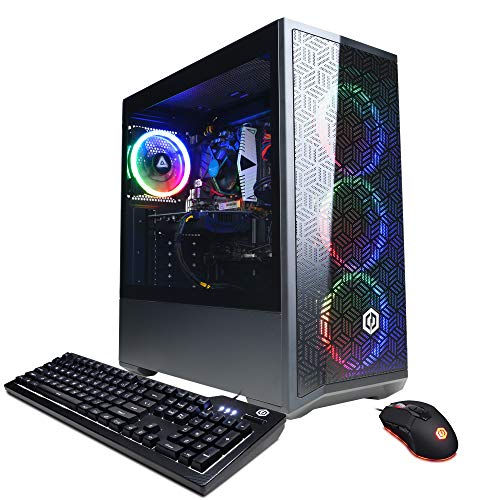
CyberpowerPC Gamer Xtreme VR Gaming PC

Skytech Gaming PC Storm

Lenovo Legion Tower 5i Gaming PC

GMKtec M6 Ultra Gaming Mini PC

GMKtec M5 Ultra Gaming Mini PC

GMKtec M8 Mini PC
The Picks, Examined More Closely
The Horizon Autherium Dragon RGB I9 RTX Gaming PC arrives looking like a showpiece, with tempered glass, RGB fans, and a 360mm AIO cooler (a sealed liquid cooling loop that keeps the CPU thermals in check under sustained loads) already mounted. Inside sits a Core i9 chip that boosts to 5.4 GHz, paired with an RTX 5070 OC (overclocked out of the box for higher frame rates) and a generous 64GB of RAM, which is twice what most prebuilts in this bracket offer.
For streamers juggling OBS, chat bots, and a modern AAA title simultaneously, the headroom is real. The 5TB of combined storage, a fast NVMe boot drive plus a 4TB spinner, means you will not be juggling installs every other week. Compared to the CyberpowerPC Gamer Xtreme that follows, this rig trades portability for raw muscle and comes ready for VR or 4K gaming from day one.
Noteworthy Benefits
- 64GB RAM means dozens of browser tabs, game launchers, and Discord can all sit open without stutter during long sessions.
- RTX 5070 OC GPU delivers strong ray-traced visuals and DLSS frame generation, the technology that uses AI to render extra frames at higher effective quality.
- 360mm AIO keeps the unlocked Core i9 cool under multi-hour gaming or rendering, reducing thermal throttling, the automatic slowdown that happens when a chip gets too hot.
- 5TB total storage is enough for roughly 30+ modern AAA installs without a cleanup purge.
Trade Offs
- Full tower size demands significant desk or floor space, which can be tight in smaller rooms.
- Power draw from the Core i9 plus RTX 5070 will be noticeable on your electricity bill during long play sessions.
Key Attributes
Built With In Mind
Enthusiast gamers, streamers, and creators who want top-tier specs in a ready-to-run desktop with no assembly required.
A Better Fit Elsewhere
Shoppers short on space or running light esports titles should look at the GMKtec M6 Ultra Gaming Mini PC instead.
The CyberpowerPC Gamer Xtreme VR Gaming PC is the practical choice when the priority is stepping into PC gaming without a towering spec sheet. It uses an older 10th-gen Intel i5 chip at 2.9 GHz, 8GB of DDR4, and a GTX 1660 Super 6GB, which handles esports and lighter AAA titles at 1080p.
It comes WiFi ready, so no extra adapter is needed for a clean desk setup. The 500GB NVMe boots Windows fast and holds a respectable starter library. For anyone on a tighter budget who mostly plays titles like Valorant, CS2, or indie games, the Gamer Xtreme offers honest performance. Compared to the Horizon Autherium Dragon, this is a clear step down in CPU, GPU, and RAM, but it is much easier on the wallet.
What Stands Out
- GTX 1660 Super still handles 1080p esports at high frame rates today, a solid match for popular competitive titles.
- 500GB NVMe SSD keeps boot times short, typically under 15 seconds, and loads levels quickly.
- Built-in WiFi saves you from buying a separate PCIe or USB wireless adapter.
Points To Note
- 8GB of RAM fills up fast when running Discord, Chrome, and a modern game, so a 16GB upgrade may be needed for some titles.
- Older CPU platform limits future upgrade paths, since newer 12th-14th gen boards and CPUs are not drop-in replacements here.
- 500GB of storage may feel cramped for gamers with large modern libraries, often filling up after a few big installs.
Right Fit For
Casual and entry-level gamers prioritizing 1080p esports play, students, or anyone wanting a functional desktop without a steep learning curve.
Swap It Out When
Buyers wanting 1440p performance and modern ray tracing should step up to the Skytech Gaming PC Storm instead.
The Skytech Gaming PC Storm uses an AMD Ryzen 5 5500 paired with an RTX 5050 8GB and 32GB of DDR4, which lands it in the sweet spot for 1080p and entry-level 1440p gaming. The 1TB NVMe covers most modern game libraries without forcing you to micromanage installs. Skytech also ships these with no bloatware, meaning a clean Windows 11 Home out of the box.
Where the Horizon Autherium goes flagship and the CyberpowerPC Gamer Xtreme goes budget, the Storm hits the practical middle. You get access to DLSS and ray tracing through the RTX 5050, plus enough memory to run a game with a dozen Chrome tabs open. Owners commonly report the case airflow stays reasonable under load, though the stock cooler can get audible during long summer sessions.
Features That Help
- 32GB of RAM comfortably handles modern games plus background apps, with no immediate upgrade pressure.
- RTX 5050 supports DLSS upscaling and ray tracing, features missing from the older GTX 1660 Super in the CyberpowerPC.
- 1TB NVMe gives you room for roughly 15-20 modern titles without constant cleanup.
Where It Is Less Suited
- Stock AMD cooler can get loud under sustained multi-core loads, so a $25 tower cooler upgrade is a common first mod.
- RTX 5050 is a strong 1080p card but not a 4K workhorse, which limits the ceiling if you own a high-end monitor.
Feature Snapshot
Whose Shelf It Belongs On
Mainstream gamers who want a balance of modern features, clean build, and capable 1080p to 1440p performance without overspending.
Another Choice May Suit
Content creators who want stronger ray tracing and a bigger GPU should consider the Lenovo Legion Tower 5i instead.
The Lenovo Legion Tower 5i Gaming PC pairs an Intel Core Ultra 7 265F with an RTX 5070 Ti, which is a meaningful step up from the RTX 5050 in the Skytech Storm for anyone chasing high-refresh 1440p or smooth 4K in demanding titles. The 32GB of RAM and 1TB of storage keep it well-balanced for current AAA games, while Legion Coldfront cooling, Lenovo’s branded airflow and fan-curve system, helps the system stay quiet during streaming or longer sessions.
It also ships with 3 months of PC GamePass, useful for trying new games without extra purchases. Compared to the Horizon Autherium, the Tower 5i trades raw RAM and storage capacity for a more refined thermal profile and a known brand warranty. For gamers who want a polished, low-fuss experience, this is an easy recommendation.
Strengths Worth Knowing
- RTX 5070 Ti delivers strong 1440p and entry 4K frame rates with DLSS AI frame generation enabled.
- Coldfront cooling keeps thermals in check without aggressive fan noise during typical play.
- Core Ultra 7 265F brings modern efficiency cores, the smaller low-power processing cores that handle background tasks while gaming.
Honest Caveats
- 1TB storage fills up quickly with modern titles, so adding a secondary drive may be needed within months.
- Lenovo’s bloatware footprint, including preloaded apps and trials, may require some manual cleanup on first boot.
Quick Facts
Made For
Gamers who value a refined, quiet build from a major brand and want 1440p-plus performance right out of the box.
Look Elsewhere When
Shoppers wanting maximum RAM or storage in a single tower should look at the Horizon Autherium Dragon RGB I9 instead.
The GMKtec M6 Ultra Gaming Mini PC shrinks desktop gaming into a box small enough to mount behind a monitor, yet it still runs an AMD Ryzen 5 7640HS with 6 cores, 32GB of DDR5, the latest-generation system memory that delivers faster data transfer than DDR4, and a 512GB SSD. Triple 4K display output through HDMI, DisplayPort, and USB4 makes it a productivity beast for traders, editors, and multi-monitor enthusiasts.
You do not get a discrete GPU (graphics card), so the integrated Radeon graphics will lean on the system RAM. For esports titles and lighter AAA games at 1080p with adjusted settings, the M6 Ultra performs well, though it cannot match the dedicated RTX cards in the Lenovo Tower 5i or the Skytech Storm. WiFi 6 and dual 2.5GbE LAN ports round out a genuinely modern connectivity package.
Positive Takeaways
- DDR5 memory at 32GB is rare in this footprint, giving you faster response times for multitasking.
- Triple 4K output makes it ideal as a productivity hub alongside light gaming.
- WiFi 6 and dual 2.5GbE Ethernet offer modern, fast networking for streamers and NAS users.
Potential Drawbacks
- No discrete GPU limits AAA gaming at high settings, so you will need to dial down details in heavier titles.
- 512GB storage fills up fast with modern games, so a fast external or internal NVMe upgrade is likely within the first year.
- Compact cooling means sustained workloads can push fans to audible levels, especially in warm rooms.
Who Will Love This
Productivity-focused users, streamers, and small-space gamers who prioritize footprint and modern connectivity over raw frame rates.
Consider Something Else When
Gamers wanting dedicated graphics and serious 1440p performance should consider the Lenovo Legion Tower 5i Gaming PC instead.
The GMKtec M5 Ultra Gaming Mini PC is the most portable option on this list, packing an 8-core, 16-thread Ryzen 7 7730U that can turbo to 4.5GHz. It is a Zen 3+ chip, an AMD processor architecture that balances power draw with solid multi-thread performance, which means it handles office work, light content creation, and casual gaming in a tiny case that disappears behind a monitor.
Like the M6 Ultra, it relies on integrated Radeon graphics rather than a dedicated GPU, so it will not replace a CyberpowerPC Gamer Xtreme for demanding AAA titles. But for esports, indie games, and HTPC use, where a small PC connects to a living-room TV for media and light gaming, it is impressively capable. Owners often use these as a media server or a low-power daily driver.
Everyday Perks
- 8-core CPU makes light work of spreadsheets, browser tabs, and casual photo editing at the same time.
- Tiny footprint fits on a shelf, behind a monitor with a VESA mount (a standard mounting interface for displays), or beside a TV.
- Low power draw keeps heat and noise minimal, ideal for bedrooms or quiet offices.
Small Caveats
- No discrete GPU means heavier AAA games will need reduced resolution or settings to run smoothly.
- RAM is often soldered, so future memory upgrades are typically not possible on these compact boards.
Best Suited To
Shoppers wanting a quiet, low-power mini PC for office work, media streaming, and lighter gaming in tight spaces.
Where A Sibling Pick Shines
Gamers wanting more cores and triple 8K display support should look at the GMKtec M8 Mini PC instead.
The GMKtec M8 Mini PC runs an AMD Ryzen 5 PRO 6650H with Radeon 660M integrated graphics, 16GB of LPDDR5 at 6400MT/s, and a 1TB SSD. Where it really flexes is connectivity: triple 8K display output, dual 2.5GbE LAN, and an Oculink port. Oculink is a high-bandwidth external connector typically used to attach a desktop graphics card enclosure.
This makes the M8 a strong base for anyone wanting to start with a compact PC and add a real GPU later through an external dock. Compared to the GMKtec M5 Ultra, you get more memory bandwidth and a more modern feature set, though you trade 2 cores of CPU. Owners often pair this with a portable monitor and an eGPU dock (external graphics card enclosure) for a clean, expandable setup.
What Earns Its Place
- Oculink port enables a future external GPU upgrade, so you can add real graphics horsepower without replacing the whole PC.
- Triple 8K display support is rare at this size, ideal for traders, creators, and multi-monitor productivity.
- 1TB SSD gives you a larger starting library than the GMKtec M6 Ultra’s 512GB.
Worth Bearing In Mind
- 16GB of LPDDR5 is soldered and not user-upgradeable, so memory is fixed at purchase.
- Integrated Radeon 660M graphics will not deliver strong 1080p AAA performance on its own.
- An Oculink eGPU dock adds meaningful cost on top of the base unit.
Spec Overview
Perfect Match For
Creators, multi-monitor users, and forward-thinking shoppers who want a compact PC with room to grow into a full gaming rig later.
Not Your Match When
Gamers wanting immediate high-FPS play should consider the Skytech Gaming PC Storm instead.
What To Weigh Before Choosing A Prebuilt Gaming PC
Match The GPU To Your Monitor Resolution
The GPU, or graphics processing unit, is the chip responsible for rendering every image on screen, and it determines what your games actually look like. A 1080p 60Hz monitor pairs comfortably with a GTX 1660 Super, while 1440p high-refresh gaming wants an RTX 5070 or higher. Running a 4K display? Plan on an RTX 5070 Ti at minimum. Pairing a weak GPU with a high-resolution monitor wastes the screen, and pairing a flagship GPU with a 1080p 60Hz panel wastes the card.
Check RAM And Storage Now, Not Later
8GB of RAM is the floor for modern gaming, but 16GB is the realistic minimum, and 32GB removes any ceiling concerns for the next several years. Storage matters just as much: a 500GB drive fills fast with modern installs, so a 1TB NVMe boot drive is a sensible default. If you see a 256GB or 500GB system, budget for a secondary SSD within months.
Consider Size, Noise, And Cooling
Full towers run cooler and quieter because they have more space for airflow, while mini PCs trade thermals for footprint. If you are placing a machine in a bedroom or under a TV, the fan noise from a compact rig under load can be a real annoyance. Look for reviews that mention sustained thermals, not just peak benchmarks.
Don’t Overlook Connectivity And Expandability
WiFi 6, USB4, and 2.5GbE Ethernet are modern features worth having if you stream, transfer large files, or use a multi-monitor setup. Equally, check how many RAM slots and storage bays are free for upgrades. A prebuilt with two empty M.2 slots is far more future-proof than one that ships fully populated.
Pitfalls And Premium Tradeoffs To Know
Common Shopping Slip Ups
The biggest mistake is buying a flashy case and overlooking a weak power supply or single-channel RAM, both of which bottleneck real performance. Another trap is chasing a giant SSD capacity while ignoring the GPU, since storage is easy to add later but a graphics card swap is not. Always check the PSU wattage and confirm it can support the GPU you actually want.
What The Higher Tier Buys
Stepping up to a premium prebuilt like the Horizon Autherium or the Legion Tower 5i pays for stronger cooling, better-quality components, and more upgrade headroom. You also get a longer usable lifespan, meaning the system stays relevant for more years before needing a major overhaul. For gamers planning to play heavy AAA titles for the next 4-5 years, the premium tier often costs less per year than buying mid-range twice.
Frequently Asked Questions
Is A Prebuilt Gaming PC Worth It Over Building One?
Prebuilts save you the time spent researching compatibility, sourcing parts, and assembling, and they ship with a single warranty covering the whole system. You typically pay a small premium for that convenience, but for first-timers, the time savings often justify it. Builders comfortable with PC assembly will still get more performance per dollar by picking parts themselves.
How Much RAM Do I Need For Gaming In 2026?
16GB remains workable for most current titles, but 32GB is the comfortable sweet spot and the most common configuration in modern prebuilts. Heavy multitaskers who run Discord, Chrome, OBS, and a game at once will feel the headroom that 32GB provides.
What Is DLSS And Should I Care?
DLSS, or Deep Learning Super Sampling, is NVIDIA’s AI-driven rendering technique that reconstructs high-resolution images from a lower-resolution render, boosting frame rates with minimal quality loss. It matters because it lets mid-range GPUs like the RTX 5050 and 5070 punch well above their weight, delivering smoother play in demanding games.
Do Mini PCs Like The GMKtec Series Handle Real Gaming?
Mini PCs with integrated graphics handle esports and indie titles well, but for demanding AAA games at high settings, a dedicated GPU is still required. Some models, like the GMKtec M8, support external GPU docks through Oculink, which bridges the gap for compact setups.
When Should I Skip A Budget Prebuilt?
Skip budget prebuilts if you plan to play modern AAA games at 1440p or higher, or if you want your system to last more than 3 years without upgrades. For 1080p esports and general use, a budget machine like the CyberpowerPC Gamer Xtreme still makes sense.
Closing Remarks
The right prebuilt depends entirely on what you play, where you put it, and how long you want it to last. Towers like the Horizon Autherium and Legion Tower 5i deliver the kind of horsepower that holds up for years, while the GMKtec mini PCs offer a smaller, quieter footprint for lighter loads and multi-monitor work. Match the GPU to your monitor, give yourself storage headroom, and the rest is just picking the case that fits your desk.


