


When your battlestation needs serious horsepower, “big” stops being a buzzword. You’re balancing oversized displays, beefy memory configurations, and chassis that can hold real thermal headroom. A big screen is easier on your eyes during eight-hour sessions, and a big SSD means you never juggle game installs when a new title drops. The picks below pair large-format laptops and desk-deep accessories that match the “biggest gaming PC” mindset: room to breathe, headroom for AI and creative workloads, and the kind of internal storage and memory that lets a system stretch across years of releases.
A Quick View Of The Lineup
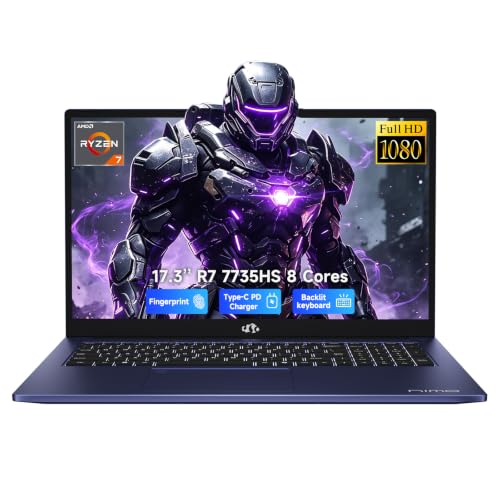
NIMO 17.3″ FHD Light Gaming AI-Laptop

Razer Firefly Hard V2 RGB Gaming Mousepad

JIALONG Black Topographic XXL Gaming Mouse Pad
NIMO 15.6″ AI-Creator-Laptop R5-6600H

NIMO 15.6 Gaming-Creator-Laptop Ryzen 7 8745HS

NIMO 15.6 Gaming-Creator-Laptop 32GB + eGPU
NIMO 15.6 AI Creator Laptop R5-6600H

NIMO 15.6 FHD AI Ready Gaming Laptop
The Picks, Examined More Closely
The 17.3-inch panel is the headline here, and for anyone whose eyes get tired squeezing detail out of a 14-inch screen, that extra real estate is a real comfort. Under the hood sits the AMD Ryzen 7 7735HS, a chip with eight cores designed for sustained multitasking, paired with 16GB of DDR5 memory, which is the current mainstream standard for laptops that handle both games and heavy browser loads.
The 1TB SSD gives you room for a healthy Steam library plus your working files without constant cleanup. Compared with the Razer Firefly and JIALONG entries that follow, this is the first true computer on the list, and the closest match to the “biggest gaming PC” idea in pure chassis volume.
Real-World Strengths
- 17.3-inch FHD screen is easier on the eyes during long sessions or document work.
- Ryzen 7 7735HS handles dozens of browser tabs alongside games and calls without bucking.
- 1TB of SSD storage means you skip the chore of external drives for a while.
- DDR5 memory gives you current-generation bandwidth, useful for AI tools and creative apps.
- Portable enough to move between rooms on a standard backpack, depending on your build.
Things To Consider
- A 17.3-inch chassis is heavier than the 15.6-inch models elsewhere in this list, so daily backpack commutes can wear on you.
- Cooling fans under load are often reported as audible in slim chassis like this one.
Made For
Anyone who wants a big screen for spreadsheets, game lobbies, and movies in one laptop.
Skip It When
You need a smaller bag-friendly machine, in which case the NIMO 15.6 FHD AI Ready Gaming Laptop is a smarter match.
The Firefly V2 keeps things tight at 15.2 by 12 inches, the size of a standard mousepad with just enough overhang for a compact keyboard. Razer’s Chroma ecosystem (the brand’s RGB lighting platform that syncs with 30-plus partner brands and Philips Hue gear) drives the underglow, with 16.8 million color options across the perimeter strip.
The hard surface is micro-textured, meaning the finish is lightly pebbled to balance glide and stopping power. That calibration matters for tracking-heavy games where your sensor is reading tiny surface variations to translate hand movement into on-screen motion.
Everyday Advantages
- Micro-textured finish works for both flick-heavy aim and slow, controlled tracking.
- Chroma integration makes this pad play nicely with Razer keyboards, mice, and Hue lighting.
- Hard surface wipes clean, which helps with soda splashes and dust.
Worth Noting
- 15.2 by 12 inches is small next to the JIALONG XXL pad coming up next, so a full keyboard plus wide mouse sweeps won’t both fit.
- Chroma features are most useful if the rest of your setup is already Razer-flavored.
Who It Suits Best
RGB enthusiasts who already own Razer hardware and want a tidy, glow-driven desk anchor.
Where Another Pick Suits Better
Anyone running a full-size mechanical keyboard and a low-DPI mouse should consider the JIALONG Black Topographic XXL Gaming Mouse Pad for the room it offers.
At roughly 35.4 by 15.7 inches, the JIALONG pad swallows a full tenkeyless keyboard and a mouse with room to spare, which makes low-DPI play styles much more forgiving. The black topographic print is understated, so it disappears under your gear rather than fighting it visually.
The stitched edges matter for daily use. A lot of cloth pads fray at the corners within months; reinforced binding here is the most commonly cited durability reason owners pick this style of mat. Compared with the Razer Firefly, this is the bigger, quieter, RGB-free sibling.
Practical Pluses
- Spans most of a standard desk, so your keyboard never slides on bare wood.
- Topographic print hides dust and crumbs between cleanings.
- Stitched edges resist the peeling that plagues cheaper cloth mats.
- No RGB means no software to install or fight with after driver updates.
Honest Caveats
- XXL sizing means the pad can hang off shallow desks, so measure first.
- Cloth surfaces tend to absorb accidental drink spills, so plan on blotting rather than wiping.
Feature Snapshot
Best Suited To
Players with a low-sensitivity mouse and a large desk who want everything on one surface.
Consider Something Else When
You want RGB accent lighting, in which case the Razer Firefly Hard V2 is the more thematic pick.
The Ryzen 5 6600H inside this NIMO is a six-core, twelve-thread chip with boost speeds reaching 4.5GHz, which puts it comfortably above common thin-and-light CPUs you find in everyday ultrabooks. The integrated Radeon 660M graphics (AMD’s RDNA 2-based iGPU, capable of light 1080p gaming) keeps the system cool and quiet during office work while still handling casual titles.
The 100W fast PD charging over USB-C is the real talking point, because you can top up from a compact brick instead of hauling a proprietary charger. For hybrid work and play, this sits between the smaller NIMO 15.6 AI Creator and the bigger 17.3-inch model at the top of this list.
The Practical Payoff
- Six-core CPU with 12 threads keeps coding tools, browsers, and calls responsive together.
- 100W USB-C PD lets you travel with one charger for laptop and phone.
- FHD IPS panel gives wide viewing angles for shared-screen meetings.
- 2-year warranty is longer than the typical 1-year baseline.
Trade Offs
- 512GB SSD fills up quickly with modern games, so you may add external storage within a year.
- Integrated Radeon graphics cap AAA performance at modest settings, so heavier titles want a discrete GPU.
Perfect Match For
Remote workers, students, and side-content creators who game lightly and want solid battery-friendly performance.
Not Your Match When
You need serious GPU horsepower, in which case the NIMO 15.6 Gaming-Creator-Laptop 32GB with eGPU dock gives you dedicated graphics.
The Ryzen 7 8745HS is an eight-core, 45W part paired with Radeon 780M graphics on AMD’s RDNA 3 architecture, the same generation you’d find in current-generation handhelds and ultrabooks. That combination delivers meaningful 1080p performance without a discrete GPU, which is unusual at this weight class.
Boost clocks reach 4.9GHz, so single-threaded tasks like game logic and compilation feel snappy. Compared with the R5-6600H NIMO above, this is the meaningful step up for creators who run local AI tools or stream while gaming.
A Favorable Mix
- RDNA 3 graphics handle modern esports and lighter AAA games at 1080p without choking.
- Eight cores make local AI inference (running a model directly on your machine) reasonable for image or audio tools.
- 1TB SSD holds a healthy game library out of the box.
- 100W PD keeps the charger ecosystem simple on the road.
Some Limits To Know
- 16GB RAM is enough today, but future AI tools will likely push you toward 32GB sooner than later.
- Integrated graphics still trail a discrete mobile GPU, so heavy 3D work benefits from the eGPU model below.
Quick Facts
Who Will Love This
Streamers, students in 3D or video, and side-project tinkerers who want strong CPU and decent iGPU in one box.
Reach For A Different Pick When
You regularly edit 4K video, in which case the NIMO 15.6 Gaming-Creator-Laptop 32GB with eGPU dock is the more honest match.
This is the configuration for people who like flexibility. You get the same Ryzen 7 8745HS chip and Radeon 780M as the standard 8745HS model above, but with 32GB of DDR5 memory and a paired eGPU dock featuring an RX 7600M XT with 8GB of GDDR6. The dock (an external enclosure that holds a desktop-class graphics card and connects via a high-bandwidth port) effectively turns the laptop into a desktop when parked.
The aluminum chassis under 4.63 pounds is the lightest in the NIMO creator line, and the 180-degree hinge helps when sharing screens in a study group or conference. For someone chasing “biggest gaming PC” performance without giving up portability, the dock does the heavy lifting at home.
The Case For It
- 32GB RAM future-proofs you for heavier AI tools and large project files.
- eGPU dock with RX 7600M XT delivers dedicated graphics on demand.
- Aluminum chassis keeps weight below 4.63 pounds, lighter than many 15.6-inch gaming laptops.
- 180-degree hinge is genuinely useful for collaboration.
Points To Note
- eGPU docks add cost and desk footprint that some shoppers may not need.
- Performance over the dock’s external connection is generally lower than a same-card desktop, depending on the port.
Key Product Details
Whose Shelf It Belongs On
Mobile editors and engineering students who dock at a desk but want a true laptop on the road.
A Better Fit Elsewhere
Casual gamers who don’t dock often should consider the lighter NIMO 15.6 Gaming-Creator-Laptop Ryzen 7 8745HS instead.
The 6600H in this NIMO is the same chip as in the AI-Creator-Laptop earlier, but the configuration trims things down to a 512GB SSD and 16GB of RAM. That’s a deliberate choice: for a student or remote worker who lives in the cloud and uses mostly browser-based tools, paying for storage you never touch is wasted budget.
The FHD IPS screen keeps text crisp without draining battery, and the chassis shares the 100W PD charging standard of the rest of the NIMO creator line. Where this fits is right at the edge between “casual laptop” and “real workstation,” and it leans toward casual.
What Works In Its Favor
- Six-core CPU handles office, school, and casual creative tasks without slowdowns.
- Lower-spec storage keeps the entry price approachable for shoppers building their first rig.
- Same 100W PD as the rest of the family, so accessories stay interchangeable.
Potential Drawbacks
- 512GB fills up fast with a handful of modern games installed at once.
- No discrete GPU means heavier creative work will need patience or a future upgrade.
Right Fit For
First-year college students and remote workers who need a clean, fast machine for productivity and lighter play.
Look Elsewhere When
You want more room for game installs, in which case the NIMO 15.6 FHD AI Ready Gaming Laptop gives you 1TB out of the box.
The 15.6-inch form factor hits the sweet spot between screen size and backpack space, and pairing it with the Ryzen 7 7735HS and 16GB of DDR5 keeps the system responsive even when a dozen tabs are open over a long session. The 1TB SSD means you’re not picking which games to uninstall after a few months.
Compared with the 17.3-inch NIMO at the top of this list, the trade here is portability versus screen real estate. For dorm rooms, shared apartments, and any setup that gets unplugged often, the smaller footprint is the more practical “biggest gaming PC” mindset in laptop form.
Bright Spots
- 15.6-inch chassis is easier to carry than the 17.3-inch option without giving up much screen.
- Ryzen 7 7735HS with 8 cores handles modern gaming and productivity in parallel.
- 1TB SSD means you skip the external drive in your first year of ownership.
Less Ideal Details
- Smaller chassis often runs warmer under load, so a laptop stand helps with airflow.
- 16GB is comfortable today, but heavier AI tools may want 32GB sooner than later.
Who Should Grab It
Travelers, dorm dwellers, and anyone who wants a roomy SSD and modern Ryzen silicon in a portable shell.
Swap It Out When
You prioritize screen size over portability, in which case the NIMO 17.3 FHD Light Gaming AI-Laptop is the better match.
What To Weigh Before Picking A Biggest Gaming PC
CPU Cores And Threads Count Most
The single biggest real-world factor in a “biggest gaming PC” is what the processor can sustain over hours, not what it spikes to for two seconds. Six cores is the modern baseline for productivity plus gaming; eight cores is the sweet spot for creators who also run AI tools or stream.
Ryzen H-series chips (AMD’s higher-power mobile line) tend to hold boost clocks longer than thin-and-light U-series, which matters when exporting video or compiling code. The Ryzen 7 8745HS and 7735HS in this list sit at eight cores, and the R5-6600H options sit at six.
Memory And Storage Should Match The Workload
16GB of DDR5 is the current comfortable floor, and 32GB is the real future-proofing number for local AI work. For storage, 512GB is workable for cloud-first shoppers, while 1TB is the practical gaming baseline in 2026.
PCIe 4.0 SSDs (a faster generation of solid-state drive) help with large project files, but for most games the difference between PCIe 3.0 and 4.0 is small. What matters more is leaving 15 to 20 percent of the drive free so the controller can manage wear leveling (the practice of distributing writes across the drive to extend its life).
Screen Size And Form Factor Set The Tone
A 17.3-inch laptop is the closest laptop equivalent to a big desktop monitor, and it removes the need for an external display in a small room. A 15.6-inch model is the everyday compromise, easier to carry, and pairs well with an external monitor at home.
If you already own a desk and monitor, a smaller laptop with stronger internals often beats a bigger laptop with average internals at the same price. For pure desk-bound play, a tower still wins on raw thermals and upgradability, which is why the eGPU model exists in this roundup.
Accessories Shape The Daily Feel
A large mouse pad changes how a low-DPI mouse feels, and an RGB pad changes how the room looks at night. These are small upgrades, but they sit under your hands for thousands of hours a year, so build quality matters.
Key Considerations Across These Picks
Mistakes Worth Dodging
Buying on raw CPU name alone is the most common slip. A Ryzen 7 chip in a thin chassis with poor cooling will throttle (reduce its speed automatically to avoid overheating) under sustained load, so look at the TDP rating (a measure of how much heat the chip is designed to produce) and the chassis design together. Skipping the storage math is the next trap; 512GB disappears in two months of modern game installs.
Where The Extra Money Goes
The step from a 6600H to an 8745HS, and from 16GB to 32GB, is the most meaningful upgrade for most shoppers running local AI tools or editing 4K video. Dedicated graphics, like the eGPU dock in pick six, buy you a quieter creative experience and longer relevance for AAA games. For shoppers who mostly browse, type, and play esports, the lower-tier NIMO 6600H models deliver honest value without the extra cost.
Frequently Asked Questions
What makes a gaming PC “biggest” in 2026? It usually means a large-screen laptop, full tower, or full-desk setup with above-average specs: 16GB or more RAM, at least a six-core CPU, a 1TB-class SSD, and either a strong integrated GPU or a dedicated one.
Are 17.3-inch laptops worth the weight? For stationary or short-move setups, yes. The extra screen real estate reduces eye strain and removes the need for a monitor. For daily backpack commuting, the 15.6-inch form is friendlier.
Do I need 32GB of RAM for gaming? Most current games run comfortably on 16GB, but 32GB helps if you keep browsers, chat apps, and creative tools open alongside your game, or if you run local AI models.
Is an eGPU dock as fast as a desktop GPU? Generally no, because the external connection adds a small amount of latency and bandwidth limits compared with a desktop PCIe slot, depending on the port. It is, however, a meaningful upgrade over integrated graphics.
How much storage do I actually need? For a gaming-focused setup, 1TB is the practical minimum in 2026, since modern AAA titles often exceed 80GB each. Cloud storage helps with media, but games still want local SSD space for fast load times.
Final Verdict
The “biggest gaming PC” idea in 2026 isn’t one shape, it is a spectrum. The 17.3-inch NIMO at the top delivers the most screen you can carry, the 8745HS models in the middle give you the best balance of CPU and iGPU horsepower, and the eGPU setup earns its place when you dock at a desk. Your budget, your bag, and your weekly workload all point the way. Start with the pick that matches the hours you actually log, and upgrade from there.


