


Plug-and-play gaming rigs have come a long way from the budget bricks of a few years ago. Today’s prebuilt options pair modern GPUs, fast NVMe storage, and clean Windows installs in a box that works the moment you hit the power button. This list rounds up ten affordable prebuilt gaming PCs covering everything from compact mini desktops to full tower builds, so you can match the hardware to the games you actually play and the space you actually have.
The Lineup, Simplified

Skytech Gaming Edge Gaming PC, AMD Ryzen 5 5500, RTX 5050 8GB

Horizon Autherium Dragon RGB I9 Gaming PC, RTX 5070 OC
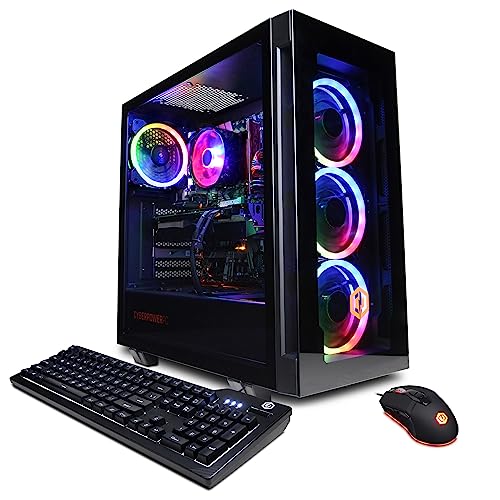
CYBERPOWERPC Gamer Master Gaming PC, Ryzen 5 7600, RTX 4060
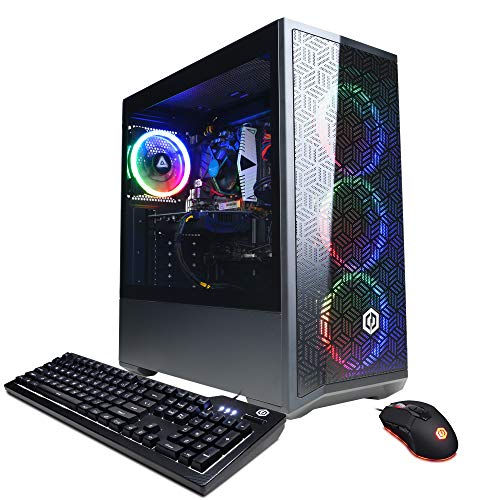
CyberpowerPC Gamer Xtreme VR Gaming PC, i5-10400F, GTX 1660 Super

GEEKOM IT12 Mini PC, Intel i3-12300HE, 16GB/512GB

Lenovo Legion Tower 5i, Core Ultra 7 265F, RTX 5070 Ti

GEEKOM A5 2027 Edition Mini PC, Ryzen 7 7730U
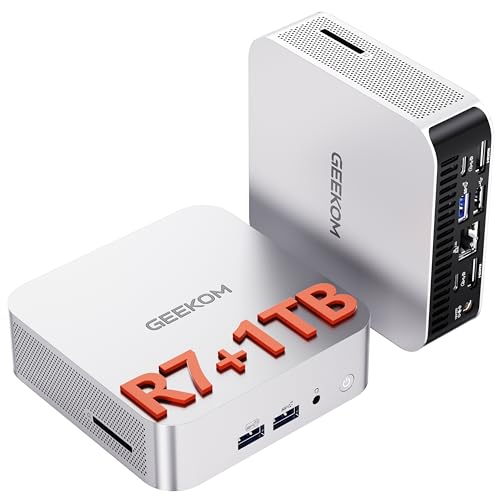
GEEKOM A6 Mini PC, Ryzen 7 6800H, 16GB DDR5, 1TB
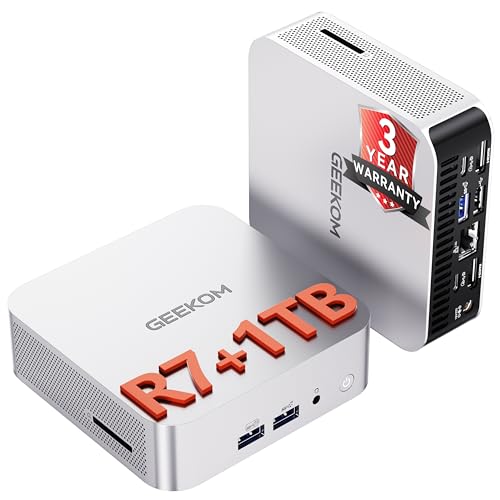
GEEKOM A8 Mini PC, Ryzen 7 8745HS, 16GB DDR5

GEEKOM IT13 MAX AI Mini PC 2026, Intel Ultra 9 185H
Inside Each Recommended Option
Skytech positions the Gaming Edge as a no-drama starter rig, and the spec list reads like a careful budget rather than a corner-cutter. A six-core Ryzen 5 5500 (a CPU with 12 threads that boosts up to 4.2 GHz) sits alongside an RTX 5050 8GB, so 1080p gaming in most modern titles is well within reach. The 1TB NVMe SSD means you skip the loading-wheel pain of older SATA drives, and the 650W Gold-rated PSU leaves a little headroom for a future GPU bump.
For apartment dwellers or first-time builders, this feels like a sensible middle ground. The case layout isn’t flashy, but the air cooler keeps thermals in check during long sessions, and Wi-Fi is built in so there’s no need to fish an Ethernet cable across the room.
Bright Spots
- Six-core Ryzen 5 5500 with 12 threads handles esports, indie games, and light streaming without choking.
- RTX 5050 8GB supports DLSS upscaling (an AI rendering trick that boosts frame rates by drawing lower-res frames and sharpening them) for smoother visuals at 1080p.
- 1TB NVMe SSD cuts load times and stores a sizeable game library out of the box.
- 16GB DDR4-3200 is the comfortable sweet spot for current titles, with a heat spreader for stable thermals.
- 650W Gold-rated PSU (an 80 Plus efficiency tier that wastes less power as heat) gives upgrade wiggle room.
- Preinstalled Windows 11 Home with no bloatware means a clean first boot.
Things To Consider
- DDR4 RAM and the older AM4 platform limit future CPU upgrades compared to AM5 picks later in the list.
- The stock air cooler handles stock clocks but may run warm under sustained all-core loads.
Key Specs
Made For
First-time gaming PC owners who want a balanced 1080p setup without researching every part on a parts list.
Consider Something Else When
Shoppers planning a 1440p or 4K upgrade should look at the Lenovo Legion Tower 5i instead, since its RTX 5070 Ti has the muscle for higher resolutions.
Compared to the budget-friendly Skytech in slot one, the Horizon Autherium Dragon RGB I9 is a different animal entirely. The unlocked Core i9 boosts up to 5.4 GHz and the factory-overclocked RTX 5070 OC GPU push frame rates well past 1080p. Storage is generous, with 1TB of NVMe rated up to 7000 MB/s paired with a 4TB 7200 RPM hard drive for media archives, and 64GB of RAM means you can keep a game, browser, Discord, and a stream running without slowdown.
Add in a 360mm AIO liquid cooler and Windows 11 Pro, and this thing is ready for VR titles, sim racing, or heavy creator workloads. Depending on how you set it up, the RGB-laden case may look loud on a quiet desk, but the cooling headroom speaks for itself.
Notable Upsides
- 64GB of RAM, roughly double the typical high-end system, keeps demanding workflows running without page-file swapping.
- 5TB total storage covers a large Steam library plus a chunk of video or photo archives.
- Factory-overclocked RTX 5070 OC card gives extra frames out of the box.
- 360mm AIO liquid cooler handles the unlocked i9 at sustained loads.
- Windows 11 Pro unlocks BitLocker encryption and remote desktop out of the box.
Honest Caveats
- The “affordable” label is relative; this is a serious investment compared to the Skytech build.
- A large case with an AIO radiator needs decent clearance behind or above the desk.
- RGB lighting adds visual flair but may not suit a minimalist office setup.
Best Suited To
Power users who game, stream, and edit video on the same machine and want a turnkey solution.
Look Elsewhere When
Shoppers who want modern Intel silicon and a quieter tower can find a more measured package in the Lenovo Legion Tower 5i with its Core Ultra 7 and RTX 5070 Ti.
The Gamer Master steps up to AMD’s modern AM5 platform, which keeps the door open for future Ryzen CPU upgrades. A Ryzen 5 7600 with six cores and twelve threads is a noticeable step over the older 5500, and the GeForce RTX 4060 handles 1080p comfortably while sipping less power than its predecessor. 16GB of DDR5 RAM is the new standard, and you can feel the difference in browser-heavy multitasking.
CYBERPOWERPC wraps it in a tempered glass case with custom RGB lighting, and the 7.1 channel audio output is a nice touch for headset owners. The 500GB SSD is a bit tight for a serious Steam collection, so you may find yourself adding storage within a few months.
Where It Excels
- Ryzen 5 7600 on the AM5 platform supports future CPU upgrades down the road.
- DDR5 memory runs faster and more efficiently than DDR4 in real workloads.
- RTX 4060 brings DLSS 3 frame generation for smoother play in supported titles.
- Tempered glass side panel and RGB lighting make the build easy on the eyes.
- Includes a keyboard and mouse, plus 7-color gaming mouse, to get you started.
Points To Note
- 500GB SSD fills up fast; budgeting for a second drive is reasonable.
- Bundled peripherals are basic, so dedicated peripherals may replace them later.
Feature Snapshot
Right Fit For
Esports and 1080p gamers who want a future-friendly AM5 platform with clean RGB styling.
Skip It When
Anyone running ray-heavy AAA games at 1440p will want the Lenovo Legion Tower 5i and its RTX 5070 Ti for the headroom.
The Gamer Xtreme VR is the entry point on this list, and it sticks to older but proven parts. The Intel i5-10400F is a six-core chip without integrated graphics, paired with a GTX 1660 Super 6GB that handles 1080p esports and older AAA games at respectable frame rates. 8GB of DDR4 RAM is the minimum for modern Windows, so you may notice a stutter if you keep too many browser tabs open alongside a game.
Where it shines is the price-to-play ratio for casual users and anyone building a first PC for a younger family member. The 500GB NVMe SSD boots Windows quickly, and the case is a familiar CyberpowerPC design with airflow vents on the front.
Notable Gains
- GTX 1660 Super 6GB still handles 1080p esports and indie games smoothly.
- i5-10400F delivers six cores and twelve threads for everyday productivity.
- 500GB NVMe SSD keeps boot and load times snappy.
- Wi-Fi and Bluetooth ready out of the box for clean cable setups.
Where It May Fall Short
- 8GB of RAM is the floor for Windows 11; upgrading to 16GB is a likely first tweak.
- GTX 1660 Super lacks ray tracing and DLSS, so newer AAA titles will need lower settings.
- Older platform limits long-term upgrade paths compared to AM5 or LGA 1851 picks.
Who Should Grab It
Budget shoppers, parents buying a first PC for a student, or anyone playing esports and indie titles at 1080p.
Reach For A Different Pick When
Gamers who want modern features like DLSS and ray tracing will get more future use out of the CYBERPOWERPC Gamer Master with its RTX 4060.
The GEEKOM IT12 isn’t a tower at all; it’s a palm-sized mini PC built around a 12th-gen Intel i3-12300HE. For shoppers with no space for a desktop tower, this is the cleanest hookup. The integrated graphics handle 4K video output and light esports, and the USB4 port (a high-bandwidth USB-C standard with up to 40 Gbps throughput) lets you connect an external GPU enclosure if you want to turn it into a more serious gaming rig later.
The metal chassis runs cool enough to sit on a monitor stand or shelf, and 16GB of RAM with a 512GB SSD covers typical productivity and light gaming. Owners commonly report that fan noise stays modest under normal use, though pushing an eGPU setup will change that story.
Strengths Worth Knowing
- Compact metal chassis disappears behind a monitor or on a small shelf.
- USB4 port enables eGPU upgrades for serious gaming later.
- Intel i3-12300HE handles office work, video calls, and light gaming efficiently.
- 16GB RAM and 512GB SSD are easy to upgrade if you need more headroom.
Trade Offs
- Integrated graphics mean modern AAA games are out of reach without an eGPU.
- Adding a graphics enclosure bumps the cost past several tower alternatives.
Built With In Mind
Apartment dwellers, dorm-room setups, and home office users who want a near-silent PC that tucks out of sight.
Not Your Match When
Shoppers who want plug-and-play 1080p gaming out of the box will find the Skytech Gaming Edge a simpler choice with a real GPU inside.
Lenovo’s Legion Tower 5i lands at the premium end of the spectrum with an Intel Core Ultra 7 265F and a GeForce RTX 5070 Ti, a combination that pushes real-time ray tracing (light modeled ray by ray for realistic shadows and reflections) and DLSS-powered AI rendering at 1440p without breaking a sweat. The 32GB of system memory is comfortable for modern games plus a browser or chat app, and a 1TB SSD covers a sizeable library out of the box.
Compared to the older CyberpowerPC picks earlier in the list, the Legion benefits from Lenovo’s Coldfront cooling design, which keeps thermals quiet during longer sessions. The included 3-month PC Game Pass trial is a nice nudge for anyone with a backlog of unplayed games.
Benefits That Matter
- RTX 5070 Ti brings high frame rates at 1440p with ray tracing and DLSS support.
- Core Ultra 7 265F has the modern feature set for productivity and gaming alike.
- 32GB of RAM keeps multitasking smooth without hitting the swap file.
- Coldfront cooling aims to keep noise and temperatures in check under load.
- 3-month PC Game Pass trial is included for new subscribers.
Points To Keep In Mind
- Premium parts push the cost well above the budget picks in slots one and four.
- A full tower requires more floor or desk space than a mini PC alternative.
Feature Card
Perfect Match For
Enthusiast gamers who want a future-ready system that handles 1440p gaming and streaming comfortably.
Where Another Pick Suits Better
Shoppers who want a more compact build should consider the GEEKOM A8 Mini PC, especially if desk space is the priority.
The A5 2027 Edition is GEEKOM’s quiet, low-heat mini PC built around AMD’s Ryzen 7 7730U. With eight cores and sixteen threads plus integrated Radeon Vega graphics, it handles office work, video calls, and light gaming with similar grace. The compact chassis fits anywhere a small router would, and the 15W-class TDP (thermal design power, a measure of how much heat the chip is designed to dissipate) means it stays cool enough to leave on a bookshelf.
Where the A5 stands apart from towers in this list is its focus on low fan noise and energy efficiency. The 512GB SSD is on the modest side, but for a productivity and light-gaming setup, it’s a fair trade.
Reasons It Performs
- Ryzen 7 7730U handles 8 cores and 16 threads for snappy office performance.
- Integrated Radeon Vega graphics play older and casual titles at modest settings.
- Low 15W-class TDP keeps the chassis cool and quiet.
- Small footprint fits behind a monitor or on a shelf.
Worth Noting
- Integrated graphics can’t run modern AAA games at useful frame rates.
- 512GB of storage is tight for a serious media or game collection.
Who Will Love This
Remote workers, students, and family members who mostly browse, stream, and play light games.
A Better Fit Elsewhere
Gamers who want to play actual PC games should look at the CYBERPOWERPC Gamer Master with its dedicated RTX 4060 GPU.
Step up to the GEEKOM A6 and you get a true desktop-class chip in mini-PC clothing. The Ryzen 7 6800H runs at a sustained 45W TDP, well above the 15W U-series parts in the A5. The 16GB of DDR5 and 1TB PCIe 4.0 SSD mean fast storage, and the 8-core, 16-thread CPU chews through heavy multitasking with relative ease.
You may find this is the sweet spot for users who want a small box but need real CPU muscle for VMs, video editing, or running multiple browser stacks. Owners commonly note that the A6’s cooling is tuned for longer workloads, which makes it a different animal from the fanless-feeling A5.
Positive Takeaways
- Ryzen 7 6800H maintains 45W for sustained performance without thermal throttling.
- DDR5 memory is upgradeable to keep the system relevant longer.
- 1TB PCIe 4.0 SSD gives fast storage and reasonable capacity.
- Mini-PC form factor fits on a desk without dominating it.
Some Limits To Know
- Integrated Radeon graphics aren’t suited for demanding AAA games.
- Higher sustained power means more fan noise under heavy load than the A5.
Whose Shelf It Belongs On
Power users running VMs, code builds, or video editing who don’t have room for a full tower.
Swap It Out When
Shoppers prioritizing actual 1080p gaming should pick the Skytech Gaming Edge, which has a real dedicated GPU.
The GEEKOM A8 layers creator-focused features onto a compact mini PC. The Ryzen 7 8745HS pairs with 16GB of upgradeable DDR5 (soldered-free, so you can swap to higher capacity later) and a 1TB PCIe 4.0 SSD. The real story is the I/O: USB4, 2.5G LAN, Wi-Fi 6E, and support for up to four 4K displays, which makes it a natural fit for streamers, editors, and traders running multi-monitor setups.
Unlike the previous GEEKOM A6, the A8 keeps ports on the modern side, and the SD card slot is a quiet win for photographers and videographers. The chassis still slips behind a monitor, but it carries workstation-tier connectivity in a tiny box.
Positive Points
- USB4 port, 2.5G LAN, and Wi-Fi 6E for modern high-bandwidth connectivity.
- Four 4K display support makes multi-monitor setups straightforward.
- Upgradable DDR5 (up to 128GB) and SSD keeps the system relevant longer.
- SD card slot is a plus for content creators moving files from cameras.
Trade-Offs To Consider
- Integrated graphics mean AAA gaming still calls for an external GPU.
- Higher-end configurations push the cost toward entry-level tower territory.
Who Should Grab It
Content creators, video editors, and multi-monitor productivity users who want a tidy small box.
Not Your Match When
Gamers wanting a one-box 1080p solution should reach for the CYBERPOWERPC Gamer Master, which pairs a real GPU with a similarly modern platform.
GEEKOM closes the list with the IT13 MAX AI Mini PC, a 2026 refresh packing an Intel Core Ultra 9 185H with 16 cores and boost speeds up to 5.1 GHz. The 24GB of LPDDR5 memory and 500GB SSD make it a credible home for local AI workloads, including running small language models, image generation, or developer-side inference. The “AI” branding refers to the chip’s neural processing unit (NPU), which handles AI tasks more efficiently than the main CPU alone.
Compared to the A8 in slot nine, this is a step up in raw CPU horsepower and a step down in raw storage. If you want a small-footprint PC for AI tinkering and coding, this is the most forward-looking option on the list, though you may find the 500GB drive fills up fast.
What Helps Most
- Core Ultra 9 185H with 16 cores handles AI inference and heavy parallel tasks.
- 24GB of LPDDR5 is enough headroom for many local AI models.
- Compact form factor fits a serious workstation on a small desk.
- NPU offloads AI tasks from the main CPU for better efficiency.
Practical Considerations
- 500GB of storage is limiting for AI datasets or large media libraries.
- AI performance without a discrete GPU is more modest than eGPU or tower alternatives.
Made For
Tinkerers, developers, and home AI enthusiasts who want a quiet, compact workstation for local model experiments.
Consider Something Else When
Gamers prioritizing real-time 1080p frame rates will get a more straightforward experience from the Skytech Gaming Edge, which has a dedicated GPU and a larger SSD.
What To Weigh Before Choosing Your Next Rig
Picking a prebuilt comes down to matching three things: the games you play, the resolution of your monitor, and the physical space the box will live in. A 1080p esports player doesn’t need an RTX 5070 Ti, and a creator running four 4K monitors doesn’t want integrated graphics. The middle of this list shows how GPU power scales with the rest of the build, and the mini PCs toward the end show what you trade for a smaller footprint.
GPU Choice Drives The Experience
The graphics card sets the ceiling for visual quality and frame rates. For 1080p at high settings in most modern games, an RTX 4060 or RTX 5050-class card is plenty. For 1440p with ray tracing, the RTX 5070 Ti tier (like the one in the Lenovo Legion Tower 5i) is the comfortable zone. Picking below that means lower settings; picking above only helps if your monitor can actually show the extra detail.
CPU And RAM Pair With Your Workflow
The CPU matters more for streaming, video editing, and heavy multitasking than for pure gaming. Eight-core chips like the Ryzen 7 7730U in the GEEKOM A5 or the Core Ultra 7 in the Legion handle those tasks with room to spare. 16GB of RAM is the modern minimum; 32GB and up pays off if you keep many browser tabs or creative apps open.
Form Factor Changes Daily Use
Full towers like the CyberpowerPC and Skytech models give you upgrade room and better airflow. Mid towers like the Lenovo Legion balance power and footprint. Mini PCs like the GEEKOM A5, A6, A8, and IT13 MAX disappear on a shelf but rely on integrated graphics unless you add an external GPU. The honest trade-off is clear: smaller boxes trade GPU power for desk space.
Key Considerations Across These Picks
Where Shoppers Go Wrong
Two mistakes come up often. The first is chasing a large SSD on the spec sheet while ignoring the GPU, since a slow graphics card will hold back gaming more than a fast drive. The second is underestimating power supply headroom; a 650W Gold PSU like the one in the Skytech Gaming Edge gives you room to upgrade the GPU later, while a tight PSU can become a wall. Storage is easy to add; the PSU is not.
When Paying More Pays Off
Stepping up from a budget build to a mid-range one usually buys you a modern platform, not just faster parts. The CYBERPOWERPC Gamer Master and Lenovo Legion Tower 5i both sit on newer sockets with DDR5, which means a future CPU upgrade doesn’t require a full rebuild. Higher tiers also tend to include better cooling, quieter fans, and cleaner cable management, all of which add up during years of daily use.
Frequently Asked Questions
Are prebuilt gaming PCs worth it compared to building your own? Prebuilts save you the time of sourcing parts, assembling, and installing Windows, and they ship with a single warranty for the whole system. The trade-off is that you typically pay a small premium over equivalent DIY parts, and you may have less control over specific component brands.
What specs matter most for 1080p gaming? A modern dedicated GPU (RTX 4060 or better), at least 16GB of RAM, and a six-core CPU cover most 1080p titles comfortably. Storage speed matters for load times but doesn’t affect frame rates.
Can mini PCs handle real gaming? Mini PCs with integrated graphics are limited to light, casual, or older games. For modern AAA gaming, you need either a mini PC with a discrete GPU or a small form factor tower like those in slots one through four.
How much RAM do I need? 16GB is the comfortable starting point for current games and general use. 32GB makes sense if you stream, edit video, or keep many apps open. Below 16GB, expect stutters under modern workloads.
Is a 500GB SSD enough? For a single-game focus or a productivity PC, yes. For a serious gaming library, you’ll likely want to add a second drive within the first year to keep things tidy.
The Takeaway
Affordable prebuilt gaming PCs in 2026 span a wider range than ever, from compact mini PCs that vanish on a desk to towers with enough headroom for 1440p ray tracing. The right pick depends on which trade-off fits your space and your games. Match the GPU to your monitor’s resolution, pick a CPU and RAM count that fit your workload, and don’t overspend on parts you won’t push to their limits.


