


Gaming rigs used to mean a second mortgage and a tower the size of a mini fridge. That story has changed. Today’s affordable gaming PC builds can deliver smooth 1080p and even 1440p play without forcing a choice between dinner and a GPU. The trick is knowing which corners actually save money and which corners just create regret.
This lineup spans a full-size RTX-powered tower, a handful of surprisingly capable mini PCs, and an AI-tuned mid-tower for shoppers who want headroom. Each pick covers a different kind of shopper, from first-time builders to anyone outfitting a dorm or a small apartment.
The Main Contenders

Skytech Storm Gaming PC Ryzen 5 RTX 5050
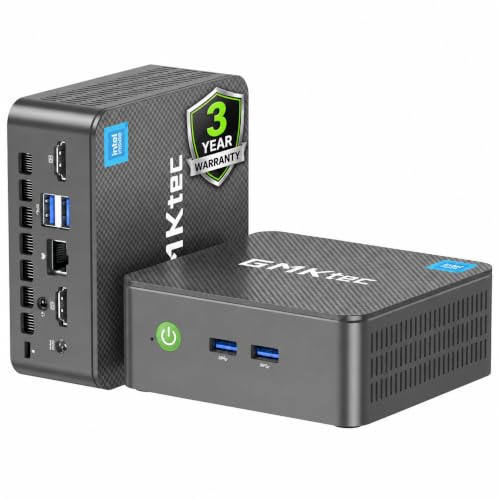
GMKtec G3S Mini PC Intel N95

GMKtec M3Pro Mini PC Intel i5-13500H

Lenovo Legion Tower 5i RTX 5070 Ti

GMKtec G10 Mini PC Ryzen 5 3500U

GMKtec G11 Mini PC Ryzen R2514

GMKtec Mini PC i7-1185G7 1TB SSD
A Deeper Look At The Lineup
The Skytech Storm sits in the sweet spot where most first-time builders actually live. A Ryzen 5 5500 handles esports and modern single-player games with headroom to spare, while the RTX 5050 brings real-time ray tracing, a rendering technique that simulates how light actually behaves in a scene, and DLSS, an AI-driven upscaling tool that paints more pixels than the GPU renders natively, so 1080p and entry 1440p stay smooth.
You also get 32GB of DDR4 RAM and a 1TB NVMe SSD, which means no immediate storage upgrade the day you unbox it. Windows 11 Home ships preinstalled with no bloatware, and the front-panel HDMI plus DisplayPort outputs give you easy dual-monitor setups. For shoppers who want one box that handles game night and a remote-work day without compromise, this is the dependable starting point.
Strengths Worth Knowing
- RTX 5050 graphics bring hardware ray tracing and DLSS to a starter price tier
- 32GB of DDR4 is double what most entry builds ship with, future-proofing multitasking
- 1TB NVMe SSD cuts load times in modern open-world titles
- Pre-built and tested, so no screwdriver or BIOS tweaks are required on day one
- Wi-Fi 5 included for cable-free setups in dorms or rentals
Things To Consider
- The Ryzen 5 5500 lacks integrated graphics backup if the discrete GPU ever fails
- Air cooling is fine for stock settings but may run warm under sustained all-core loads
- A mid-tower case takes more desk or floor space than the mini PCs further down this list
Feature Snapshot
Made For
First-time builders and anyone graduating from console gaming who wants a turnkey tower with a real graphics card.
Consider Something Else When
Shoppers working with very tight desk space should look at the GMKtec M3Pro Mini PC, which trades GPU muscle for a fraction of the footprint.
The G3S is the smallest box on this list, and it knows it. Built around a 12th-gen Intel N95 chip with four cores and a 3.4GHz burst, it targets the kind of work that used to anchor a beige office tower: email, spreadsheets, browser tabs by the dozen, and a stream running in the corner.
You do get 8GB of DDR4 and a 256GB SSD, plus dual HDMI outputs for a clean two-monitor desk. Wi-Fi 5 and Bluetooth 5.0 keep peripherals wireless. Light indie games and older esports titles run at modest settings, and owners commonly report the fan stays near-silent during office work. For shoppers who want a starter desktop that hides behind a monitor, this is a calm, affordable place to begin.
Bright Spots
- Footprint small enough to mount behind a display with a VESA bracket
- Dual HDMI outputs make a productivity two-monitor setup painless
- Fan noise stays low during browsing and document work
- Power draw is a fraction of a gaming tower, friendly to always-on use
Worth Noting
- 8GB of RAM caps how many browser tabs and apps you can juggle at once
- 256GB of storage fills up fast with a modern game library
- Integrated graphics struggle with anything past light indie or esports titles
Right Fit For
Students, remote workers, and anyone outfitting a secondary space that needs a quiet general-purpose PC.
Not Your Match When
Shoppers who want a real graphics card should step up to the Skytech Storm Gaming PC, which pairs a discrete RTX 5050 with similar everyday usability.
Mini PCs used to mean compromises you could feel. The M3Pro pushes back hard. Its 12-core, 16-thread i5-13500H brings laptop-class speed to a chassis small enough to sit on a stack of books, and Intel Iris Xe graphics handle esports and lighter AAA titles at 1080p with sensible settings.
You get 16GB of DDR4 and a 512GB NVMe SSD as the baseline, which is enough to install a dozen modern games and keep your work apps open. For shoppers who want something between the Skytech tower and the ultra-compact G3S, this is the bridge: real CPU muscle, integrated graphics that do not embarrass themselves, and a body that disappears on a desk. Owners commonly use it for photo editing, light video work, and competitive multiplayer at 1080p.
Notable Gains
- 12-core, 16-thread CPU makes multitasking and creative work feel responsive
- 512GB NVMe holds a respectable game library without an immediate upgrade
- Compact chassis fits in entertainment centers or behind monitors
- Integrated graphics outperform older entry-level dedicated cards in some scenarios
Trade Offs
- No dedicated GPU means high-settings AAA play is off the table
- Compact cases can run warm under sustained all-core loads
- Limited internal expansion compared to a full tower
Key Product Details
Best Suited To
Creators and competitive players who care more about CPU speed and desk real estate than raw GPU power.
Look Elsewhere When
Anyone chasing maxed-out settings in modern AAA games will get more value from the Skytech Storm Gaming PC and its dedicated RTX 5050.
The Legion Tower 5i is the most ambitious build on this list, and it shows. An Intel Core Ultra 7 265F pairs with an RTX 5070 Ti, which means ray-traced 1440p and entry 4K become realistic rather than aspirational. Coldfront cooling, Lenovo’s airflow-focused chassis design, keeps the system quiet during long streaming sessions or marathon raid nights.
32GB of memory and a 1TB SSD match the Skytech Storm on capacity while pushing the GPU tier higher. You also get three months of PC Game Pass, a service that rotates a library of current games for subscribers, which softens the upfront cost if your library is still small. For shoppers willing to spend more today to avoid upgrades tomorrow, this is the cleanest path.
Everyday Perks
- RTX 5070 Ti handles 1440p ultra and entry 4K with ray tracing enabled
- Coldfront cooling design keeps thermals and noise in check under load
- 32GB of RAM supports streaming, chat apps, and modern games simultaneously
- PC Game Pass included for an instant library on day one
Points To Note
- Higher cost than entry-tier builds, so value depends on how long you keep it
- Full tower footprint demands dedicated floor or desk space
- Pre-built warranty terms vary, so register the unit early
Perfect Match For
Enthusiast gamers and streamers who want top-tier performance now and headroom for the next few hardware generations.
A Better Fit Elsewhere
Shoppers with smaller rooms or tighter budgets will find the GMKtec G3S Mini PC a more sensible everyday pick.
The G10 leans into one specific superpower: triple 4K display output. Powered by a Ryzen 5 3500U with Radeon Vega graphics, it drives three monitors at once through HDMI 2.1 and USB-C, which is a rare trick at this size. For traders, editors, or anyone running dense dashboards, that alone justifies the box.
16GB of DDR4 and a 1TB SSD give you comfortable headroom for productivity apps, browser workloads, and a respectable collection of indie and older games. USB-C and 2.5G LAN round out the modern desk, and the small chassis makes it easy to mount out of sight. For shoppers who treat a PC as a multi-display command center first and a game machine second, the G10 is a thoughtful fit.
What Helps Most
- Triple 4K display support is rare in this size class
- 1TB SSD gives plenty of space for project files and games
- 2.5G LAN is a real upgrade over standard gigabit for NAS and fast networks
- Compact case fits behind monitors or inside AV cabinets
Minor Gripes
- Integrated Radeon Vega graphics limit modern 3D gaming to modest settings
- Triple-display setups require careful cable planning for HDMI and USB-C ports
- Not ideal as a primary AAA gaming box
Feature Card
Who Should Grab It
Productivity-focused shoppers running multi-monitor desks, light creative work, and casual gaming on the side.
Skip It When
Anyone focused on serious 1440p or 4K gaming will be better served by the Lenovo Legion Tower 5i.
The G11 is a different animal. Built around the AMD Ryzen Embedded R2514, a chip designed for continuous 24/7 operation, it targets industrial and commercial environments: digital signage, kiosks, lab rigs, and Proxmox home-server builds where uptime matters more than frame rates.
Radeon graphics outperform basic Intel N-series integrated chips for 3D workloads, which helps when this box doubles as a light workstation. The low 15W thermal envelope keeps fan noise minimal, a real bonus in quiet offices. For shoppers who want a mini PC that runs cool, sips power, and stays reliable around the clock, the G11 fills a specific niche the rest of this list does not touch.
Practical Pluses
- Embedded-class CPU is rated for 24/7 continuous operation
- Low power draw keeps electricity costs down on always-on deployments
- Compact, fan-tuned chassis runs quietly even under steady load
- Stronger integrated graphics than typical entry-level mini PCs
Honest Caveats
- Not designed as a primary gaming box for modern AAA titles
- Embedded CPU ecosystem means fewer mainstream upgrade paths
- Storage and RAM configurations depend on the specific variant purchased
Whose Shelf It Belongs On
Home-server tinkerers, small business owners running signage, and anyone who values silent, always-on reliability.
Reach For A Different Pick When
Gamers looking for daily play should pivot to the Skytech Storm Gaming PC for a dedicated GPU and faster gaming memory.
The final pick closes the list with a connectivity-heavy mini PC. An 11th-gen Intel i7-1185G7 with Iris Xe graphics drives a wide range of tasks, and you get a generous 16GB of DDR4 plus a 1TB SSD, so storage pressure stays low.
Where this box earns its place is ports. USB4, a high-bandwidth connection that rivals Thunderbolt for fast storage and docks, 2.5G LAN through an Intel i226V controller, Wi-Fi 6, and Bluetooth 5.2 cover the modern desk without dongles. For shoppers running a creative workflow, a home lab, or a hybrid office setup, the port variety makes a real difference. The honest read: this is a feature-dense workhorse, not a gaming powerhouse.
The Helpful Details
- USB4 enables fast external storage and single-cable docking
- 2.5G LAN outperforms standard gigabit for NAS and large file transfers
- 1TB SSD leaves room for projects, media, and a modest game library
- Wi-Fi 6 and Bluetooth 5.2 keep wireless peripherals modern
Less Ideal Details
- Integrated graphics cap 3D gaming at lighter settings and older titles
- 11th-gen silicon is mature but newer alternatives exist for CPU-heavy tasks
- Compact chassis can throttle under very long sustained all-core loads
Feature Overview
Built With In Mind
Hybrid office workers, home-lab enthusiasts, and content creators who value ports and quiet operation over raw gaming frame rates.
Swap It Out When
Gamers chasing high-refresh 1440p should pick the Lenovo Legion Tower 5i for its dedicated RTX 5070 Ti and stronger cooling.
What Matters Most Before Choosing Affordable Gaming PC Builds
Pick the right GPU tier first
Graphics cards drive gaming performance more than any other part. For 1080p esports and indie play, integrated graphics on the GMKtec M3Pro or G10 will surprise you. For modern AAA at high settings, a discrete card like the RTX 5050 in the Skytech Storm or the RTX 5070 Ti in the Legion Tower 5i is the real upgrade path.
Match the form factor to your space
Mid-towers cool better and upgrade easily, but they need floor space. Mini PCs disappear behind a monitor but trade GPU headroom for compactness. Shoppers in dorms and small apartments often do better starting with a capable mini PC, while dedicated gaming rooms reward full-tower airflow.
Don’t underbuy RAM or storage
16GB is the comfortable minimum for modern gaming and multitasking today. 32GB, like the Skytech Storm and Legion Tower 5i ship with, removes a future upgrade entirely. Storage follows the same logic: 1TB gives breathing room for game libraries, while 256GB fills up within months of modern installs.
Mind the connectivity
Wi-Fi 6, 2.5G LAN, and USB4 are no longer luxuries. They affect download speeds, NAS performance, and how many dongles live on your desk. Shoppers planning to dock a laptop, drive multiple monitors, or push large files should weight these ports heavily.
Key Considerations Across These Picks
Pitfalls Shoppers Hit
The most common trap is chasing the cheapest mini PC and expecting modern gaming performance from integrated graphics. Another is ignoring the case size until delivery day, when a full tower blocks a closet door. Always confirm the chassis dimensions, your monitor cable plan, and your network speed before you commit.
Where The Extra Money Goes
Higher-tier builds like the Lenovo Legion Tower 5i buy you a stronger GPU, better airflow, and longer useful life. That translates to smoother high-refresh 1440p gaming today and meaningful headroom for the next generation of titles. For shoppers who keep a PC four or more years, that gap is usually worth the extra spend.
Frequently Asked Questions
Can a mini PC really handle gaming?
Yes, but with limits. Mini PCs with integrated graphics handle esports, indie titles, and older games well. Modern AAA at high settings still wants a discrete GPU, which means a full tower like the Skytech Storm or the Legion Tower 5i.
How much RAM do I need for an affordable gaming PC?
16GB is the practical floor for modern gaming and multitasking. 32GB, as in the Skytech Storm and Legion Tower 5i, removes the question entirely and helps if you stream or run creative apps alongside games.
Is a pre-built gaming PC cheaper than building one?
Pre-builts often match DIY prices once you factor in Windows licensing and the time cost of assembly. They also ship with a single warranty. Builders who enjoy the process still save a bit, but the gap has narrowed.
Do I need a discrete GPU for 1080p gaming?
For esports and lighter titles, integrated graphics can manage. For modern AAA releases at smooth frame rates, a discrete card like the RTX 5050 or higher makes a real difference.
What should I upgrade first on a pre-built gaming PC?
Storage and RAM are the easiest wins if the shipped configuration is tight. After that, the GPU drives the largest gaming performance jump, followed by cooling if the system runs hot under long sessions.
Wrap Up
The right affordable gaming PC build depends less on budget and more on the room you have, the games you play, and how long you plan to keep the box. Towers like the Skytech Storm and Legion Tower 5i handle modern gaming without compromise, while the GMKtec mini PCs cover everything from quiet office work to always-on home servers. Match the build to your actual habits, and the upgrade cycle gets a lot less painful.


