


Shopping for a new display in 2026 means wading through resolution ladders, refresh-rate arms races, and curve depth debates that weren’t on the table a few years ago. This roundup skips the marketing fog and looks at ten monitors that actually fit real gaming setups, from compact desks to wide battlestation rigs. Each pick gets a clear read on what it does well, where it falls short, and who it’s actually built for, so you can match the screen to the games you play and the room you sit in.
A Side-By-Side Look

KTC H32S17F 32 inch 240Hz Curved Gaming Monitor

KTC H32C5 32 Inch Curved 280Hz Gaming Monitor

KTC H32S25E 32 inch 240Hz Curved 2K Gaming Monitor

Kuycon G32X 32’’ UHD 6K Monitor

KTC H24S17P 24 Inch Curved 240Hz Gaming Monitor

INNOCN 34C1R 34 inch Ultrawide WQHD IPS Monitor
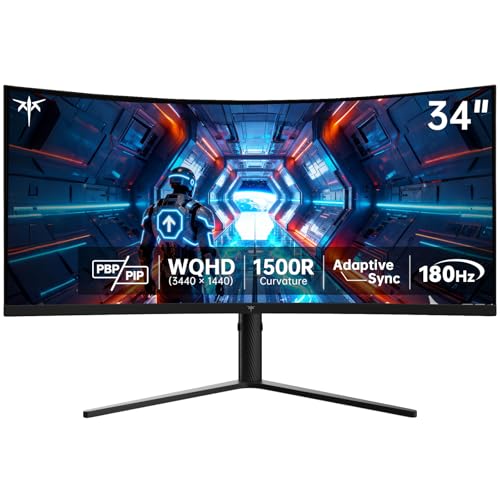
KTC H34S5 34 Inch Ultrawide Curved 180Hz Gaming Monitor

INNOCN 49C1G 49 inch Curved 144Hz Ultrawide Gaming Monitor

INNOCN 45C1R 45 inch 5K2K Ultrawide Curved Monitor

IBW 15.6 inch 2.8K 100Hz Portable Gaming Monitor
More Details On Our Top Picks
The KTC H32S17F leans hard into competitive play, pairing a 240Hz refresh rate with a 1ms response window so flick shots and quick camera pans read cleanly in fast shooters. A 32-inch curved panel fills more of your peripheral vision than a flat 24-inch screen, which helps when you spot-check flanks in team-based matches. The 1080P resolution keeps frame rates high, especially on mid-range GPUs that struggle to push 1440P at top speed.
Esports players who already own a capable graphics card and want the smoothest motion clarity get the most from this panel. The stand is VESA-compatible, so a custom arm or wall mount is straightforward, and the 1ms spec cuts the smearing that some VA panels show during whip-pan movements.
Practical Advantages
- 240Hz refresh keeps motion sharp in competitive shooters
- 1ms response reduces ghosting during whip-pan moments
- Curved 32-inch screen pulls your eyes into the action
- Full HD demands less from your graphics card than 1440P
- VESA mount support for arm or wall installations
Worth Noting
- 1080P on a 32-inch screen means visible pixels up close
- HDR performance tends to be modest at this tier
Built With In Mind
Fast-paced competitive players running mid-range GPUs who want fluid motion over maximum detail.
Swap It Out When
You want noticeably sharper text and image detail, in which case the KTC H32S25E 2K panel fits better.
The KTC H32C5 pushes the refresh-rate envelope further, with a 240Hz native panel that can be overclocked (pushed beyond its factory setting) up to 280Hz when the game and GPU cooperate. A 1ms MPRT (Moving Picture Response Time, which measures how fast pixels shift between frames) response helps motion stay legible, while a 1500R curve wraps the picture around your field of view. 128% sRGB coverage brings punchier colors than many budget speed panels manage.
Compare that to the H32S17F above, and the difference is mostly ceiling speed and a stronger color envelope. A tilt-adjustable stand keeps the ergonomics basic but serviceable for most desks, and the VESA mount opens the door to a proper arm setup.
The Case For It
- Overclockable 280Hz ceiling for the smoothest competitive play
- 128% sRGB adds color punch beyond basic speed panels
- 1ms MPRT response keeps fast motion clean
- 1500R curve wraps the image around your view
Points To Keep In Mind
- Reaching 280Hz demands a high-end GPU and compatible cable
- Tilt-only stand leaves height adjustment to a VESA arm
- 1080P at 32 inches shows pixel structure during desktop work
Who Should Grab It
Competitive gamers and streamers who already push top-tier GPUs and want maximum motion clarity on a curved display.
A Better Fit Elsewhere
You want a sharper image for single-player and creative work, where the Kuycon G32X 6K panel suits the brief.
The KTC H32S25E steps up to 1440P (QHD), which packs roughly 78% more pixels than the 1080P models above, so text reads crisply and game textures gain noticeable detail. The 1000R curve is the tightest bend in this roundup, hugging your field of view more aggressively than the 1500R panels. A 240Hz refresh rate over DisplayPort 1.4 (DP1.4, a high-bandwidth display connection standard) keeps fast motion clean, and the 4000:1 contrast ratio gives dark scenes a depth many IPS rivals struggle to match.
Mixed-use gamers benefit most, getting speed for competitive play and resolution for story-driven sessions. The 122% sRGB coverage means single-player worlds look more saturated, and the tiltable stand plus VESA mount gives you flexibility for an arm upgrade later.
Bright Spots
- 1440P resolution sharpens text and game detail over 1080P
- 4000:1 contrast delivers deeper blacks in dark scenes
- 1000R curve is the most immersive in this list
- 122% sRGB brings richer color to single-player worlds
Practical Considerations
- Driving 1440P at 240Hz needs a powerful graphics card
- 1000R curve can feel too tight for spreadsheet-heavy work
Feature Snapshot
Right Fit For
Mixed-use players who want speed for shooters and sharper detail for RPGs and sim games.
Not Your Match When
You want maximum horizontal screen real estate, where the KTC H34S5 34-inch ultrawide makes more sense.
The Kuycon G32X takes the resolution crown in this roundup with a 6K IPS panel (In-Plane Switching, a panel type known for wide viewing angles and color accuracy), packing serious pixel density into a 32-inch frame. 98% DCI-P3 coverage is a wide color standard used in film production, and 99% sRGB means the screen handles both gaming and color-aware work like photo editing. A 500-nit peak brightness rating is bright enough for HDR content to actually look impactful in a normally lit room.
Creators and high-end PC builders who prioritize sharp text and accurate color over top-end speed benefit most. The minimalist stand ships included, and the panel supports a 100W USB-C connection for charging a connected laptop while carrying the video signal.
Benefits That Matter
- 6K resolution brings desktop-sharp text and texture detail
- 98% DCI-P3 suits photo and video work
- 500-nit peak brightness helps HDR content pop
- 100W USB-C handles video and laptop charging through one cable
A Few Limitations
- Refresh rate sits well below the 240Hz speed panels above
- Driving 6K smoothly demands a top-tier graphics card
Technical Highlights
Whose Shelf It Belongs On
Detail-focused creators and PC enthusiasts who want a sharp 32-inch panel that doubles as a creative workspace.
Look Elsewhere When
You prioritize fast competitive motion, where the KTC H32C5 280Hz panel is a more natural fit.
The KTC H24S17P shrinks the formula down to a tournament-friendly 24-inch size, which is the size most esports pros still prefer for its tight head-tracking area. A 240Hz refresh rate, 1ms response, and 1500R curve pack competitive specs into a panel that fits on smaller desks and dorm setups. The 1080P resolution pairs well with mid-range GPUs that need every frame to count.
Tournament players, students, and anyone working with limited desk space benefit most. The 3000:1 contrast ratio gives darker games more depth than many flat 24-inch competitors, and the VESA mount keeps mounting options open.
Noteworthy Benefits
- 24-inch size suits tight desks and tournament play
- 240Hz refresh keeps motion clean in fast shooters
- 1500R curve adds immersion without overwhelming small spaces
- 3000:1 contrast improves dark-scene visibility
Trade Offs
- 1080P on 24 inches still shows pixel structure up close
- Smaller screen limits multi-window productivity use
Core Details
Best Suited To
Esports-leaning players with small desks who want the standard competitive size and speed.
Consider Something Else When
You want a wider field of view for sim racing, where the INNOCN 49C1G 49-inch ultrawide suits better.
The INNOCN 34C1R delivers a 21:9 ultrawide canvas at 3440 x 1440, which gives you roughly a third more horizontal space than a 16:9 32-inch screen. An IPS panel keeps colors consistent across wide viewing angles, and the 180Hz refresh rate handles fast-paced games without obvious blur. Picture-by-Picture (PBP) mode lets you run two video sources side by side, which is handy for streamers and remote workers who keep reference content open during play.
Productivity-first gamers get the most value, since the ultrawide format shines for spreadsheets, timelines, and split-screen workflows. The fully adjustable stand supports 130mm of height travel plus tilt, so finding a comfortable angle is straightforward.
Everyday Advantages
- 21:9 aspect adds real width for split-screen work and play
- 180Hz refresh handles most modern games smoothly
- IPS panel keeps colors accurate at off-center angles
- Height and tilt adjustments for ergonomic comfort
- PIP and PBP modes support multiple video sources
Worth Bearing In Mind
- Some games and videos still default to 16:9 and add black bars
- 180Hz trails the 240Hz speed panels above
Perfect Match For
Remote workers and gamers who want one screen that handles a full workday and an evening of immersive play.
Reach For A Different Pick When
You want an even wider canvas, where the INNOCN 49C1G 49-inch 32:9 display stretches further.
The KTC H34S5 pairs a 3440 x 1440 ultrawide panel with a 1500R curve and 180Hz refresh, building a screen geared toward sim racers, flight sims, and atmospheric RPGs. The 4000:1 contrast gives dark dungeons and night drives more depth, and the 1ms MPRT response handles whip-pan motion without heavy smearing. A full ergonomic stand with tilt, swivel, pivot, and height adjustment means you can dial in a comfortable angle without buying a separate arm.
Compare that to the INNOCN 34C1R above, and the H34S5 trades IPS viewing angles for higher contrast, which matters in darker game scenes. Players who sit close to the screen and want maximum wrap benefit most from the 1500R bend.
Useful Touches
- 1500R curve wraps the screen around your view for immersion
- 4000:1 contrast improves dark-scene readability
- Full ergonomic stand covers tilt, swivel, pivot, and height
- PIP and PBP support dual-source workflows
Honest Caveats
- 180Hz refresh trails 240Hz competitors in fast shooters
- Stand footprint is wider than tilt-only options
Product Snapshot
Who It Suits Best
Sim racers, flight sim fans, and RPG players who want an immersive curved ultrawide with full ergonomic support.
Where A Sibling Pick Shines
You want sharper text density for productivity, in which case the INNOCN 45C1R 5K2K ultrawide is the stronger choice.
The INNOCN 49C1G pushes into 32:9 territory, which is like sitting in front of two 27-inch 16:9 screens merged into one panel. A 1800R curve keeps the edges in your line of sight, and the 144Hz refresh rate handles most modern games at acceptable speeds. 99% sRGB coverage and HDR400 (a baseline HDR spec requiring 400-nit peak brightness) support keep the color and contrast picture respectable for the size.
Anyone replacing a dual-monitor setup with a single cable-managed screen benefits most, especially sim racers who want a wraparound cockpit view. USB-C, DisplayPort, and HDMI inputs cover most PC and console hookups, and the height and tilt adjustments help dial in a comfortable angle.
Positive Points
- 49-inch 32:9 panel replaces a dual-monitor setup
- 1800R curve keeps the edges visible without sharp distortion
- USB-C, DisplayPort, and HDMI inputs cover PC and console use
- Height and tilt adjustments support ergonomic positioning
Potential Compromises
- 144Hz refresh trails 240Hz speed panels in fast shooters
- 49-inch footprint demands a deep desk, around 80 cm or more of clearance
- Vertical pixel count matches 1080P, so text reads less sharp than 1440P ultrawides
Made For
Sim racers, flight sim enthusiasts, and multitaskers who want a single wraparound screen instead of a multi-monitor array.
Skip It When
You want a sharper pixel grid for reading-heavy work, where the INNOCN 45C1R 5K2K ultrawide offers more density.
The INNOCN 45C1R takes the ultrawide formula and crams 5120 x 1440 into a 45-inch curved VA panel, which gives you the horizontal real estate of two 1440P screens with one tidy bezel. The 1500R curve sits at a comfortable bend for most desk depths, and the 90W USB-C power delivery can charge a connected laptop while carrying the video signal. PIP and PBP modes let you run two sources side by side, which is genuinely useful for editing workflows and shared workstations.
Video editors, traders, and serious multitaskers get the most value from the pixel density. The vertical resolution matches a standard 1440P panel, so windows stack comfortably without feeling cramped.
Everyday Perks
- 5K2K resolution brings sharp text and dense timelines
- 1500R curve stays comfortable at standard desk depths
- 90W USB-C powers and drives a laptop through one cable
- PIP and PBP support side-by-side workflows
- Height adjustment supports ergonomic positioning
Small Limitations
- Refresh rate is lower than the 240Hz speed panels above
- Drivers and apps may need scaling tweaks at 5K2K
Feature Card
Right Fit For
Video editors, finance pros, and multitaskers who want a single ultrawide that handles dense workflows.
Not Your Match When
You want maximum refresh speed, in which case the KTC H32C5 280Hz panel suits your priorities.
The IBW portable monitor brings a 15.6-inch 2.8K panel to setups where a full-size display simply isn’t an option. The 2880 x 1620 resolution on a small screen means text and game detail look crisp from typical laptop viewing distances, and the 100Hz refresh keeps casual gaming smooth. USB-C and HDMI inputs cover laptops, phones, and consoles, including the Switch and PS5, so it works as a travel companion across most of your devices.
Road warriors, students, and remote gamers who split time between a laptop and a desktop benefit most. The 300-nit brightness is comfortable for indoor use, and 100% sRGB coverage keeps color accurate for content review on the go.
Real-World Strengths
- 2.8K resolution on 15.6 inches keeps text sharp at close range
- 100Hz refresh handles casual and indie games smoothly
- USB-C and HDMI cover laptops, phones, and consoles
- Lightweight build fits in most laptop sleeves
Less Ideal Details
- 15.6 inches is small for dedicated desktop gaming
- 100Hz ceiling trails the 240Hz desktop panels
- Touchscreen adds cost if you don’t need touch input
Who Will Love This
Traveling professionals and laptop gamers who want a sharper, faster second screen on the road.
Consider Something Else When
You want a permanent desktop upgrade, where the KTC H32S25E 32-inch 2K panel fits the role better.
Matching The Right Specs To Your Gaming Style
Start with resolution and refresh rate, since these two drive both image quality and frame-rate demands. A 1080P 240Hz panel like the KTC H32S17F rewards competitive shooters where every frame matters, while a 1440P 240Hz model like the KTC H32S25E balances speed with sharper detail. Pushing to 4K or 6K demands a high-end GPU, so think about your graphics card before chasing pixel count.
Resolution Versus Refresh Rate Tradeoffs
Higher resolution means more pixels to drive, which lowers frame rates unless you own a flagship graphics card. A 1080P 240Hz setup is easier on mid-range hardware and still feels incredibly smooth in fast titles. A 1440P 240Hz panel hits a sweet spot for many gamers, offering sharper visuals without crushing frame rates on capable GPUs.
Curve Depth And Screen Size
Curve depth, measured by the R-rating, tells you how tightly the screen bends. A tighter 1000R curve wraps aggressively and suits close seating, while a gentler 1500R or 1800R bend feels more natural for productivity work. Larger screens generally benefit from a curve, since the edges stay in your line of sight without forcing head movement.
Connectivity And Ergonomics
Check the inputs before you buy. HDMI 2.0 handles most current consoles, while DisplayPort 1.4 is required for high-refresh 1440P or higher signals. A height-adjustable stand saves your neck during long sessions, and a VESA mount opens the door to monitor arms and wall mounts for clean desk setups.
Color Coverage And HDR
For content creation, color accuracy matters. Panels with high sRGB or DCI-P3 coverage render photos and videos closer to how they’ll appear on other screens. HDR support is worth having, though the effect varies widely between basic HDR400 and higher-tier implementations.
What To Watch Before You Add To Cart
Common Shopping Slip Ups
Chasing the highest resolution without considering GPU capability is a frequent mistake, since a 6K panel underperforms when the graphics card can’t push enough frames. Another is overlooking curve depth, which can make tight 1000R panels feel aggressive during spreadsheet work. Always confirm cable and port compatibility before you buy.
Where The Extra Money Goes
Premium tiers typically invest in higher pixel density, better color accuracy, and stronger HDR performance. A 6K panel like the Kuycon G32X costs more largely because of the manufacturing complexity of pushing that many pixels into a 32-inch screen. Higher refresh rates and adaptive sync (technology that matches the display’s refresh to the GPU’s output to prevent screen tearing) support also add cost, and they make the biggest difference for competitive play.
Frequently Asked Questions
Is An 8K Gaming Monitor Worth It In 2026?
A true 8K gaming monitor is a niche purchase, since most current graphics cards struggle to push high frame rates at that resolution. If you own a flagship GPU and want maximum detail, it’s worth considering, but 1440P and 4K options often deliver a better balance of clarity and speed for most setups.
What Graphics Card Do I Need For High-Refresh Gaming?
For 1080P at 240Hz, a recent mid-range card usually suffices. For 1440P at 240Hz, a high-end card is recommended, and pushing 4K or higher at high refresh rates demands flagship-class hardware. Check the specific monitor’s recommended specs before committing.
Does A Curved Monitor Help With Gaming?
A curved screen can help by keeping the edges of the display in your natural line of sight, which reduces head movement and adds immersion. Tight curves work best at close seating distances, while gentle curves feel more natural for mixed productivity and gaming.
Are Ultrawide Monitors Good For Esports?
Ultrawide screens work well for sim racing and atmospheric games, but competitive shooters often favor standard 16:9 or 24-inch panels. Some esports titles don’t fully support 21:9 or 32:9 aspect ratios, which can stretch the image or add black bars.
Do I Need HDR For Gaming?
HDR improves contrast and color range when supported, but the effect depends heavily on the panel’s HDR tier. HDR400 is a baseline that adds subtle improvement, while higher tiers make a more visible difference in supported games.
Wrap Up
The right gaming monitor comes down to matching resolution, refresh rate, and size to the games you play and the hardware you own. Competitive shooters benefit from high-refresh 1080P or 1440P panels, while sim racers and creators get more from wide or high-resolution displays. Take a clear look at your desk space and GPU before you buy, and you’ll end up with a screen that fits both your games and your room.


